Opoona
My First RPG for Wii.

If it had been released a few years ago, Opoona would have been one of those Japanese PlayStation 2 titles nobody ever noticed on the release list - one of those quirky, average games that no-one really knew what to make of. Thanks to the dearth of Wii RPGs, though, it might have better luck.
Opoona is a simple, charming Japanese space-RPG, miles away from others of its kind in tone, but not up to their standards in execution. It's interesting, though, sufficiently so to make it worth a second look for RPG-starved Wii owners; people with other consoles might wish to turn to shinier, bigger-budget productions like Lost Odyssey and countless PS2 games for their traditional-JRPG needs.
Opoona's toned-down cel-shading and relaxing, spaced-out music are a good indication of what to expect from the game: it's extremely laid back. You take control of Opoona, a cheery little spaceman whose ship ran into trouble on a family holiday, leaving him separated from his parents and siblings on a strange planet.
Although reuniting him with his family provides the plot's impetus, the vast majority of the first half of the game is spent doing strange jobs around the city - being a waiter, tidying rubbish, hoovering, hunting sea-monsters, playing the ukulele - in order to make equally strange friends, gain job licences and access new parts of the city. The jobs range from dull to mildly entertaining, but never far beyond; thankfully the variety, amusing presentation and occasional funny mistranslation ("You've won acceptably!") save things from becoming really tedious.
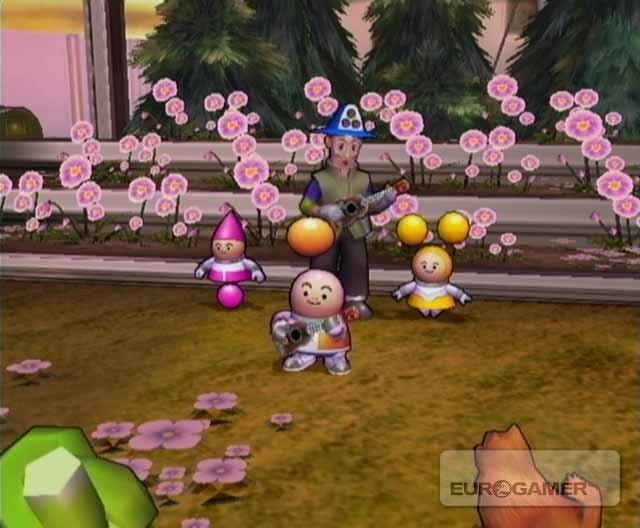
Things pick up a bit plot-wise when Opoona's sister turns up, and we take control of her for a good few more hours until the family is reunited. Here, the action moves away from the domed cities and their part-time labour and out into the big, wide, beautifully-rendered world. Opoona's graphics are hardly cutting-edge technologically, but it does look really very gorgeous at times, especially outdoors - Opoona's stylistic direction is the most extraordinary thing about it, from the weird monster and character designs to the striking space-age lines of the cities. Opoona's art direction is the work of two former Dragon Quest artists, which perhaps explains its strange and occasionally beautiful appearance.
Out in the big wide world, things revert to a more traditional JRPG framework of dungeons, side-quests, exploration, treasure chests, items and random battles. There's about thirty hours in here for the averagely adventurous player, more for the dedicated, and Opoona does a lot to make the hours slip by. The space-children protagonists move around at a fair clip, which makes running around and around in dungeons a lot less trying than it is in lesser examples of the genre, and the action-based fighting system keeps things lively in the random battles.
The one-handed control system, too, makes Opoona very chilled-out and easy to play. For the most part it's a frustration-free, brainwork-optional little adventure. The music, too, is genuinely great - which, given that it's done by Final Fantasy's Hitoshi Sakimoto and his studio, is perhaps not entirely surprising.