Fable II Post-Mortem

EG chats to Peter Molyneux.

You may think you know everything about Peter Molyneux by now, but did you know he once chatted up a ghost's girlfriend and then killed her in front of him? You may think you've heard everything about Fable II, but do you really know why it only has one save slot? Or which two simple things could have improved the co-op?

With a first round of DLC on the way, we sat down with the Lionhead boss to see how he feels about the company's latest game. SPOILER ALERT: if you haven't finished Fable 2 yet and don't like spoilers, you might want to give this one a miss - at least for now.

Eurogamer: You've said that, most of all, you wanted Fable II to make people happy. Have you succeeded?

Peter Molyneux: If you open the community boards, you can see there are a lot of people who are fractious about things. But a lot of people have come up to me and said what a fantastic experience they've had.

Some of those are gamers and a lot of them are not. I'm very proud of how inviting the Fable world was and how much real freedom it gave you. So, although I'm sure there's room for a lot more improvement, I think on balance, my original statement is at least partially true.

Eurogamer: Has the game found the unusually broad audience you were after?

Peter Molyneux: Yes. Three years ago we were writing the big things on a board, and one of those was: the experience should be for more than just us gamer lot, and why not make it so that it's accessible for everyone? A lot of people who have played it have said, "My girlfriend or my partner saw me play it and they've taken over and continued playing it."
1

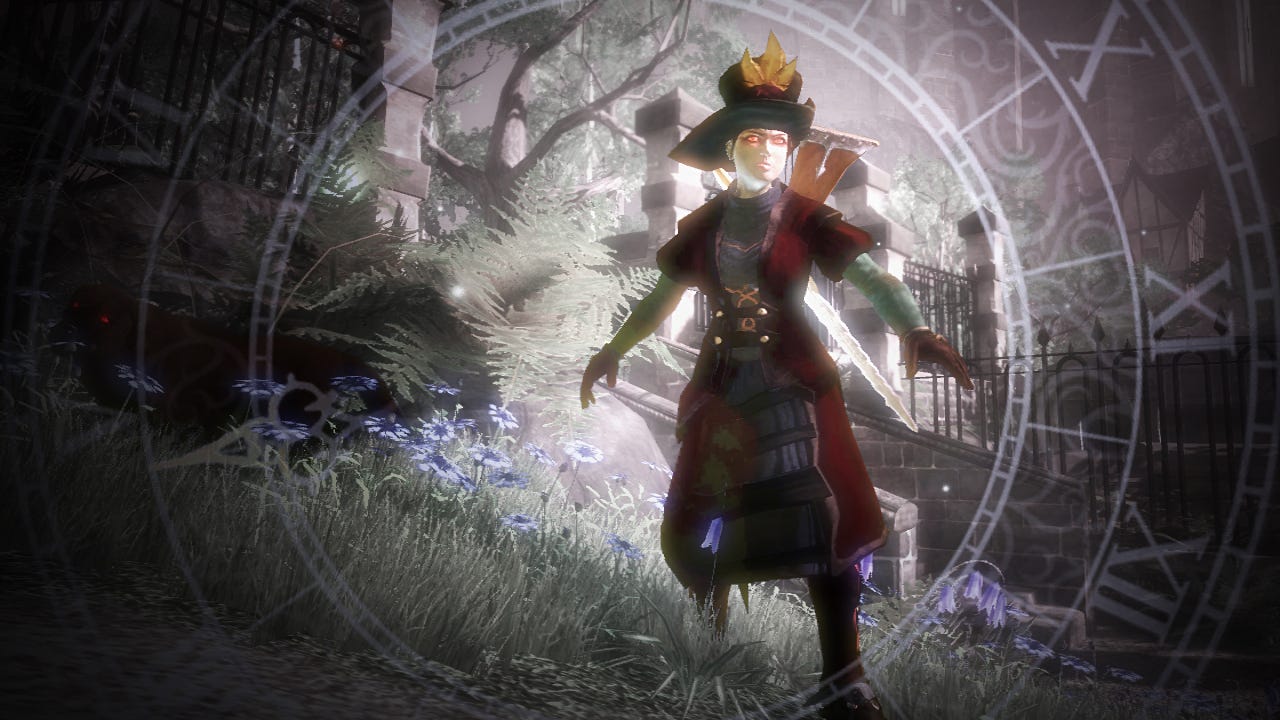
The only criticism that I've got, and I'm not going to fully point the finger at us, is that I think that controller is such a barrier to the casual market. It's so intimidating even before we pick it up. It's not an issue of making the controller pink or blue or something like that: it's far more inherently difficult for people who don't play many computer games.

My wife, for example - one day I'm going to do a game that she actually enjoys - she holds the thumbstick like a little gear lever, and you're looking at her and going, "Put your thumb down there!" and she refuses to do it. She's always going to be challenged by that.

Eurogamer: Do you feel you served the casual audience more successfully than your core audience?

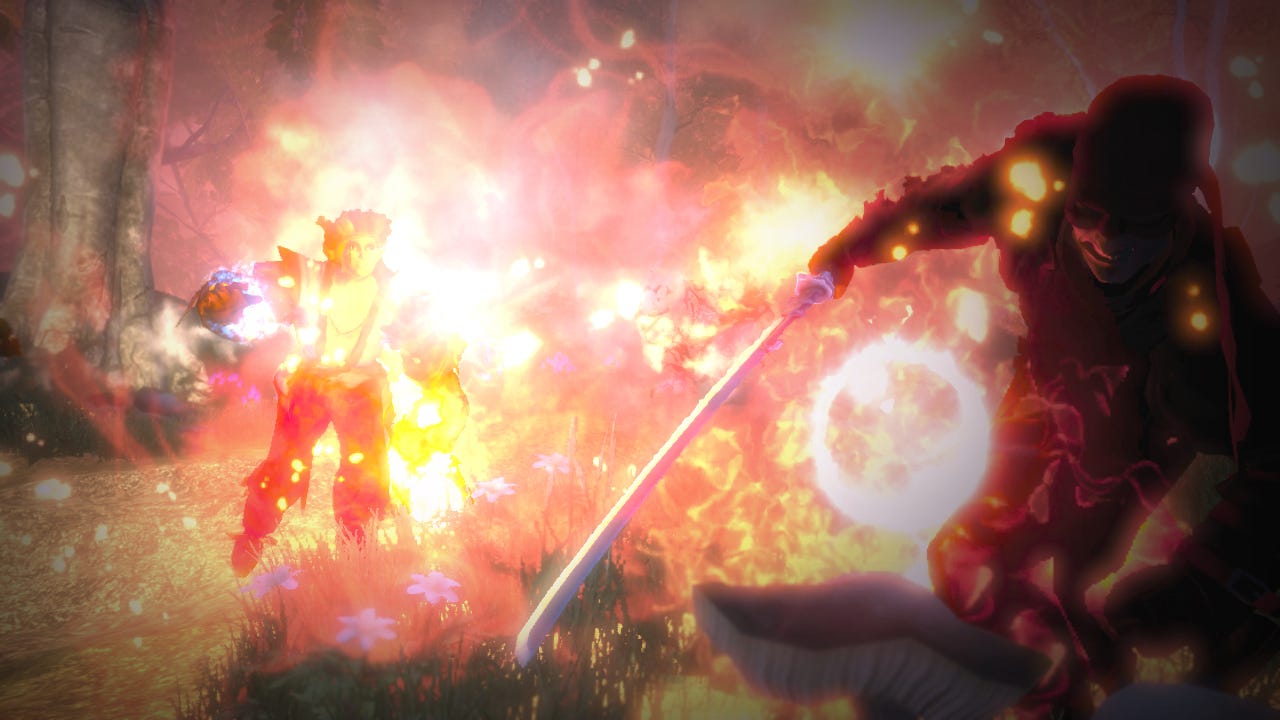
Peter Molyneux: I don't think we gave the core audience enough rewards. Combat in Fable, and I'd argue in RPGs, shouldn't be tedious. It should be part of the relaxation of playing. We achieved that, but we didn't make you feel cooler and cooler.

We had the currency to do that. We had these mechanics called crescendos which were supposed to build up so that it was only later in the game that you realised, "Wow, I'm really cool," but we didn't exploit them well enough. They should have been even more dramatic and widespread.
2

Eurogamer: Is it hard to sell to the audience the difference between something that's accessible, and something that's just too easy?

Peter Molyneux: It's not the particular challenge that's easy or hard, it's the overall experience: how you feel about each of those combat moments. Personally, if you're defining easy as, "Well, I should have died five times here and had to repeat the same combat over," I think that's just tedious.

It's not about easy and hard, it's about entertainment and tedium. Each moment in Fable is an experience. Sometimes it's an experience about feeling like you're about to fail and just succeeding. That's the ultimate that we want, rather than the experience of going in, failing, and finally succeeding. I wouldn't mind that once or twice but not over and over.

Eurogamer: Is it scary to throw out seasoned mechanics like dying, restarting, grinding, and getting lost?

Peter Molyneux: It was deeply scary to have the breadcrumb trail. It took an awful lot of persuasion. I think everybody predicted, "You'll follow this thing and get bored, and the sense of exploration will be gone." Sometimes, when you're a designer, you have to push against all resistance, and you have to believe it's going to work.

The experience of being lost is not what you want. The experience of exploring is what you want. The argument I use is: if you go orienteering, you take a map. Humans like to know where they're going. The people who really like to explore are the uber-uber-good people who are very good at working out where they are in a 2- and 3-D world. We stuck with the breadcrumb trail, and I'm really happy with the results.

Thinking about the future, I think there's an enormous amount of gameplay in that breadcrumb trail: there's a lot we can do with that which we never had time to explore.

Eurogamer: How do you play Fable II?

Peter Molyneux: Remember, I've only recently played Fable II for the first time, because although I've played through it thousands of times, when you're playing through it and writing down the things that are wrong, you're not really playing it.

After a while, I forgot completely about the good and evil side, and got wrapped up in what was going on in the moment. I found myself taking quite unnecessary revenge on things that I felt had done me wrong, and at other times I'd go along with things.

For example, the ghost that asked me to marry the bride: I was the epitome of cruelty to that bloke because I thought he had done something wrong. I married the girl, took her back, and then I killed her in front of him, and took great glee in that.

Eurogamer: Why the single save slot?

Peter Molyneux: Should I be honest? I think I should. The one save slot is purely a restriction imposed on us because of running out of time. It was nothing to do with the save mechanics, it was purely down to the GUI.

3

The pause screen having a scrolling list of games was weeded out in the last weeks. Before that I had put in the question: if we give people these save slots, for a lot of people it will ruin the experience, because the feeling you can just go backwards and forwards is rather like rewinding in a film when you're halfway. That's how I justified it to myself, but that was another raging debate. I'm not sure it's a system we'll emulate again, to be honest.

Eurogamer: Which choices in the games have turned out to be the most memorable?

Peter Molyneux: I think the Shadow Court stands out, the idea of being scarred, that stands out a lot, and the end of the game. A lot of people have said, "Where was the big battle?" I stand by it: the Lucien character was not a character to fight. He had an army so it would have been invalid. So those three choices at the end, albeit simple, were very engaging.

Eurogamer: Are you collecting stats on the way people are playing? Do you know what choice people are making at the end?

Peter Molyneux: There is this tool we could have integrated, which would have collected thousands of stats on everybody. But it also generated thousands of bugs, and we had to drop it. What a great shame.

There's been a surprising number of reactions to the choices, from someone sending me a personal email saying that I deserved to die, and that he would never buy another game ever again unless I release a patch to resurrect his dog, to people saying, "I didn't think I had it in me to sacrifice so much, but I feel so good about it."

Eurogamer: The final choice has very clear consequences, but a lot of the other choices are unclear. You often seem to go for a surprise...

4

Peter Molyneux: You've got to have a blend. We had this technology to change the world radically all the way through the game. We realised that if you kept doing this, unless you say, "Choice A means thousands will live and choice B means thousands will die," it spoils that. I love mixing things up.

Eurogamer: There are moments in the game where you really change the pace: the Spire, where you're a slave, for example. Was that a risk, given the audience you wanted?

Peter Molyneux: It was definitely part of the pacing. A lot of games and films have this arc which is always the same: the baddies get tougher, the weapons get bigger, you're building yourself up for a really big fight and then everyone dies, and that's it. We wanted to mix it up and make it more unexpected.

Eurogamer: DLC: We're getting Knothole Island on December 22nd. I'm guessing that's a version of Knothole Glade in Fable I?

Peter Molyneux: It's an island off the coast. It's far bigger than you would expect. It's something you can go to at any point: there's new simulation stuff, new creatures, a completely new dynamic environment in there which we never had time to exploit in Fable I.

You can expect new weapons, new gameplay, quite a few dungeons with a little bit more puzzly elements, because we didn't do that a lot in Fable I, and it fits into the story and to the world perfectly.

What people haven't realised yet is this thing about Theresa: who is she? That line at the end: "Leave the Spire now, it's mine." What's she going to do with that? And how come she ended up with what she wanted, it seems, more than what you wanted?

Eurogamer: Is this a story to be explored in DLC, or something for Fable III?

Peter Molyneux: If you leave it too long then people will forget. You can sustain a mystery for a certain amount of time, and I think people will talk more about the mystery after DLC1, whether we fully explain it or not - but we can't wait for another Fable to explain it.

Eurogamer: You wanted this to be a game where people not only judged the game, but judged Lionhead, and its ability to deliver. How do you feel you did?

Peter Molyneux: There was a lot of very brave things in Fable II. I rate it pretty high, and in the end, there were areas that needed polishing, but I'm immensely, incredibly proud of the team.

For a team like that, working with an idiot like me is tough. They just want me to design a game that's going to be a great experience, and here I am, adding these things that have never been done before, and that makes their life pretty tough, and I think they've done a stellar job.

5

Eurogamer: Can I tempt you into being old-school Peter Molyneux and telling me something about what's coming next?

Peter Molyneux: I've already got in trouble for this. But there is a sense of excitement around something we've been experimenting with for an awful long time. If we pull this off - and that's a big if, and please don't think this is hype, it's just a designer talking about his job - if we get even close, I think it's going to produce something you have never seen before: concept, play-style, genre, everything.

This is the reason Microsoft wanted us to be first-party, to give us the ability to make a big step. This industry needs big steps. You can feel it in the air right now: there's an uncertainty about these massive blockbuster formulaic games that we continue to make. I partially accuse myself of doing that.

On the other side there's this real disparity between the machines that we've got at the moment; we've got gamers' boxes and casual boxes. There needs to be this revolution.

Eurogamer: It seems you're saying there are a lot of design problems people have now solved. Can you give us a hint about some of the problems to be solved next?

Peter Molyneux: The big problem is the sense of wonder that you and I had when we first played computer games. I can remember that sense of wonder. I can remember going into the arcades and playing Missile Command and Defender, and my heart was full.

6

That sense of wonder, to a certain extent, has evaporated from the world. We need to convince people that a form of entertainment so magical it takes people's breath away is still there.

You may think this is all arty-farty rubbish. Let's talk about cinema. Until the golden few years when you had Star Wars, and the cinema turned from being a slightly two-dimensional thing to this huge, epic, queues everywhere [business]. Everyone was talking about it. When was the last time we heard about that in the world of cinema?

For years and years, the same television programs came on. Then out of the blue you had Lost and Dexter, and TV was where it was at. That's what computer games need. They need that redefining moment of the experience itself, and I think we are about to do it. I'm not saying "we" as Lionhead, I'm saying us as an industry.

We have to take the big heavy rulebook we've been writing in blood over the last 20 years, and put it into a mincer. Then say, what if we were starting from scratch? What if we were inventing this now, with all the tools we've got, Live, Controllers, the fact that screens are really big now? What if we were going to do that again and what would we end up with? That's what we're trying to do here.

Peter Molyneux is creative director of Lionhead Studios. Fable 2 is out now exclusively for Xbox 360.

Comments (190)

Comments for this article are now closed, but please feel free to continue chatting on the forum!

  • Loading...hold tight!