Escape From Paradise City Preview

Take me home.

When it was the titular town of Guns N' Roses' 1987 tune, Mr. Rose sold us on Paradise City as an idyllic rocker's resort. The grass? Green. The girls? Pretty. What more did you need to know? Axl's promise of fertile, babe-abundant terrain moved millions of records for the rock group and the fictional burg's fictional tourism flourished in kind.

But not unlike other '80s acts (direct your glares toward Van Halen, kindly) Rose & Co. have come and gone, resting on their long-haired laurels with just a greatest hits and live album in the past decade and a half. Sans Axl's melodic endorsement, Paradise City plummeted from its prime. Crime crept in, uprooting lime-colored lawns for cratered concrete. Mob men took hold of hotels, bars, and other businesses in Paradise. And the pretty girls? Shipped off to streetwalk nearby San Andreas, we'd imagine.

You won't find harlots to hit up for extra health in Escape from Paradise City, but the title does solicit other genres for design decisions. Marrying the scene and setting of Grand Theft with World of Warcraft's system and structure? A curious couple, but Denmark-based Sirius Games is set on developing devotion between the two. Not by integrating grand autos and crafty wars, no, but by bringing a strategic, real-time RPG to retail.

Paradise heists familiar features from each aforementioned hit, but of the larcenies it relies mostly on Blizzard's multi-million-selling mechanics. There's point-and-click combat. Side quests. Skill progression. Ability cooldowns. Azeroth is swapped for asphalt, police in place of paladins and Murlocs for mobsters, you might say. But a persistent world Paradise ain't. Instead, you'll alternate between three former felons blackmailed from jail in single-player. A passable premise (and likely Schwarzenegger script at some point), you're dispatched to do the government's dirty work: find out how the hell this seedy syndicate has kept Paradise under lock and key for so long. Welcome to the jungle, indeed.
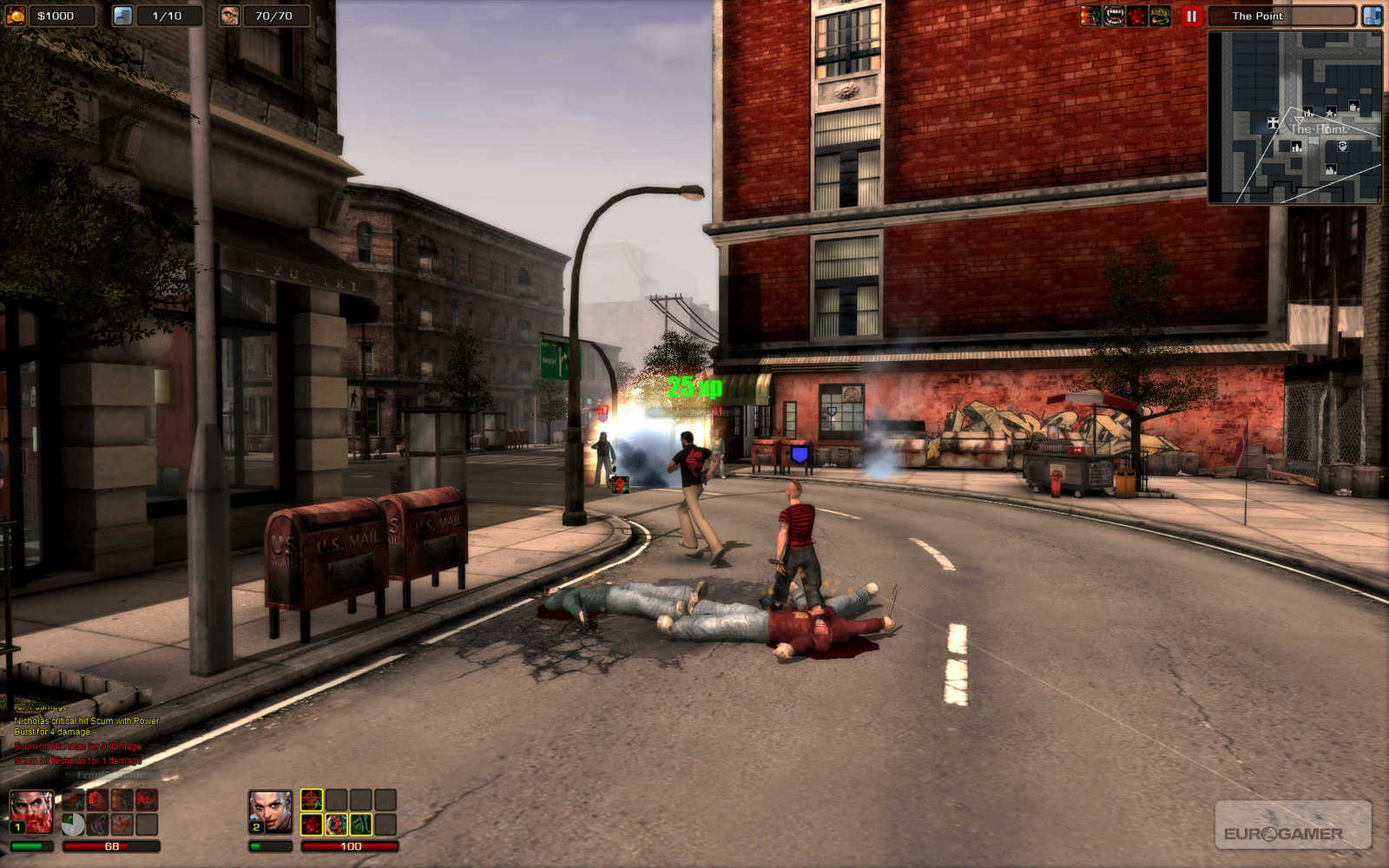
'Escape From Paradise City' Screenshot 1

How do the anti-heroes go about it? By swiping back some of the turf for their own gain, naturally. The campaign is all about taking territory; stages are divvied up into as many as a dozen distinct neighborhoods up for grabs. Some boast a bar, others a low-rate motel or convenience mart, but all are kept in check by a neighborhood boss. Scum and organized gangers also mill about: the low-lifes you'll left click through for experience points and a handful of coin (intargetable pedestrians don't offer the same benefits, unfortunately). Harass these hoods, and you'll be tough enough to make your way toward their leader's apartment hideout.

Once you've bullied the boss, and he'll spread word to nearby businesses of your new hegemony. From here, Paradise's urban spoils are unlocked. Funds trickle automatically from the hotel to finance your tab at the bar for stat-boosting drinks and other items (a sake bomb that improves your movement speed? Recipe, please). The store clerk unveils a secret cache of shotguns, weighted baseball bats, pistols, brass knuckles, armor and accessories. All in all, it's an at-your-pace progression that lets players pick off precincts one at a time to grow their avatar.
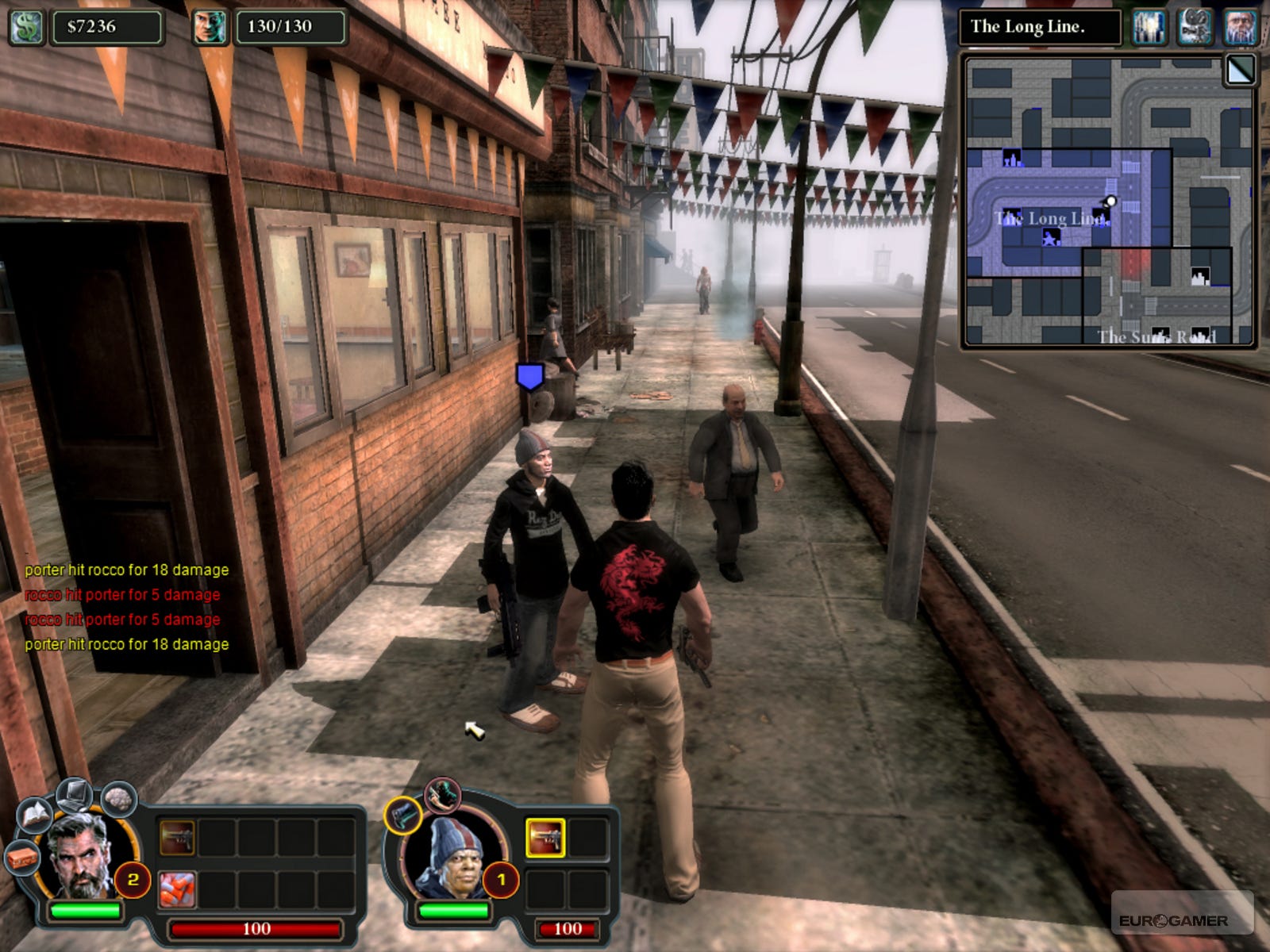
'Escape From Paradise City' Screenshot 2

The characters themselves, in lieu of genuine classes, take varied approaches to combat. A Clooney lookalike, Nick Porter prefers ballistics. Lethal latina Angel Vargas wields clubs and other melee munitions. And Boris Chekov (distant grandfather to the Star Trek doctor, no doubt) pulls pistols while enlisting henchmen for support. Altogether, a cast akin to that of a classic beat 'em up: a no-nonsense action hero, spunky femme fatale, and the dwarflike, rotund strongman to round out the group.

A tree of 24 traits articulates the trio's fighting styles. You might begin the game with Porter's "Demolitions Expert" ability, which lets him lob grenades for 20 less focus (Paradise's currency for special feats), but close out your leveling with "Art of Sniping," which grants a 50 percent enhancement to hit and damage. Angel's "Erratic Movement" helps her dance around bullets while moving, while "Wicked Mind" demonstrates her amiable spirit later in the game, improving her probability of performing critical hits against prone targets by 50 percent.

If traits are the violent bread and butter of your character, henchmen and power skills are the deadly desserts: unhealthy for criminals, and often filled with cream. Ordering enough of both is key to making it in Paradise City. You can hire up to three henchers once you own rights to the bar - gunmen, medics, scouts, and five other types to supplement your street strength. Your posse tends to take a bodyguarding role as they follow automatically: sponging up bullets and clubbings in combat so there'll be less of your own blood in the streets.

Not unlike a well-timed ace, power skills are best described as wild cards that tilt the table. Deployed from a 18-button grid aligned top left, they include "street medicine," which spawns a medic to patch up friendlies; tapping "call vehicle," taxis in a van for the player's use; "assassin" drops in a hitman to track down a specific foe. Others lend simpler support - unveiling a neighborhood's "fog of war" so you can scout ahead, send a squad of police, or phoning in an airstrike to clear a block. Power skills were among the more playfully devastating parts of Paradise we encountered, contributing a sense of measured strategy usually only found in an RTS.

'Escape From Paradise City' Screenshot 3

There's individual skills, too, of course. Unlike passive traits, executable attacks like Porter's legshot can drop an enemy to the sidewalk, while his aimshot is a volatile lone round that's worth the two seconds it takes to charge. Rows of boxy icons represent the abilities on screen, but in use the skills lacked a certain luster to accompany them. WoW and other RPGs may have spoiled us with their effect-laden, colorful combat, but there simply wasn't much spark to signify your attacks in the build we played.

On the whole, however, Paradise's presentation is pretty. HDR lighting lends itself to night/day cycling. Sunlight glares off car hoods, manholes spout smoke pillars. Burning garbage bins and graffiti-scrawled walls decorate the cityscape - Paradise seems caked with a layer of erosion to illustrate its nature. We're hungry for a few more indoor areas, however - they're limited to the handful you can exploit for funds and items. Still, it's all captured well by two camera configurations. The overhead point-of-view is not unlike the perspective you get in city-building titles; in your omniscience, you can slide about the city, eyeballing avenues independently of your character. The street-level view is akin to a third-person action title: framed over the shoulder to capture combat intimately.

As you might imagine, all this business of power skills, traits and territory control factors nicely into Paradise's eight-person multiplayer. Accessible through co-op and competitive modes, the few matches we played were all about fast-paced proliferation: advancing your character's abilities and access to items through territory control while muddling your opponent's progress. The power skills encourage a disruptive style we found satisfying - if you're good, your competitors will feel like there's a rain cloud of air strikes, poison bombs, snipers and SWAT teams following them around.

'Escape From Paradise City' Screenshot 4

Paradise's ambition as an RPG/RTS blend is admirable, but our hands-on time wasn't sans skepticism about how well it'll cement together. Aside from neighborhood bosses, we encountered just three enemy types during different sections of Paradise's 16 chapters. The environment itself, while attractive, didn't sport much substance - there wasn't much to do aside from taking territory and a token side quest or two. And vehicles? Not so much the free-roaming roadsters you're used to in GTA as one-way, auto-piloted shuttles that are deployed with a specific power skill.

The dynamic combat system may yet redeem some of these shallower sections. Genre-bending is nearing cliche status in the game development world, but we appreciate Sirius trying something relatively new by uniting two over-copied concepts. Urban areas are all but reserved for action titles, but Paradise City leases its land to patient tactics as much as it does playfully dropping an air strike or two on a whim. We'll see if it's something you'd rather escape from or take home come October.

Comments (15) Latest comment 4 years ago

Comments threads automatically close after 30 days, but please feel free to continue chatting on the forum!