E3: Peter Moore

On conferences, prices, defects, money hats, Japan, and beyond 2007.

A day after Microsoft's E3 2007 press conference, Eurogamer sits down with the man who did most of the talking and asks about how he felt the conferences went, his current view on pricing, exclusivity deals, why things still aren't working out in Japan, the recent absorption of a billion-dollar cost for extending Xbox 360's warranty, and what happens beyond 2007. Over to you, Peter.

Eurogamer: What do you think of the reaction to your press conference last night?

Peter Moore: You know, I haven't had a lot of time. Unfortunately we also planned a 7am financial analyst meeting this morning that got me out of here at 6am and I've been on the go ever since. I did have a look at the normal blogs I check up on, friends in the UK. If I'm encapsulating the reaction that I've read on the blogs - no disrespect, but I didn't read journalist reaction, I read what the people thought, and a lot of people in the UK actually got up at 4.30 to watch it, god bless them - was that there wasn't a lot of announcement per se. There was no tattoos, there was no Metal Gear Solid. Maybe the anticipation of these announcements that some people have planted in their minds haven't come to bear.

But we had so much stuff. As well as the rather unusual step of just focusing purely on this year, rather than trying to do some visionary stuff about 2008 and 2009. If I read the mood of the boards correctly on that, it was 70 percent positive, 30 percent negative - wishing we had showed more visionary stuff, wanting to see what 2008's looking like and beyond. And the debacle that was my guitar playing [Moore says he couldn't hear the music properly]. You may have had time to read reaction more than I have, but I literally have not had the chance. So tell me what the reaction is.
1

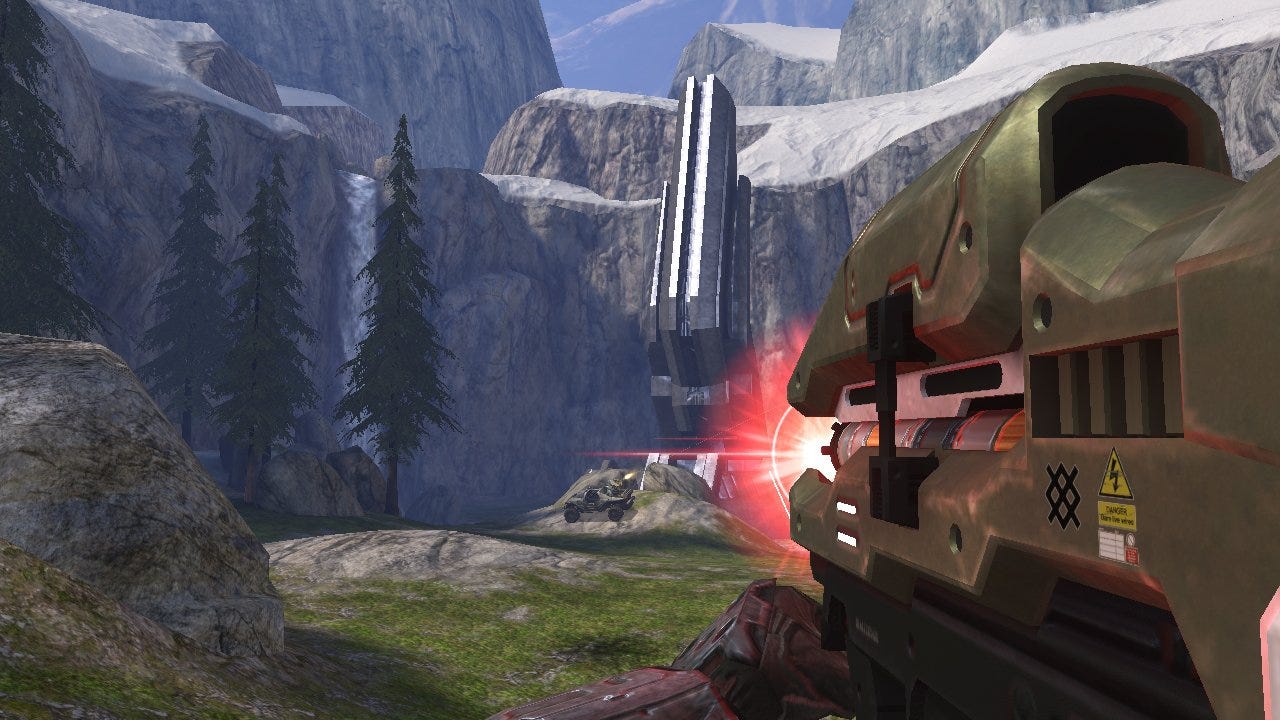
Along with GTA IV and Madden 08, Halo 3 is part of the "perfect storm" Microsoft is cooking up for holiday. Sorry, Christmas.

Eurogamer: I think people were looking for more things beyond 2007, but then I think all three of the conferences had a lot of stuff that we've seen before.

Peter Moore: Well, and I think rightly so this is a very critical moment in this coming holiday - and I apologise for saying "holiday" - I know that you guys give me abuse, and I'm not off to Greece for two weeks. I can say "Christmas". (Someone said last week, does Moore think he's going to Corfu or something like that?)

But it is a critical period we're coming into, because all three consoles are going to be on the straight band and it's going to be who's got the goods. And if we still all believe that great games moves hardware, then it's about the great games. So we made the decision several months ago that, look, we've probably got 40 games we need to show in some way or another, but for 2007 we don't want to short-change either our first-party stuff or more importantly our third-party partners, so we said we were just going to focus on right here, right now, and, as we said last night, put our cards on the table.

When you've got a holiday like this with Halo, Grand Theft Auto and in the case of the US Madden, all coming together within literally I guess 90 days of each other, it's a pretty critical holiday. We felt good about what we showed - in particular some live demos - Call of Duty I think blew a lot of people away - [thickens accent] the lads from PGR came down from Bizarre Creations and I helped Brian get his English right, which he was doing...

Eurogamer: Was that live, the Call of Duty demo?

Peter Moore: Trust me, it was live.

Eurogamer: The football one wasn't though, was it? Madden?

Peter Moore: Er! I'm not going to comment on that one [laughs].

Eurogamer: I think that answers it.

Peter Moore: But Jason and Grant - absolutely. Because there were a lot of things that could have gone wrong. No, they were definitely. No doubt about that. Unequivocally live.
2

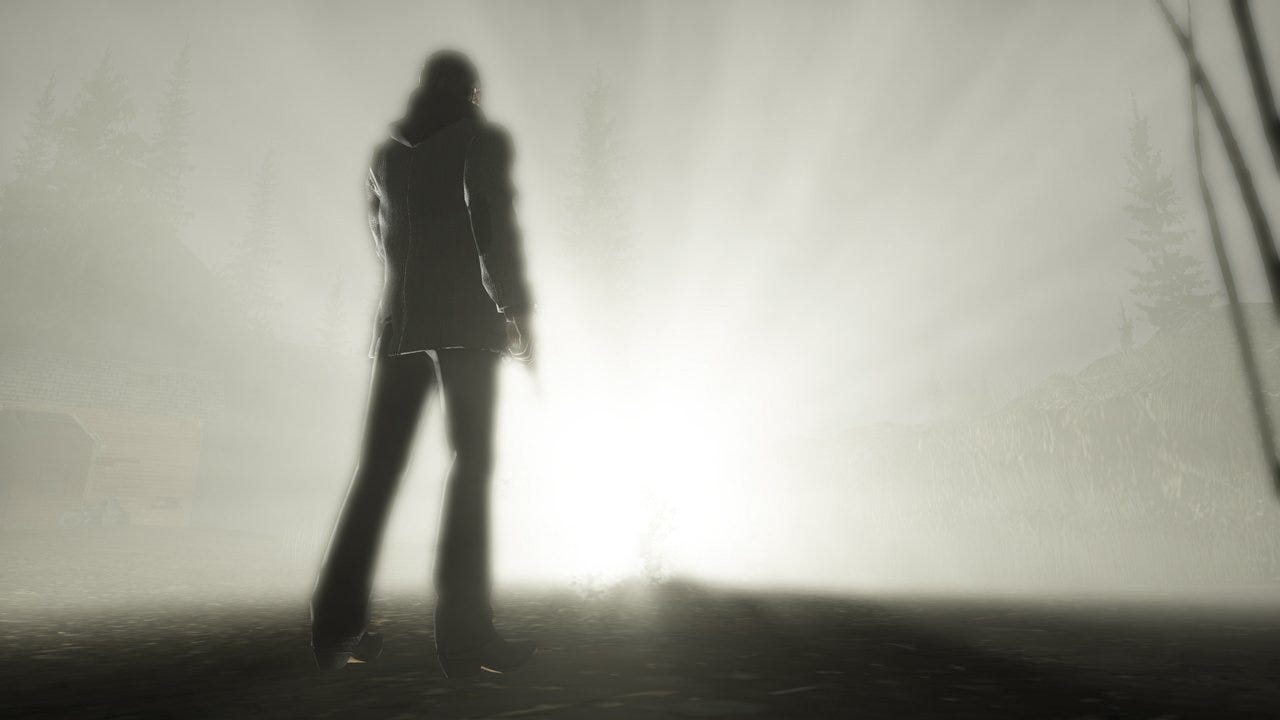
Alan Wake will be among Xbox 360's 2008 titles. MS chose not to talk about them this week.

Eurogamer: You've got these big titles this Christmas, but what about after that? Are you going to be able to produce as exciting a line-up at next year's E3 once Halo and GTA are out of the way?

Peter Moore: [Counts on fingers] Too Human, Alan Wake, Halo Wars, Fable 2, Banjo Kazooie, which is five titles - first-party exclusives obviously - that I think about for 2008 that we haven't even begun...even though Peter Molyneux's here I think showing Fable 2, and you'll probably get a glance at Halo Wars - I haven't been able to see that yet. No, there's plenty of titles. And that's just first-party stuff.

I think our challenge was, this E3, yesterday, that we were going to have to short-change things this holiday to talk about the future. I'm very cognisant; we had people sat on concrete steps and wanted to get in and out in an hour and fifteen minutes, plus we were on television. It was important we focused on - and we may have been wrong - but we wanted to focus on this 2007, and then we've got plenty of opportunities, whether it's Leipzig, or TGS, or other opportunities in the future to talk about 2008. I think gamers are very very discerning about where they're going to spend their money this holiday, and they're spoilt for choice with games - not only with ourselves, but Nintendo and Sony also laid their cards on the table this morning, so in a world where a lot of people have only two consoles now, they're spoilt for choice.

Eurogamer: What did you think of Nintendo and Sony's conferences?

Peter Moore: I saw glimpses. I was in and out of interviews, and we actually put on monitors in one of the lobbies down there, the web-stream, and I saw a little bit of - I saw Nintendo's Wii Fit, which was interesting. I was trying to figure out - it was difficult to see, we kept losing connection - but you know, it seemed to be something that... remember I was at Reebok for many years where the Reebok Step, which is an aerobic exercise thing where you step on and step off, and I thought it was that at first, but it seems more like it's motion-sensing.

Eurogamer: It's got kind of scales and sensors in it.

Peter Moore: Yeah, I was waiting to see Reggie's weight! But I don't think we ever saw it.

Eurogamer: It came out overweight, actually. It shows his BMI.

Peter Moore: Oh his BMI - what was it? Upper twenties?

Eurogamer: 27. Right in the red section.

Peter Moore: As he said, muscle is denser than fat.

But you know, it's a classic - you could have predicted it. Reggie, Iwata-san, Miyamoto-san, all come together. The only thing I found surprising - there was a lot of retrospective. In other words, it was a lot of PR reels of launch and stuff we all know. This wasn't educating the mass audience - this is E3. So I was a little surprised. But other than that I thought it was a classic Nintendo press conference, and they have a lot to be proud of.

Sony's was...interesting that they decided to try Home as a venue for Phil or for Jack or for Kaz to speak from, and I'm not sure what I felt about that. It felt a little forced. But they had the goods. I didn't see the end, but I assume they showed Killzone, and I don't know how that looked. And I saw Kojima-san talking about Metal Gear Solid, and that seemed to go on for a long time, and in the end I had to leave halfway through the trailer they showed. I remember him saying this is in-game footage, and it clearly looked very good, and it's Metal Gear, so it is going to be very good - I didn't get to see anything after that.

But other than that, I saw the PSP obviously - and clearly Sony still believes in the PSP, and they're going to have the new slimmed down and lighter version - will it or not still succeed against DS if they still see the DS as the competition. So I'm the wrong guy to ask. I always look at it through a different lens. I don't know what you guys thought, but it feels like we all now get into our rhythm and we do ours and they do theirs and now it's Jack more than Kaz, and Reggie's become the primary spokesperson and they show DS games and they show some cool stuff with the Wii.

3

Games like Gears that offer DLC provide a new source of revenue for Microsoft, but it's only one of many sources.

Eurogamer: You put up the numbers for sales last night, and I think you said you're in a tight race with the Wii, and the PS3 is kind of lagging behind - do you not see Sony as so much of a threat any more?

Peter Moore: No no, I was just quoting numbers, I wasn't making any commentary about them being a threat or not. That's NPD numbers so it's very accurate stuff, and we tend not to talk anecdotally or talk about our own internal numbers, so I only talk about NPD numbers and they're stunningly accurate.

So we just wanted to make sure that people understand in this new world of our industry that we shouldn't be totally fixated only on hardware installed base numbers, but focused on total consumer spending - and in a world where we've got consumers connected who are a great opportunity for us as an industry to advertise to, digital distribution, which all three companies talked about in their press conferences, advertising being a huge opportunity to this very desirable demographic, sponsored downloads, buying digital objects on Live, MMOs, all of the stuff that being connected now gives the opportunity to do - we start to look at what the mobile phone companies call ARPU - average revenue per user - and that's where you start looking at revenue from a number of sources.

In the old days of our industry you sold as much hardware as you can and you sell cartridges. And that was it. Those were the two ways you could bring in revenue. Now we're clearly selling hardware, we're clearly selling packaged games, we're clearly selling digital downloads, we're talking to companies like Pepsi and Nike and Nissan and Ford about advertising revenue flowing in, and not just the platform holders but third parties - so we start to look at different ways to measure success in the industry, and how much money you can garner from a consumer becomes one measurement of success - and how many opportunities they have to spend money. It's no different to when you go into a store back home and the bigger the department, and the more enticing the goods, the more likely you're going to spend money, so that's the idea - I don't want to sound like a corporate suit, but this is a business that has become a high-stakes business, and the cost of development and the cost of marketing continues to escalate. So we need to make sure that not only ourselves, but our partners have good opportunities to offset that cost.

Eurogamer: On the subject of numbers, why don't you tell us how many people are playing Xbox Live? You tell us how many sign up, but you don't tell us how many have got Gold. The only reason I can think of is they're not as high as you'd like them.

Peter Moore: Ah, so you've got a conspiracy theory there. No - the majority are Gold, and we have some very clear competitive reasons why we don't start breaking down revenues much crisper than that. We give a lot of information on online. We give you the total numbers. The one thing we do is we think every member is valuable to us because we could do commercial transactions with Silver and Gold. No, we're not lying to you, if that's the insinuation that somehow we're actually lying about the numbers.

4

Remember what Xbox Live used to look like? We've come a long way.

Eurogamer: You're not lying, you're just not telling us the numbers.

Peter Moore: Well, you just said the numbers aren't as good as I'm saying. There are complex GAP accounting things that we have to adhere to. Microsoft is a very conservative financial company, and rightly so, so we'll break down the numbers in the aggregate - after that, it just becomes very competitive, and we have to be careful how much information we start sharing.

Eurogamer: Going back to what you were saying about how games are more expensive these days and costs are rising, you recently spent USD 50 million on Grand Theft Auto 4 content.

Peter Moore: No I didn't. Take Two I think reported something - and again I can't speak for companies that are publicly traded that are not Microsoft - but they reported - and didn't attribute it to us but reported getting revenues for, I can't remember the phrasing in their accounts, but recognising revenue for content in the future. So that is nothing with...we didn't make a statement.

Eurogamer: Because we actually asked for a comment on what they'd said and we were told "no comment on rumour and speculation", which would suggest there is some truth in that even if that's not exactly what happened. Presumably you would have given them a lot of money to secure that exclusive.

Peter Moore: We have a business arrangement, because there's a cost involved for Take-Two, for Rockstar to go and do things. Clearly business arrangements are always private, unless there is something there that forces what we call an 8-K in this country, or something on the 10-K, but it's a business arrangement that we have, that's no different from business arrangements that Sony has, no different than business arrangements Nintendo has. But yeah, we're delighted to be able to have that episodic content, and that stuff doesn't come for free. But we're not going to comment on somebody else's financials - that would be rude of us.

Eurogamer: So it's not bribery, in Jack Tretton's phrase.

Peter Moore: That was a strange comment, you know. I'm not going to get involved in that, but saying they've never had a business relationship with a publisher to make content for the PlayStation platform...

Eurogamer: Do you think it's foolish not to invest money to make content exclusively for a platform if that's what their policy now is?

Peter Moore: I don't know if it's their policy now. I certainly - I find it a stretch to believe that business arrangements, marketing money, development money - this is what our industry does, we work with our partners and we figure out how we can make a game sell better. We do it all the time, and we're not shy about saying we'll sit down with publishers and ask how can we invest in making your game better on our platform. We did it for example with Guitar Hero, and it worked out very well - and there was a business arrangement involved there, and I'm not shy about saying that - but Jack made a statement and I'm just not going to get lured into a battle with Jack. He knows how to run his business.

5

The rings of death have proven costly.

Eurogamer: What about a cost you have confirmed then which is the billion dollars for the repairs. How hard of a decision was it to make to put all that money into that?

Peter Moore: Very difficult decision, but in some instances a very easy decision. We had not done right by the consumer, it was becoming very apparent to us in the last couple of months that we had a number of issues that were creating this problem - the three flashing red lights - and from all the way to the top of the company it is not easy to take a billion-dollar charge. Anything that begins with a 'b' is a lot of money. But we had to do it. We needed to do it.

It was not easy, but one thing people have to understand is how difficult it is when you sit down, you look at your business, and your employees and everyone in your team that has given sweat, blood and tears to get this thing out and you have to make this admission like this that we hit an unacceptable failure rate.

It was a tough day - a really tough day. But I like to think we did the right thing. Even then you get criticised for doing the right thing - you say look, your arms are up and I've apologised to everybody that's had this, and we're going to take care of people, and what we're doing at three years is pretty much unprecedented, but we need to do that - we really need to do that.

Eurogamer: Do you think you left it a bit late to do it? I was surprised because I've been really impressed that Microsoft, since the original Xbox, has held its hands up and admitted to faults and changed them, and I'm surprised at how long it took you to get round to it just purely because of the sheer costs involved.

Peter Moore: Well, it's expensive. As well, this is complex to roll it out. All you guys see is a billion dollars and three years, and three flashing red lights. What we see is global repair and refurbishment centres have to get geared up because the worst thing we could do is give you a bad experience again now, making sure we capture all the cost because you've got a fiscal responsibility to the corporation and the shareholders to sit down and go through all the costs - it would have been no good saying it's 800 million and then saying next quarter, you know what, it's another 300 million.

You have to...a lot of people got involved, you have to calculate every penny, as difficult and painful as it is, to make sure every customer is taken care of here. And we needed to make sure that...the logistics were unbelievable, getting it done, and then when you file something out of cycle, as we did before earnings - our earnings are not until the next couple of weeks - then there's complexities of reporting periods. We also needed to take the charge in the fiscal year that just ended, so without boring you with all the details of this whole thing, it takes a while.

The most important thing though is we needed to make sure we'd figured out all these numbers of issues, because not figuring out, and not getting the fixes in, and not improving the process, and getting the testing process down - which is the real key - and making sure that we get accelerated live testing and figuring out where all these problems are - there's no one systemic issue, you know, there's a number of factors that combine to this general hardware failure, as we call it.

6

The Elite, due out on 24th August, will hopefully have no naughty rings at all.

Eurogamer: Why haven't you come out and said what exactly's causing the problem?

Peter Moore: Because we look at it as...because, again, there is no one problem that's causing it. It's a number of environmental issues. We look at it, and we started to look at this thing - literally you're getting in the field 12 to 14 months of experience of people using the consoles more than other people, and you start to see trends, and clearly we were seeing that trend and watching it very closely, and then, again, made the very difficult decision. But yeah, we're not going to talk about specific hardware problems - they're very technical in nature, very complicated, and it's really not going to do us any good.

All people should focus on is that, if you've got the problem, we're going to take care of you.

Eurogamer: What's the wider impact on the Xbox project of that one billion dollars? You're running a business - does that mean that now, perhaps, you're not in a position to make that price cut you might have made later this year, for instance, or something like that?

Peter Moore: No. You take a reserve. You have to do it because it's the right thing to do for customers, regardless of what impact that has.

You don't - there is nothing to do with any pricing. All of a sudden you don't say that's a billion dollars you could have given back to the consumer in pricing, no. That has to be done separately, and without getting into generally accepted account procedures, yeah, you've got this - it's a balance-sheet thing you have to focus on, whereas your pricing is another thing.

We're continuing to accelerate our cost-reduction curve - we're continuing to improve on our costs in the hardware - so that ultimately, as we all know, the next few years we can start bringing our prices down in line with where we need to be. Those two things should not be confused, and the consumer should not think they can't afford to bring the price down.

Eurogamer: Has the cost of manufacturing the 360 come down significantly since launch?

Peter Moore: I don't know about significantly - I don't know the exact cost, but what happens is on a very regular basis you're constantly negotiating with suppliers - there's 1700 parts in an Xbox 360, and they come from a myriad of different suppliers, so as you build volume and the great thing about where we are is we've got a critical mass of volume, you amortise things, and again we're going to get into the reams of details, but again you amortise parts and then the suppliers you deal with can give you a better price and then your assembly costs - you get better at that - and so your price comes down there.

So it's not that one day it costs you USD 500 and then the next month it costs you 250. There is a waterfall of cost-reduction that goes on for years and it's planned out by the engineers, who are much smarter than I am, who have to figure out how you work with suppliers, how you assemble it in a more efficient way, how you get better yields in the factory, and, you know, it's no different than what Sony and Nintendo are doing right now - how you bring down your costs over a period of time, which allows you to pass that on to the consumer.

Eurogamer: Any plans to cut the price this side of Christmas, or do you think the prices you're at now are fine until the end of the year?

Peter Moore: We have no plans right now to make any pricing announcement whatsoever. We feel real good about where we are right now.

Eurogamer: Does that feeling extend to the end of the year?

Peter Moore: Don't know. You know us. That is a statement I make on a daily basis, and you have to react. The good news is that it's something that we feel good about, having maintained our price from launch, and have had good volume, consumers see value for money - as we continue to cost-reduce it puts you in a better position to pass on the savings to the consumers. But no plans, no announcements.

Eurogamer: What about the PS3 price cut? Do you think USD 100 is significant enough to boost their installed base?

Peter Moore: Interestingly, I didn't see a price cut, and I must have been reading the wrong thing. It's still 499 and 599.

7

Moore argues that the PS3 price cut is nothing of the sort.

Eurogamer: It's 499 for the 60GB or 599 for the 80GB.

Peter Moore: So they've added greater value at the same prices. Which to me is not a price cut. So I don't want to be anal, but I read price cut and I expected to see 399. When I hear the words "price cut" I expect to see a price cut. What they've done is they've added greater value in the form primarily of storage at the same price points. You know, I haven't made any comment - we'll have to wait and see, I did see Nintendo's George Harrison saying that it's ineffective, but the consumer will vote on that, and I think Jack did say, anecdotally, that their sales have doubled over the weekend, so we shall see.

Again, my opinion doesn't matter. They need to see if they can get their rate up from 20,000 a week. If they increase it 20 percent that's only 24,000 a week. So they need to see if they can double or triple their run-rate to get back in line with where they need to be. And I'm not sure adding more value triples their run-rate of sales, and I don't know what's going to happen in Europe because there's nothing been announced there of yet.

Eurogamer: Why didn't you announce the Elite price for Europe last night?

Peter Moore: Well, the Elite is USD 479 here, but we allow - when the appropriate time for our team on the ground, our subsidiaries in particular obviously in the UK, they'll announce the price, which we won't be long.

Eurogamer: Talking about numbers again, one place where Sony does seem to be doing better is Japan -

Peter Moore: One would hope so - although they're getting beat, what, better in relation to us, but getting outsold six to one last month by Nintendo?

8

Blue Dragon - a Japanese RPG, but not an answer to the Japanese problems Microsoft faces.

Eurogamer: Sure, but my point is that the Xbox original didn't do very well in Japan and you went into this generation being quite bold about saying this time we're going to get it right, we're going to get Sakaguchi and all the rest of it, and yet you're still shifting 3,000 a week?

Peter Moore: Yeah, we move three, depending...We had Trusty Bell [Eternal Sonata in the West] ship a couple of weeks ago. Yeah, the numbers are the numbers. We shipped 7,000 that week, and we trickle on.

I think the bigger conversation about Japan and I try to make this point - I tried to make it last night - is that, again, by simply measuring hardware sales in Japan people only see a very small part of the very complicated relationship I deal with in the 50 to 60 times I've been to Japan in the last 6 or 7 years, and that is being part of the global publishing infrastructure with the Japanese publishers.

I use Capcom probably as the easiest one to - we met with Inafune-san three and a half years ago and laid out the vision for Xbox 360, in an open way that we do that typically our competitors don't, because they don't really get involved with the publishers. Inafune-san believed in our vision and convinced Capcom to green-light two titles - Dead Rising and Lost Planet, and both now are million-unit sellers that have done very well. Capcom of course in their fiscal year-end credited the great profits they made to the Xbox 360.

The ability for us to say every publisher now in Japan is publishing games is part of this very complicated respect you have to garner with Japanese publishers. When you go over there it is about face, honour and respect. They respect the fact we compete in the Japanese market. They also respect that their own market is flat-to-declining and they've taken a more global view. It would be easy for me to say, "you know what, we're simply not going to do business in Japan - we can't, they don't like Americans, they're too loyal to Japanese companies, they don't like foreign games" - whatever excuse I could make, but that would be disingenuous to what we need to give to Japan.

And Sakaguchi-san as well - Blue Dragon will ship here, and I think people are going to love Blue Dragon, and Lost Odyssey is going to be stunning, so we are making investments in Japan that will pay off on a global basis. Japan is far deeper than simply looking at Famitsu numbers and saying we're only selling 3,000 units. And I've spent more time sat on aeroplanes to Tokyo and meeting these people - it's still the cradle of our industry. It's still where some of the greatest games are made.

But more importantly, we're making sure they understand we're in 37 countries, not just in one, and we're doing business. We're doing a lot of second-party deals now. We're going to be representing a lot of the Japanese publishers in Europe. We've done that in Europe for years with Tecmo, we've created success with - I think all the way back to the original DOA [Dead or Alive] where we've done a lot of work in distribution for them, and you're going to see more of that from us because they trust us, we do great work, we've done probably millions of units now in the DOA series as a second party.

The team on the ground there and the overall second-party team do a great job over there, and we've got it down like a turnkey - we know how to distribute these games so it's a real deep and complex relationship and if I tried to explain Japan to you now...we've invested a lot of time over there. I've the greatest respect for all of those people, and I like to think they have the greatest respect for us. They like the fact that we go in and we compete and we try.

Eurogamer: But they're not buying Xbox 360s.

Peter Moore: The Japanese underground consumer is probably not buying it as much as I would like. That's a fair comment. But again if that's your only measurement...I'm trying to make the point that it's more complicated and there are greater benefits that you don't see simply by Japanese Famitsu sales every week.

Eurogamer: I completely agree with you that in terms of attracting publisher and developer relations you've done a great job there. But for all the noises that were made before 360 - that you'd figured out all the problems that were going to be solved this time - it's exactly the same problem this time. They've not taken to it.

Peter Moore: I just won't take no for an answer. We're just going to continue to develop games over there - Lost Odyssey's going to be fabulous - and we're going to keep hammering away, and everybody can keep criticising me because we're only selling three or five thousand a week.

Eurogamer: But do you think, then, that you have the right strategy? Because it doesn't appear to be working.

Peter Moore: Well, it depends what working means. That one measurement, that one measurement -

9

Hironobu Sakaguchi's other game, Lost Odyssey.

Eurogamer: It's quite an important measurement though.

Peter Moore: Yeah. One measurement, but hardware and what we do with our domestic subsidiary in Japan, it is not turning out the way I would have hoped it. Fair comment. The overall uber-strategy - so that's a tactic, the overall uber-strategy of ingratiating ourselves with some of the most powerful publishers in the world so we can deliver millions of units of games around the world, that is working.

Eurogamer: So you'd rather have the relationships?

Peter Moore: I'd rather have both, but right now I'm happy...if I had a choice, I'm happy where I am. Believe me, you've been over there, you know the deal, it is not easy to do business, and you're probably right - we've done it either wrong, or haven't executed well, or somehow Sakaguchi was the wrong guy, or marketing has been flawed, but we're just going to keep going at it.

Eurogamer: But are you looking at what's happening at this generation? Do you have an idea what's been going wrong this time around?

Peter Moore: I'm not saying...it's tough to say you've done something wrong. The fact of the matter is I totally agree with our strategy of going out, sitting down with - we flew and met Sakaguchi-san three years ago in Hawaii where he lives, and we sat down and we figured this whole thing out. If the complaint last time was you don't have Japanese RPGs, well we went and got Japanese RPGs - and Blue Dragon's sold well. It hasn't blown the doors down by any means, but we believe in him, he's here, he's going to be showing you Lost Odyssey if you haven't seen it already, and we're going to keep pounding away in that market because it's a very important market.

10

Moore concludes on high hopes for the year - and lots of work for the likes of these folks.

Eurogamer: You recently announced that you'd just missed the 12-million target. Why do you think that didn't quite happen? Do you think sales are plateauing a little bit right now?

Peter Moore: You sit a year out and you say, "we're going to exactly land on that target," and we're a little short. In a world where - I think in this generation this industry is going to drive 150, 170 million consoles, being short a few hundred-thousand at a point in time in relation to what you thought you were going to be a year before - I think it's a rounding error. Yeah you like to say - you say around 12 million, you like to hit 12.

I'll point you again to last night. With what we've got coming, starting with BioShock, PGR, all the way into GTA IV, Splinter Cell, all the games that are coming - I'm confident. We can't talk about - until we get to earnings, which are a couple of weeks away, we can't talk about guidance for the next fiscal year, but we will do that. I just need to forecast better, I guess.

But I really think if you take it in the overall structure of a complete life cycle, it's a few hundred-thousand units in a monstrous business. I'm very excited about the length of this cycle. One of the great things about seeing the PS2 continue to sell well, particularly in Europe - it really gives us great confidence that we get our console - two, three, four years from now - at the right price point, with the number of games we're going to have for it, I think we're assured of the same success, and I think it benefits everybody.

Peter Moore is head of Microsoft's Interactive Entertainment Business Division. Interview by Ellie Gibson and Johnny Minkley.

Comments (106)

Comments for this article are now closed, but please feel free to continue chatting on the forum!

  • Loading...hold tight!