Drakensang: The Dark Eye

Vorsprung durch experience points.

Xindan of Spogelsen. Hilgert the Whimsical. Firu of Gareth. Wolfman Beerworth.

We could go on. These choice gems are some of the better options thrown up by Drakensang's random name generator, and they save an awful lot of time in explaining just what sort of game it is.

The Dark Eye is a German pen-and-paper tabletop RPG, originally conceived by Ulrich Kiesow in 1984. In the 15 years since it's undergone countless tweaks, polishes and buffs, rendering it Germany's most popular dice-roller and cowing even the mighty Dungeons & Dragons rules in the sales figures. It all happens on the conveniently named continent of Aventuria, a land divided between the kingdoms of Men, Dwarves, Elves, Orks, Goblins, Ogres, Trolls, etcetera, etcetera. Oh, and Dragons are quite big players, too. What this translates to is a fairly by-the-numbers interpretation of the classic high-fantasy scenario.

The first few lines of my notes aren't particularly promising: "Dragons. War. Dwarves, Elves, etc. Dwarves = angry, Elves = nancies. First nipple (male) approximately 28 seconds in."

The complexities are a little more subtle than that, but you see where I'm going. A dragon-like race is returning to Aventuria, bringing the usual cadre of miscreants along with it, and at some point it'll be up to you to stop it. When you've played as many fantasy RPGs as we have, it's not the most inspiring story. Happily, Drakensang does distinguish itself in other ways.
1

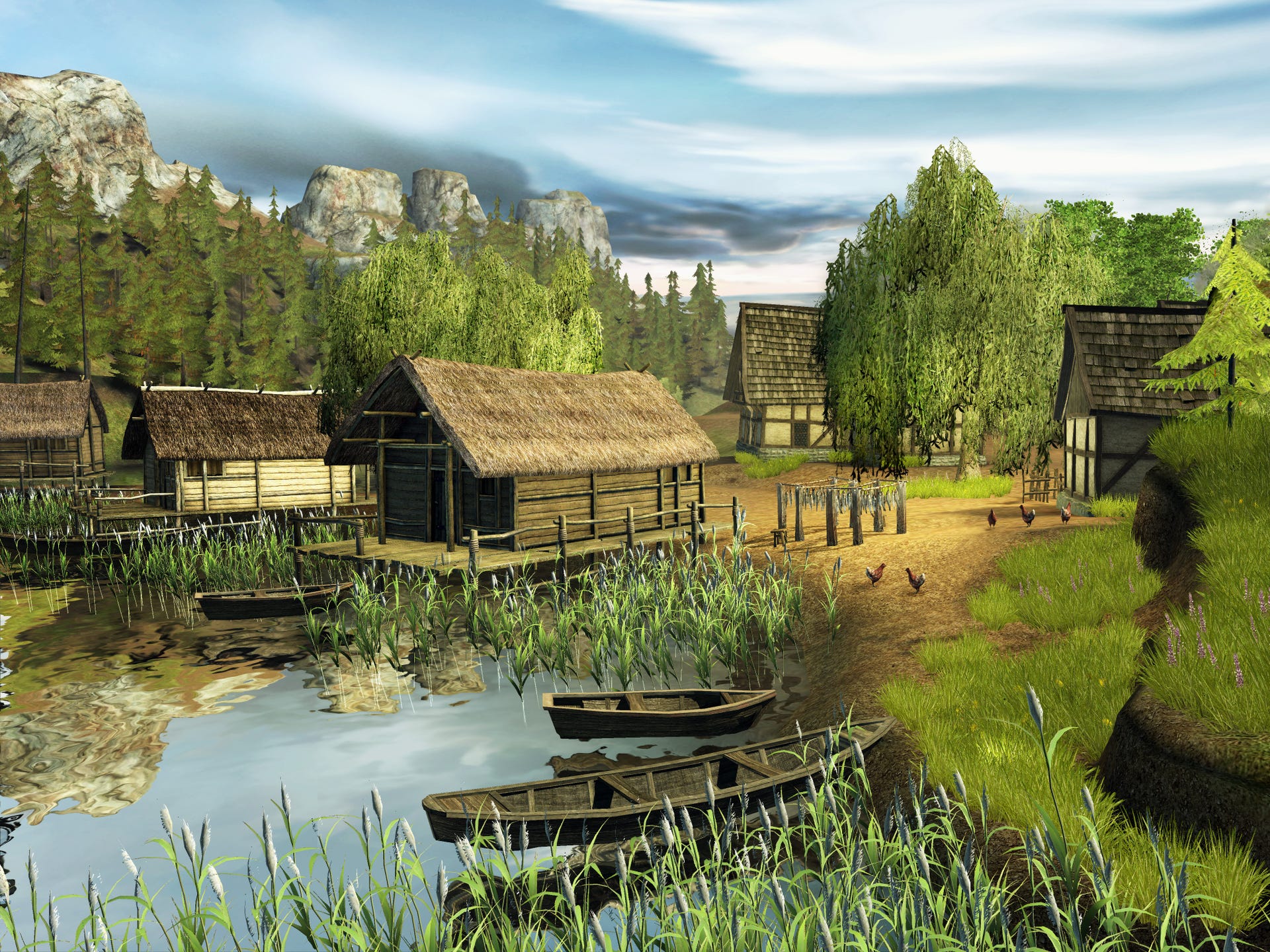
Idyllic, isn't it? This time next year it all be strip clubs and landfill.

Straight off the bat, or menu, is the excellent character creation screen. A generous spread of classes are unfurled from the fantasy picnic basket, some familiar, some not. They're arranged into 'style' groups, with three separate flavours of each available, apart from the one-off Pirate and Amazon classes. All of the classes are race-specific, with most roles being filled by members of the various human kingdoms, and Elves and Dwarves getting three each.

There are staples like Warrior and Rogue, but there are also more esoteric fantasy figures like the Metamage and Burglar. These can be picked ready-built, or fine-tuned to fit your particular needs. Indeed, the wealth of perks, skills, attributes and combat actions available pay great tribute to Drakensang's origins in the Dark Eye ruleset, despite its much-reduced digital incarnation. Sadly, there was no physical tweaking to be done, meaning you're stuck with the somewhat anodyne character models which the game picks for you.

Once you've put your virtual face on, it's straight into the action at Avetrue: the first, feet-finding section of Aventuria. Except there's not a lot of action, because like almost every RPG ever, the first area is a sleepy rural hamlet full of folks with endearing problems like missing hunters and lost jewellery. Presentation is pretty enough, although graphics are a little flat and soft, with glowing fields of bloom-encrusted flowers and gently pastel-shaded tents. The inhabitants are standard fare too: concerned, terse, yet ultimately public-spirited guardsmen; nagging traders' wives; hayseed yokels and the obligatory impractically-endowed glamour pusses.

Localisation is often a big issue for European games being translated into English, and it shows here. Voices are a medley of am-dram ham, brusque American and harsh quasi-regional efforts. Only the opening and important lines of conversations are currently voiced, something which may or may not be addressed upon release. The translation is pretty flawless, however, and a pleasant levity pervades conversations where appropriate.

Once you get to combat - having picked up a brassy, irascible Amazon warrioress on the way (where would we be without those?) - the pen-and-paper background becomes a bit more obvious. In fact, in execution, there's a great deal of MMO about the mechanics. Action is paused with the space bar, a la Baldur's Gate, giving the opportunity to plan a strategy and activate skills and spells from the hot-bar. Other than that it's a case of right clicking a foe and letting the dice do the work.

There are technically two parts to every round of combat, an attack and a parry, but in practice there's no break in the flow. Familiar red numbers float up to indicate damage incurred until the enemy lies dead and their corpse can be plundered or harvested with the appropriate skill. All experience earned goes into a pool for each party member to upgrade abilities via the character sheet, or buy new talents from vendors. All damage suffered by your party gradually recovers, although stat-draining wounds, suffered when an attack's strength outweighs a party member's constitution, will need healing to repair. It's not a hugely exciting system, especially with the modest set of abilities available this early on, but it has a pleasing solidity and balance.

There are only so many ways in which a quest to either kill, collect or discover something can be couched, but Drakensang certainly doesn't skimp on the plagiarism. We fought rogue wolf packs, toppled trophy bears, searched for amulets and sleuthed our way through a murder case so signposted that a community support officer loaded on Buckfast would still have solved it by teatime. During the preview, perhaps intentionally, our party was never in any real danger at all, even to the point of tedium. There'll need to be a shaking up of the jobs on offer to pique real interest.

2

Cheery little fellows, these.

Fifteen years of play-testing obviously haven't done any harm, and the balance and depth for which the tabletop rules are famed are readily apparent. Reliablility can only do so much to paper over the cracks in a rusty breastplate, though. We're talking about a game where the only major Dwarven NPC we saw was a drunk. With a Scots accent. Where female armour only protects the torso from the nipple down. A world in which people still keep piles of money and equipment in barrels. A game in which you are tasked, fairly early on, with killing some giant rats.

Despite the busy streets of the cities and the mammal-infested countryside, the regular mobs and the obvious wealth of lore behind it, Aventuria just doesn't feel like a real place, home to real people or featuring genuine intrigue. What this looks like, then, is the predictable, dependable workhorse of the RPG genre. The Volvo. The Catherine Cookson. The Phil Neville, if you will. Given that the game has been out in Europe for some time now, we wouldn't expect any major changes before release, save for a little tidy-up on the localisation. Still, at least you can spend twenty minutes making up death metal bands with the name generator.

Comments (20)

Comments for this article are now closed, but please feel free to continue chatting on the forum!

  • Loading...hold tight!