Champions Online's Bill Roper

Cryptic's new ambassador on nemeses, consoles, and life after Hellgate.

Bill Roper has tasted what must be some of the highest highs and lowest lows in game development. At Blizzard he played a key role in the development of Warcraft, StarCraft and Diablo into the multi-million-selling franchises they became, working as a producer, project manager, director and ultimately vice president of the Blizzard North studio. Then he left to form Flagship Studios, a venture that eventually ended in financial collapse and the cancellation of its only operating game, the multiplayer RPG Hellgate: London.

Late last year, Atari-owned Cryptic Studios parachuted Roper in as design director and executive producer for its new superhero MMO, Champions Online. Due for release this spring, the game draws on Cryptic's work on the originator of the genre, NCsoft's City of Heroes, and Microsoft's cancelled Marvel Universe Online. It's also based on Champions, a long-running pen-and-paper role-playing game with its own cast of characters and universe, as well as a ruleset famed for the freedom it gives players.

As you can read in our previews, Champions Online offers all the familiar MMO trappings as well as unprecedented freedom in character-creation - not just of your own hero, but of the Nemesis you'll ulitamtely have to face. It's also been designed with console versions in mind - Cryptic said at last year's E3 that it had an Xbox 360 version up and running, and concept approval from Microsoft. Champions Online is currently in the early stages of beta testing.

We spoke with Roper on the phone to find out what's new with the game and how life after Hellgate is treating him.
1

Eurogamer: We last saw Champions Online at Games Convention in Leipzig last summer. What's changed since then?

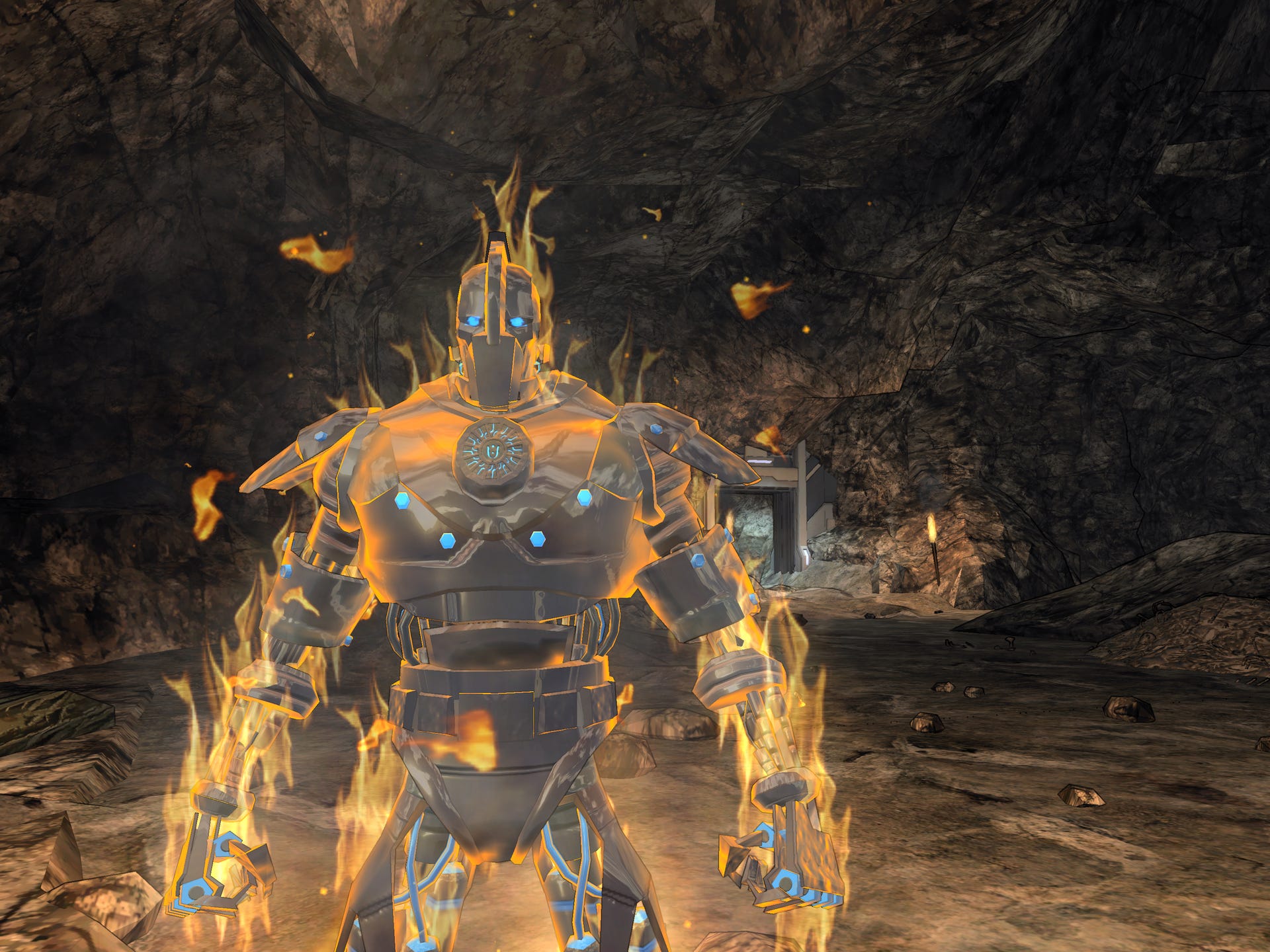
Bill Roper: We've been doing complete revamps of all the powers, the combat system, the travel powers - we just put teleport into the beta - obviously a lot of different play areas including Strongholds [the game's "dungeons"], a lot of work on the Nemesis system, the list just goes on and on. Tons more options, including the ability to change the colours of your powers and choose the emanation point your powers are coming from, whether it's your hand, your eyes, your chest. The UI is completely changed.

Eurogamer: You mentioned the Nemesis system - that's something Cryptic wasn't saying much about last year. Can you tell us how that will work?

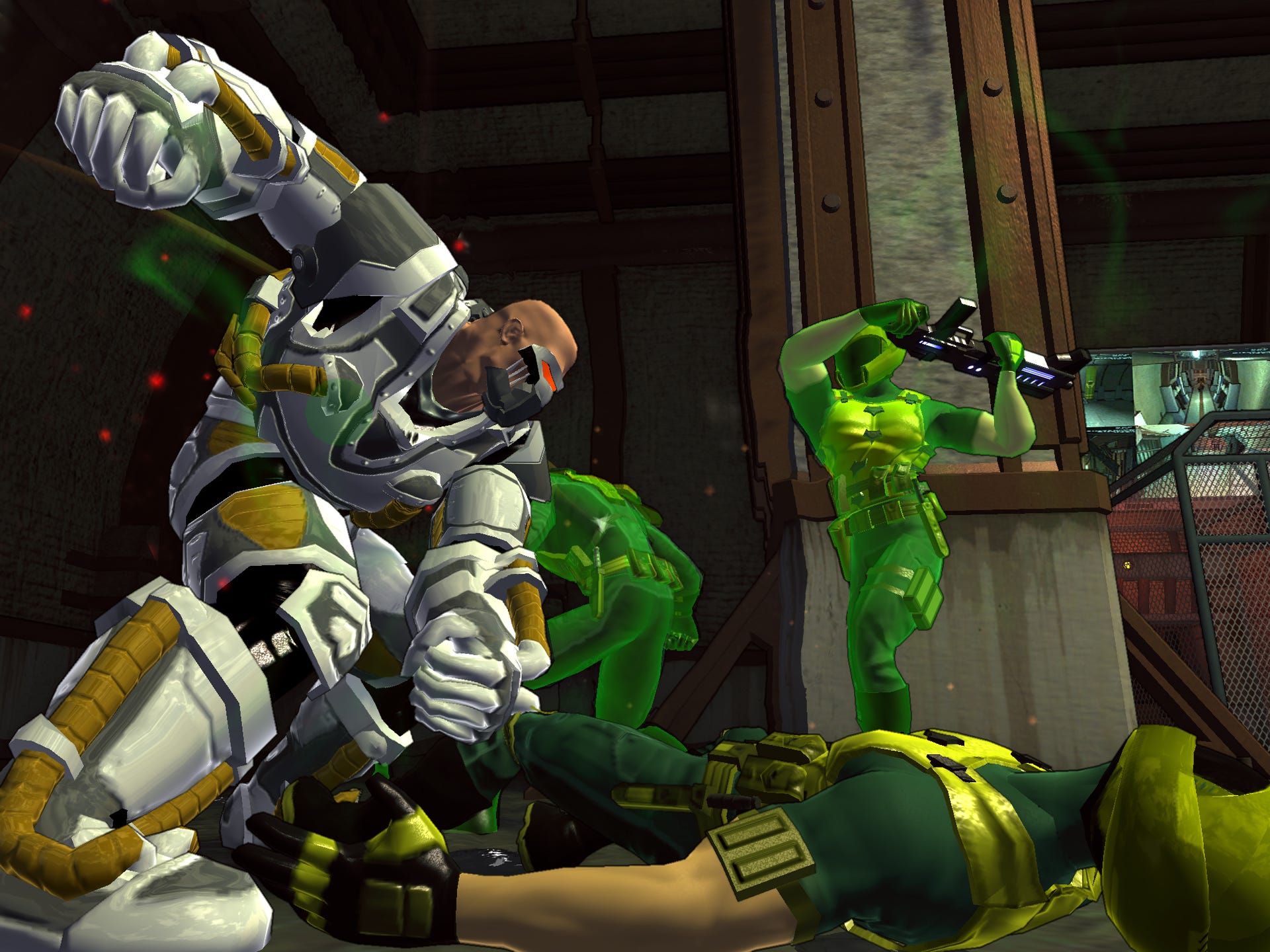
Bill Roper: Sure. When you get around the mid-game, you have the ability to create your Nemesis... It's built very much out of the same tools that you use to build your hero with, so you go in, design the costume, choose the powers, you choose his minions, choose what his minions use for weaponry, you pick his motivations.
2

Then you start going on these separate Nemesis missions - you'll start getting ambushed by the minions of your Nemesis, and eventually one of these minions will kind of break down, and say "oh no please don't, I'll tell you I'll you", and you get a clue off him. You go through a whole series of these very Nemesis-specific quests which revolve around the things you put in about your Nemesis, but it's not always the same path that you take, there's multiple story directions that you could be going through.

The first time you go through that, we really spread that through the gameplay so you're at your absolute best by the time you're fighting in the big showdown with your Nemesis. He's really been designed as the biggest solo challenge that we can give you.

Eurogamer: So the Nemesis content will be instanced for you personally - is there a way to interact with other players' Nemeses?

Bill Roper: Oh, that's actually one of the coolest parts, the Nemesis is designed so you can share it. It's actually the very first way of having user-generated content in Champions. If I just happen to be out in the world, the minions are just going to jump me and anybody can see that happening - and when I go into Nemesis showdowns I can certainly invite team-members to go with me.

Eurogamer: You mentioned changes to the UI as well - when we last saw the game, it had something halfway between a PC and console UI to accommodate both formats. Which way is it going at the moment?

Bill Roper: It's definitely MMO-based. We still have... the ability to play the game on consoles, but we really needed to make sure that the UI was specific to [the PC]. We've done a lot of work to keep that four-colour-comic flavour in the UI, but make it very much so that it is very comfortable for PC MMO players... It feels like a PC game.

When we take the game to consoles, we'll have to redo the UI so that it works. Fortunately we designed the game with consoles in mind, so there aren't any mechanics which won't work. But with Champions coming out first on the PC, it was really important for us to make sure that the UI base for everything was very strong and solid and felt right on the PC.

4

Eurogamer: So the console versions will be coming out some time afterwards?

Bill Roper: All I know is it's coming out first on the PC. We really, really want to bring it out on console, the consoles are just hungry and perfect for an MMO, and we've done a lot of work to ensure that there's nothing to prevent us from doing that. It's an area beyond my control at this point, I just work on the game.

Eurogamer: You came onto the game late last year, quite late in the development cycle, which must be a very different experience from the last games you worked on. What can you add at this stage?

Bill Roper: It's definitely very different from Hellgate: London, where I was there right at the beginning of the whole idea. It's actually getting back to what I did when I worked at Blizzard. Pretty much after Warcraft II, I would come in the last six to eight months of the project, and get involved at that time. A lot of what I'm able to do is - there's many complete systems and systems that are still coming online, but the core of the game is there, and I'm looking at it and trying to figure out what needs to be done to kind of punch things up. How do we make this work better? This isn't working, what can we do?

It's a very different level of creativity to what designers have - you have a lot of the framework in place already, in many regards you're past all that beautiful blue-sky design where anything and everything is possible. You're dealing with taking what you have and making it great. It's actually very exciting and challenging.

Eurogamer: Our European readers might be a bit less familiar with the Champions role-playing game, the licence and fiction that's behind this game. Why should we care about it, instead of the better-known superhero universes?

Bill Roper: A good reason to care about being involved in the Champions IP is that very reason - you get to discover all these things.

From a design standpoint, from a creation aspect, it's wonderful for us because Champions has been around since '81. There's 20-odd years now of people playing the game, the core mechanics, the core IP, expanding on those, making it deeper and richer. It's almost like this world has as much depth and history as any other universe, but people just haven't had the opportunity to experience it. The really fun part is that players can jump in and now find something that is huge and immersive and deep and that has all these connections and story and gameplay, but they're discovering it for themselves.

Eurogamer: With MMO launches, there's a big focus these days on the game being ready for launch, in a stable state with as few bugs as possible and loads of content. People expect the moon - do you think it's ever possible to be truly ready to launch an MMO?

Bill Roper: I think it always has to evolve fast in the first few months. The challenge is for developers to get enough highly-polished content that provides that base, that platform. I think that sometimes if players don't see that you're going to have it, they don't believe you're ever going to have it. You launch a game that has no PVP whatsoever in it, players think there'll never be any PVP in it.

I think the other difficulty is that, when you're launching a new MMO, your competition is always going to be a game that's been around for 3, 4, 5 years. It's had that much time and effort put into it, and it's bound to be a good game if it's been around for that long. I think that unfortunately leads to a very unrealistic expectation from players.

5

If someone comes from World of Warcraft for example, they're viewing what WOW is now. They don't remember that when WOW launched, all it had was duels. It didn't have a PVP system. But the thing that they did was at least put in a thing that showed, hey look, you can fight another guy.

A lot of developers really kill themselves trying to do too much at this point.

Eurogamer: With Hellgate, you saw the process of launching and running a subscription game from beginning to, as it turned out, end. What did you learn from that that you can bring to your work at Cryptic?

Bill Roper: The problem with Hellgate was that we tried to do too much. We launched as a single-player game, and a free-to-play game, and a subscription-based game, and we were one of the first Vista games, and we were doing high-end graphics but also trying to do stuff for low-end systems, and we launched I think in 14 languages. We were trying to appeal to and appease too many different types of players and business models.

6

The thing that we learned was keeping a focus on what the core of your game is from every aspect - from the business side, from the gameplay mechanics, from who you're addressing. I think the upside after what happened with Flagship is now I can look at things and say, "hey, you really don't want to do that, and here's why".

It's obviously not a bad thing, but Blizzard was pretty much all successes. And you learn a lot from that, you learn what to do right. But you never learn what you shouldn't do... Those are very difficulty lessons to learn, but ones that stay with you. When Flagship closed, I took it very hard, but I wanted to jump back in and keep making games in the industry because I felt like I had learned so many lessons.

Comments (14)

Comments for this article are now closed, but please feel free to continue chatting on the forum!

  • Loading...hold tight!