Version tested: Xbox 360
At points, Orcs Must Die! made me angrier than Dark Souls, which has got to be some sort of achievement. A third-person take on tower defence that mixes trap-laying with simple blasting and melee combat, it's a deeply charming game with a difficulty curve that veers wildly and a toolset that's half pot luck and half brilliance.
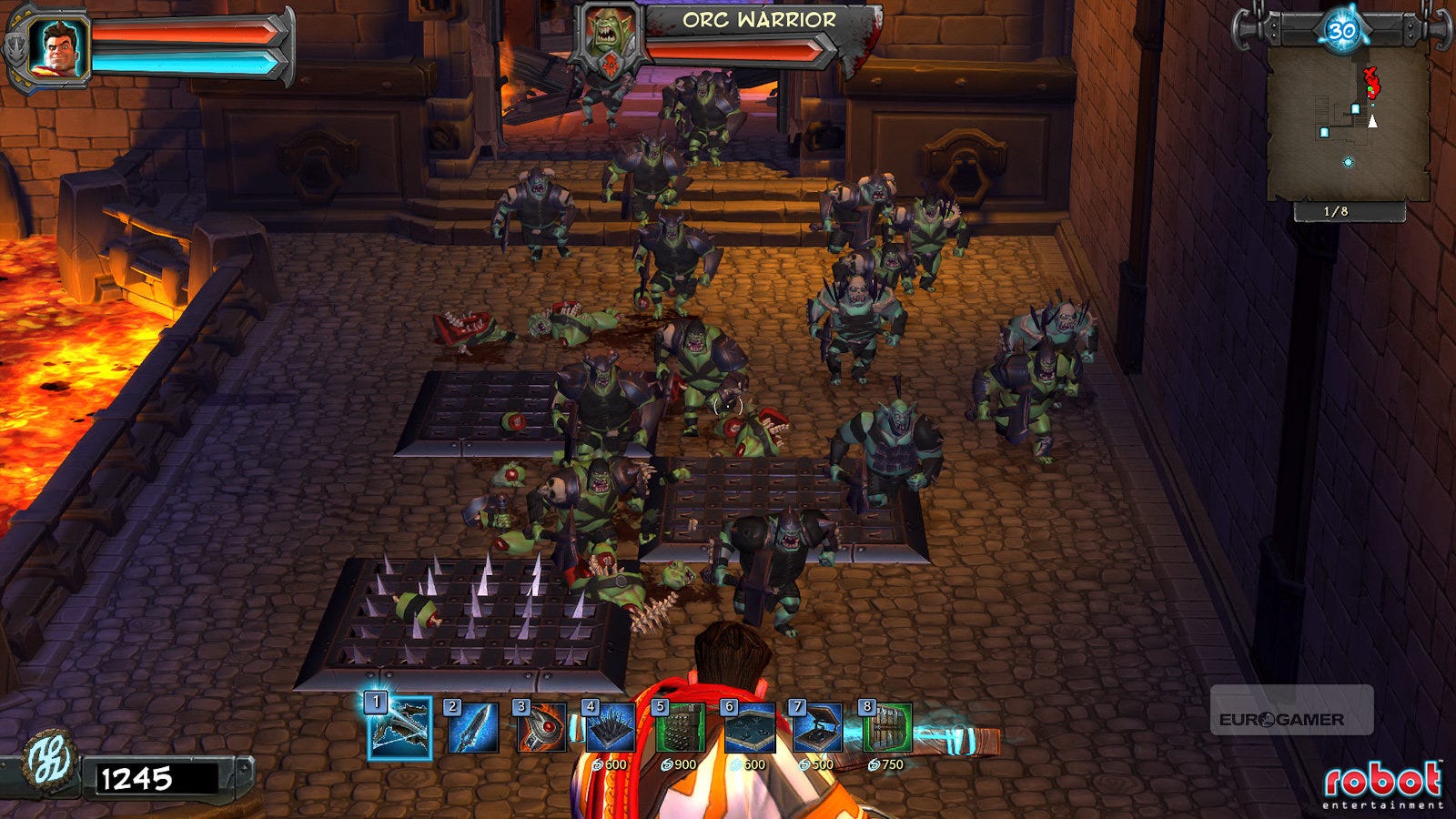
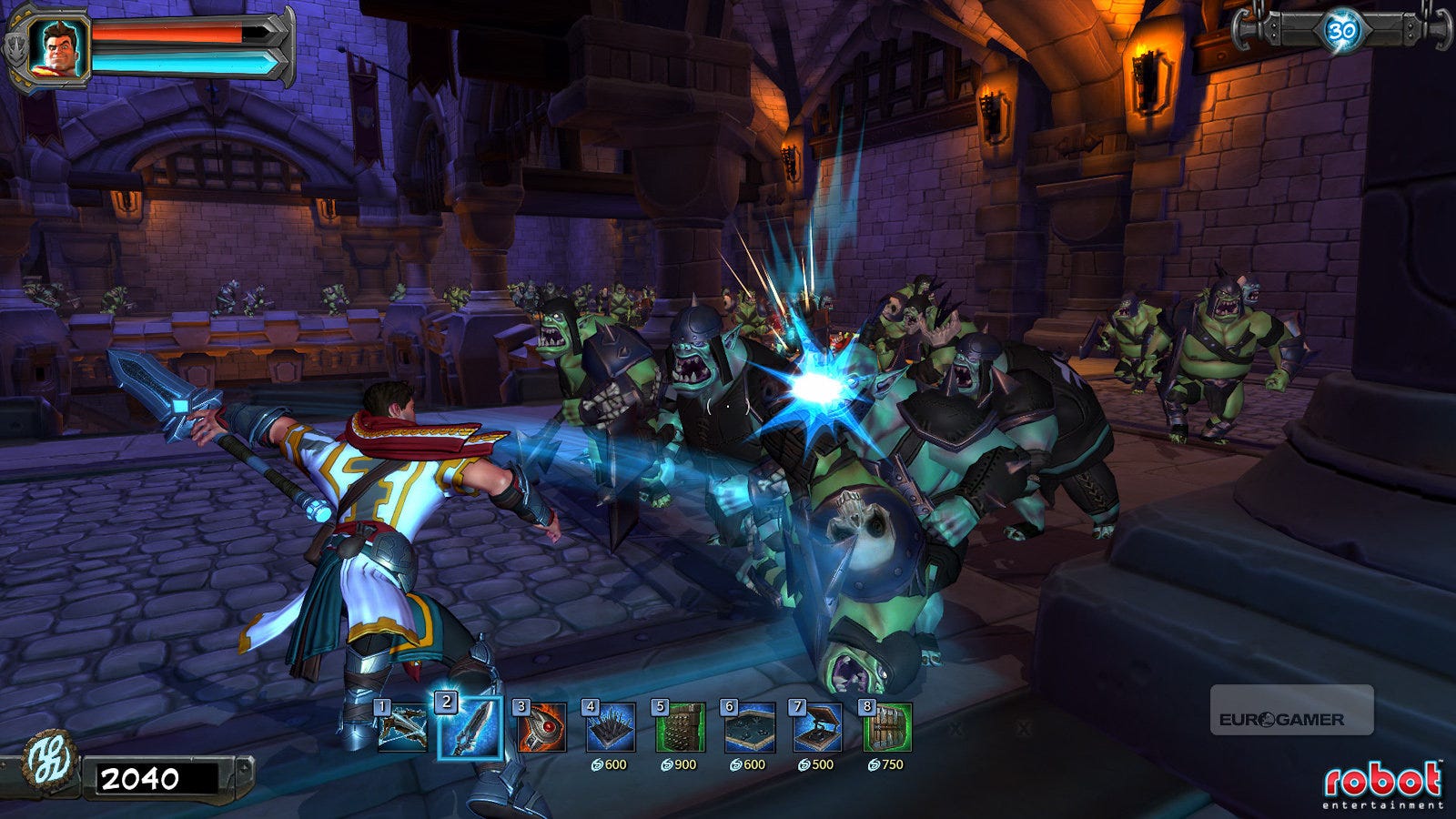
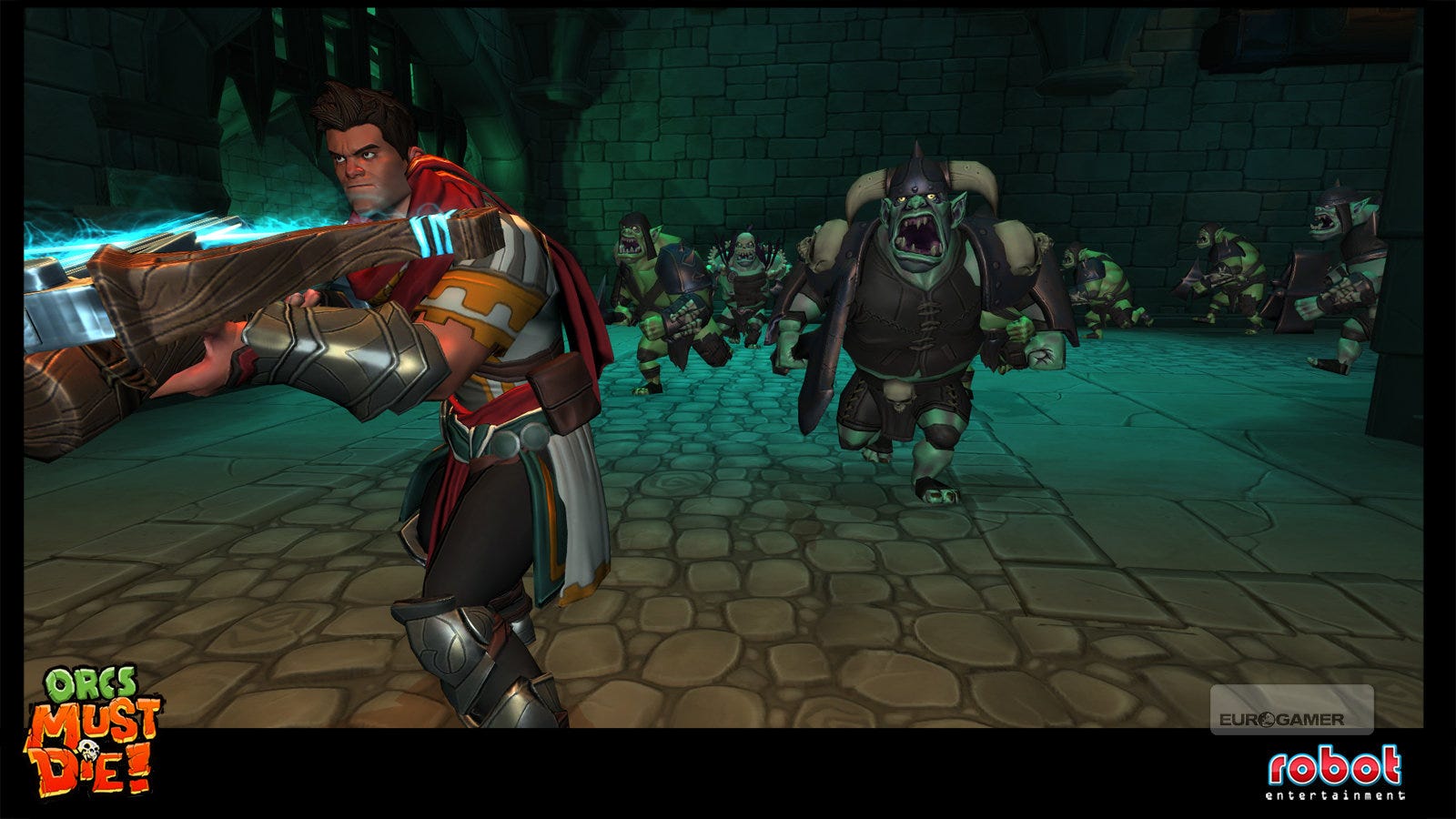
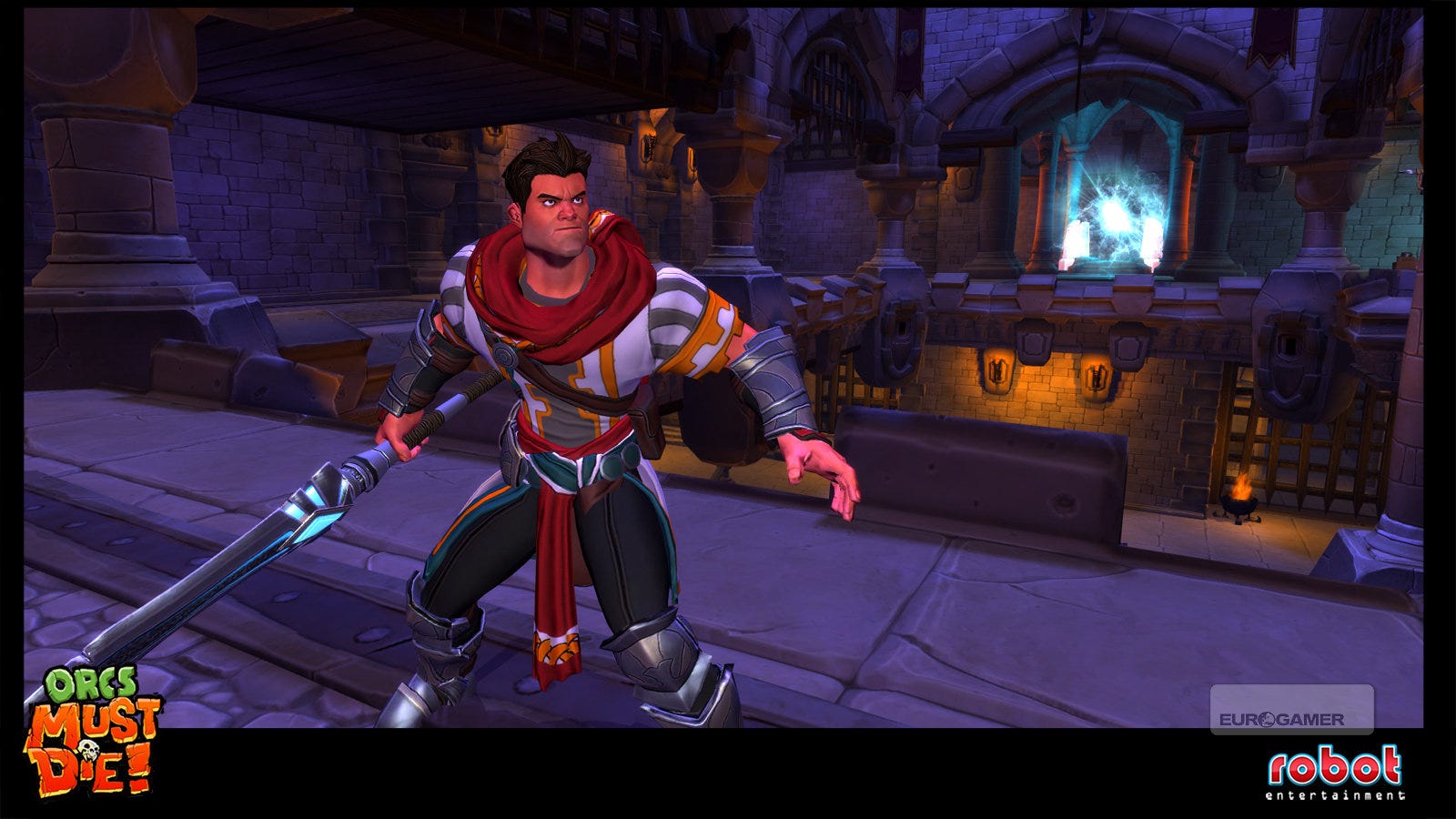
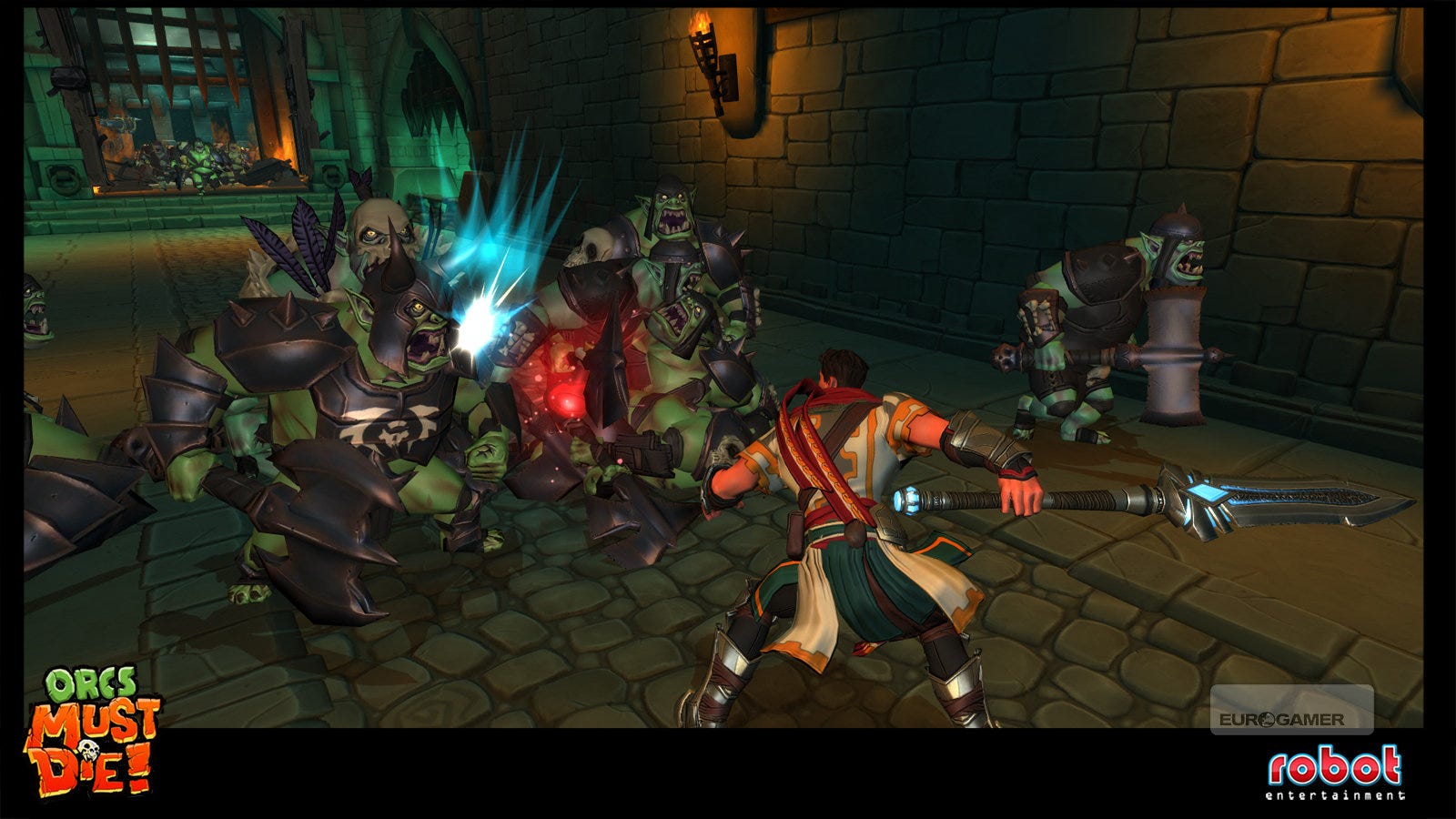
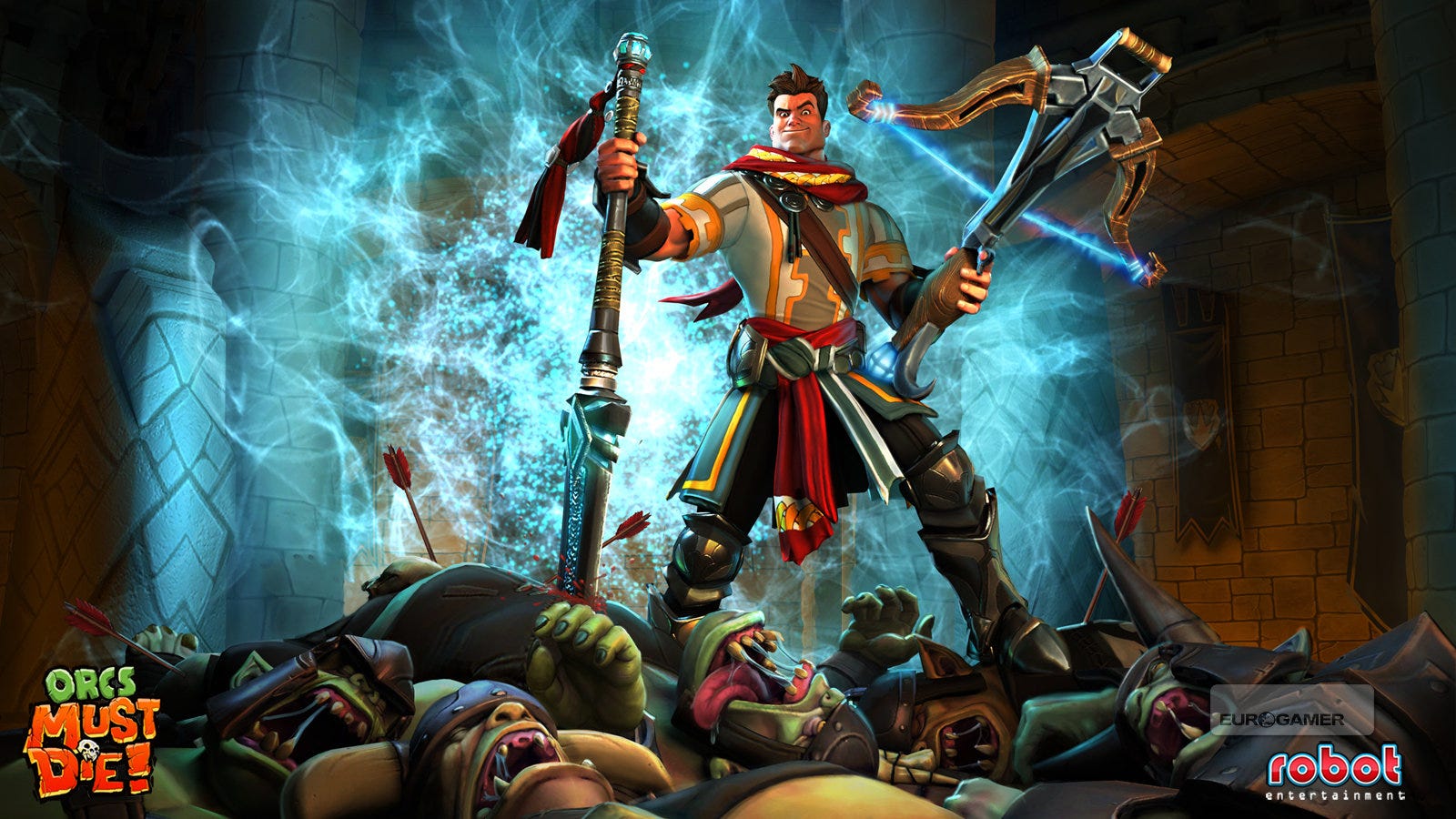
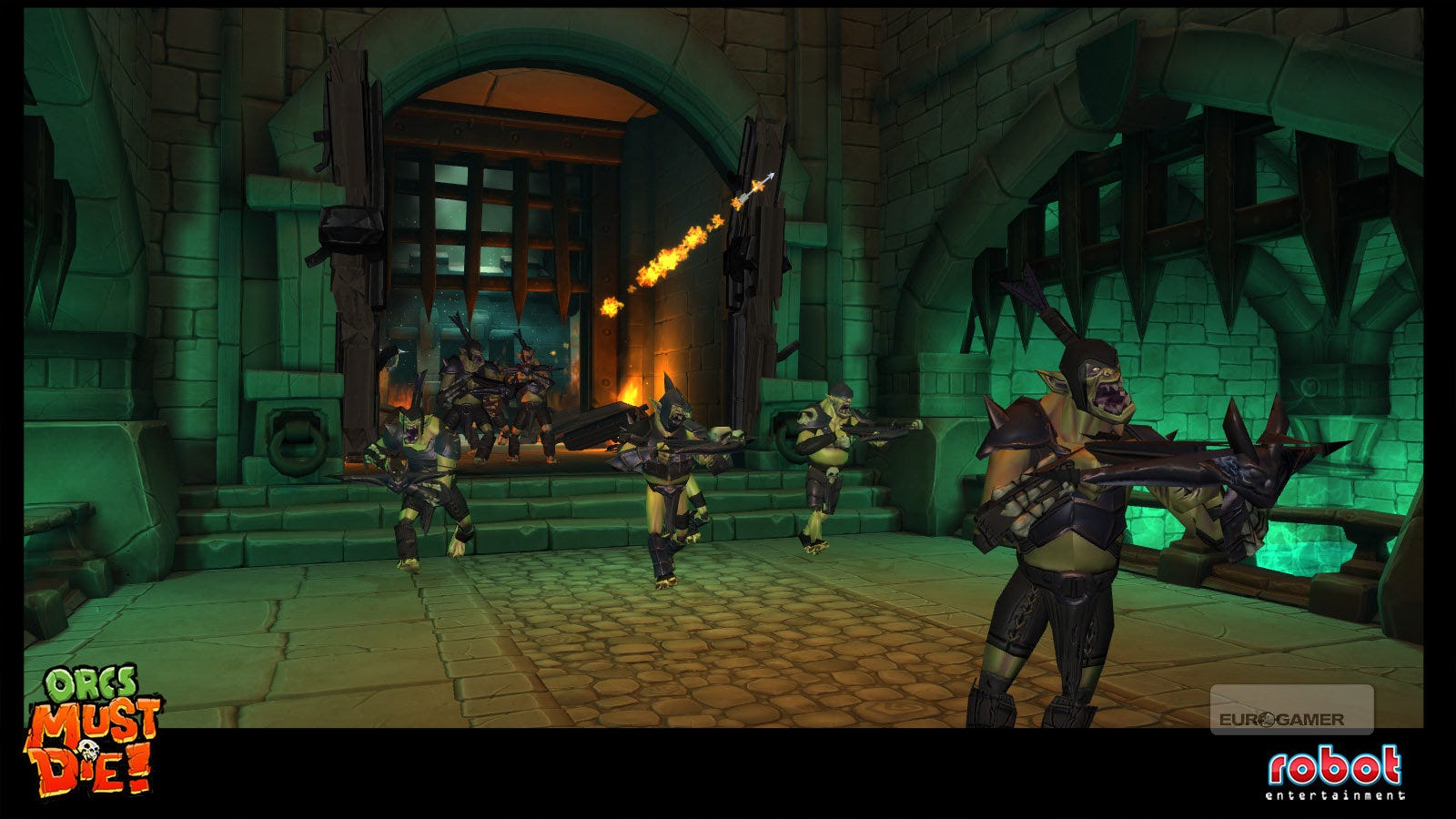
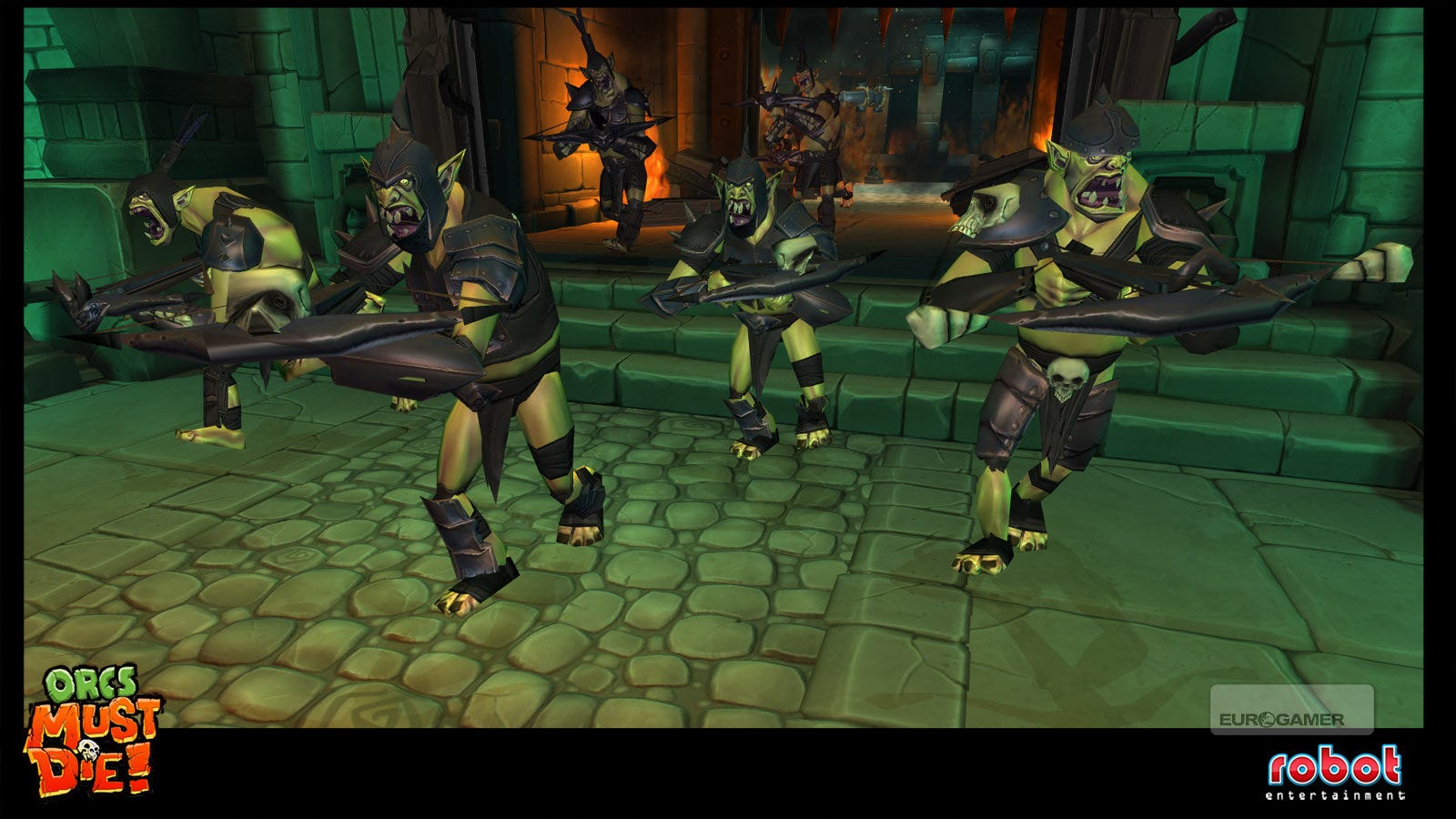
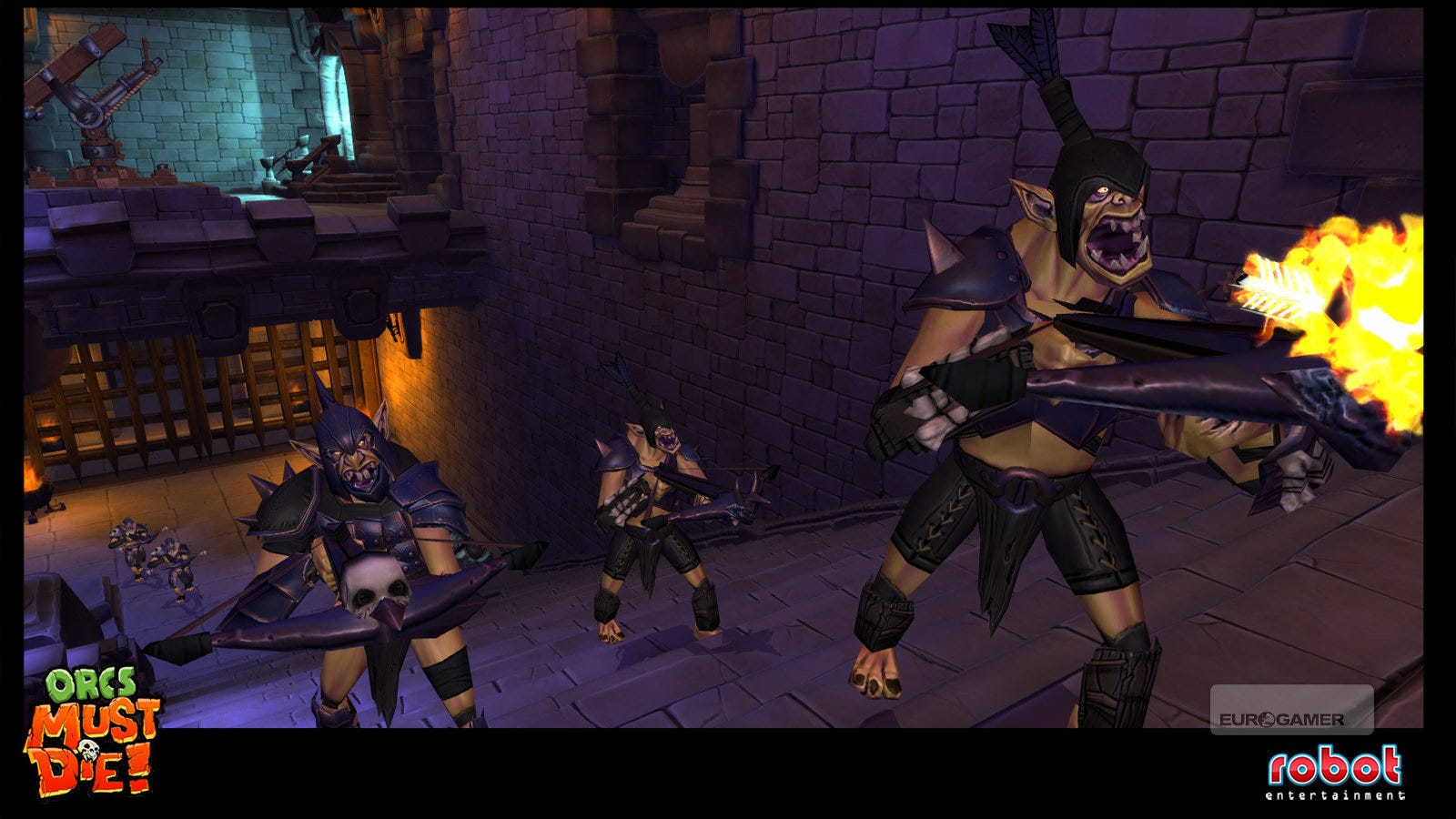
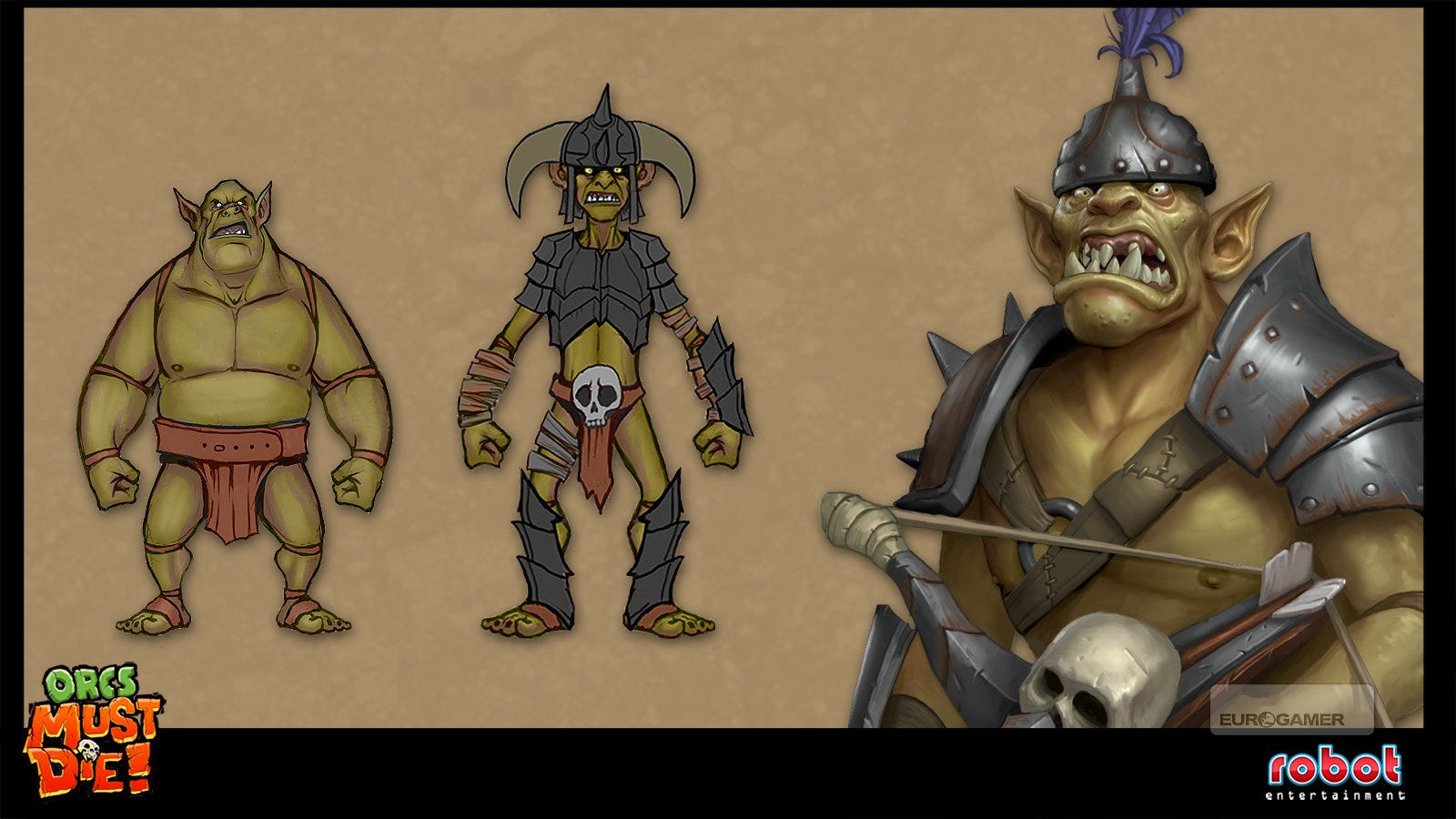
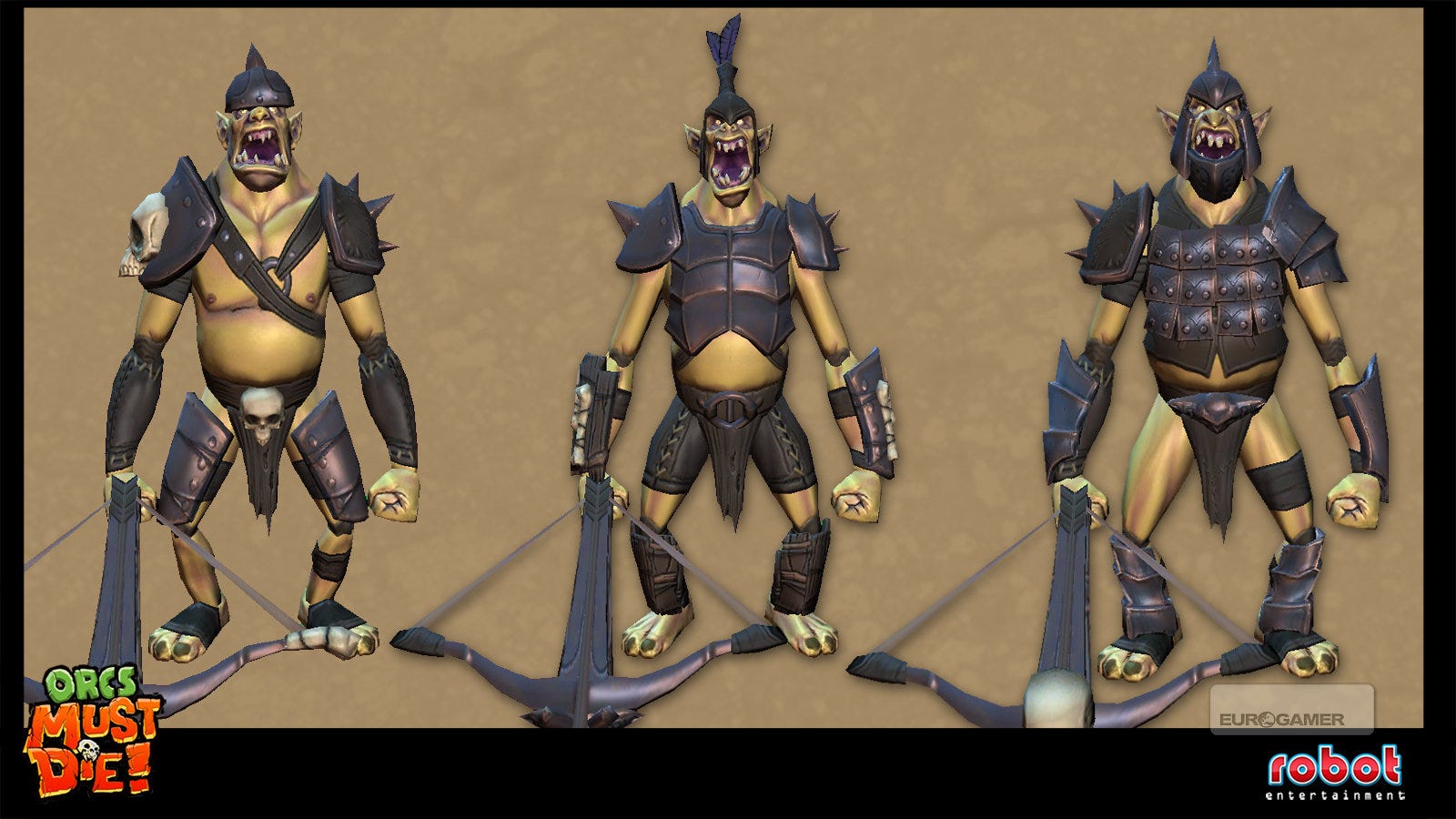
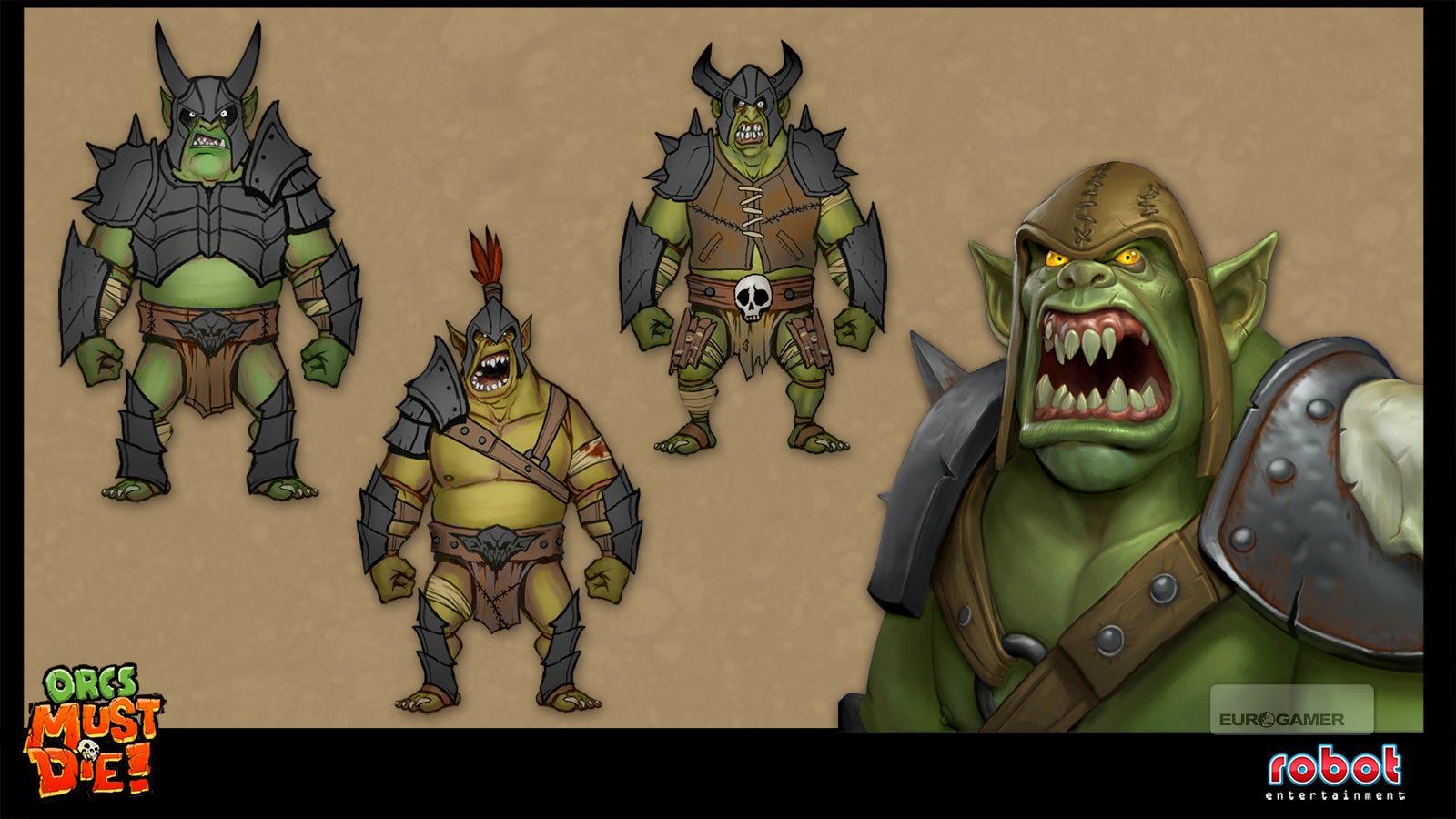
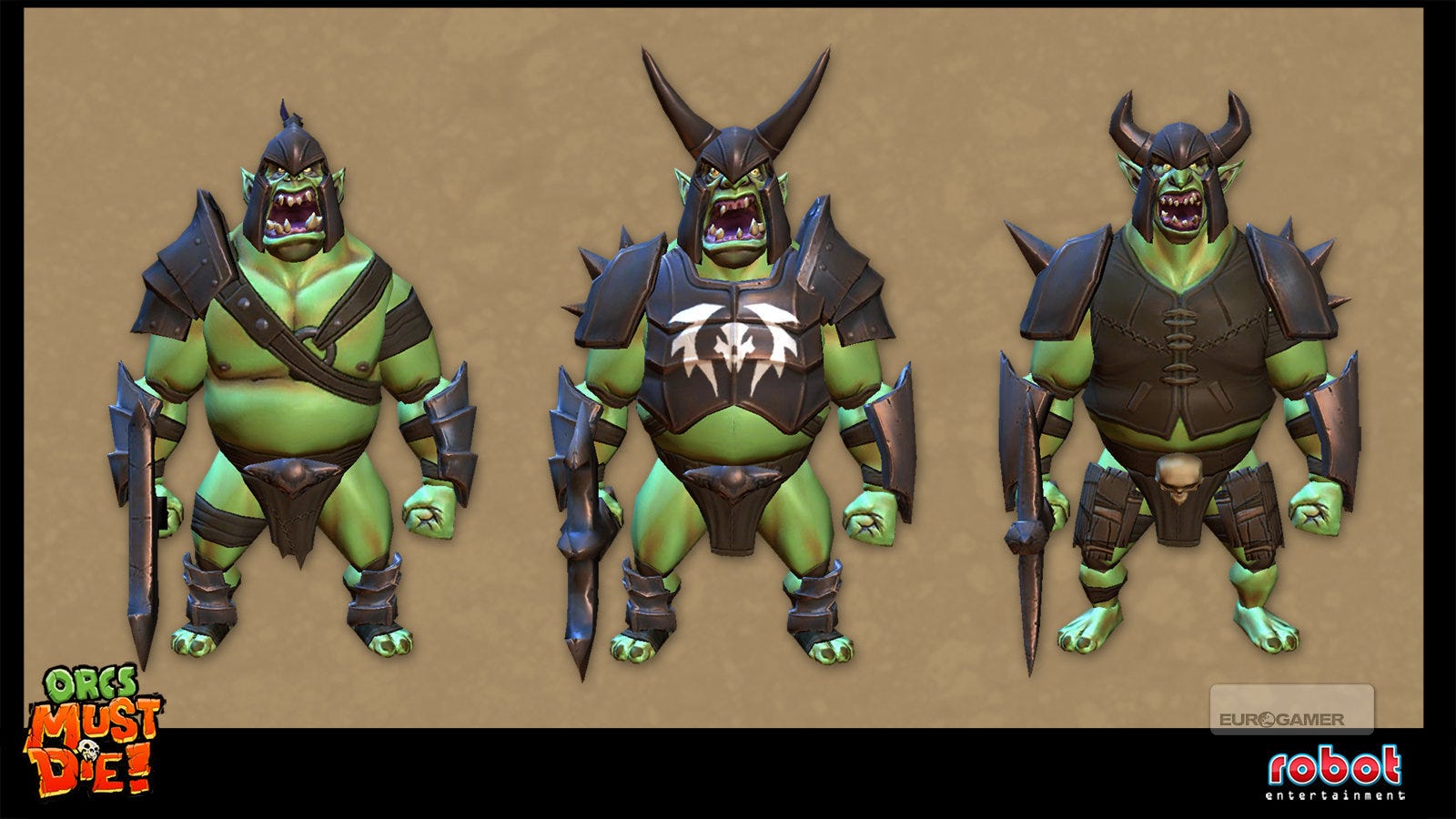
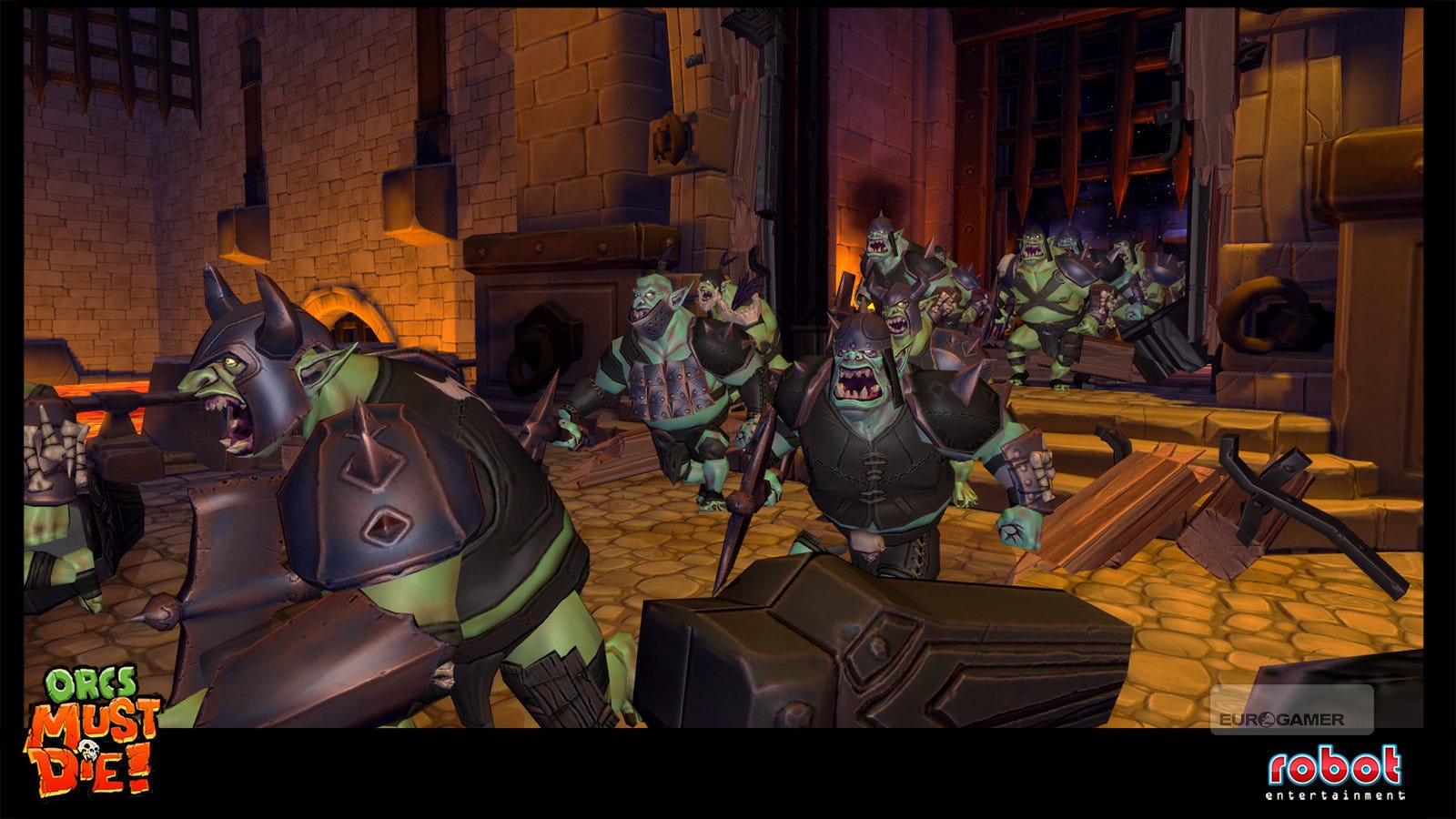
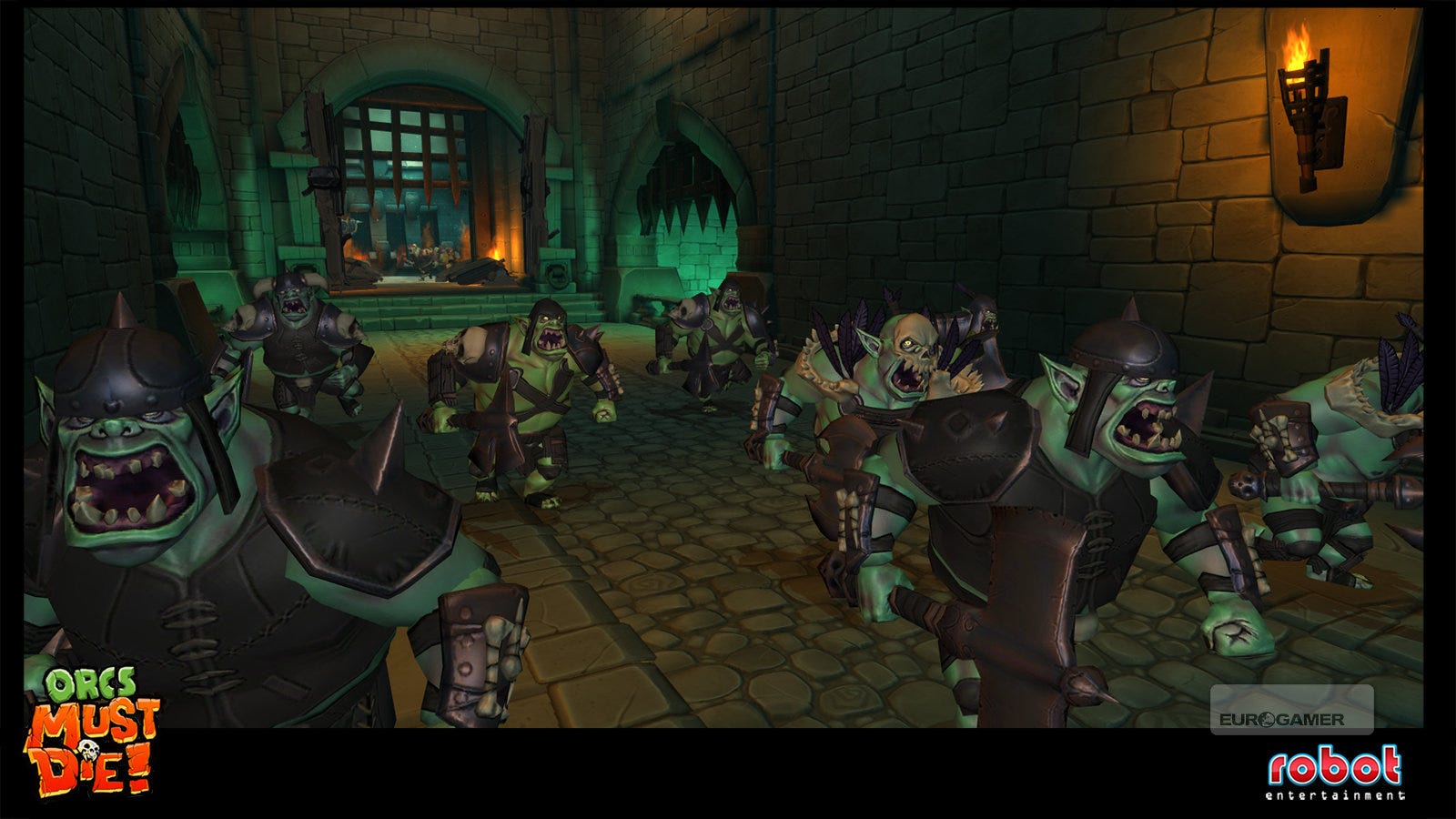
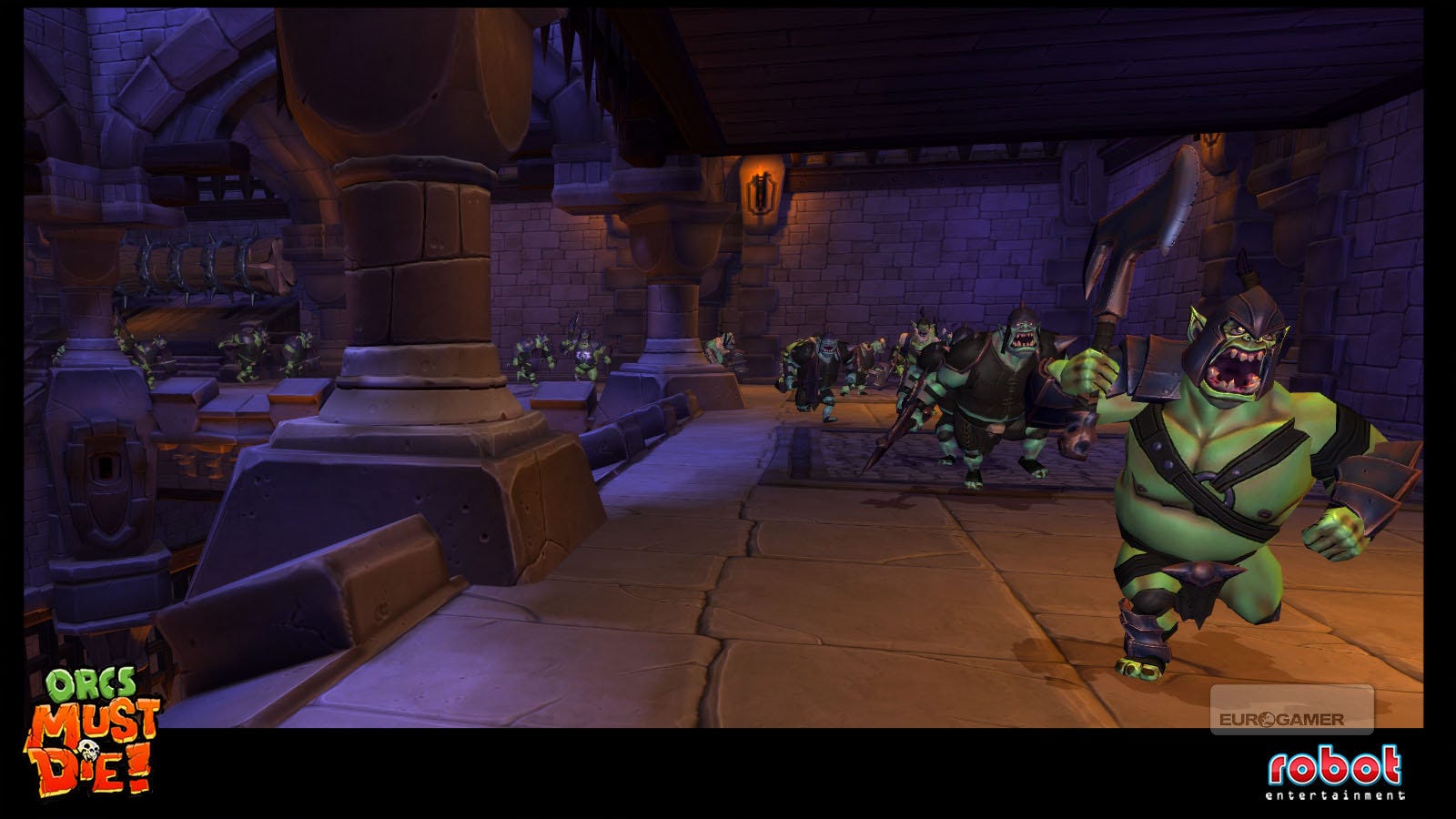
You play an apprentice mage who's tasked with keeping waves of Orcs, Ogres and other beasties out of the 'rifts' in each level. Huge groups of enemies spawn from fixed locations and run along predetermined paths towards them. If too many get to the rift, you lose. To stop the horde you have an initially limited set of traps and personal weapons, which rapidly expands into a huge grab bag of troops, whirring blades and smooshing contraptions perfect for turning green mobs into pesto.
You're given as much time as necessary at the start of levels to scope them out on foot and place traps, identifying bottlenecks and environmental hazards that will maximise your weapons. Traps cost cash, anywhere from 200 glowing blue money points (they don't seem to have a name) up to thousands, and killing enemies grants from 10 to hundreds depending on toughness - all self-explanatory enough.
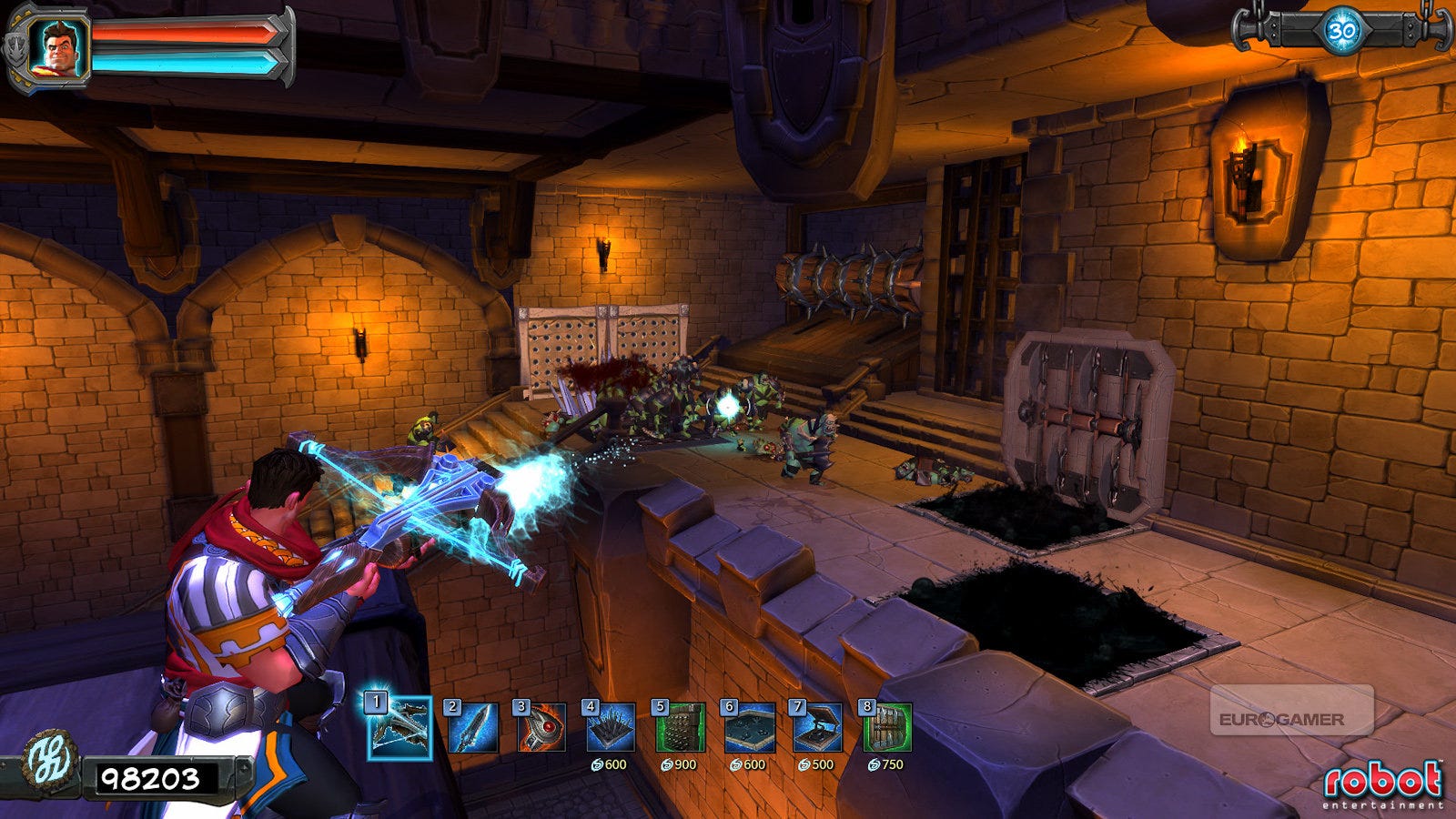
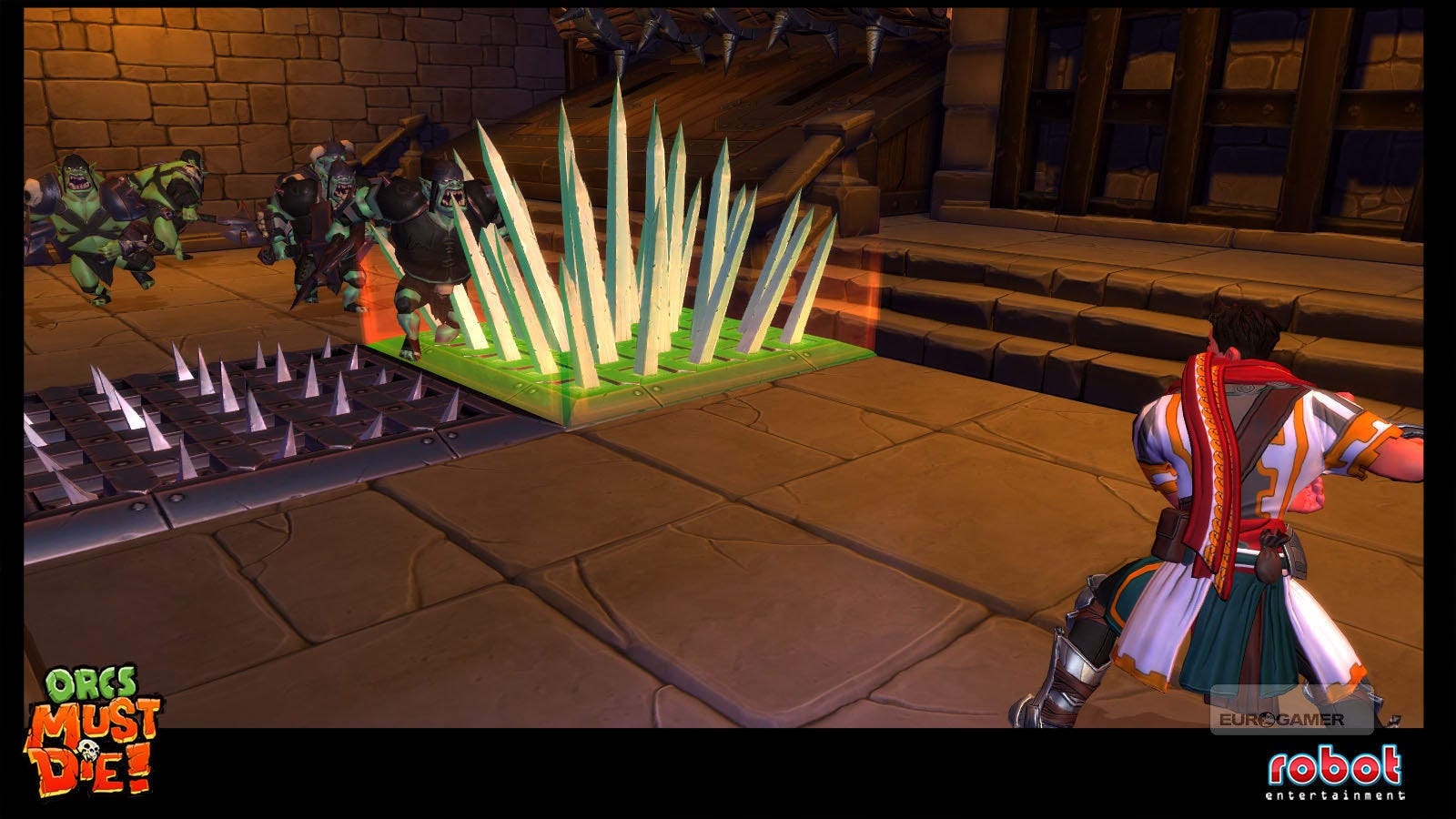
The first thing Orcs Must Die! gets right is the trap-laying interface. At each level's beginning, you select the traps you want to take in (these can be changed before the horde is unleashed), and then cycle through them with the bumpers before pressing A to place. Traps have certain requirements, for example whether they need placing on a wall or a floor, and bright green or red wireframes instantly communicate whether a certain position is going to work - it's simple, fast and makes setting up death corridors an absolute pleasure.
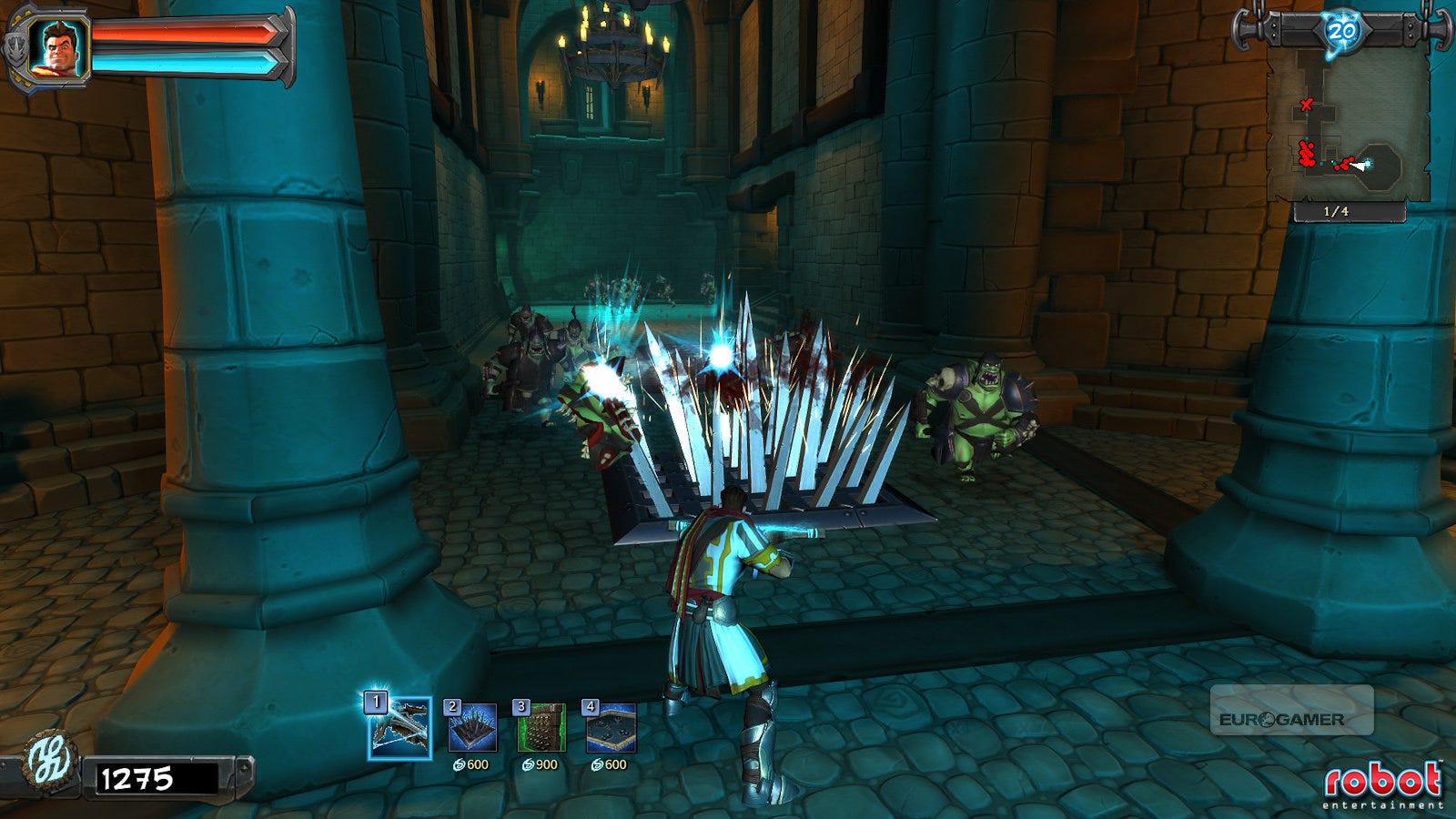
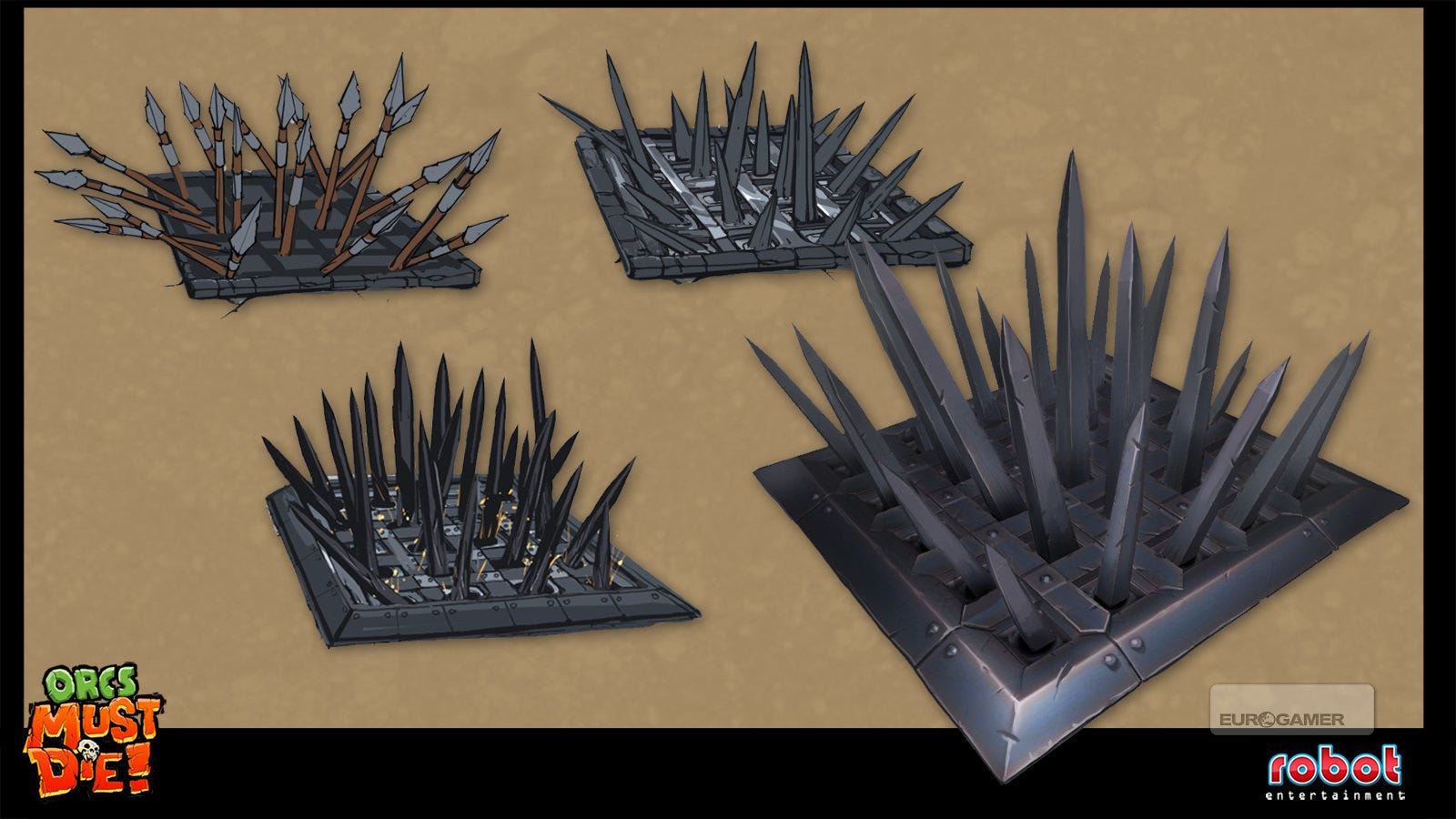
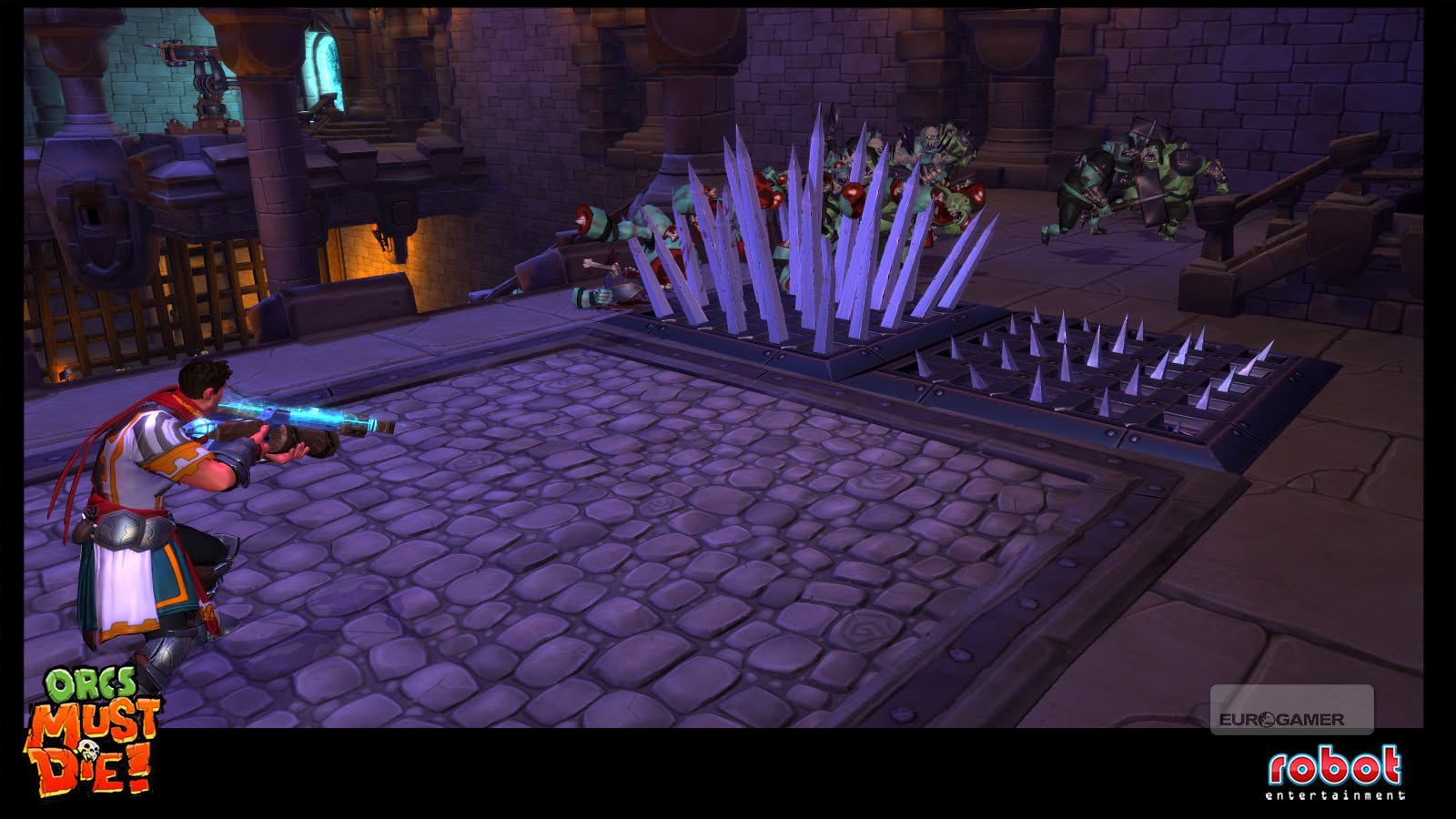
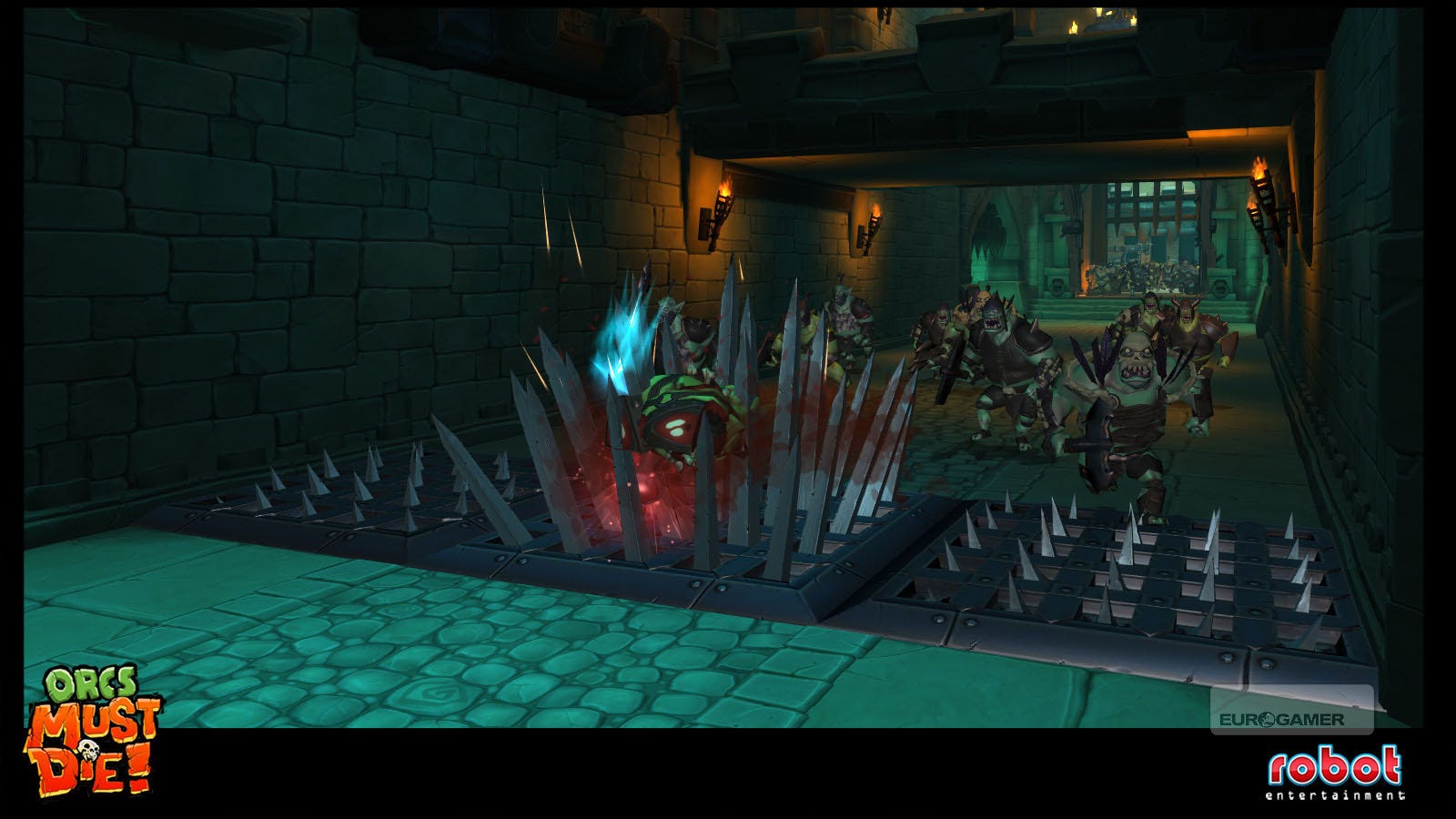
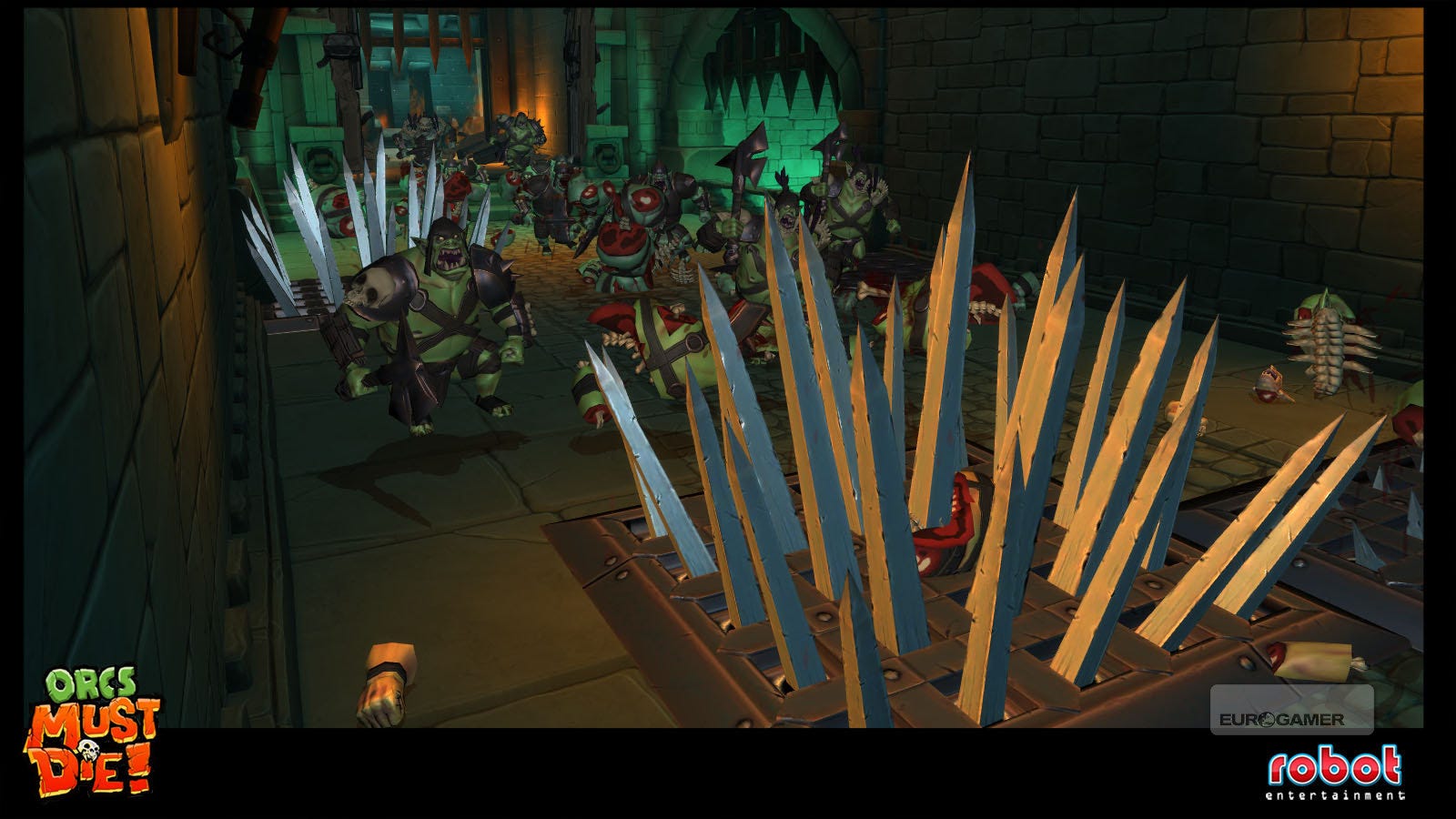
As for the traps themselves, they can be simple damage-dealers, slow enemies down, or bounce Orcs around into convenient pits of doom. A favourite is the arrow wall, which when triggered sends arrows shooting out multiple times that can absolutely nail through crowds - combine this with the tar trap, which slows down mobs, and the distance upgrade, which lets it trigger from further away, and you're really cooking. The spring trap, on the other hand, doesn't damage the mobs but can either fling them towards something that will, or simply be used to bounce a crowd back to the start of the gauntlet. Why not set up a load of spinning blade walls at the landing point?
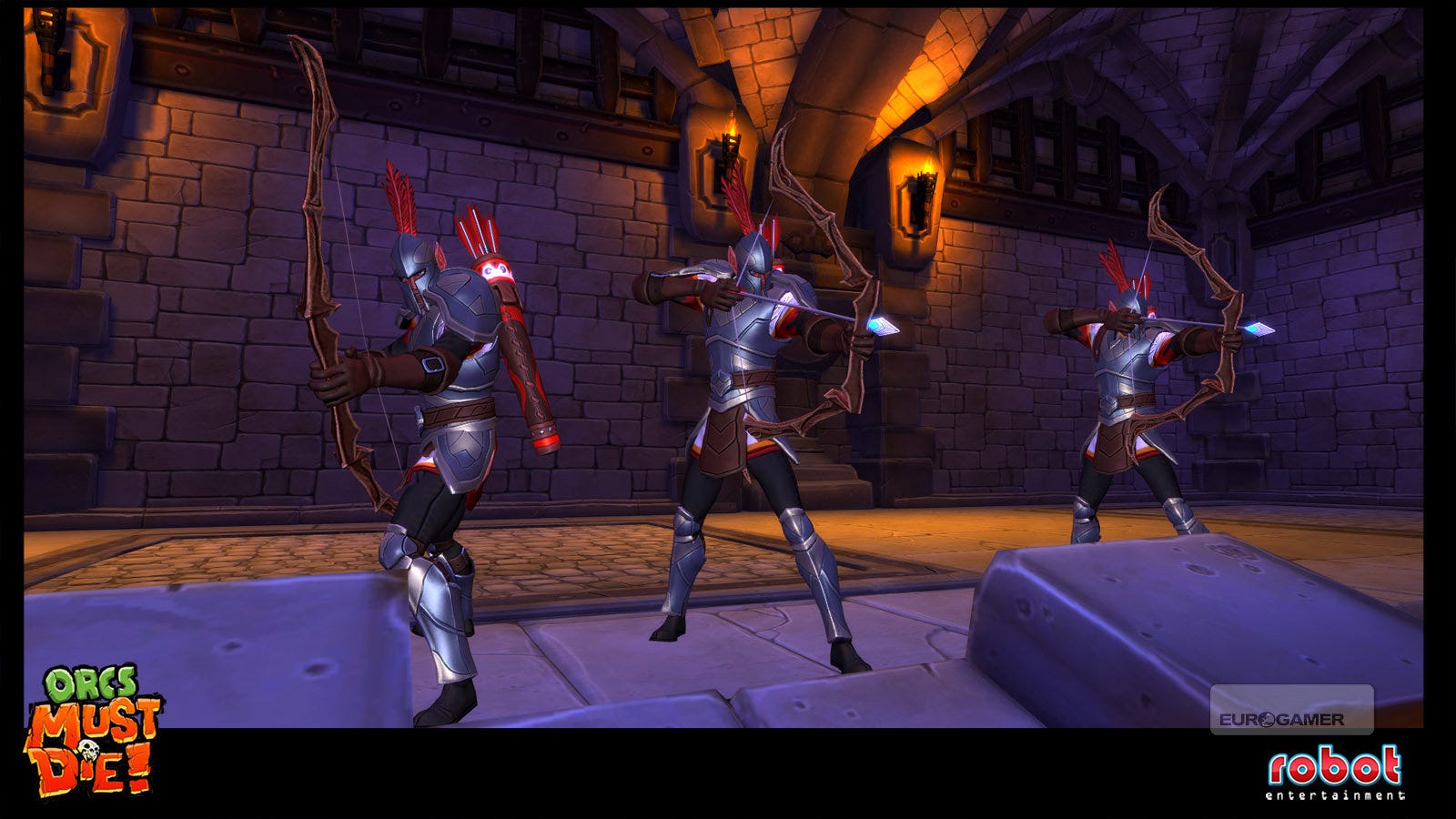
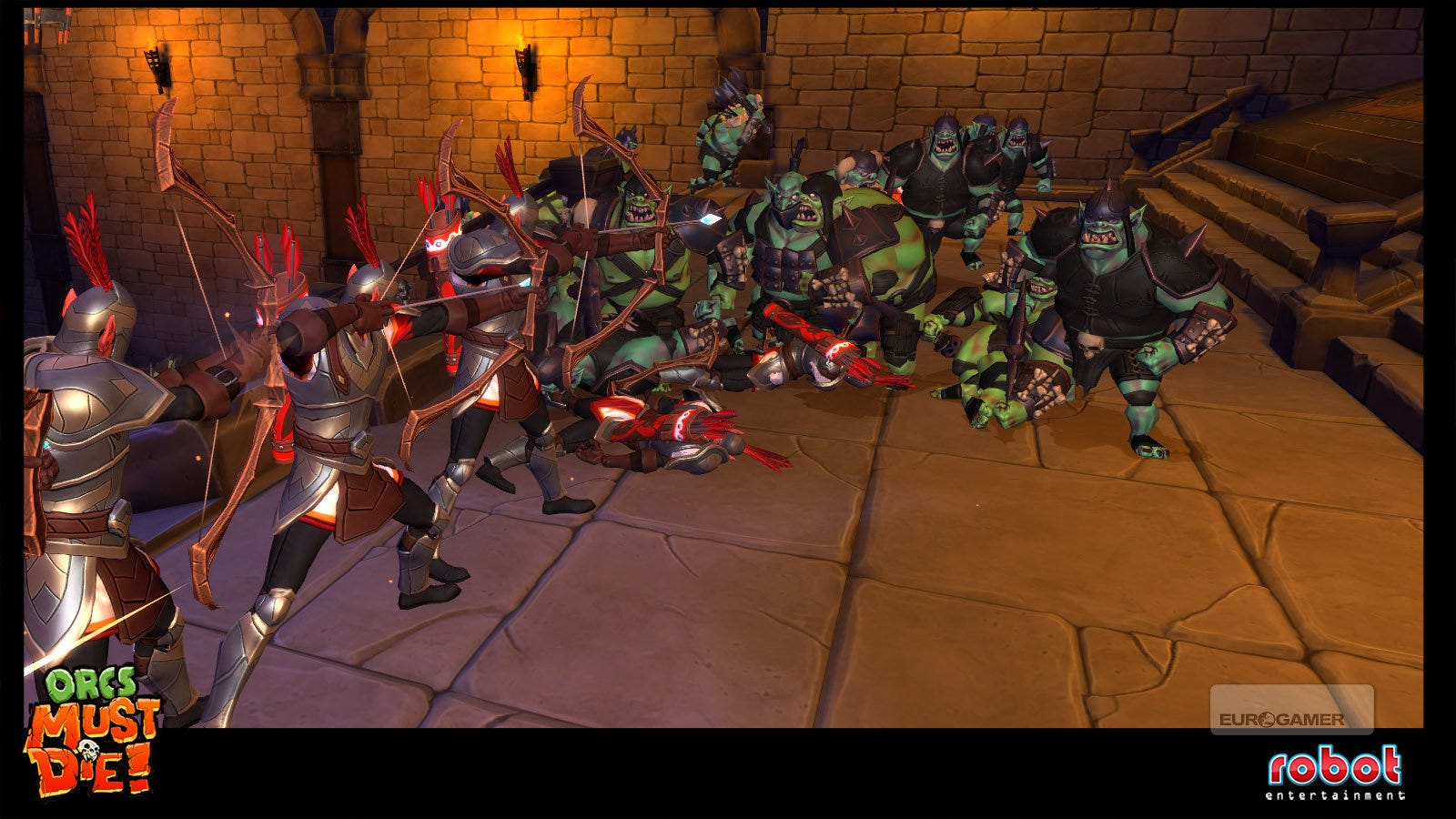
Other traps work in concert with the troops you can spawn. These draw from the same currency pool, but have several big advantages. The first is that they attack the Orcs directly rather than waiting for them to walk by a certain position, and the second is that they attack frequently. The traps have a long reset time after each use, but if they're set up right, they do mega damage - so the trick on most levels is to have troops whittling at the crowd constantly, and certain uber-death spots that crush the remainder.
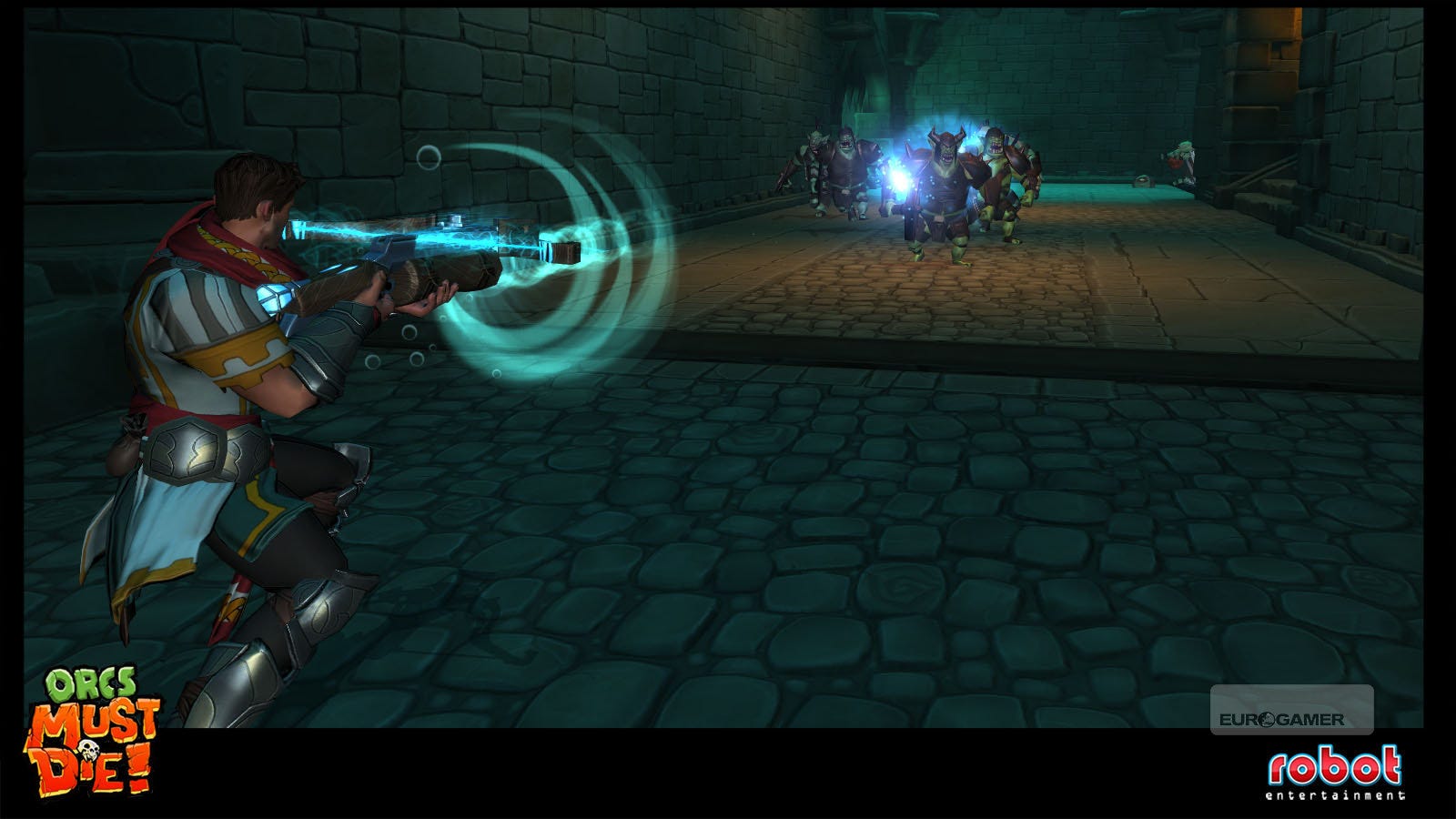
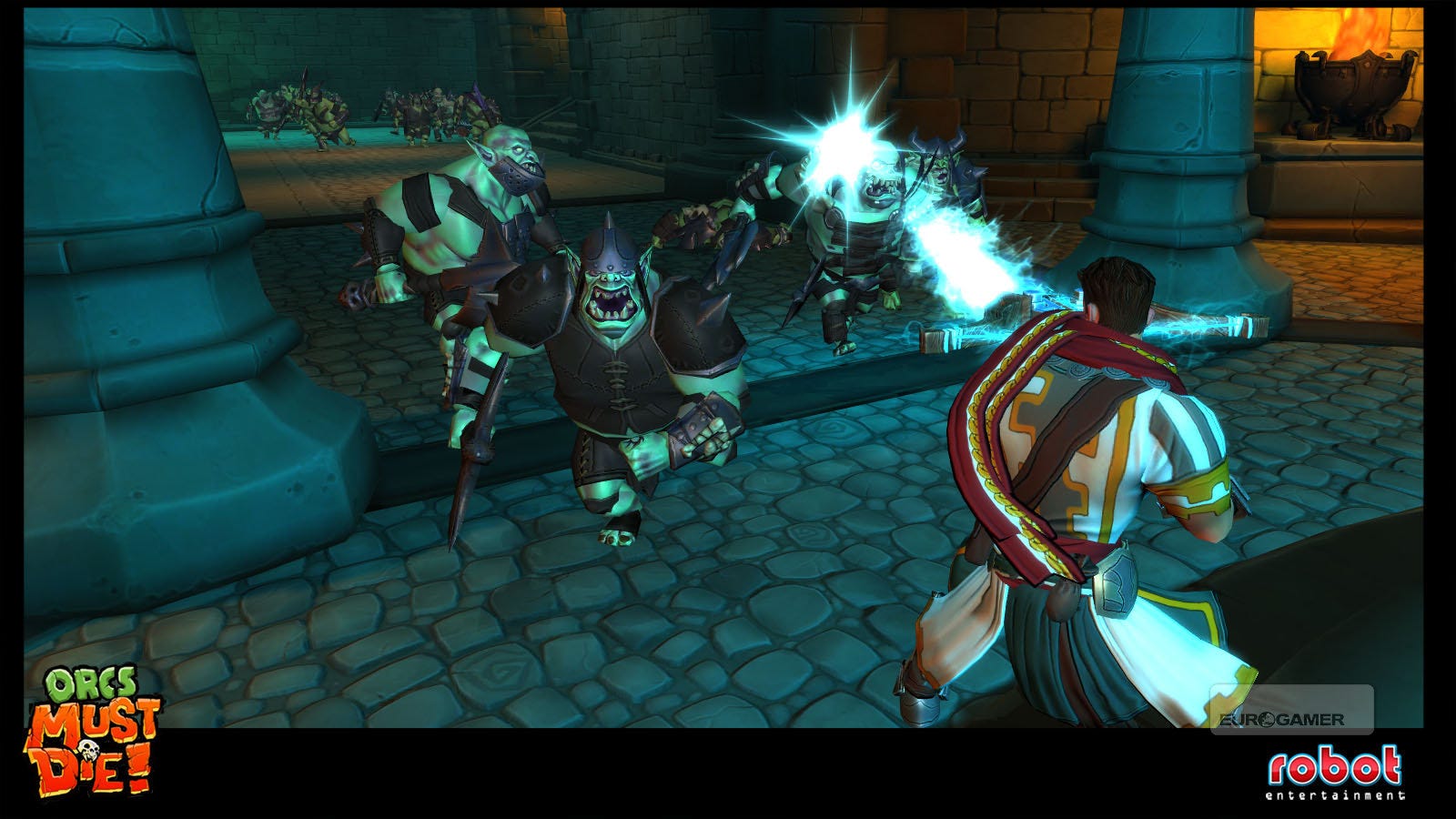
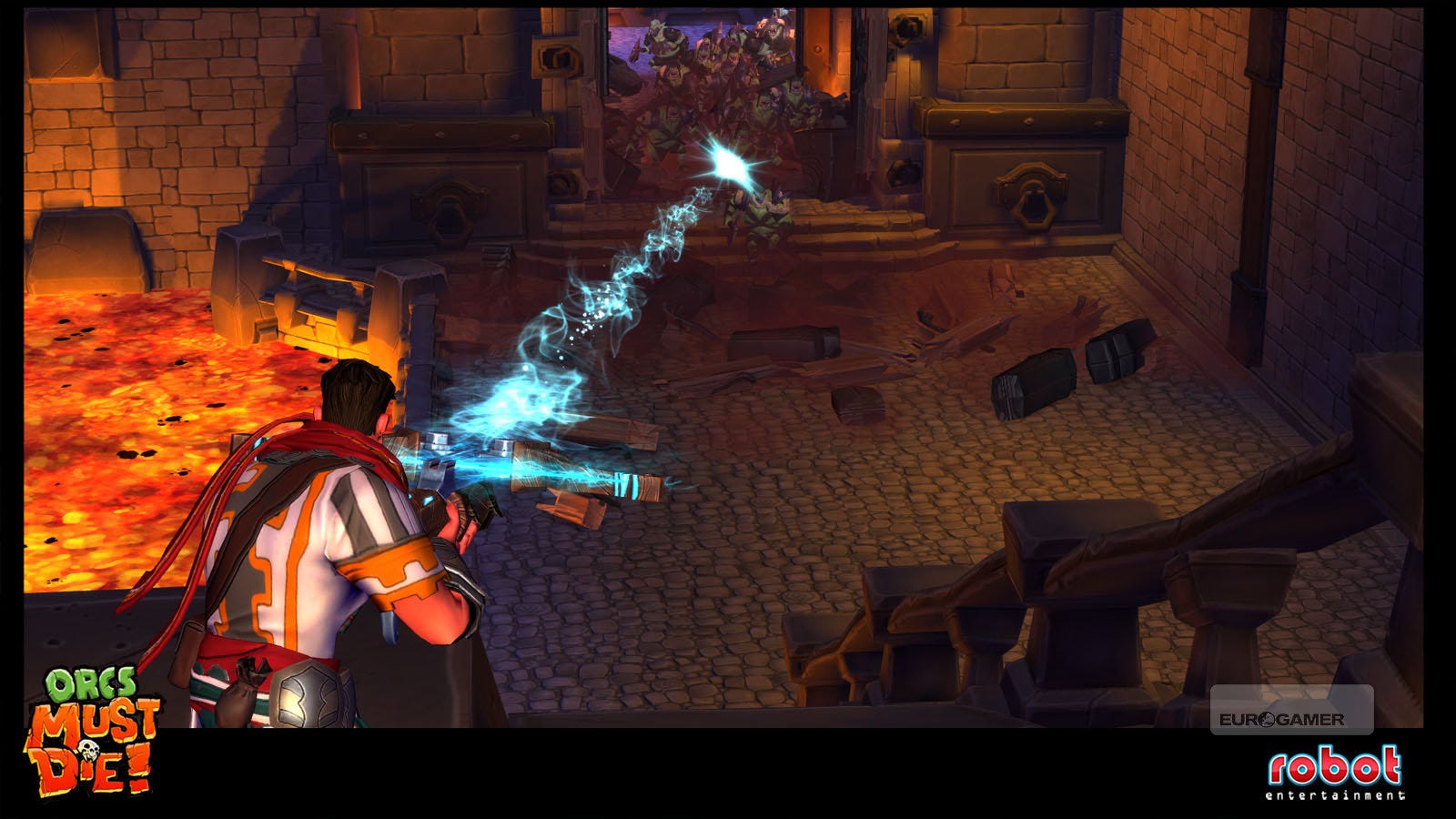
Everything is about building to this point. In each level's initial stages you'll have much more involvement with actually killing the Orcs and building up the war chest; the earlier crowds are smaller, and your various melee weapons are very effective. Personal combat isn't subtle, but it's a lot of EDF-style fun with elements of skill - the crossbow in particular has an expanding reticule that means either picking headshots from afar or spamming bolts up-close. Later, flame gauntlets let you chuck fireballs into bunched-up groups, and the best of the lot is the wind belt, which can be used to push giant clumps of enemies into pits and traps.
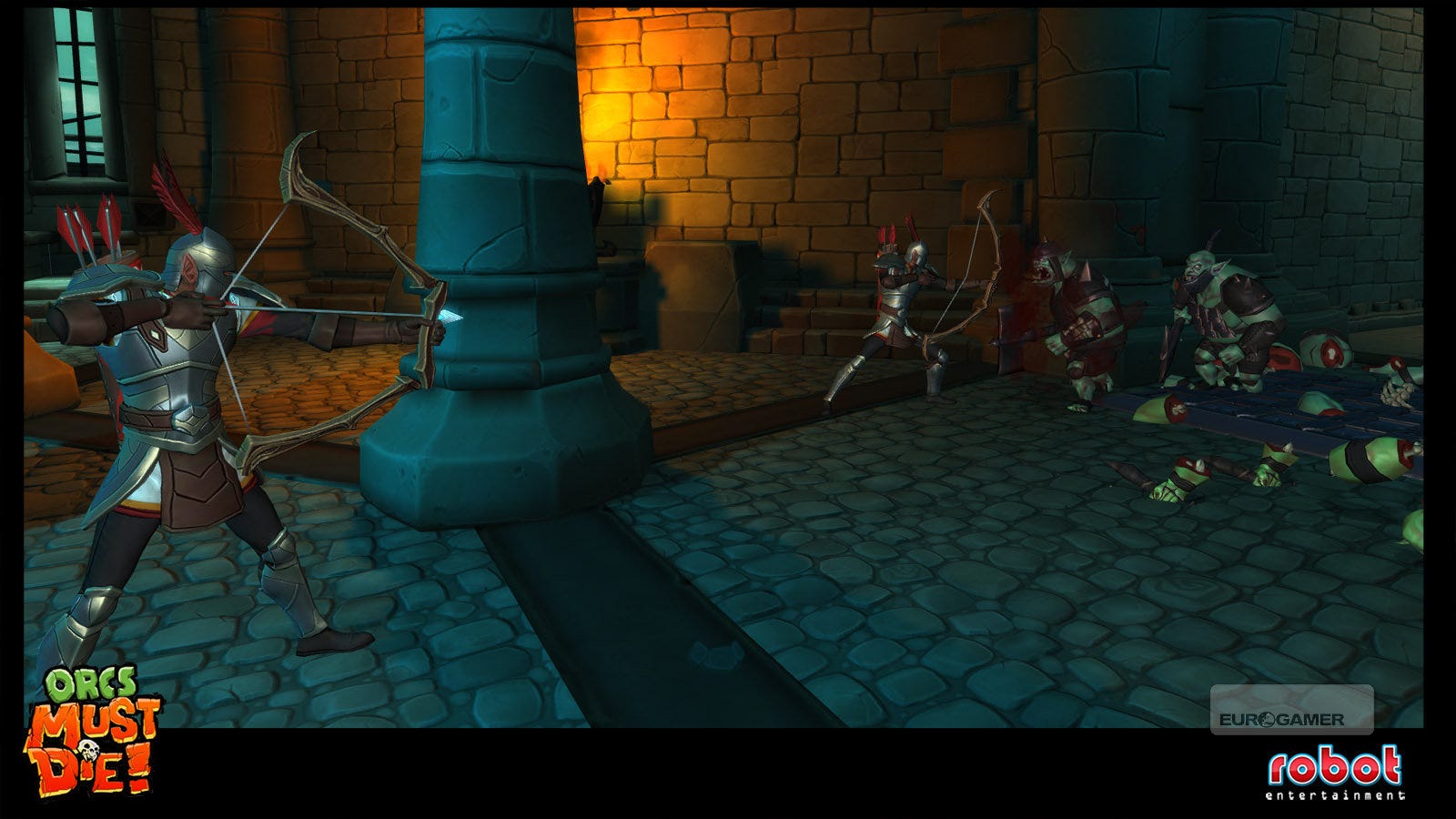
When everything's set up right, Orcs Must Die! feels very good indeed. The crowd will burst out of the doors and the first few are instantly spiked; the next lot, tumbling over their corpses, get stuck in tar as arrows shunk through them; then a steam trap levitates the survivors into the sights of a row of archers to create a load of pin cushions. A straggler somehow avoids all of this and sprints for the rift - and just before reaching it, the last-ditch Paladin you hid behind a corner slices his head off.
Even when you get it wrong, the game gives you the tools to recover. Any trap can be sold for its cost to change layouts on the fly. Sometimes, what seems like a perfectly-positioned set of death-dealing blades get bypassed, or a hunter enemy gets among your archers and guts them, leaving you with a load of sprung devices and a popgun. At these moments, Orcs Must Die! can be amazing, the interface coming into its own as you fight a desperate rear-guard action, shoving spike traps and arrow walls into every remaining crevice, tossing down exploding barrel after exploding barrel and just making it by the skin of your teeth.
Great stuff. And then, about halfway through the second of three acts, Orcs Must Die! becomes a very tough nut indeed. Your initial spending money seems measly next to what you have to face from the off, there are multiple spawn points and no way of telling which one will open first other than a trial and restart, and one wildcard enemy throws all your plans in the dustbin. Part of this is an enjoyable challenge - being able to adapt quickly and maximise what you do have. And then at other points a huge mob of miniature sprinters will materialise, run past all your traps without being hit and straight into the rift and that's that.
Next time you'll be prepared, of course: but was there any way of telling that tactic was coming other than losing to it? The start of each level does show the icons of the enemies you'll be facing, but the sheer mass of enemies in later levels means your strategy always has to be general ('kill lots of things as efficiently as possible') rather than tailored towards stopping one specific type. There are a lot of spikes like this, certain points in certain waves, that simply flattened me: the first half of the game is easy street, the second scales up to something rough indeed.
Difficulty is a subjective thing, so the rapidly-scaling challenge in Orcs Must Die! may work for some players. You could argue that managing these crisis situations is exactly where the meat of the game lies. I found it extremely frustrating after a certain point, with progress depending on a lot of trial and error.
The upgrades that make things cheaper aren't just dull, they're often not worth it: get the practical ones first.
There are other disappointing aspects: certain traps, for example Push Walls and Barricades, seem so limited in function they barely get a look in - while others are constants. There's an upgrade available for each of the 28 tools and traps, but while some of these make them more efficient, a lot simply make them cheaper to buy, which feels like a failure of imagination. Upgrades are purchased with the skulls you get for clearing each level, awarded on a five-skull rating system which seems all over the place: I cleared one level without taking a hit and without a single enemy getting into the rift, and got three stars. In another I barely survived with two Rift points left and got five stars.
Bewildering stuff, really, but Orcs Must Die! does more right than wrong: its best trick is your integration as the 'hero' character amidst all the usual contraptions, combining that tower defence skill of balancing fixed positions with the ability to get in the mixer and manipulate the crowd. Rewarding and frustrating in equal measure, but rarely boring, it's a memorable dose of mass slaughter.
7 / 10