Super Mario 3D Land
Mushroom for improvement?


So, Mario to the rescue? After a rather awkward first six months, the game that should have been there from day one arrives on 3DS next month, with the Kart variety following closely behind.
If you're in any doubt as to the importance of these titles to a fledgling Nintendo console, consider the following: by the end of last year, New Super Mario Bros. DS had shifted 26.2 million copies and Mario Kart DS an equally dizzying 20.7 million.
On Wii, it's a similar story, with Mario Kart notching up 26.5m sales and New Super Mario Bros. Wii a mere21m. These games aren't just popular, they're also brilliant. And, frankly, there hasn't been a lot of that on 3DS so far.
If you came along to Eurogamer Expo 2011, you may have fiddled with a four-level taster of Super Mario 3D Land. Last week, Nintendo offered up what appeared to be a full build of the game at a London press gathering - with the cruel, stone-hearted caveat that we weren't allowed to play beyond World 2.
Immediately apparent is the structure: each world's map is a linear sequence of stages, with spinning 3D models of each displayed on the top screen, and a more retro 2D view on the bottom.
This blend of new and old, of 3D and 2D, is the central idea of the experience: a 'greatest hits' package of features and a fresh perspective on fun.
One reason why Nintendo is able to get away with its endless recycling of Mario material is that the raw mechanics have always been wonderful. Frequent, beautifully-judged nods to the past are both a consoling reminder to MariOAPs and a fresh joy to Ninfants.
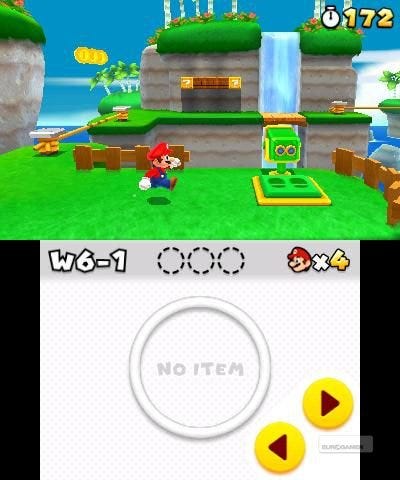
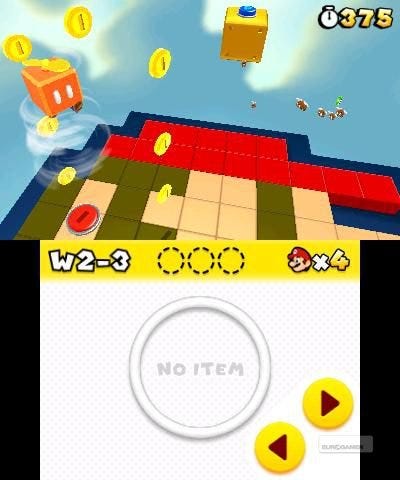
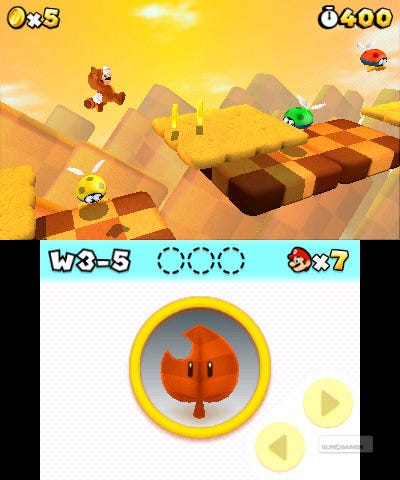

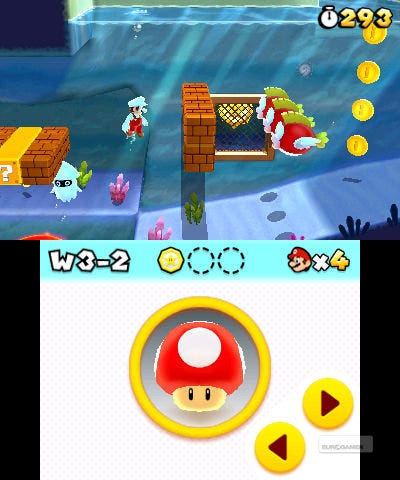
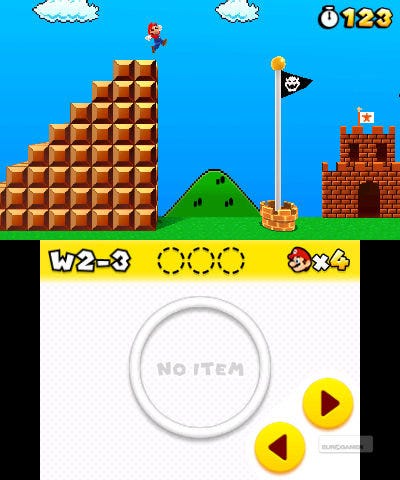
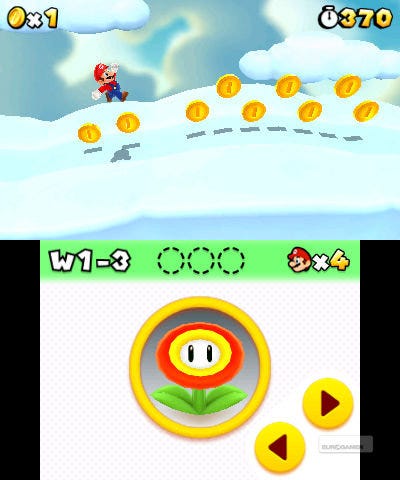
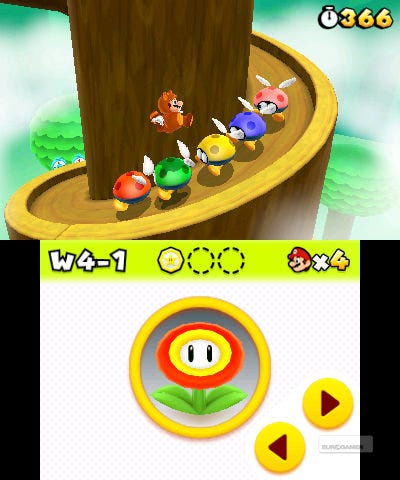
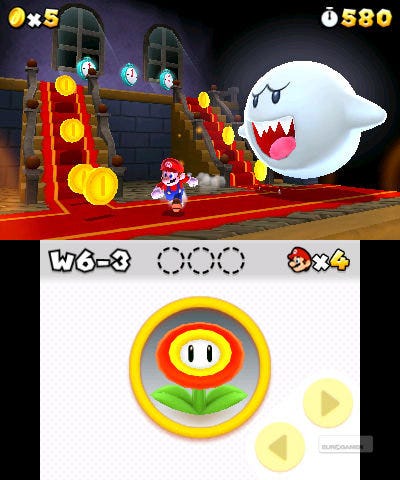
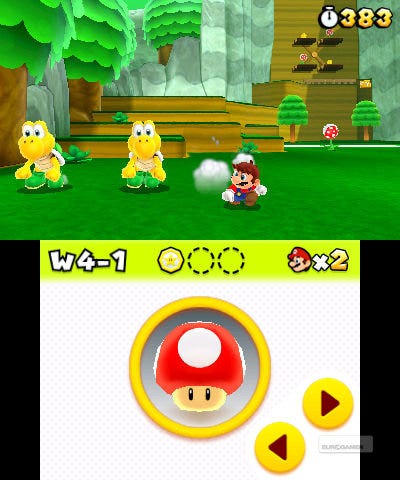
And the recycling is always accompanied by charming novelty. Take the mounted binoculars found hither and thither in the game. Stick Mario's eyeballs against them and up pops a first-person view of the stage for you to scope out a route (using the Circle Pad or gyroscope). But catch sight of a Toad, zoom in, and he'll cast out a special coin that grants a bonus - becoming in effect an adorable micro-game.
I rattled through the first two worlds in around an hour. The stages are short but varied, and never less than fun. My main concern was how quickly and easily I was able to race through a quarter of the game's regulation eight main worlds.
It's not apparent where secret stages will feature (the maps don't seem to allow for additional paths to open up), but this is Mario so it's reasonable to assume there'll be secret worlds of wonder squirrelled away somewhere.
Secret areas within stages (at least the ones I was able to ferret out) make clever use of all three dimensions, toying with the conventions of the genre Nintendo created in ways it has done since Mario first smashed through the ceiling and ran along the top of the level to reach a Warp pipe.
There've been some concerns aired over how slowly Mario capers through his latest outing. This being my first time with the game, I was at first disappointed to discover the criticisms seemed to ring true, until I remembered something fairly important: the run button.