The life and times of Dylan Cuthbert

The Q-Games boss on infiltrating Nintendo EAD, jumping ship to Sony and going solo with PixelJunk.

Next time you feel good about the sum achievements of your life to date, you'd do well to peruse the resumé of Q-Games founder Dylan Cuthbert for a quick reality check.

Since starting out as a fresh faced young programmer at British studio Argonaut back in 1989, he co-developed classic SNES shooter StarFox while still in short trousers, became one of the few Westerners ever to infiltrate the ranks of Nintendo's elite EAD internal studio, jumped ship to Sony to help develop the PlayStation 2 and then, in 2001 set up his own studio, Kyoto-based Q-Games.

In the same month as the revered PixelJunk developer celebrates both its 10th anniversary and the release of its excellent Star Fox 64 3DS remake, we sat down with the amiable 39-year-old emigré at the Tokyo Game Show to discuss where he's been, where he's going and how he plans to get there.

Cuthbert was just 18 when he was flown to Japan to show Nintendo the 3D Game Boy engine he had been working on at Argonaut. One thing led to another, and before he knew it he'd upped sticks to Kyoto and was programming Game Boy tank battler X with Metroid creator Yoshio Sakamoto and Miyamoto's groundbreaking SNES shooter Star Fox within the hallowed walls of EAD.

"I found it really eye-opening," he remembers.

"I came from the English games industry which had no concept of game design whatsoever. The programmers made the games. I went to Nintendo and they had a dedicated director and assistant director on the team. There would be Miyamoto checking the game design, not a programmer.

"They had this way of making sure a title had all its elements in place across the span of the game. You'd have an ending that was just as thrilling as the opening of the game, which a lot of games didn't have, especially in Britain.

"Your average Amiga game would have a great start or a great premise, and then either the difficulty level would just go through the roof so you couldn't get to the end, or you'd get to the end and it would just fizzle out."
1

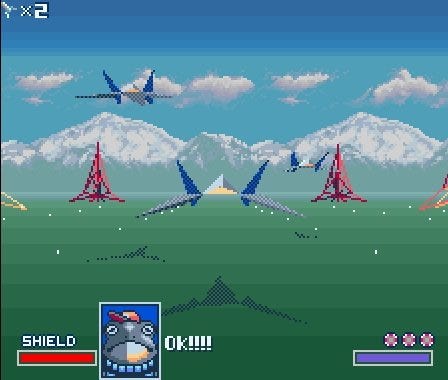
Cuthbert was still in his teens when he programmed classic SNES shooter Star Fox.

Given the stature of his new colleagues, his shaky grasp of the language and the fact that he was still barely old enough to order a jug of sake, you'd imagine he might have had trouble fitting into his intimidating new surroundings.

"No, not at all," he insists. "It was hard work but in a fun way. It was like a perfect learning experience of how things can be made really well."

And Cuthbert duly thrived, impressing his new taskmasters, not least of all Miyamoto himself. In a recent Iwata Asks interview, the legendary Nintendo creator remembers being impressed at just how well the young developer took to the task at hand.

"I was surprised that he could handle programming at that age - that he could work a regular job when so young. I thought, 'Oh, so that's what kind of world this industry is.' The first thing I thought when I met Dylan-san was that this isn't a field in which you can get puffed up simply by being older."

Wranglings over a non-compete clause in his contract with Argonaut unfortunately meant that, unlike his colleague Giles Goddard (who most recently made 3DS launch title Steel Diver for the platform holder), he was unable to take up a full time position in Kyoto. But rather than heading back to England, he instead got on a plane to California to work at Sony.

Cuthbert remembers his stint at Sony, where he was lead designer on colourful PS1 shooter Blasto, as a "friendly time" but a very different experience to what he'd seen in Kyoto.

"Sony was much more American," he explains.

"It was enjoyable but it was a different lifestyle. It had a very corporate feel, whereas Nintendo was more like a family - a family-run company. That was the big difference. At Sony you felt a corporate entity around you at all times. Whereas at Nintendo it was like Miyamoto-san was your dad and [former CEO] Yamauchi-san was your grandad."

He returned to Japan in 1999 to work at Sony Japan on tech demos for what would become the PlayStation 2 (the duck/bath clip shown at E3 2000 was Cuthbert's work), before finally taking the leap and setting up Q-Games in 2001.

Its first few years were spent staffing up and working on more tech demos, this time for Sony's PSP and the nascent PS3, and it wasn't until 2006 that its first game - stylish GBA puzzler Digidrive (later remade for DSiWare as Art Style: Intersect) saw release. Another Nintendo collaboration, Star Fox Command, followed soon after, alongside work on aspects of the PlayStation 3's XMB, before development on the first PixelJunk title got underway.

Since then, it's become one of the most prolific studios in the business, turning out on average three titles a year, alternating between bite-sized DSiWare downloads for Nintendo and six more PixelJunk titles for Sony, with Sidescroller and 4am (formerly known as Lifelike) the next out the door.

"We go with whatever we see that looks interesting and fun, without really caring if the market is there," he explains of Q's ethos. "As long as we make enough money to get by we're fine. It's more fun just being able to make what you want to make."

It's a unique set-up: a Japanese studio run by a Brit, staffed by a mix of developers from both East and West, and making exclusive titles for two opposing platform holders.

"If you're a Japanese person coming in you'll probably think it's very Western, and if you're a Western person you'll probably think it's very Japanese," says Cuthbert of the office culture. "It really is like that. It has a bit of everything."

And that dichotomy is clearly reflected in the games it makes. While its output might be aimed more at the Western market, its titles are built on solid Japanese design principles.

"They're kind of like a hybrid. Some of the art styles are Western but a lot of the gameplay elements are Japanese. So, for example, PixelJunk shooter has a lot of Nintendo touches to it. Like a Super Mario World thing - secret areas and coins to collect.

"And our attention to detail is definitely more on the Japanese side. We just make sure everything is very finely tuned. It creates that very nice hybrid between Western and Japanese aesthetics."

2

Cuthbert joined Sony in 1996 to work on nuts PS1 romp Blasto.

With feet placed firmly on both sides of the globe, Cuthbert has a privileged vantage point from which to survey the health of his adopted homeland's games industry. Just a few steps from the café in which we meet, the Tokyo Game Show is underway and it's a rather sorry sight this year, barely filling two thirds of the Makuhari Messe. While there are a handful of interesting titles on show, the majority are sequels or spin-offs of established franchises.

"It's kind of in a weird state because you've got two consoles in their final years - the Wii and the PSP - so we're in that lull," he muses.

"Looking around the show today, it seems the publishers are getting a bit weak-willed. They're not really claiming their territory very well. There's a lot of sequels, and nothing that makes you go 'wow'.

"Back in the day, when you came to the Tokyo Game Show there'd be things like Katamari Damacy out of left field to wake you up a bit. Or there'd be weird Korean bottom probing games or something, but at least it was different. This year I haven't seen anything that's interesting.

"I don't know what might shake things up again," he continues. "I don't know many studios that do the kind of thing we do where we publish and self-fund our own titles. Most studios are still in the old model where you have to be funded by the publisher and the publisher tells you everything you have to do. They do the work, and that's it. But the publishers aren't really taking the risks right now."

He goes on to suggest that the country's burgeoning mobile sector has slowly been robbing the core Japanese games industry of young talent.

"Mobile gaming took off a lot earlier here than it did in the West. 10 years ago a lot of graduates would go into that industry as it was paying better than the regular games industry. There's a lack of inflow of creativity at the lowest level.

"I think recently in the US you have a similar problem where people will go into Zynga or other social networking companies instead of more orthodox gaming companies."

While the Japanese industry at large might be staring down a rather depressing future, it seems Q-Games has plenty of interesting stuff in the pipeline. More PixelJunk is of course a given, though don't expect any more sequels in the vein of Shooter 2.

"We get a lot of calls to do an Eden sequel, and people also say they want more Monsters. We're actually doing a social network version of Monsters. Probably Facebook. It's a hell of a lot of fun.

"Apart from that I'd prefer not to do any more sequels for the time being. We have a couple of original ideas we want to pursue. You can get into this trap if you start doing that, where that's all you end up doing.

"When we made Shooter we had all these ideas left over, and we thought it would be such a waste not to do another, so that's why we did Shooter 2. That was necessary. Apart from that though, I always prefer to make original things. Every now and then, as fan service, make a sequel. But not one after another."

And what about StarFox, the title which made Cuthbert's name? Miyamoto recently went on record as saying that if StarFox 64 3D doesn't sell, Nintendo might be forced to call time on the franchise.

"He always says stuff like that," notes Cuthbert with a smile. "Eventually [there'll be another]. It's one of his characters. It'll make a re-appearance no matter what happens I think, though I can't speak for him obviously."

Does he have any ideas of where he'd like to take the franchise?

3

The PixelJunk series, soon to see its seventh title, began with Racers back in 2007.

"We always have ideas but it needs Nintendo to come and speak to us about it first. We can't actually decide anything ourselves."

In any case, Cuthbert explains that pitching new projects to Nintendo is often a futile exercise. Given its huge resources and heavy prototyping culture, the chances are it's got there first.

"The problem with Nintendo is that they have so many internal staff that whatever idea you go and show them it's quite likely they've already developed a prototype for that kind of game internally. You're showing something they've already seen.

"It's weird. Several times in the past I've shown them stuff that I thought was totally new and original and they'll go away, come back and say 'actually we made this prototype last week' and it's the exact same game. But they never finish anything. The vast majority of stuff never makes it out.

"If you can work like that it's the best way to do it. Throw it all up against a wall and the thing that sticks is the thing you go with. We try and do the same thing with PixelJunk. We've had lots of ideas in the past that we just stopped. We'll find a more interesting idea and go with that instead."

The obvious gap in Q-Games' client list is Microsoft. Are there any plans to add that third feather to Q's cap?

"We did some stuff way back, but we don't have any interest right now," he reveals.

"We talk to them occasionally, but not really for anything in particular. It's just too much for us to do, to deal with all three of the big manufacturers. Just dealing with two is hard enough! We'll stay with Sony and Nintendo for the time being."

4

Not checked out Q's DSiWare output? Clever Arkanoid riff Reflect Missile is a good starting point.

One other thing Cuthbert rules out, and in no uncertain terms, is a return to his homeland. Alas, it seems like the British games industry has lost one of its brightest talents for good.

"There's no way could I go back to Britain. I find the reverse snobbery really hard. Just because people like good things people make fun of that. The whole point of life is enjoying yourself and having good things, right?

"When I came to Japan, I found the opposite. It might be just the Victorian values in Britain but in Japan they're a lot more open to other people. You get a lot more expressiveness here. People have this image that Japan is this uniform society but it isn't at all. That's why you have all the crazy things. You've seen the games, for example. There's crazy stuff there, and that's an expression of individualism.

"In Britain I find everything tends to be more uniform. We tend to make interesting technology or something that looks cool but we don't go further than that, take it to its conclusion and make something unique. We fear ridicule."

Conservatism is certainly not an accusation that could be thrown at Q-Games' output. As detailed in Eurogamer's recent preview, off-the-wall audio plaything PixelJunk 4am might be the studio's most out-there concept yet. Who knows where Cuthbert's freewheeling outfit goes after that, but you can be sure it'll be well worth keeping an eye on.

Comments (36)

Comments for this article are now closed, but please feel free to continue chatting on the forum!

  • Loading...hold tight!