Bodycount
Surprisingly low.

You can tell a lot about a game from its Achievements. After one hour and six minutes of playing Bodycount, it had doled out 335 points. Not only are the names uninspired ('Boombastic' - really?) but they're handed out in great chunks for standard progression. Unlock a new ability, another 50 points. That's not generosity - it's desperation.
Bodycount is a desperately average FPS, a poorly-conceived and barely finished rush-job entering the most over-saturated genre around. It has a campaign clocking in at around four hours, a multiplayer mode that redefines bare bones, enemies that don't respond to your presence, and a frankly terrible line in costumes.
This was supposed to be Black's spiritual sequel - a line that Codemasters has been playing down since the departure of Bodycount's spookily-named former project lead Stuart Black. But Bodycount loses out in every way to Black, a game released five years ago on last-generation hardware. There's no point in dwelling on the comparison just to stick the boot in, but you wonder why it was made in the first place.
Bodycount's weapons are mundane versions of the usual suspects: pistol, shotgun, machine-gun, etc. There's a decent enough alien shotgun/grenade launcher hybrid waiting in the game's final third, which blows up enemies with crackling purple electricity, but needless to say it's not really worth the entry fee.
Bodycount's shooting, in terms of aiming and firing, is reasonably tuned and could have been the basis of a better game, but here it's constantly hampered by a terrible cover mechanic and a travesty of a melee attack, and that's before we even mention what you're shooting at.
The cover system, such as it is, is based around holding the left trigger while hiding behind something to peek out from the side. You'll use it intentionally maybe five times, if that, in the whole campaign, yet it shares a trigger with normal aiming. This means that if the game thinks you're in cover while aiming, moving your sight around can suddenly jerk the screen sideways - and it's not the most gracefully presented move. Bodycount's fighting doesn't even demand a cover system, never mind one that's neither use nor ornament.


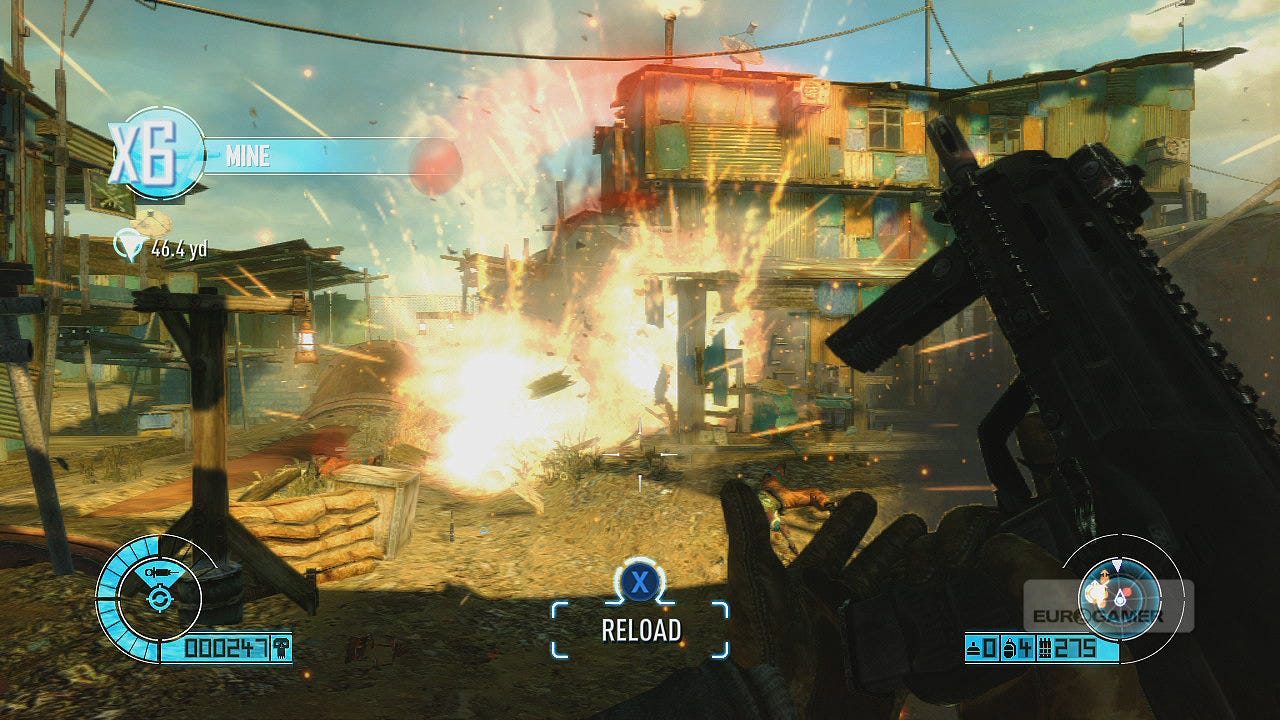
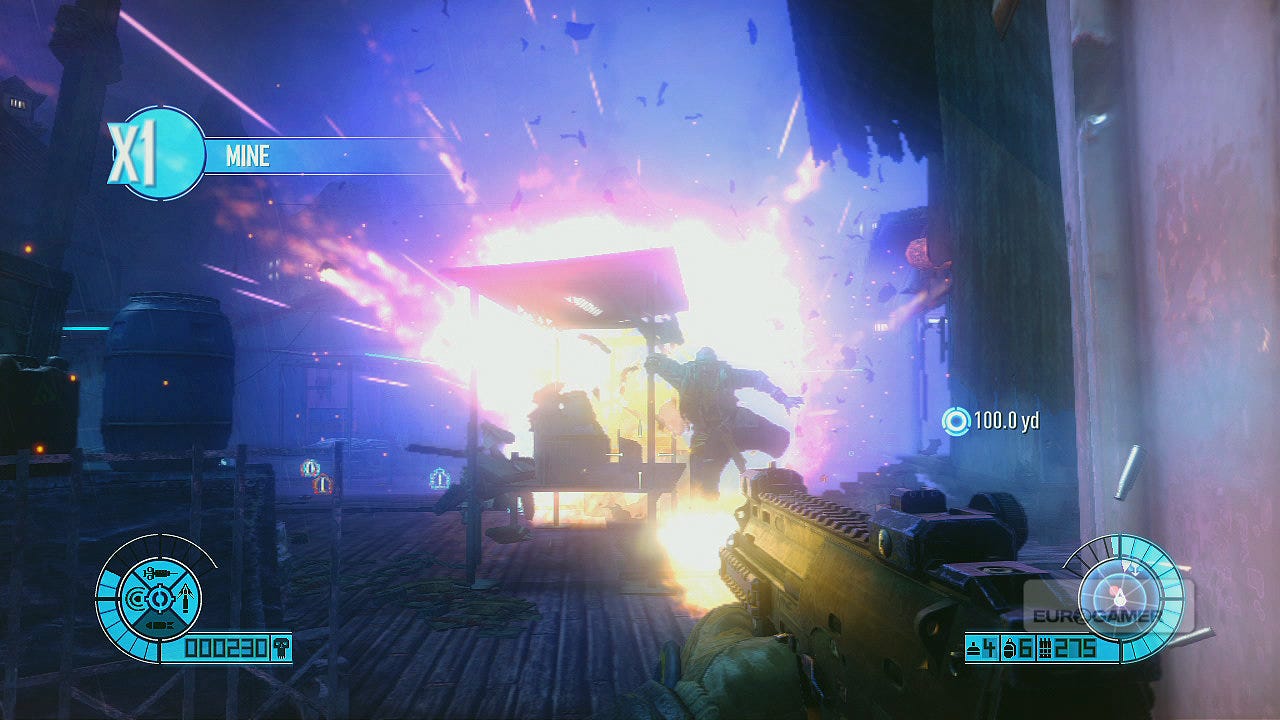
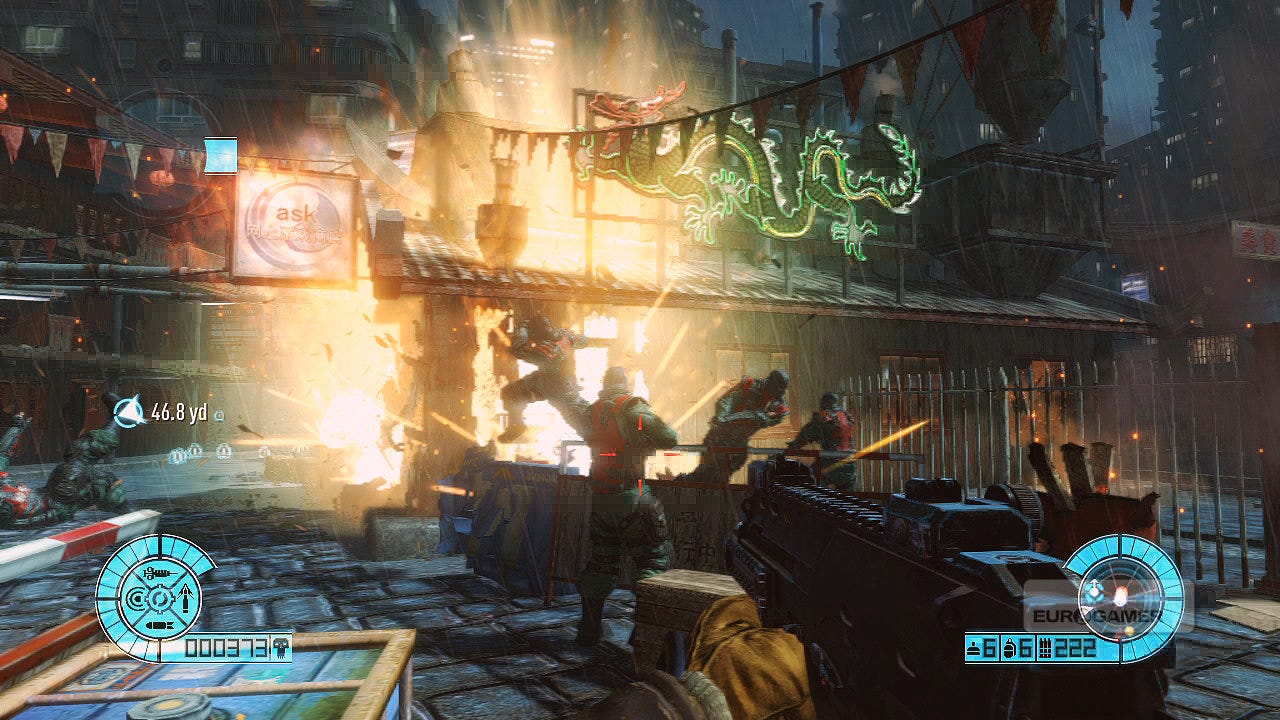
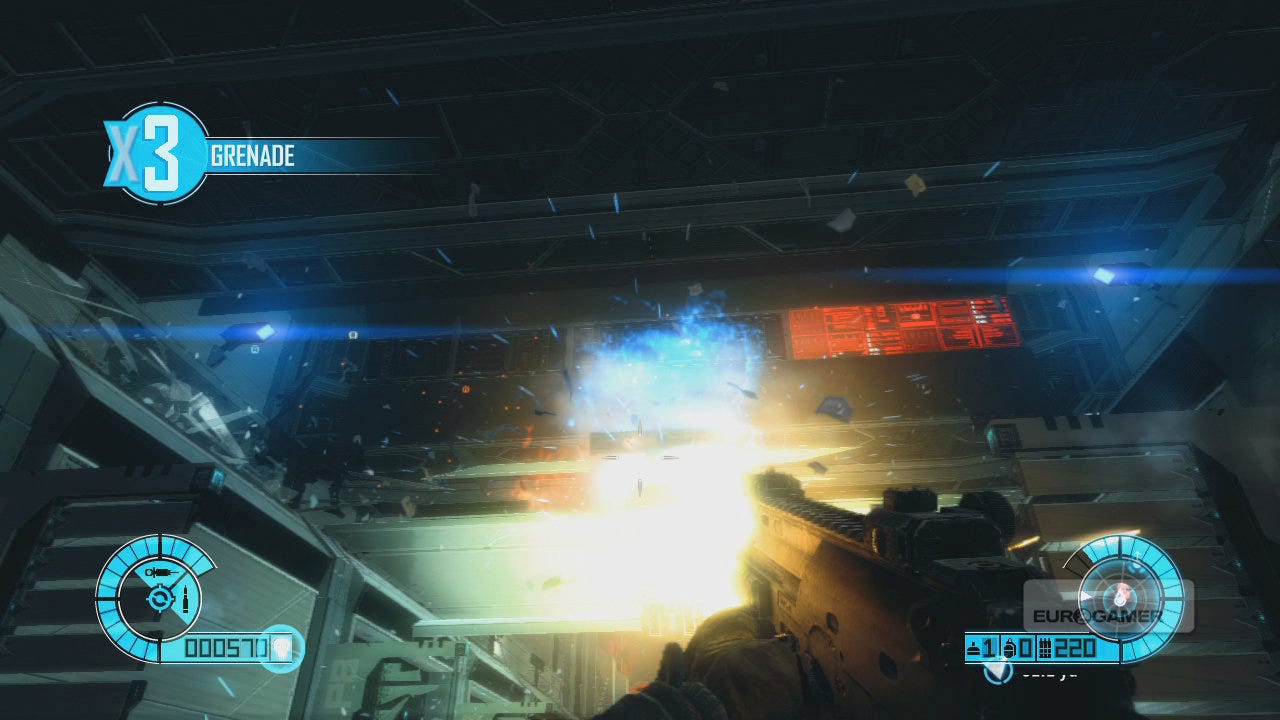
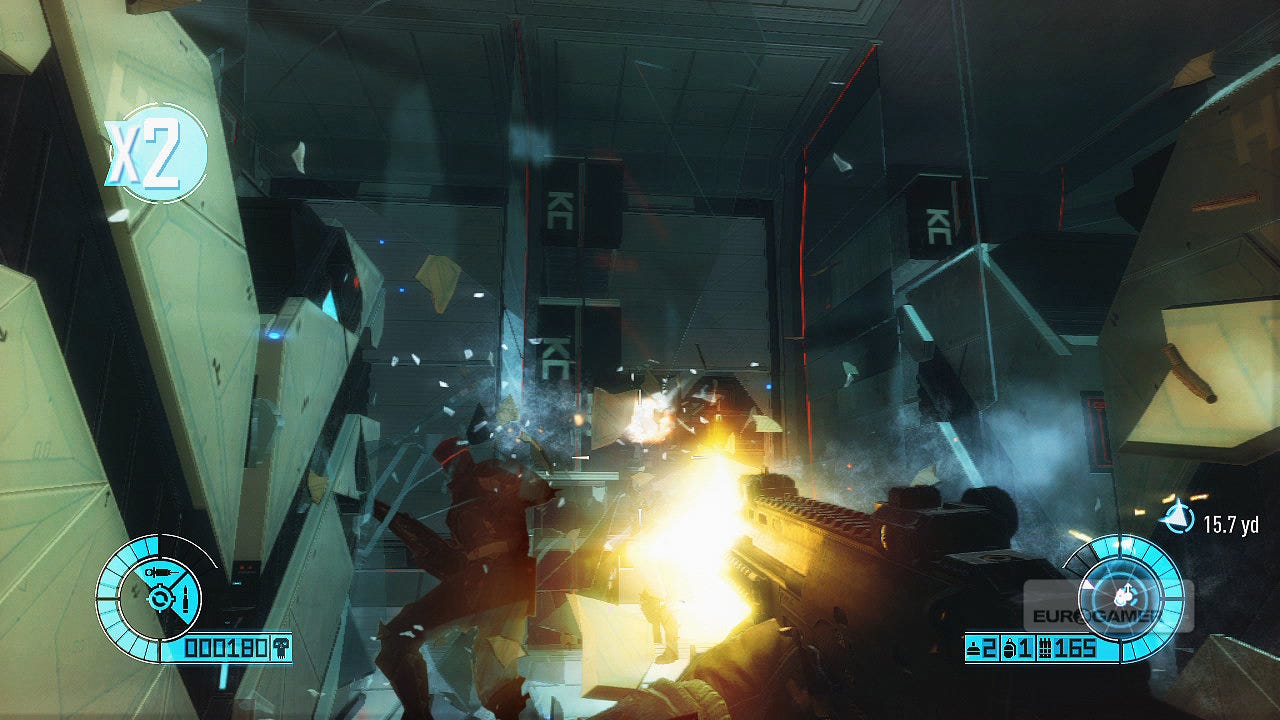
Backing up this misfire is a destruction system that's downright archaic. Next to what Battlefield has been doing for years and years, Bodycount's effort is paltry. When behind cover, chunks of it will go flying when the bullets hit, and elements of the scenery can be shot or knifed through. That's it. There's no grand scale to it. Certain bits of the environments are destructible while others are not.
But what does for Bodycount is its enemies. The game's spawning mechanism for each level has these chumps running towards their assigned start point, which often seems to be behind the player, before attacking. So for much of Bodycount you'll be sprinting forwards to a checkpoint while the four or five men supposed to stop you sprint in the other direction. It's bizarre.
Things don't get any better once they start attacking. A dumb horde is fine, in its own way, but Bodycount's troops are lemmings, relentlessly jamming into doorways, bunching near explosive barrels, and rushing into the hail of fire that killed their mate.
Sometimes they'll ignore you completely. Just stop in the middle of a firefight, look in a different direction and turn motionless. At one point a crack team of five troopers came undone when they huddled near a barrel, and one threw a grenade that bounced off the head of another and fell at their feet. I'm not making this up.