Saturday Soapbox: Careful What You Choose
Are choice-and-consequence systems making our games less interactive?


Five years ago it was cover systems. Thanks to Gears of War, it got to the point where you couldn't go to the bathroom without being invited to crouch behind something by a whopping red icon. Then for a while it was experience systems in multiplayer. They had been done before, of course, but we can blame Call of Duty 4 for catapulting them to front of mind. Nowadays even 2D platform games on your mobile phone have XP systems.
There are always trends at work in game development, and people are always copying each other (sorry, learning from each other). It's often to our ultimate benefit, too. Third-person action games used to be notoriously crap at gun combat because you couldn't easily judge your level of safety, and thanks to everyone copying Gears of War now we can focus on other things.
The current thing, then, is choice and consequence. It seems like whatever you're playing now, you can expect to have to say something meaningful to somebody, or have someone's life thrust into your hands at a moment's notice.
Rockstar does it all the time - the people in GTA IV, Red Dead Redemption and L.A. Noire all want you to make their minds up for them now and again - and BioWare has built a dynasty out of it. Hell, if Nintendo really wants to appease its shareholders after the 3DS debacle, just stick a gun in Mario's hand and ask him whether he wants to shoot Toad in the face or leave him to his crack habit. And of course our Eurogamer Game of the Week is Deus Ex: Human Revolution, a game which is more or less built on the idea that the world is what you make of it.
So is this a positive trend too? It certainly seems like it. With a few well-directed exceptions like the Uncharted series and Enslaved, it's nice to be breaking away from games where you have to put down the controls every 20 minutes to watch another unskippable cut-scene where conflicted idiots do stupid things on your behalf.
Then again, previous systemic trends have been more to do with improving your engagement - by making it more fun to do something fundamental to a game, by giving you more reasons to play a game for longer or, going even further back to the advent of third-person cameras in 3D worlds, simply by framing the action better.
And, at the risk of turning this into Saturday Semantics, this latest trend is a bit riskier, because whereas a lot of the other changes at work in game development are injecting more interesting possibilities into our interactions, choice-and-consequence is perhaps beginning to do the opposite.
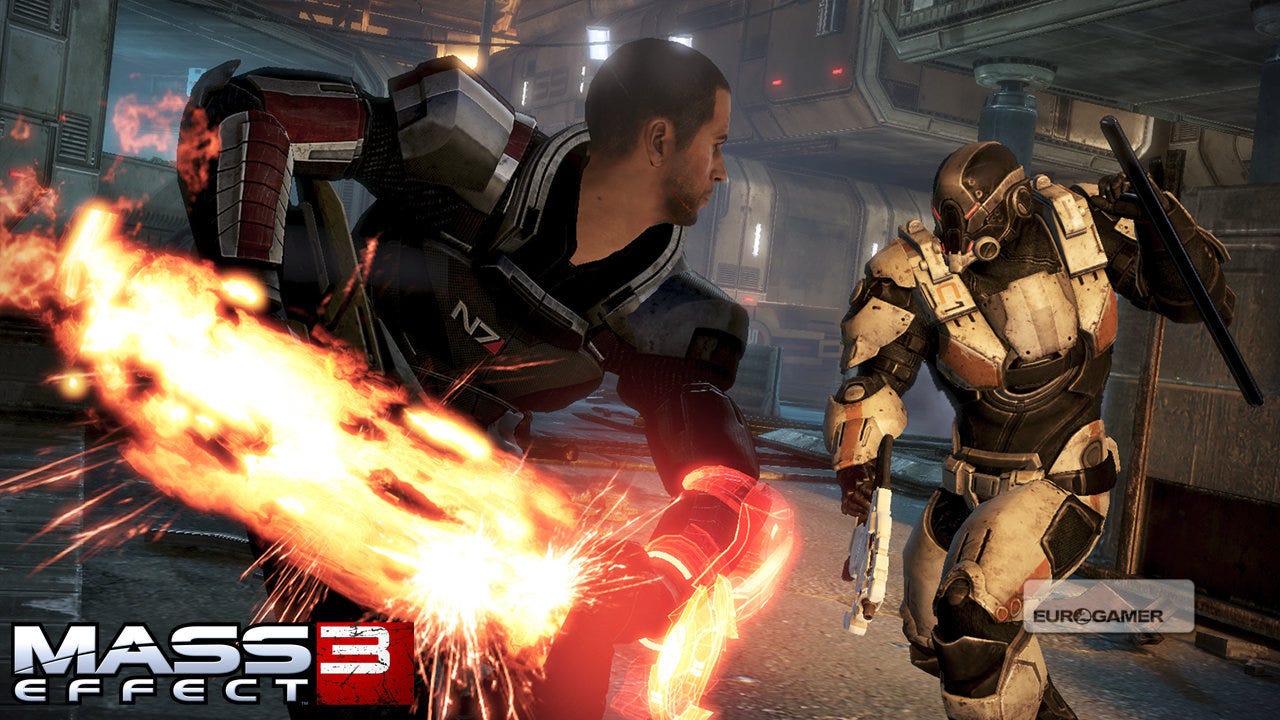
Take Mass Effect as an example. It's a trilogy of games where your actions are supposed to shape the fate of the universe; where the alien you sleep with in the first game might be a villainous crime lord by the time you meet her in the second; and where your behaviour - even incidental stuff like what you say to a reporter - can alter the way you're perceived and potentially cost the lives of those around you a few years later.