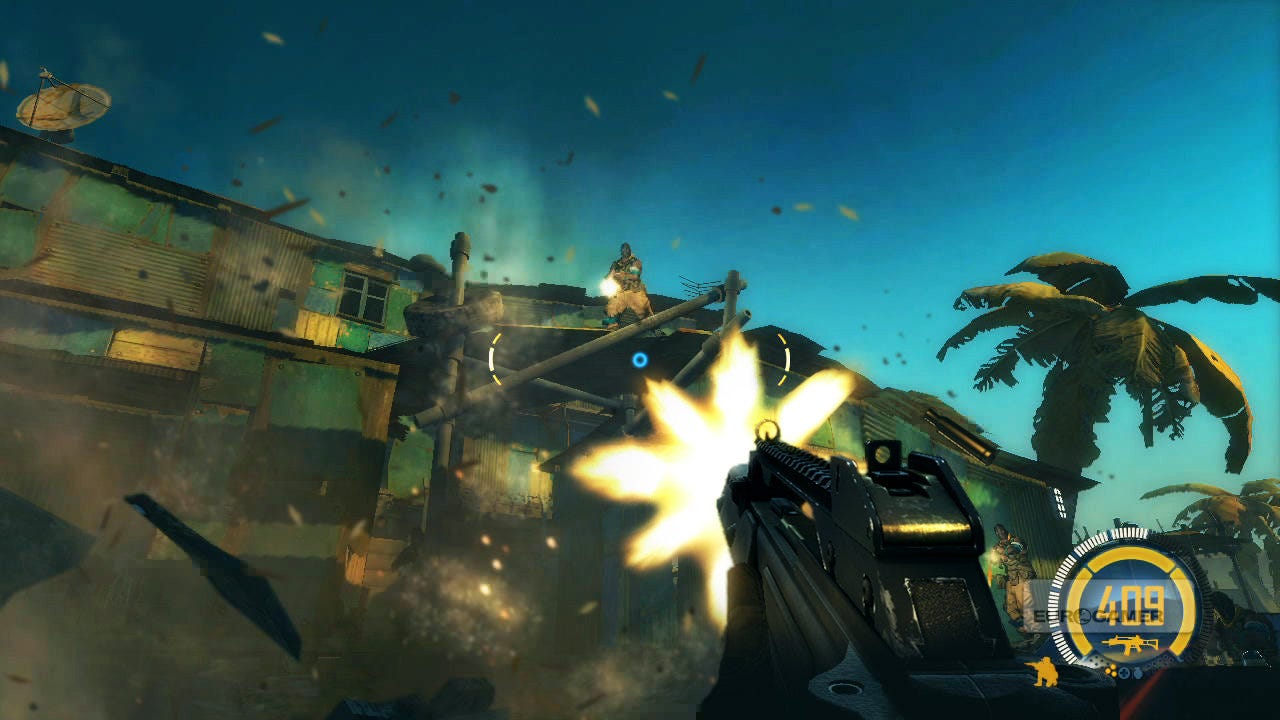
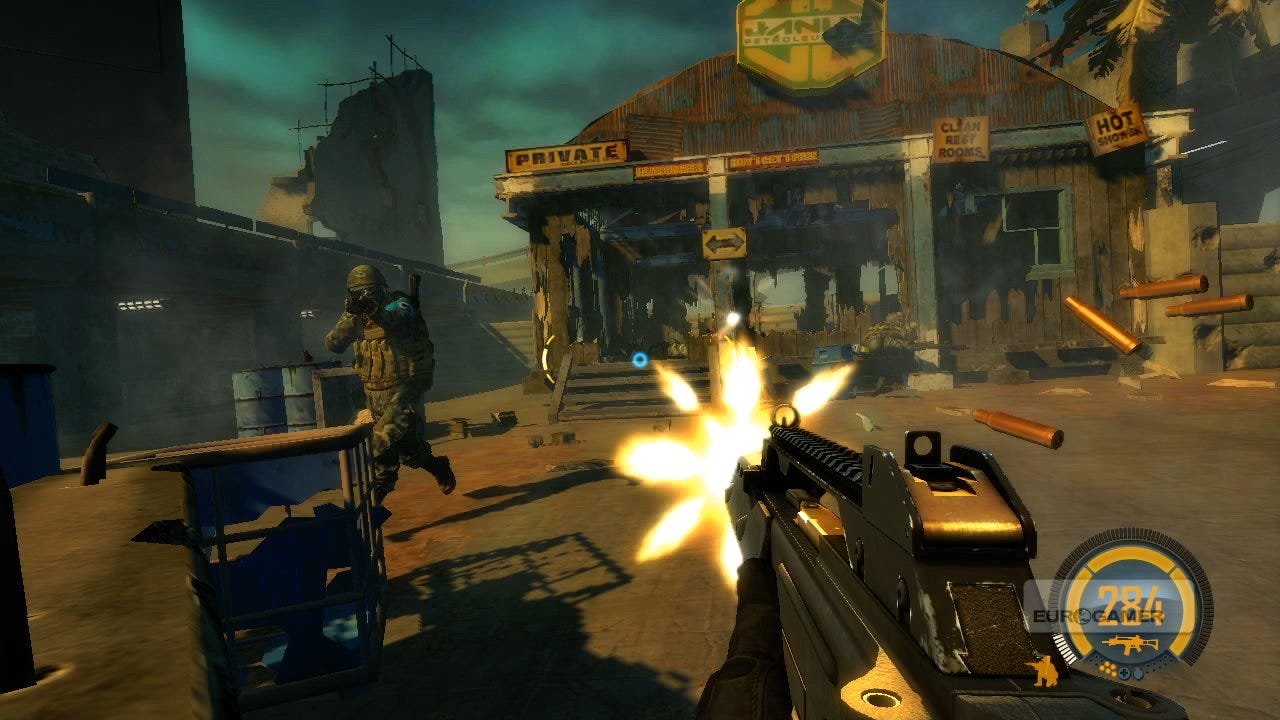
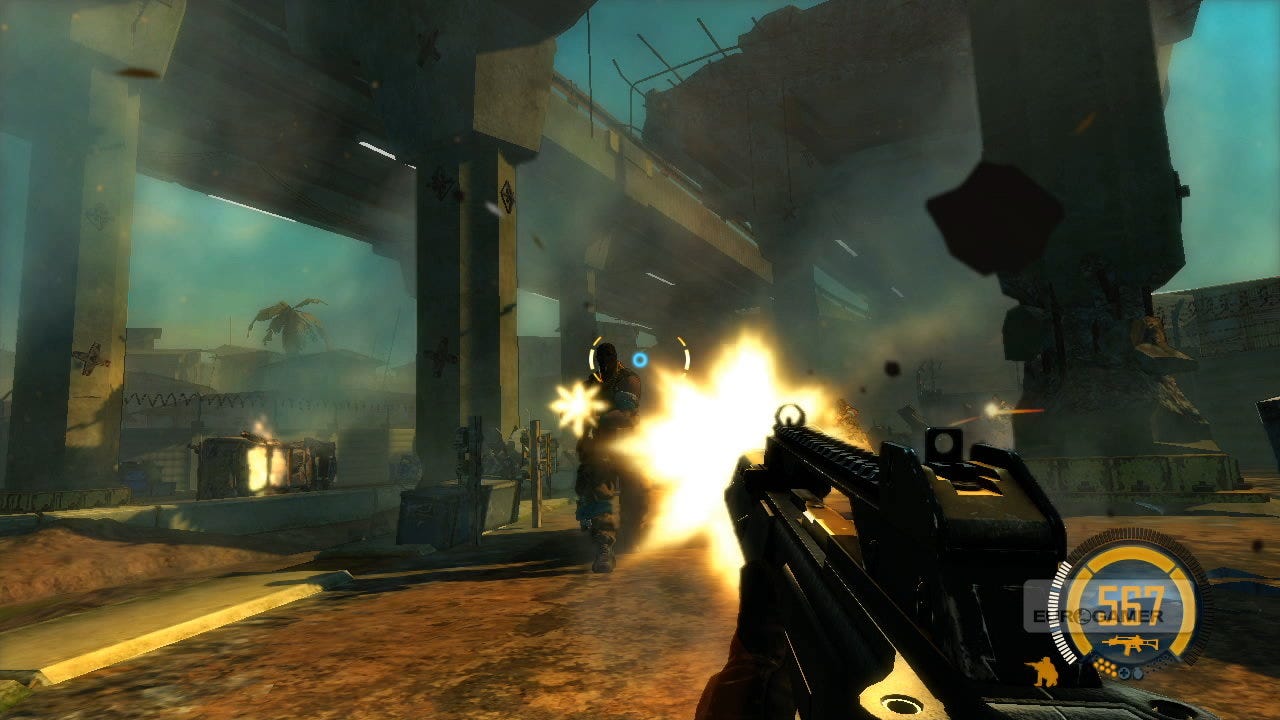
Bodycount's been no stranger to adversity: Codemasters' spiritual sequel to Black has seen the departure of some important team members, and been the subject of plenty of rumour regarding missed milestones and brutal crunch periods. With the project finally headed to a late summer release, we caught up with game director Andrew Wilson to get his perspective on a troubled development – and to see what's driving this ambitious shooter.
Eurogamer: You've had a number of high profile departures on Bodycount. Stuart Black, particularly, was the creator of the IP and seemed to be the voice of the game before he left. What's it like to work on a game after crucial personnel depart? Is it a sign that Bodycount's development has gone off the rails?
Andrew Wilson: The problem is that a lot of developers will get through development without having a figurehead like that, because it can become a personality-driven thing. When you get someone like Stuart, who's obviously very outgoing, very passionate, and very capable when it comes to articulating the game, of course you put them up as the figurehead.
It sort of gives a false impression of how important people are, because it's a dev team. By the time Bodycount's done, well over 100 people will have worked on it. You could take a variety of people across the team and say that if they left it would actually be more damaging than some of the senior people who have gone. Particularly on the code side, like the lead gameplay programmer - if he turned around and left tomorrow, I'd be a lot more upset, because he's fundamental in terms of actually getting the game built.
So when you put a figurehead up like that, you can give a false impression of the importance of individual people. Really, it's a team sport.
Eurogamer: But how does it affect the team when they see people like Stuart Black, or like executive producer Tom Gillo and Codesmasters Guildford GM Adrian Bolton leaving?
Andrew Wilson: It unsettles people. Of course it does. There will be some people on the team who don't have massive day-to-day contact with the people leading the team because it's such a big group, so it can be unsettling. But then you get through the next couple of weeks and you see that nothing really has changed and everybody else is just carrying on. Then you go and do another public demo and that goes well. It's not easy having people leave like that, but it happens. It happens a lot.
Eurogamer: There are persistent rumours that milestones have been missed, that development money's run out, and that people on the team are crunching and not being compensated. Is this a case of, "Just get the game out the door and be done with it?"
Andrew Wilson: No, not at all. We didn't have a specific release date for quite a while, and the reason was that for new IP, it's very difficult to map something out and know exactly when it will be done. It's much easier with a straight sequel, which is a known quantity. So actually, the release date has shifted. Not by huge amounts. We locked it a few months ago, just after Christmas. We are in a crunch period at the moment: we've just come through alpha and we're getting into the bug-fixing stage. I've never worked on a project where that's not the case. I've worked on worse projects than this in terms of crunch, too.
The money's not run out, either. Let me put it like this, if we were told to, we could take what we've built, fix the bugs, and put it in a box very quickly. And we're not doing that.
Eurogamer: So what are you doing?
Andrew Wilson: We're happy with the feature set that we've built, so we're not building any more features. The last few features came in in the last few weeks. We're now balancing the game. We're getting a lot of people in, we're doing a lot of testing with people from the target audience. We're doing a lot of fine-tuning, and we're trying to week-by-week just lift the whole thing. This is the time that, when you cut it from a project, you cut ten percent of the quality. You need to give it that final month at the end where the screws get tightened up and you tweak and balance it.
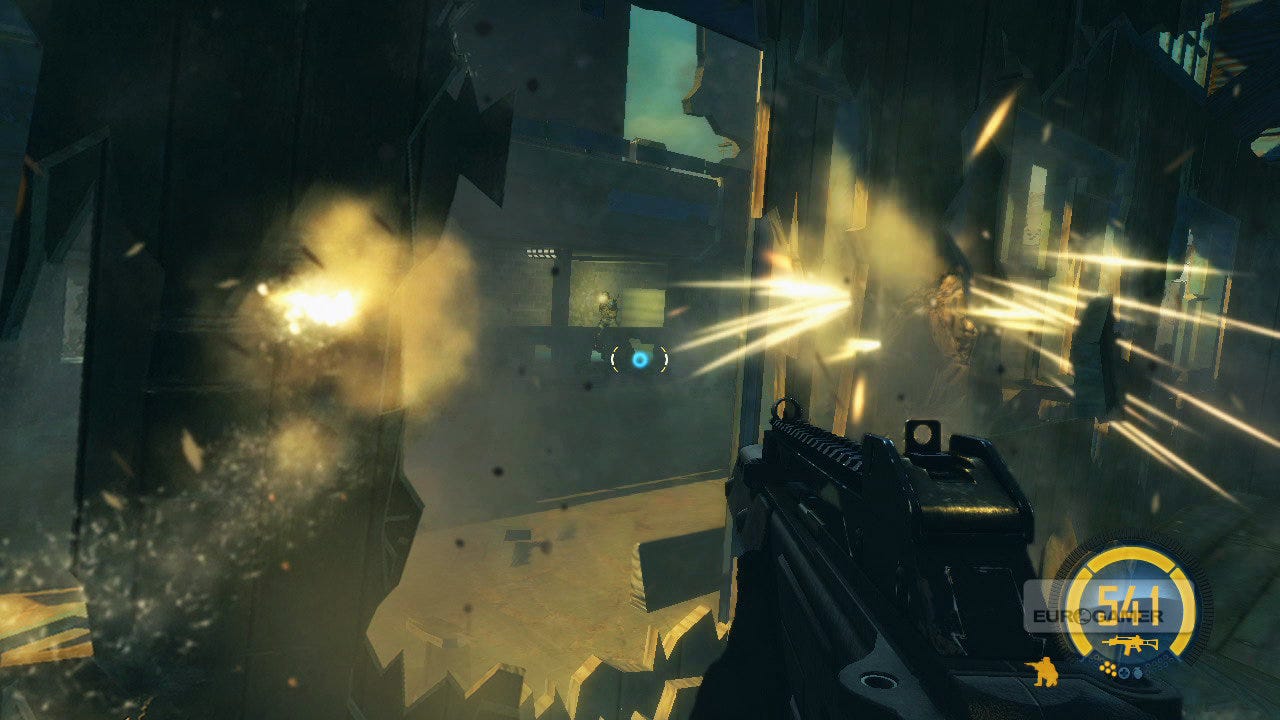
Eurogamer: Bodycount's approach to the FPS is very different from most other shooters out there. It's not overly reliant on scripting, and you seem to let the AI do a lot of its own thinking in large, non-linear levels. How did that come about?
Andrew Wilson: It was a risky choice to make. When you create something entirely new, everything that you do slightly differently is a risk. We decided to push this in a different direction very early on. Partly it was because there are certain things we don't like about other shooters, and partly it was because we wanted to do something different. It's very hard to take a group of people and gee them up to make something that is just like something else. It's far better if you can say, "This is Bodycount. This is what we're building." All the AI and open level design really fed into that and supported it.
Eurogamer: With a new IP, is it a smarter idea to take risks than to play it safe?
Andrew Wilson: I think it's less risky to push in a new direction with a new FPS at the moment. If you look at something like COD, and you go up against them saying you can out-gun the big boys, you're going to lose. Not only have they spent an obscene amount of money on it, but they've spent years and years iterating that exact concept, through a number of sequels, to get it, for what it is, pretty much perfect. You're not going to compete with it, you're only ever going to be compared to it - and those comparisons are only ever going to be unfavourable. So taking a risk and pushing in a new direction, at least you can say that it's different and you don't get a lot of comparisons to anything else.
Eurogamer: Bodycount was initially positioned as a spiritual sequel to Black. What's the team's relationship with that game? Do you feel its presence hanging over you a little?
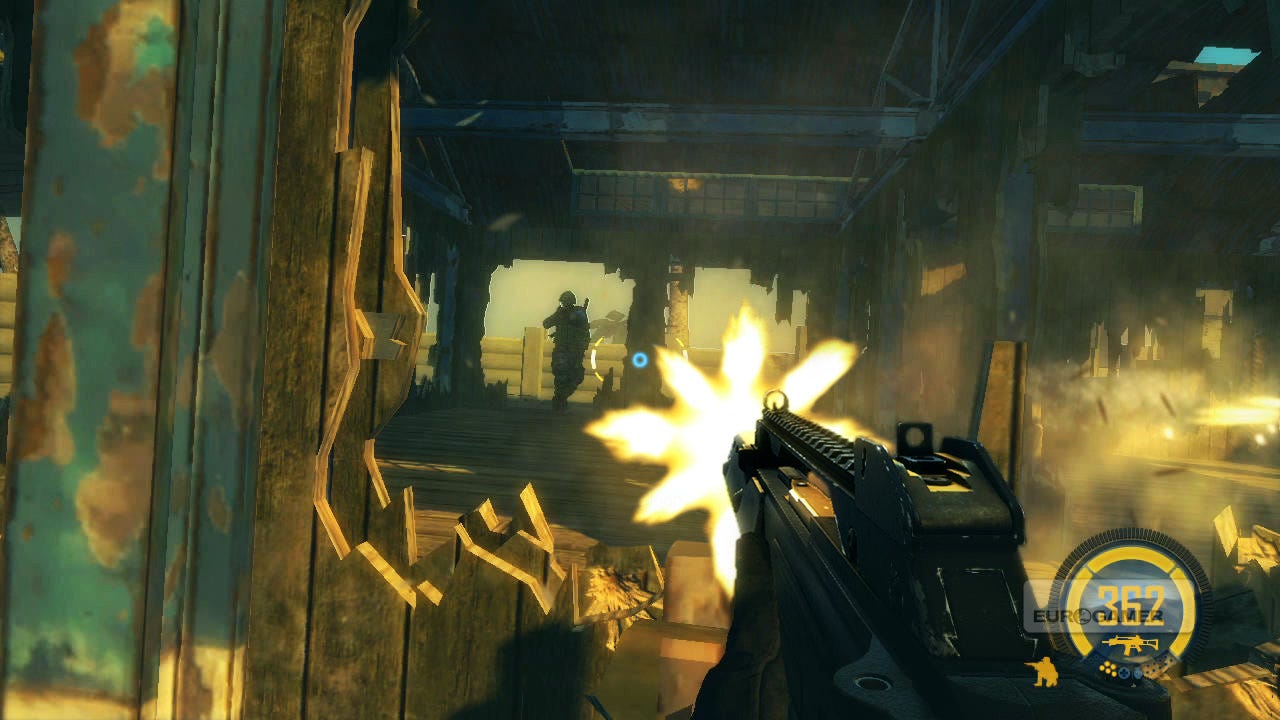
Andrew Wilson: I wouldn't say it was hanging over us exactly. We've got a good chunk of the Black team working on this with us. Obviously, it would do a disservice to people still working at Criterion, who made Black, to say that we've got the whole Black team. We don't. But we've got a large number of people including some of the senior creatives on it, so the influences are there. When Stuart Black and I sat down and asked ourselves what we were going to make, it seemed that the perfect thing to do would be to do a shooter. If we were going to do that, it would be nice to do a proper shreddable shooter as nobody has done that for years. It was born of that, and it was born of the fact that we knew we had a lot of expertise in the studio to do that.
So there is a legacy there, there is an idea that this is a spiritual successor. But we don't have Black memorabilia around in the office, and we don't look at it and go, "Right, so for the sequel we'll need..." If you look at Bodycount and you look at Black, until you play them and see the shredding and everything, you wouldn't know they're from the same gene pool.
Eurogamer: How have FPS games changed since Black?
Andrew Wilson: You look at FPS games at the moment, and for the last couple of years, it's been a bit of an arms race. It's about who can outspend who, and who can deliver the most bombastic, over the top experience. Then this year, you've seen things like Bulletstorm and Brink, and you're starting to see people push in a different direction and you're starting to see a lot of innovations. [Laughs] I don't think it's the death throes of it, with this crazy burst of inventiveness...
Eurogamer: Where you go mad before you die?
Andrew Wilson: Right! I don't know if that's it, but this is an important year for FPS games. We're going to see how much room there is around COD and Battlefield.
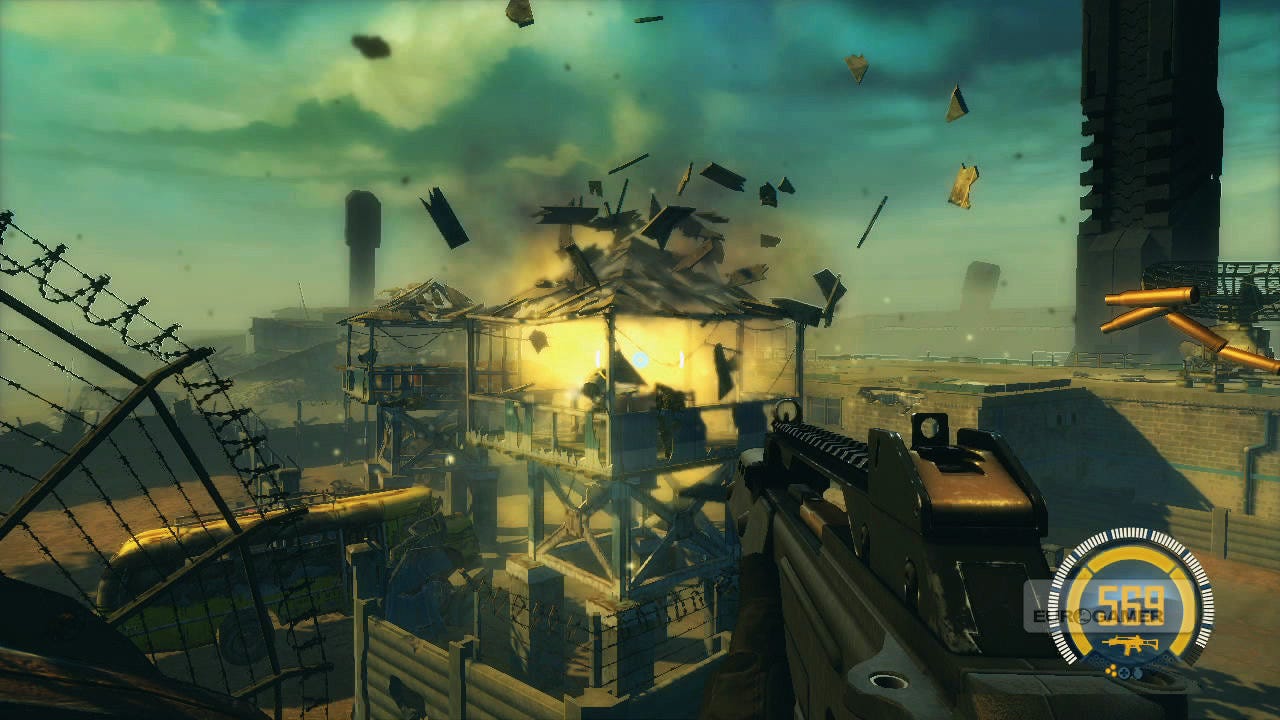
Levels tend to be large and dauntingly open-plan.
Eurogamer: The skill kill system in Bodycount is very interesting: it's a lot less elaborate than Bulletstorm's, which turned that game into a kind of puzzle game at times. Have you reined yourselves in on purpose?
Andrew Wilson: The core thing about the skill kills is that they aren't at the centre of things. It's all about the combat chain: doing one skill kill after another and keeping that multiplier growing and growing and growing. That's how we grade you, and that's how we rate you at the end of the missions. The reason we do that, pure and simple, is to drive replay within the single-player campaign. Bodycount's levels are very open, the AI is very dynamic, and you can actually have a completely different experience by attacking levels from different directions. Skill kills are a way of saying that there's more to the campaign than playing it once and then living in multiplayer.
Eurogamer: One of your power-ups in the game is a speed boost, and apparently this started off as a bug and then became a feature?
Andrew Wilson: It's funny how the game itself can surprise you. With the speed thing, I'd just gone to play the co-op mode for the first time. It was early, and it was quite broken – and one of the things interesting about how it was broken was that one of the players was running at double speed. I was looking at it on the other person's screen, and it looked quite funny, but it also gave me a really interesting advantage in terms of running around and mopping up all these waves that were attacking. It worked perfectly within the context of our upgrades. We realised if we could time-limit it, it worked brilliantly, and we could swap it in for one of the other upgrades we weren't actually that happy with.
Eurogamer: Was that other upgrade one of the things you put in and then realised you shouldn't have?
Andrew Wilson: It was something that stayed in. It was a radar-related upgrade, and we realised that we were asking the player to pay for something with Intel that other games would normally give you for free. We decided people should have it permanently from the start.
Eurogamer: Part of what you're pushing with Bodycount is guns that feel especially satisfying to shoot. How do you actually go about creating that kind of experience?
Andrew Wilson: Basically, you get a guy in who's done it before on a lot of high-profile titles, has shot a lot of real-world weapons, and is also a crazy, on-the-edge borderline sort of Welshman. Then you sit him in a room for two years, and have him endlessly iterate until it feels right. It's about time, ultimately. A lot of teams will make a shooter, a game about guns, and then won't put the time into endlessly finessing everything about that.