Version tested: Retro
There once was a time when varnished wood was considered to symbolise the very height of affluence and sophistication. Cladding your product - be it a motor vehicle, wireless radio or television set - with timber panelling was widely regarded as a sound idea if you wanted to attract the attention of fashion-conscious consumers back in the 1970s, but then so were glitter-encrusted platform boots, bedside coffee machines and The Bee Gees.
Mercifully, mankind's obsession for faux wood-effect consumer goods died out with the dawn of the plastic-obsessed eighties, but that doesn't mean that electrical items crafted from trees have entirely lost their lustre - as the unique wooden SNK Neo Geo MVS capably proves.
Produced by Analogue Interactive in the United States, this striking piece of hardware is the video game equivalent of a prohibitively expensive hi-fi separate or a custom-made suit. Fashioned with the hardcore enthusiast in mind and sure to become the stuff of legend in collectors' circles, it doesn't really get any better than this for rampant SNK fanboys.
MVS vs. AES
But there's a good chance that this machine may be of interest to those who aren't card-carrying Neo Geo freaks, so before we delve a little deeper into this 100 per cent walnut-encased console oddity, it's worth recapping exactly what kind of beast we're dealing with here. SNK's Neo Geo system premiered in 1990 and has gone on to become a cult; famous to many, yet played and owned by comparatively few.
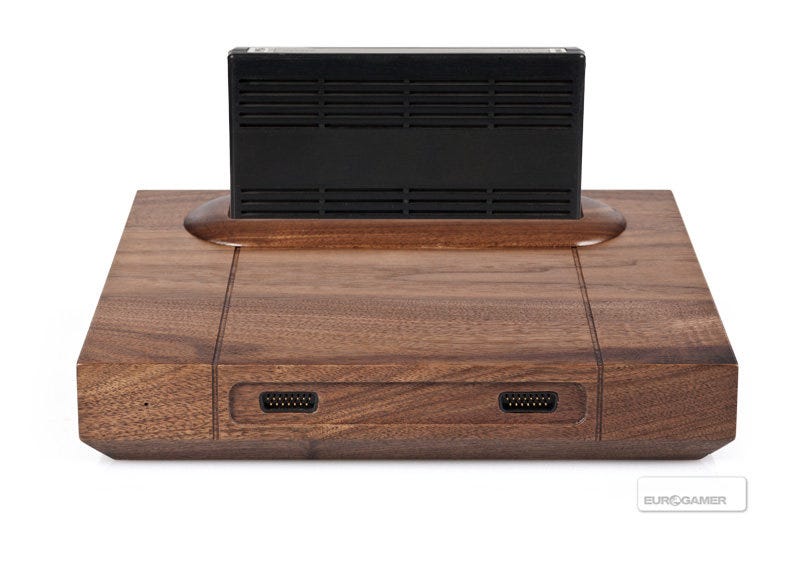
Its genesis was down to SNK's desire to offer long-suffering arcade operators a risk-free route to profitability. Unlike most arcade machines of the era - which either came in expensive dedicated cabinets (see Sega's Space Harrier and After Burner) or used unwieldy and easily-damaged PCB boards - the Neo Geo MVS (Multi Video System) took inspiration from the burgeoning home console scene and utilised universal cabinets and easily-swappable compact cartridges.
The benefits were obvious; once a game had reached the end of its lifespan, the operator could simply whip it out of the robust MVS cabinet and replace it with a newer, fresher release.
Not content with succeeding in the coin-op arena, SNK also launched the AES (Advanced Entertainment System), which was essentially the MVS hardware repackaged for domestic use. The price tag of the hardware was astronomical, and the games themselves retailed for over £200 apiece - a truly eye-watering sum, even by today's standards. After all, this was cutting edge coin-op technology, and it made rival platforms like the Mega Drive and SNES look weedy in comparison.
Regardless of their format - AES or MVS - Neo Geo games were identical. Every cart used the same chips across both standards, the only difference being that when played on an MVS, games would default to the arcade setting (which required coins to be inserted to play) while on the AES a 'free-play' approach was selected. However, in order to prevent industrious arcade owners from purchasing the (then) cheaper home cartridges and making a tidy profit with their MVS cabinets, SNK ensured that the software from one system could not physically be played on the other.
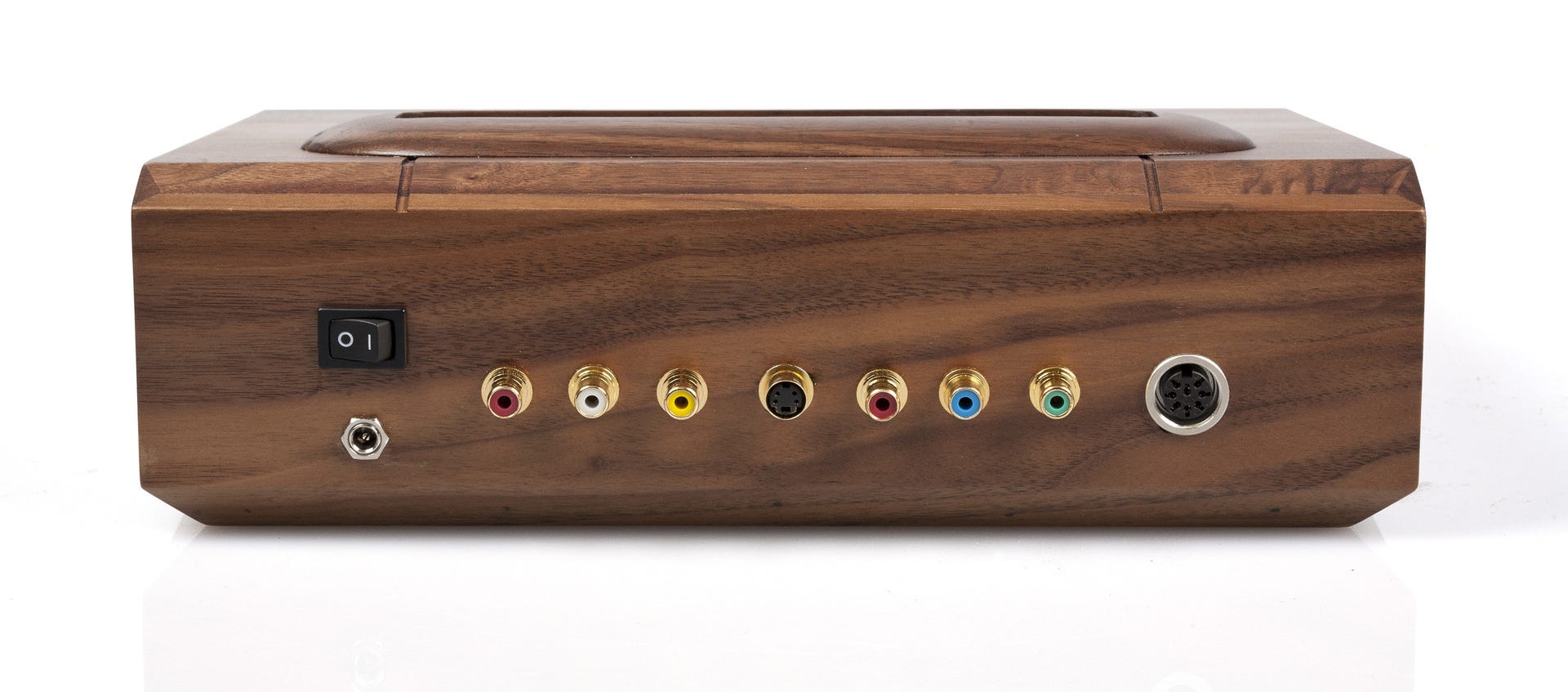
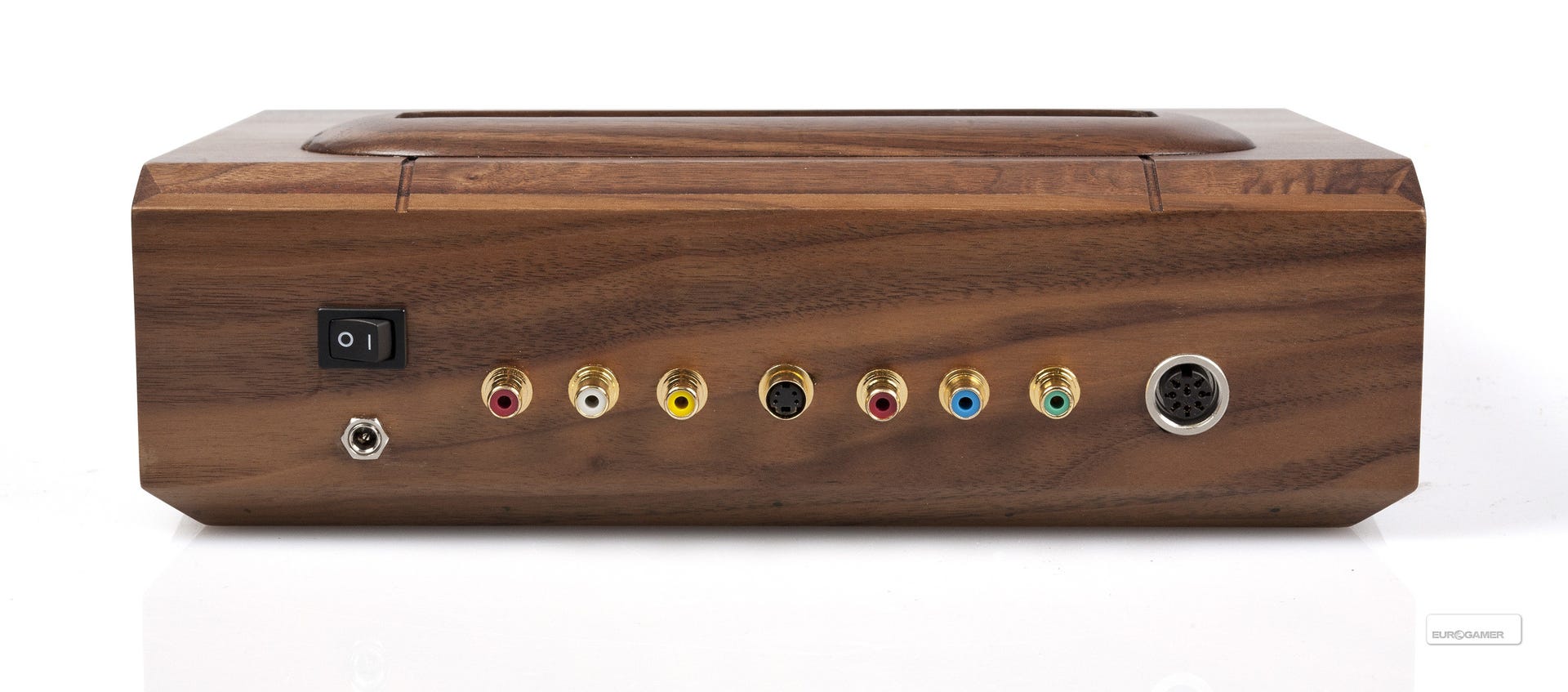
The only connection it's missing is RF – and for that, we're eternally thankful.
Ironically, as the years have rolled by, the AES editions have become much more valuable than their MVS counterparts due to lower production runs and more attractive packaging. For example, a copy of Metal Slug on MVS will cost you no more than £50, while the ultra-rare AES edition is known to fetch well over £1000 on the second-hand market.
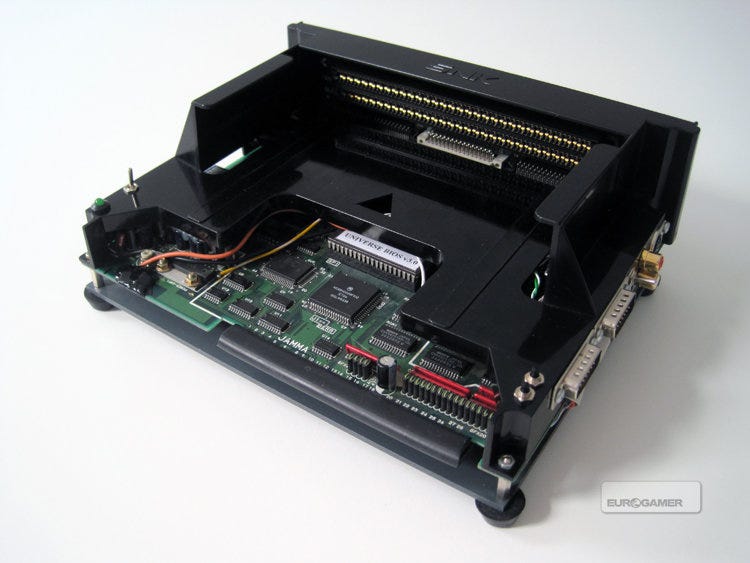
For this reason, many retro gamers opt for the MVS system rather than an AES one, as the software is usually much more affordable. Hence the coining of the term 'Consolised MVS'. Broadly speaking, this process involves ripping out the guts of the MVS hardware from its arcade cabinet and tinkering so that it functions on a standard television set.
The Hardware
As you can imagine, many of these CMVS units are somewhat on the ugly side. Produced by Neo Geo lovers with plenty of passion but little in the way of engineering talent, many horrific home-made examples can be found on the net. Even when you spot what is considered by collectors to be a 'clean' job, you'll usually be greeted by exposed circuit boards and trailing wires – two unfortunate by-products of the messy modification process.
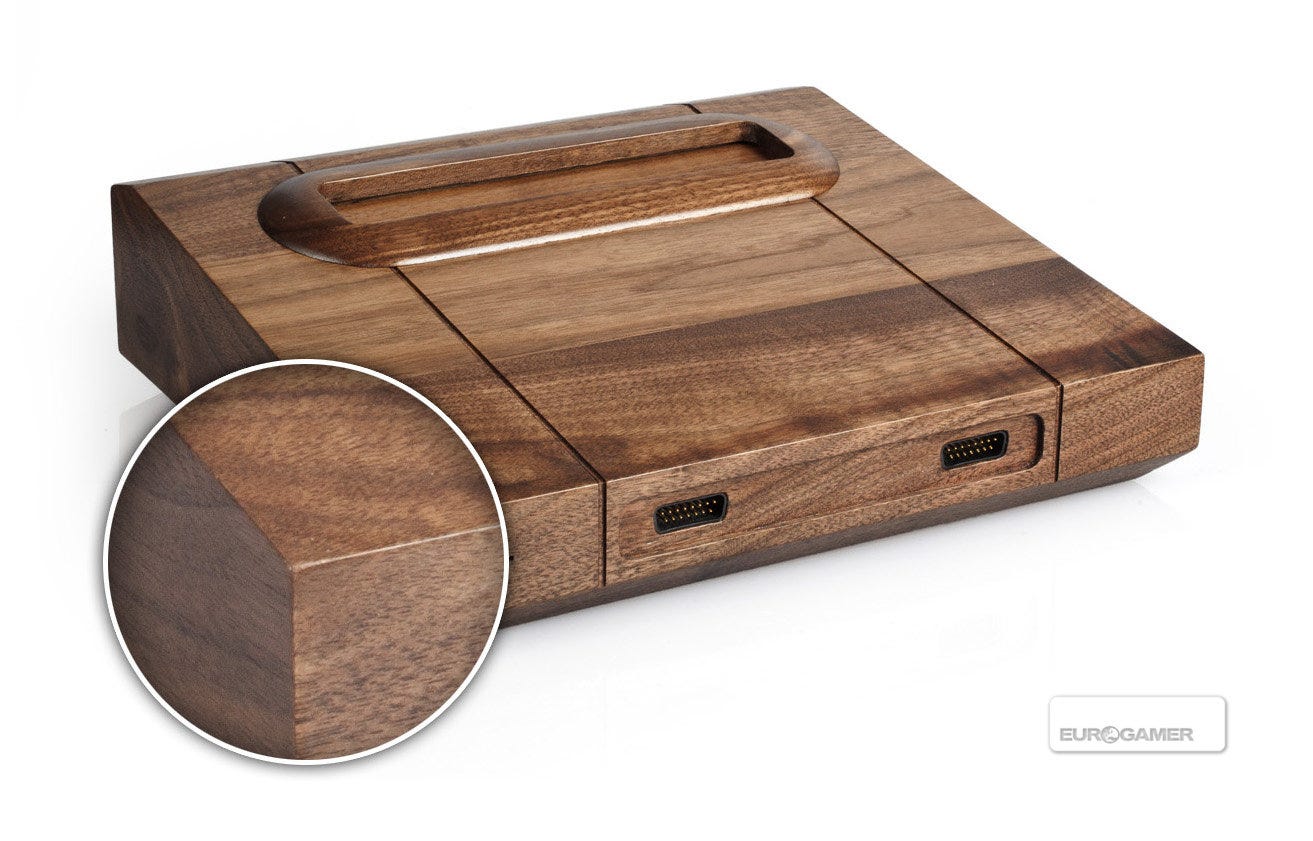
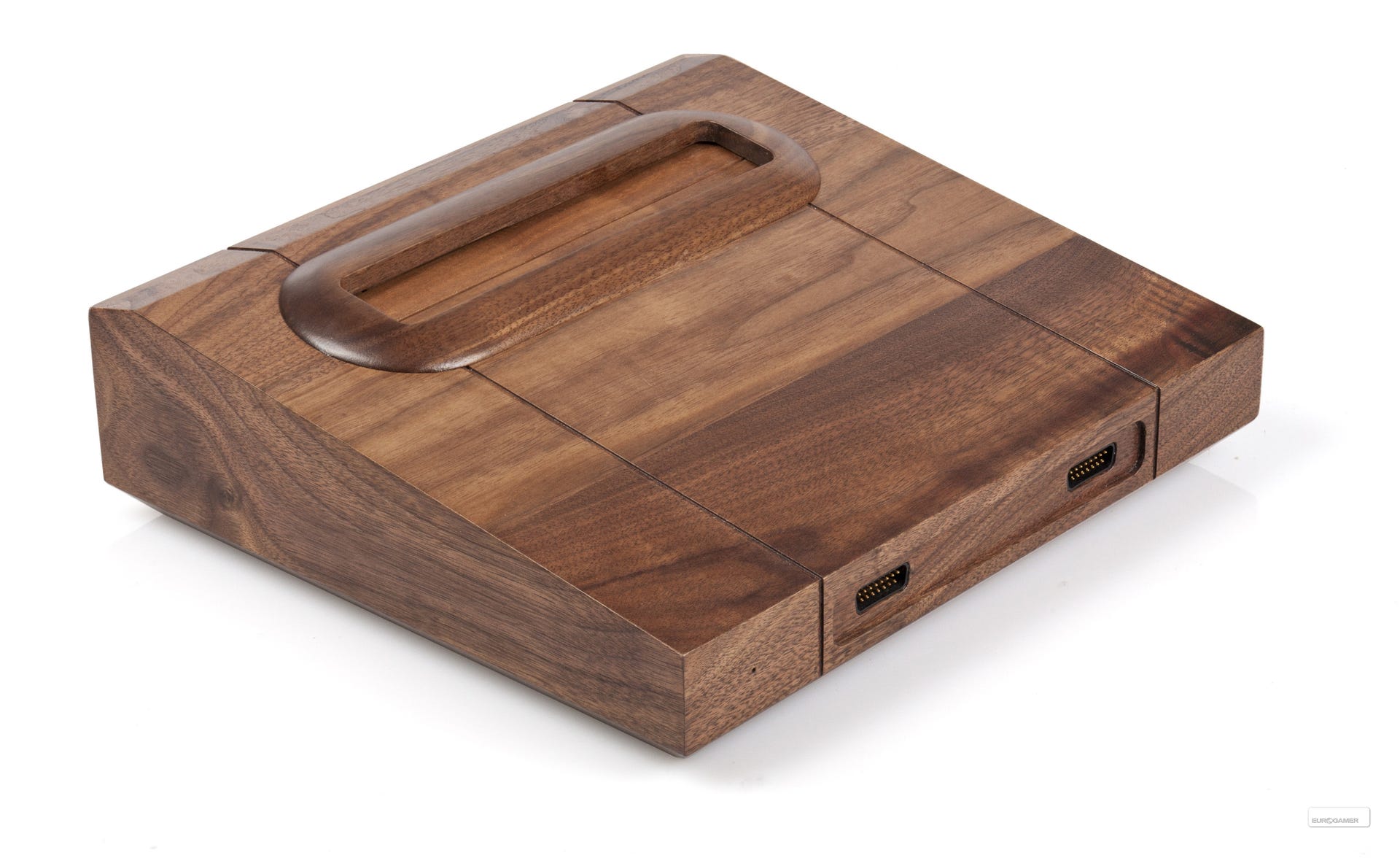
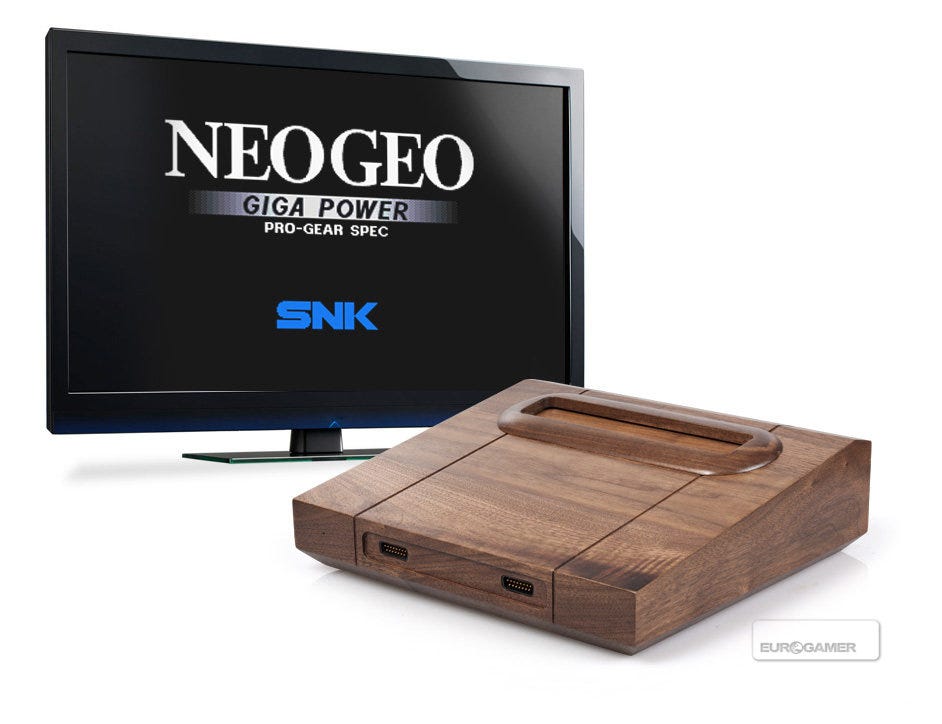
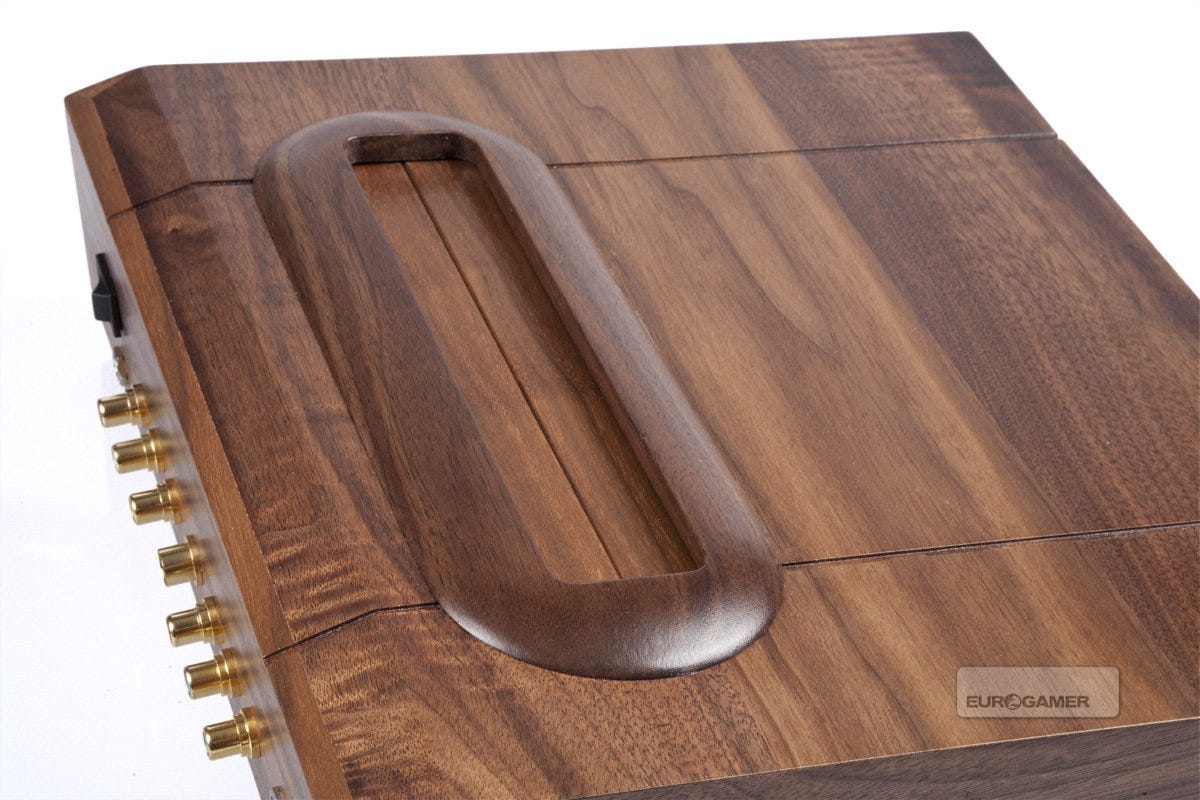
So it's with a degree of surety that we can say that Analogue Interactive's Wooden CMVS is the best modification job we've ever seen. Encapsulated in aesthetically pleasing polished walnut and boasting a design largely inspired by the aforementioned AES, this handmade machine is both bewildering and alluring at the same time. A wooden console should by rights be a laughable spectacle, yet it only takes a single passing glance to fall in love with this one-of-a-kind system.
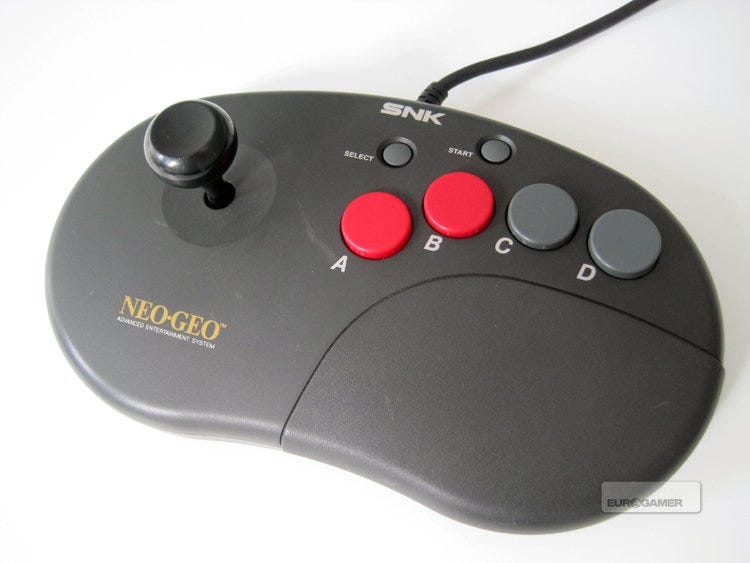
The wooden MVS comes supplied with component cables and a universal power lead. Although the lead can cope with different global power standards, you'll need a plug converter to use it here in the UK. It's also worth noting that you don't get any controllers with the system - these you'll have to purchase separately. Both the original Neo Geo AES stick (which boasts terrifying dimensions that nearly dwarf Sega's Mega Drive console) and the revised (and thankfully cheaper) Neo Geo CD variant will function perfectly - as will the Neo Geo CD joypad, an excellent micro-switched effort which proved so popular it was recently re-tooled and re-released for the Sony PlayStation 2 in Japan.
With RGB SCART, component, composite and S-Video connections around the back of the unit, this console is equipped to handle practically every AV scenario you can throw at it - including the latest HDTVs. Although it's not a HD signal, RGB SCART offers the best quality, with rich colours and sharp graphics - although you'll need to stump up the cash for a custom-made lead, which is also available from Analogue Interactive's webstore.
The Software
During its 14-year active lifespan the Neo Geo system was graced with over 150 different titles; the final first-party release was SNK's Samurai Shodown V Special, which went on sale in 2004. Although it's tempting to think of it as dead hardware, that isn't entirely true. Small-scale developers continue to support the platform over 20 years after its inception; German studio NG:DEV.TEAM launched the MVS edition of its 2D shooter Fast Striker at the tail-end of last year.
The wooden MVS is supplied without joysticks, so you'll need to source your own (and they don't need to be made from wood).
Even if you don't profess to being an SNK expert, chances are you'll be aware of - and have played - some of the company's most famous franchises. Metal Slug, King of Fighters, Fatal Fury, Art of Fighting, Samurai Shodown: all of these series started life on the Neo Geo. Many continue to flourish on next-generation consoles and handhelds, but for the most authentic experience, one undoubtedly has to turn to the original hardware.
As we've already mentioned, MVS carts are reasonably cheap when compared to their AES equivalents. Auction sites such as eBay offer thousands of games for sale, many of which are indelibly marked with dust and grime earned during a lifetime of service in the world's smokiest and smelliest arcades. Prices vary depending on desirability and popularity, but thankfully the fan site Neo-Geo.com maintains a reliable price guide for both MVS and AES software.
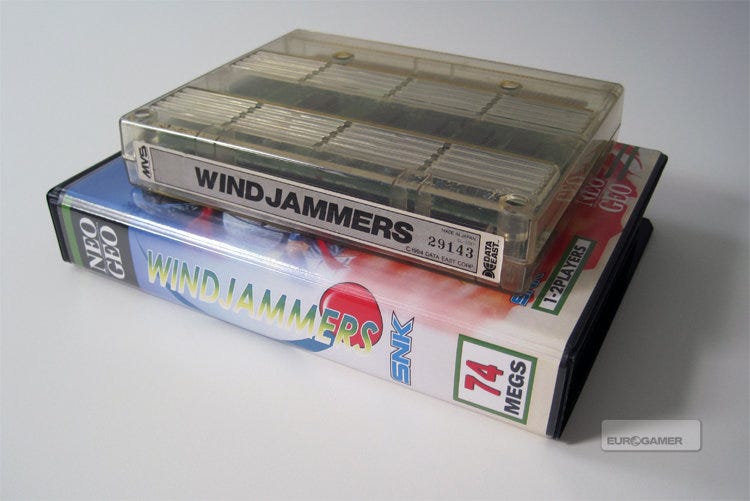
Although MVS carts will have been originally sold to operators with marquee graphic kits and possibly even a brief instruction manual, expect to purchase them today with no packaging whatsoever. It's possible to buy cases - known by collectors as 'Shock Boxes' - as well as fan-designed inlays, however. These go a long way to smartening up your burgeoning collection of software.
The Verdict
MVS carts tend to look a little shabby but specially made 'Shock Boxes' and custom inlays add some class.
So, just how filthy rich or serially unhinged do you have to be to even contemplate purchasing one of these bespoke wooden wonders? The answer is not very, on both scores. Converted MVS machines tend to fetch high prices online purely because they're created by amateur enthusiasts in their own time, rather than large manufacturers with reduced production overheads and wide-ranging distribution networks. Because of this, there's a desire to recoup both cost of parts and effort involved. For the $649/£400 being asked by Analogue Interactive, you're actually getting an incredibly decent deal - compared to the norm, at least.
If you consider yourself to be an avid retro gamer than this is unquestionably the best way to experience one of the finest and most enduring video game platforms in the history of the medium. The cost of MVS carts is low enough to make collecting a very achievable venture, and the impressive array of TV connections strewn across the back of the unit means that you'll be getting the best possible picture quality for your own home entertainment setup.
Besides, owning a CMVS system - and a hand-crafted wooden one, at that - is almost certain to elevate you to the standing of gaming demigod in the eyes of your peers. The ones that remember the timelessly classy wood-panelled Atari VCS, at least.