Bangai-O HD: Missile Fury
Bullet swell.

Treasure's latest, as with much of the company's best output, carves its own determined path. Paying little mind to fashion or genre, Bangai-O HD: Missile Fury instead sticks tenaciously to its own vision.
Somewhere, buried deep at its core, this is a twin-stick shooter in which you pilot a gigantic weaponised bipedal robot, viewed side-on from a camera positioned a mile away. But we are a long way from Geometry Wars and its ilk; the mechanics and twists heaped on to Bangai-O mean it defies easy classification.
It looks like a bullet-curtain shoot-'em-up, projectiles filling the screen in a furious swarm. But while there is an intermittent demand for keen twitch reactions, very often it's more like a puzzle game, a generous collection of stages conundrums that must be poked and picked at before they can be properly unravelled and understood. Or wait, should that be more like a racing game, in which you must dart towards an exit point before a crate falls to block your path? Or perhaps a sports game, in which you try to outwit a baseball bat-wielding enemy robot, sneaking around its maniacal swings to bring him down?
In truth, Bangai-O HD: Missile Fury is all this and more: a hotchpotch collection of discrete game design ideas arranged like a linear mini-game collection, somehow made coherent by way of the giant/minuscule robots and hails of missiles that fly through each one.
It's the third game in the series. The first, released for Nintendo 64 and Dreamcast (in two slightly different variations) told a bats**t insane story of two child mecha pilots on a mission to take down the fruit-stealing Cosmo gang.
For the sequel, Bangai-O Spirits on DS, story and structure were largely discarded in favour of a dizzying array of standalone micro levels which could be tackled in any order. With no narrative to couch the game in, and no set order to play it in, Bangai-O Spirits felt like Treasure freestyling game design at an open mic night (or perhaps playing as support band for WarioWare). It was smart, infuriating, ingenious and exhilarating all at once, stripping the company's previous output down to its constituent parts, a flurry of micro-games to show the world that the developer was more gifted than you, even when it wasn't really trying.
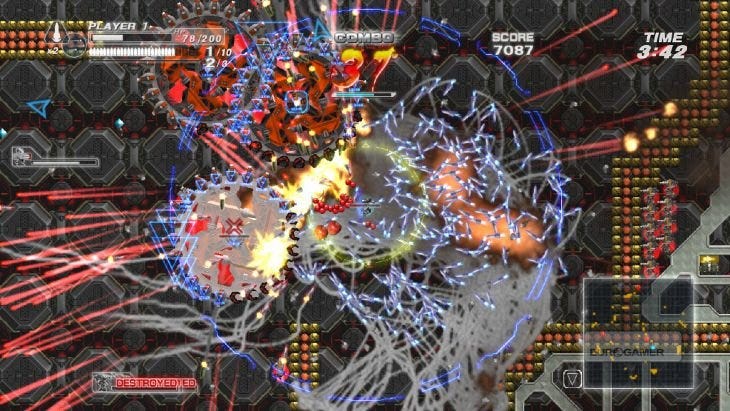
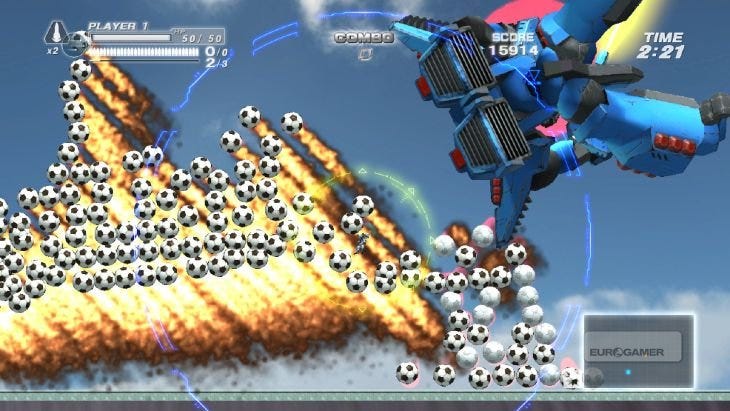
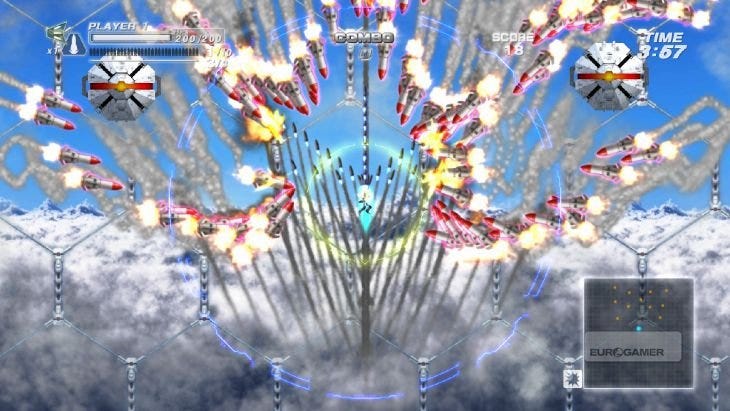
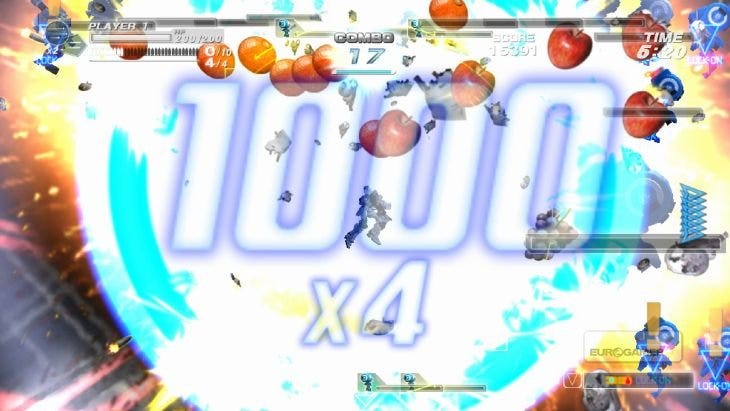
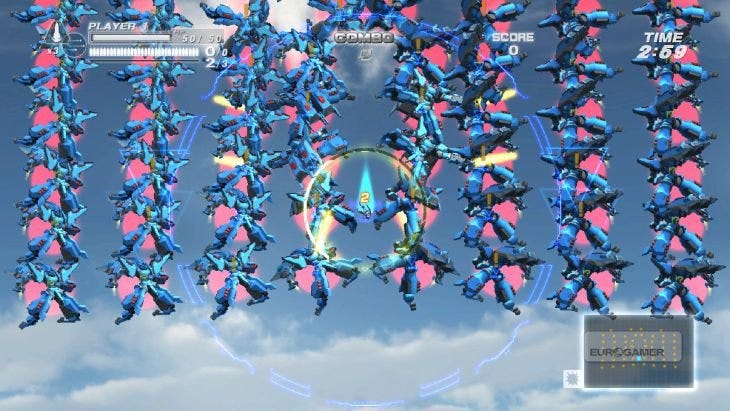
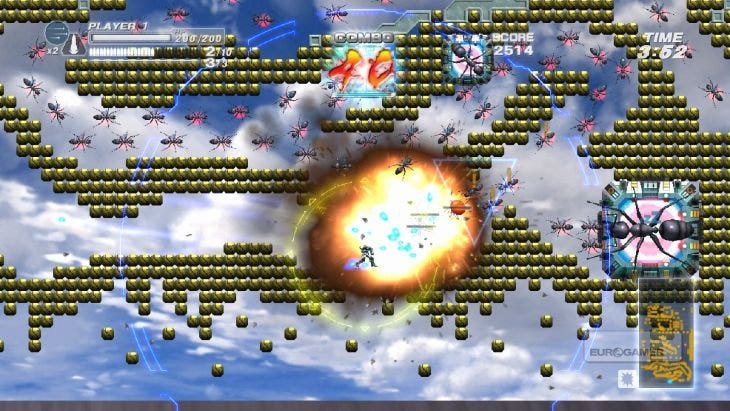

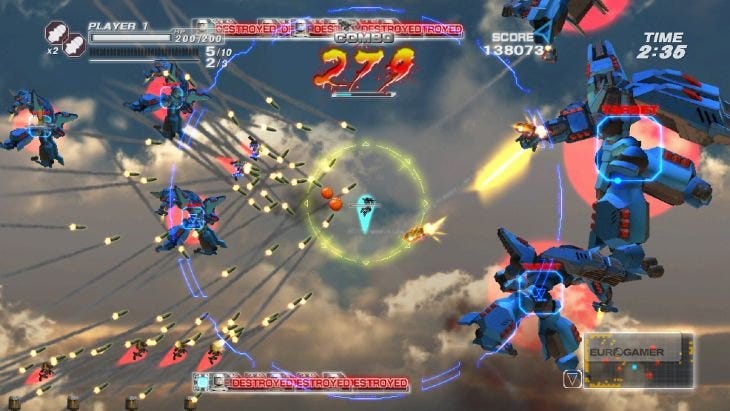

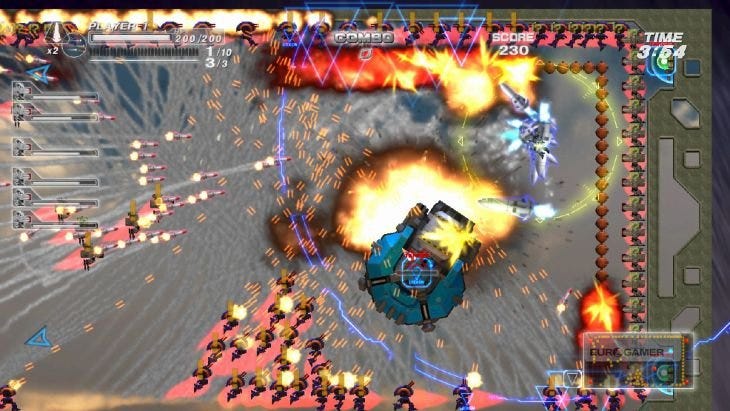
Bangai-O HD: Missile Fury falls somewhere between its two predecessors. There's no story here to frame the experience, but then Treasure's stabs at narrative have always come across as half-hearted, the company preferring to let design do the talking. Instead, the preamble to each stage is more like a hurriedly scrawled note from its designer: "Watch out for ninjas", "Be sure to use the napalm gun", "Hurry to the exit before it's too late."
Very soon, these clues reveal themselves to be indispensable, often holding the key to finishing the extremely challenging stages. There's no concession to newcomers. The Tokyo-based boutique developer has never shied away from challenging us, but Missile Fury's learning curve is dispiritingly steep, even for veterans of the series.
The main 'campaign' is comprised of 47 short, sharp stages. According to the leaderboards, at time of writing, only 11 people in the world have completed the set so far, with nobody yet making it through all of the additional 56 bonus levels thereafter.
The challenge is enjoyable for the most part. As many of the stages can be completed in a minute or less, players who approach the game like a Trials HD, knowing they will need to play and replay each one before progressing, will have the best time of it.
But unlike Trials HD, the learning curve is poorly plotted, with huge difficulty spikes very early on. It's a failing that Treasure itself seems to admit. Fail a level three times in a row and the next in sequence will unlock for you anyway, allowing you to progress through the game (but leaving a taunting gap in your leaderboard statistics). Too often, the game tips from challenging to infuriating, to the extent that its difficulty becomes the primary talking point, rather than the regular ingenuity and brilliance of its design.