The Master of Synaesthesia
Tetsuya Miziguchi on Child of Eden and beyond.


"The concept is hope and happiness. That's what we pitched first," says Q Entertainment's Tetsuya Mizuguchi, sitting down after a Child of Eden demo to talk with us about his work in games so far. "It's like a spiritual sequel to Rez, definitely, but I wanted to have much more organic feel, not only digital, techno. I made it like a drama, a story, an emotional setting – it has songs, lyrics, words.
"The visuals are like moving textures, moving sounds. And the physics, too, looks like nature, like how particles spread with the music, and the changing of colours with sounds... If Child of Eden were darker, it would just look more like Rez."
Child of Eden is enough to bring out the poet in all of us. When you're floating alongside a shimmering space-whale, flinging musical bullets at it with your hands like an omnipotent cosmic conductor, until it coalesces into a ball of light that explodes into an enormous phoenix, it's difficult not to go all starry-eyed and start pulling together verses of praise. It's the first game I've seen in a long while that actually makes the hairs on the back of my neck stand up.
Mizuguchi is an able demonstrator. He understands exactly what makes Child of Eden fascinating to watch, holding back from theatrical hand-flourishing and letting the game speak for itself. Like all of his work, it's mesmerisingly synaesthetic. Your movements make sounds, which in turn make colours and light patterns that come together with the game's own beautiful visual and aural backdrops. The finished illusion of control over the sights and sounds makes you feel like a spiritual force of creation. It's like nothing else.
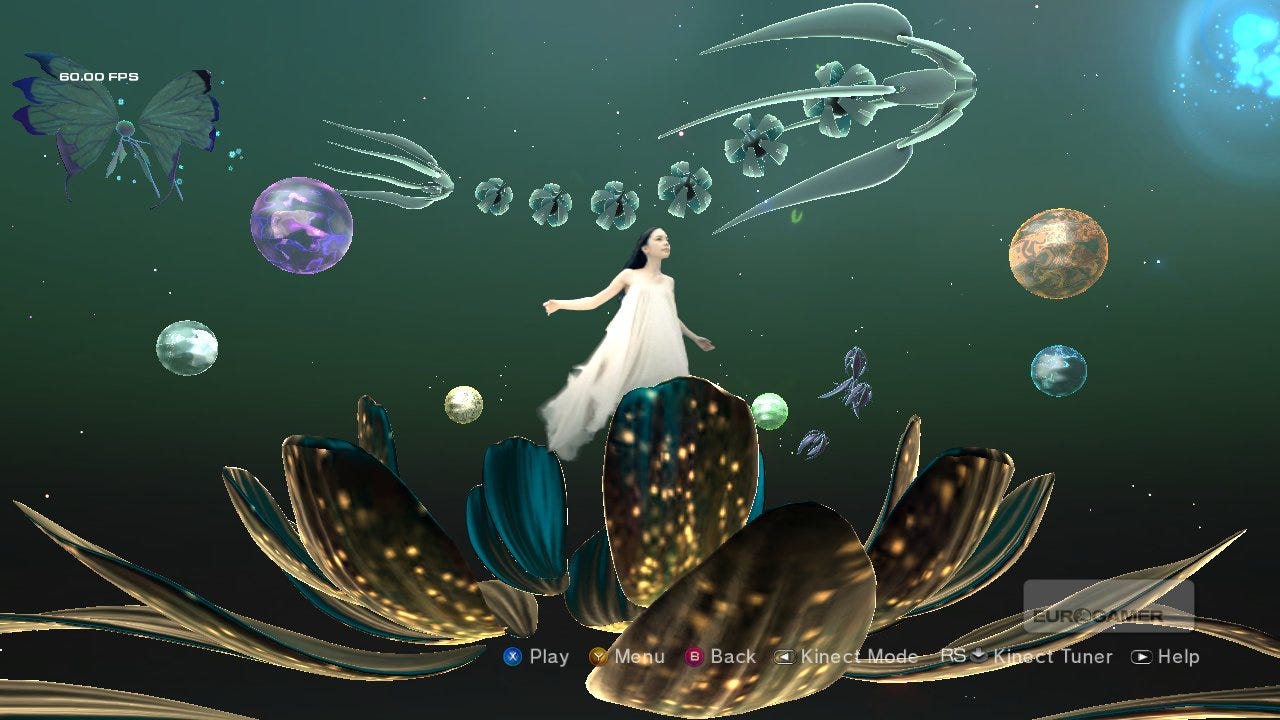
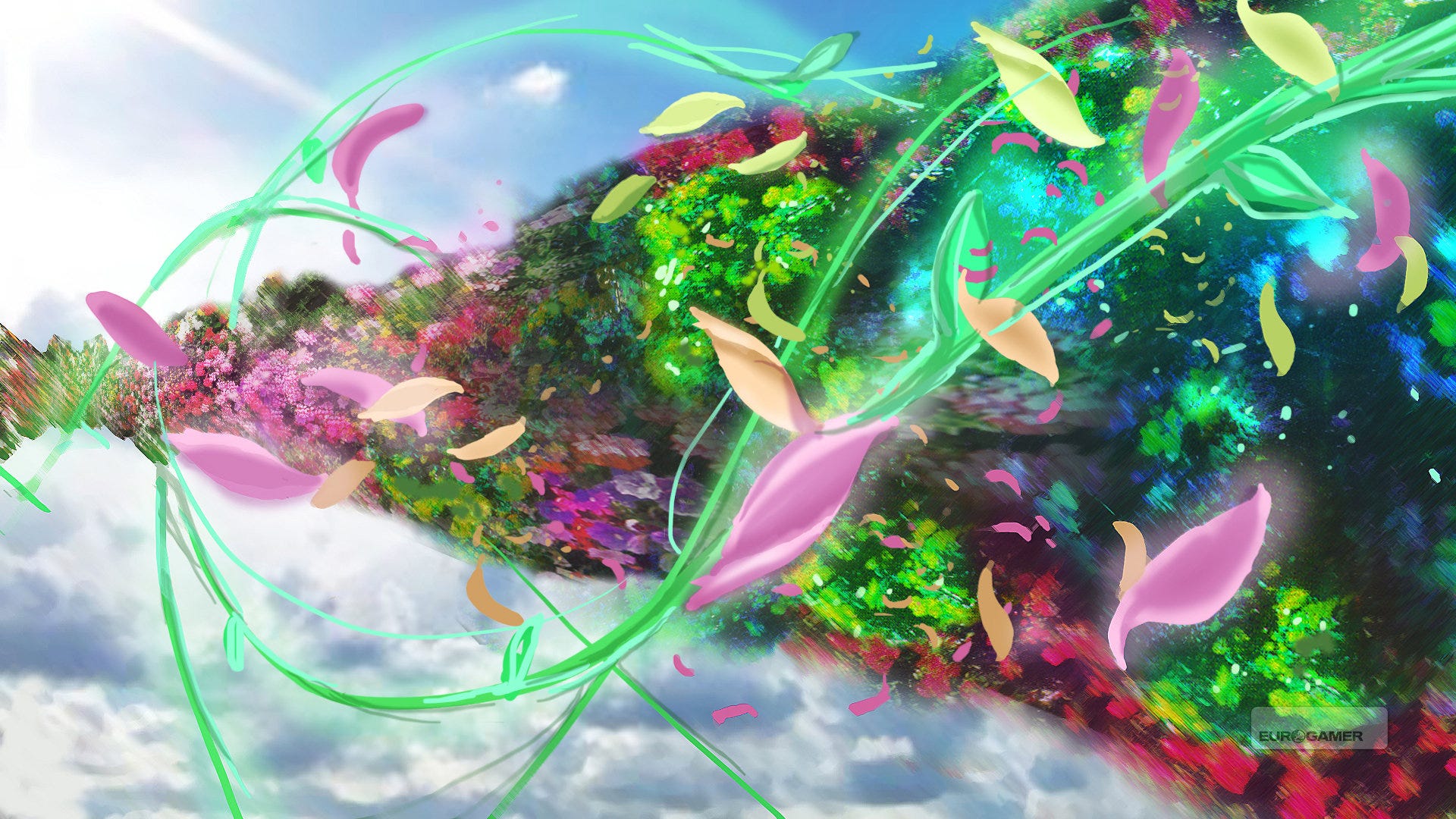
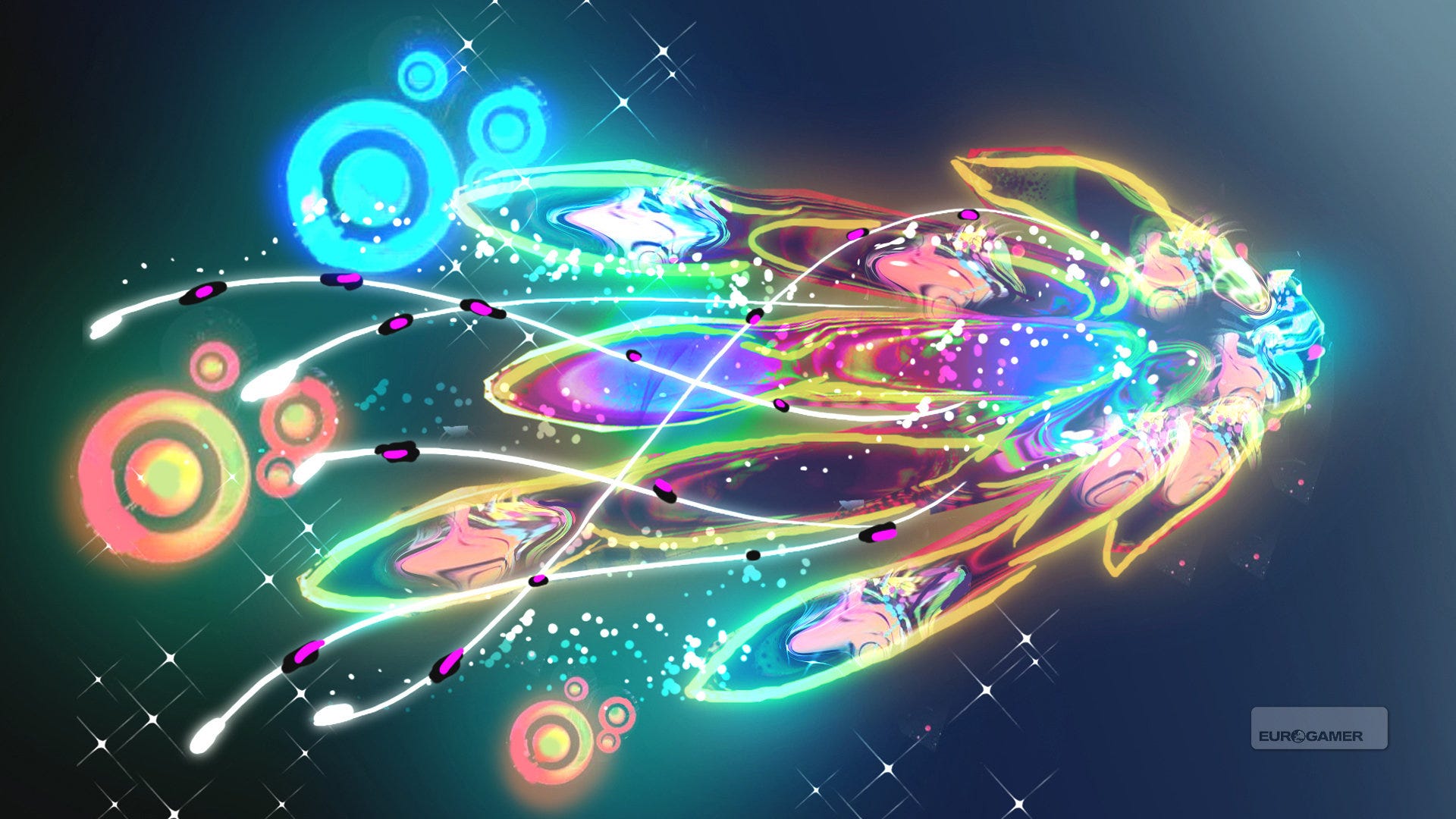
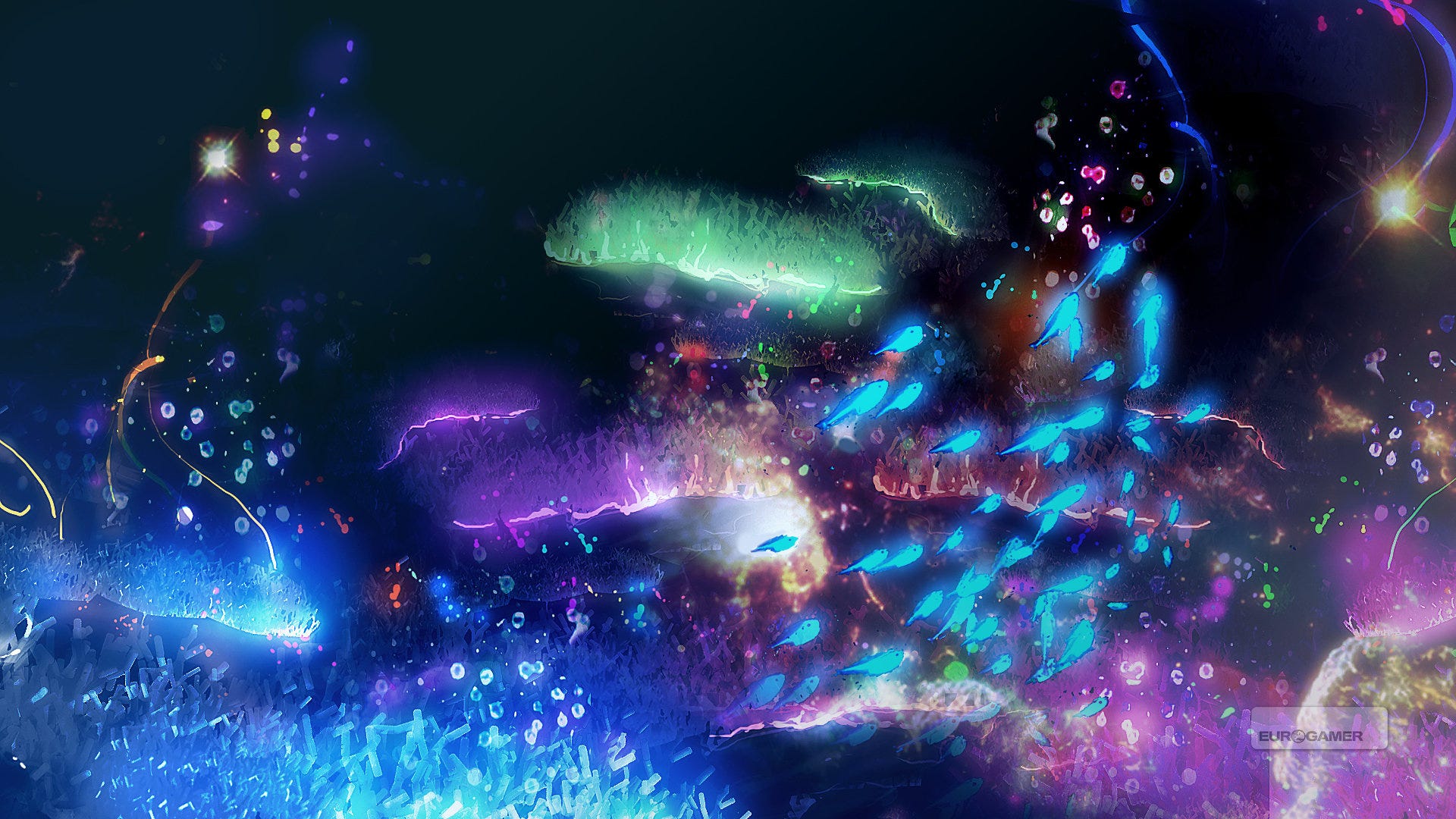


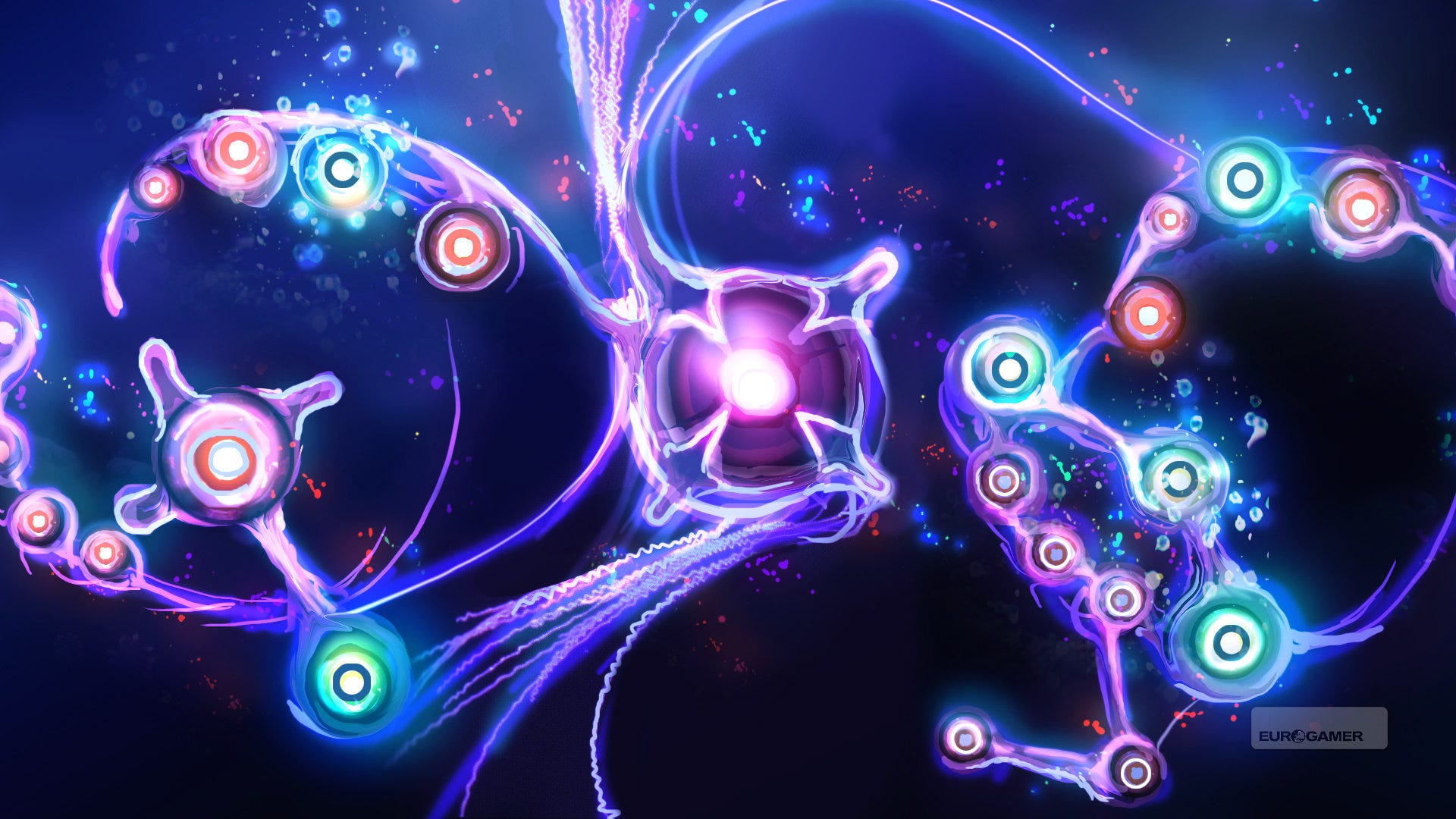
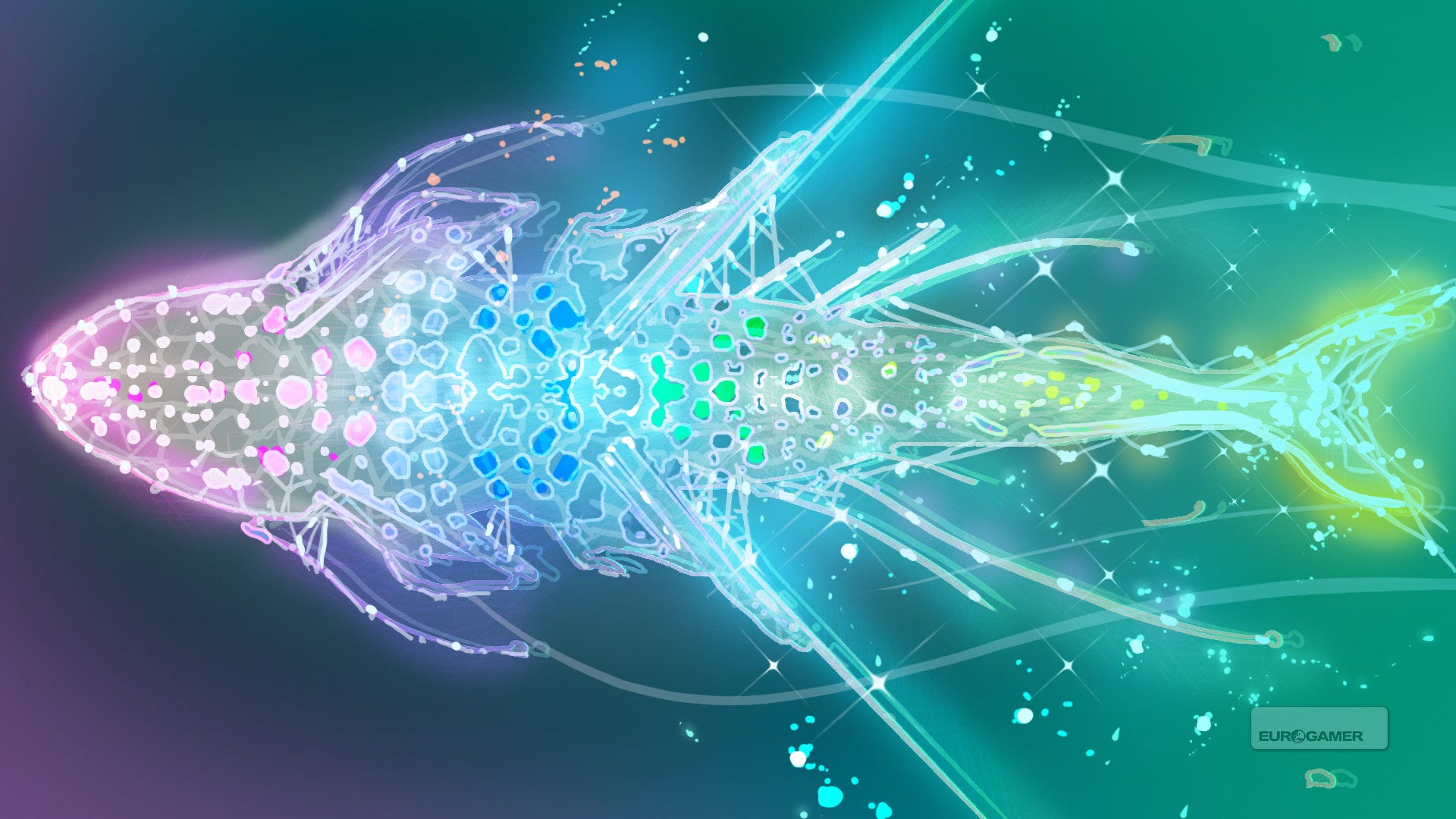
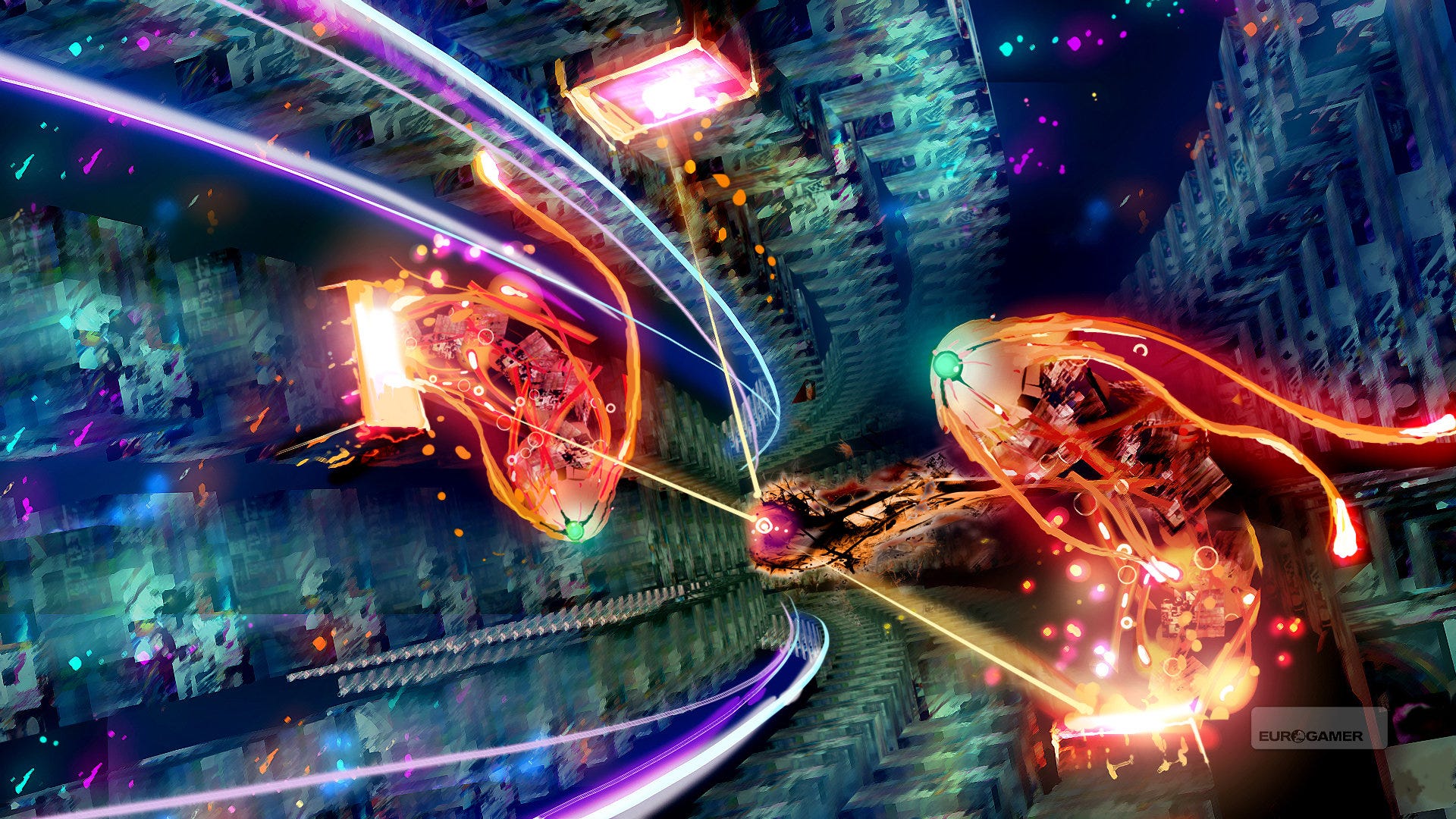

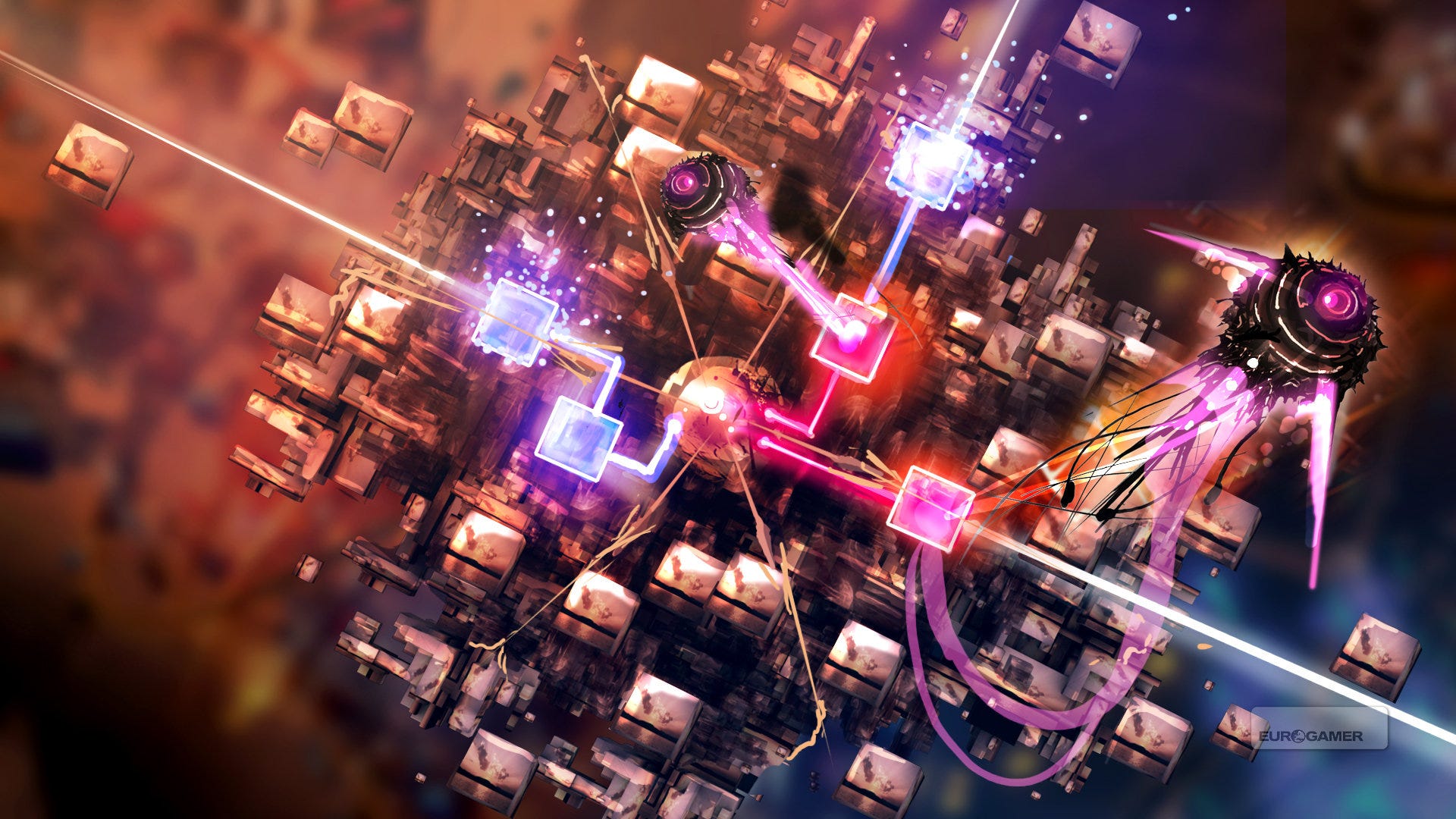
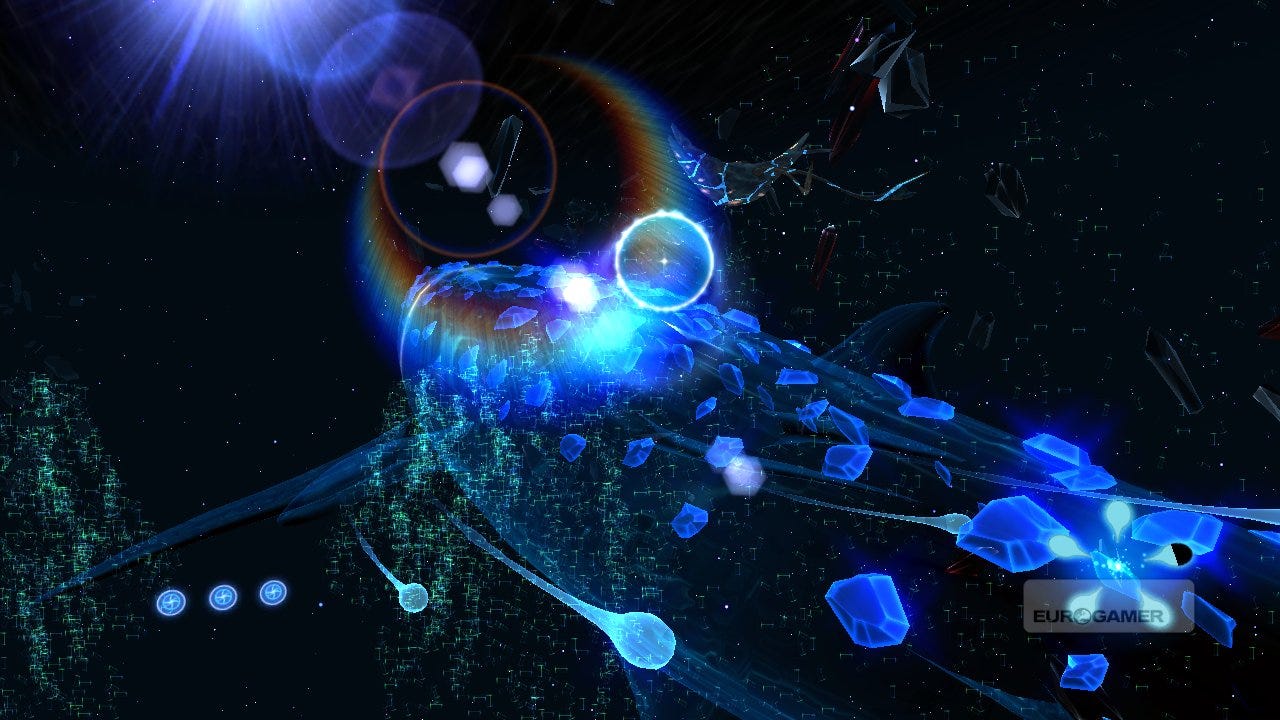
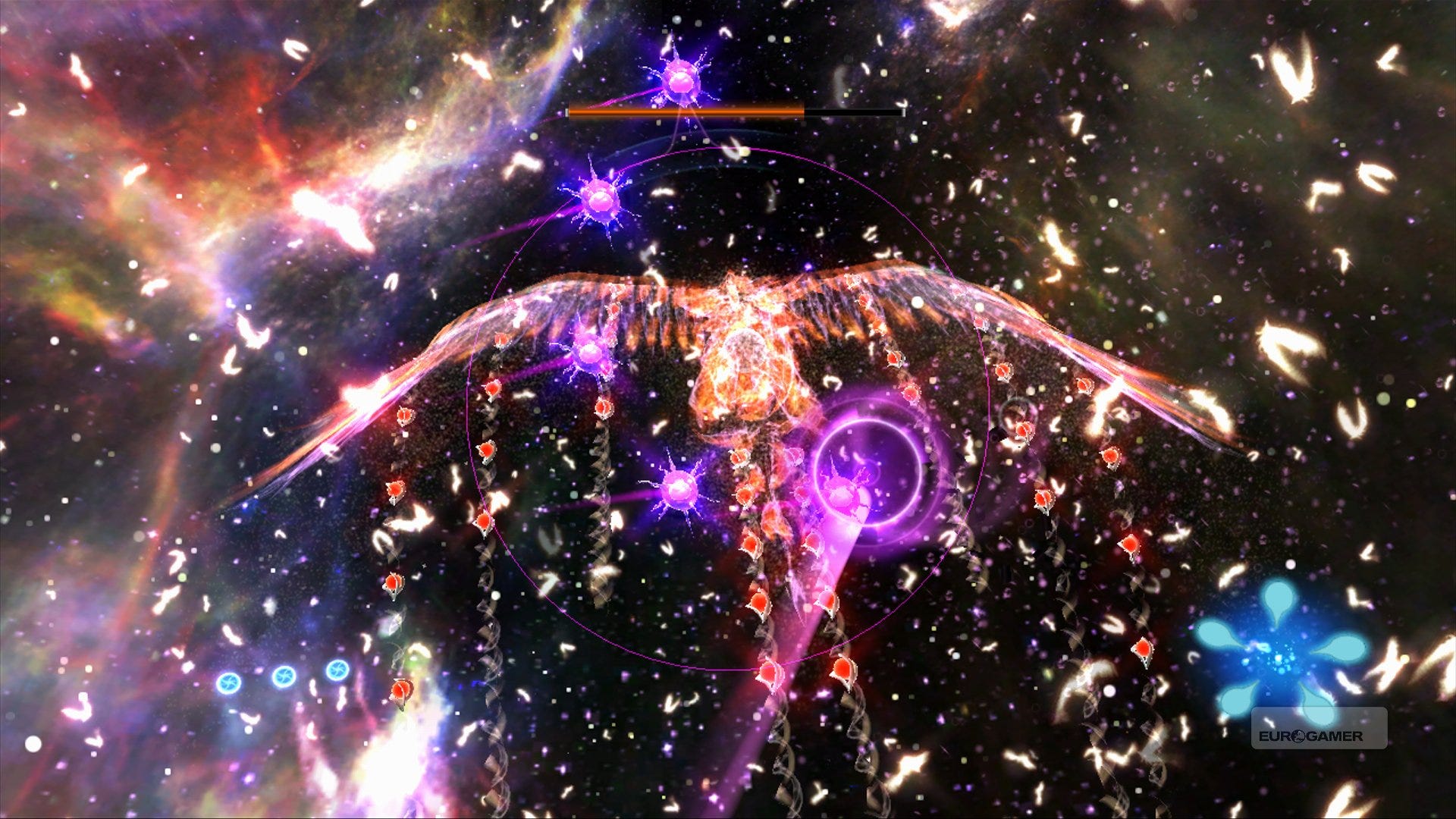
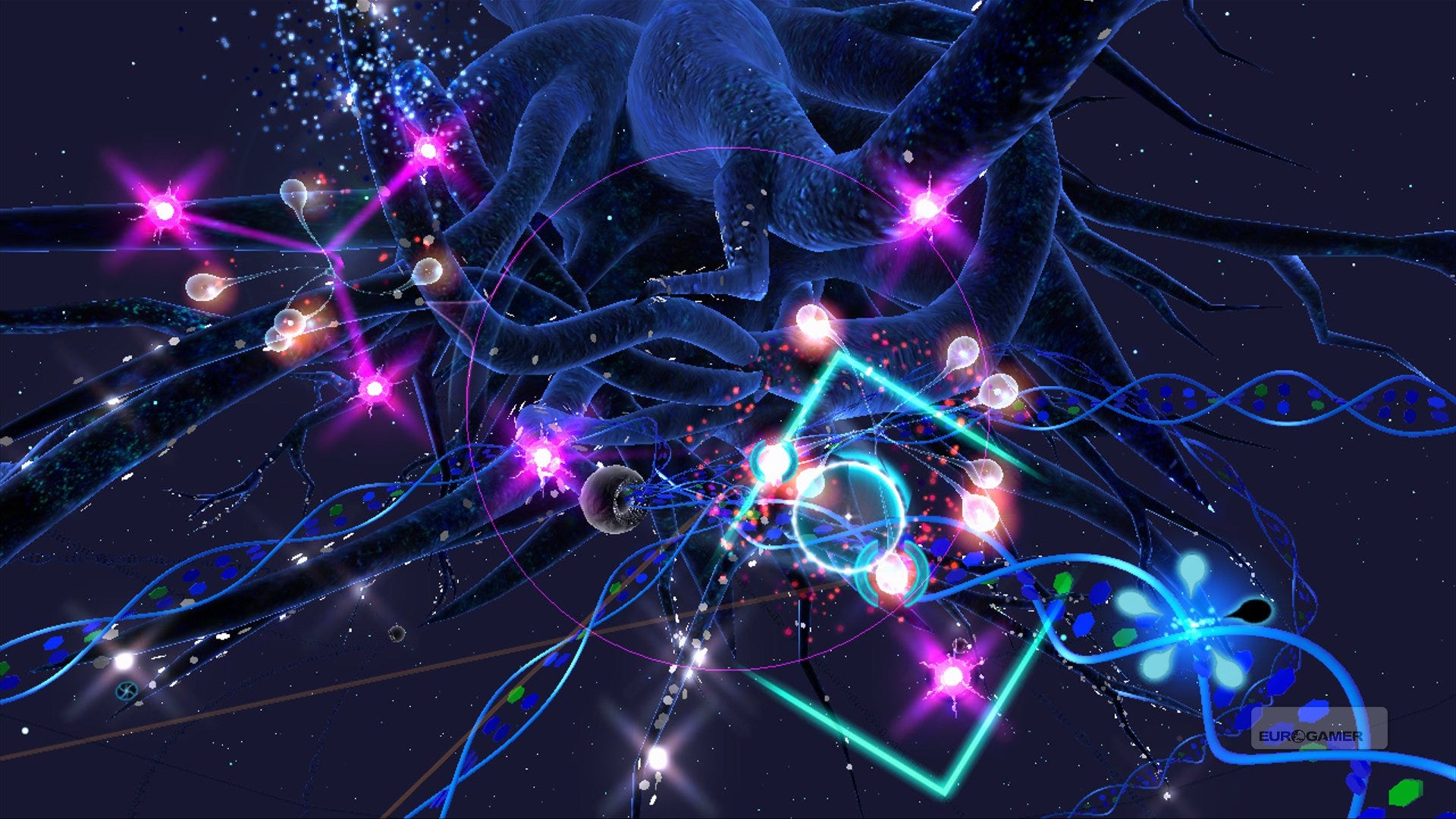
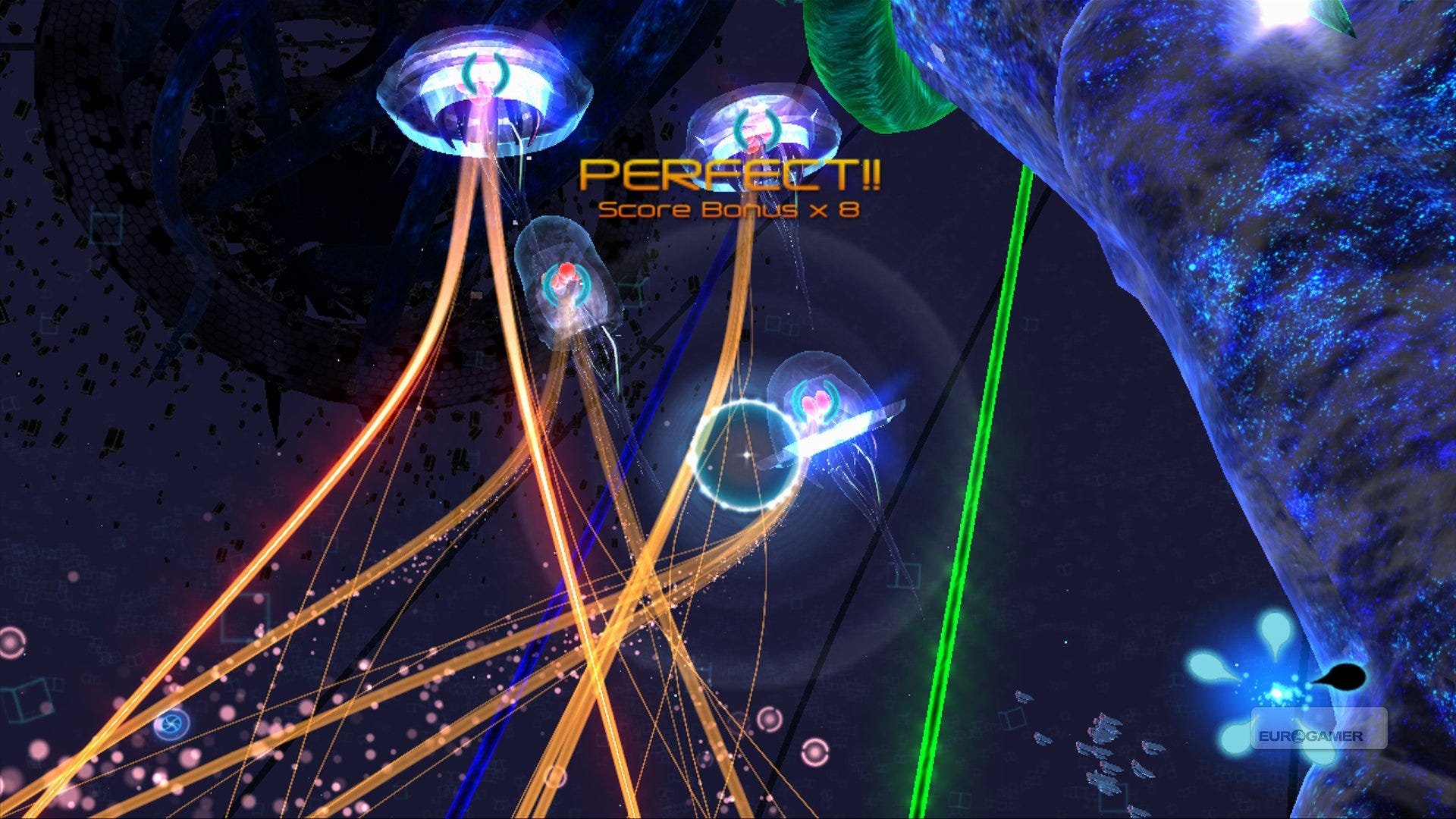
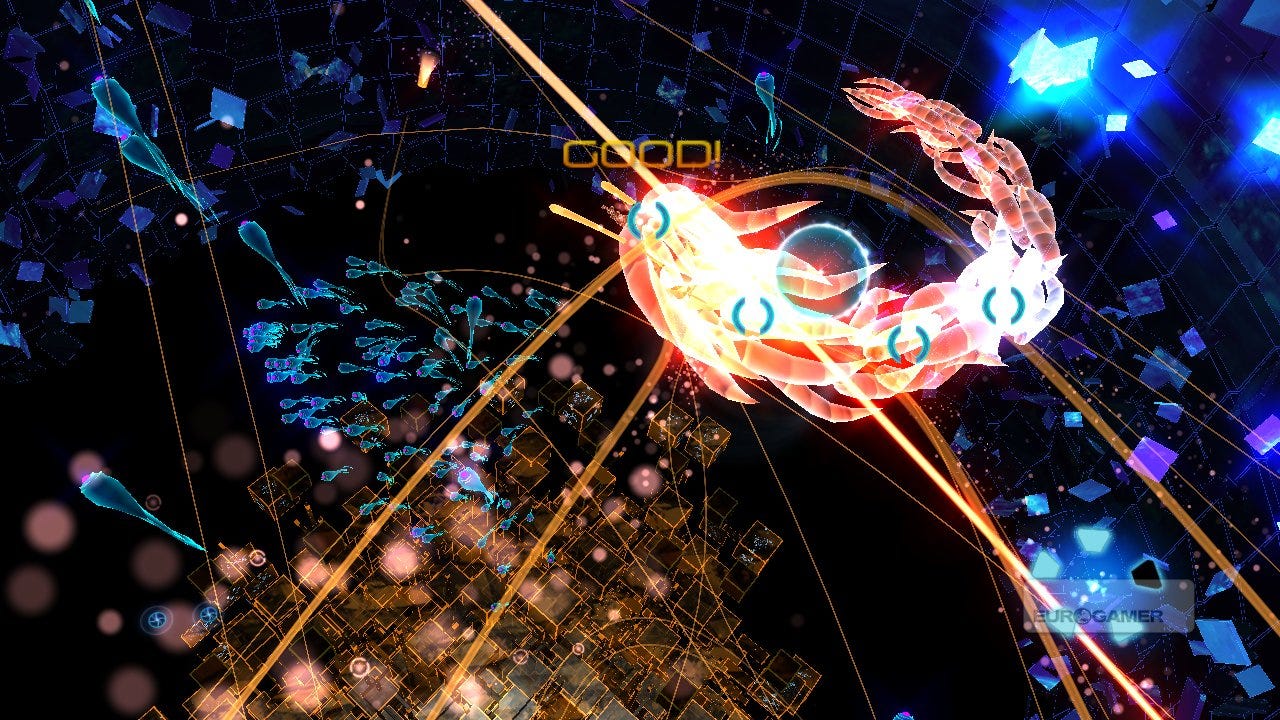
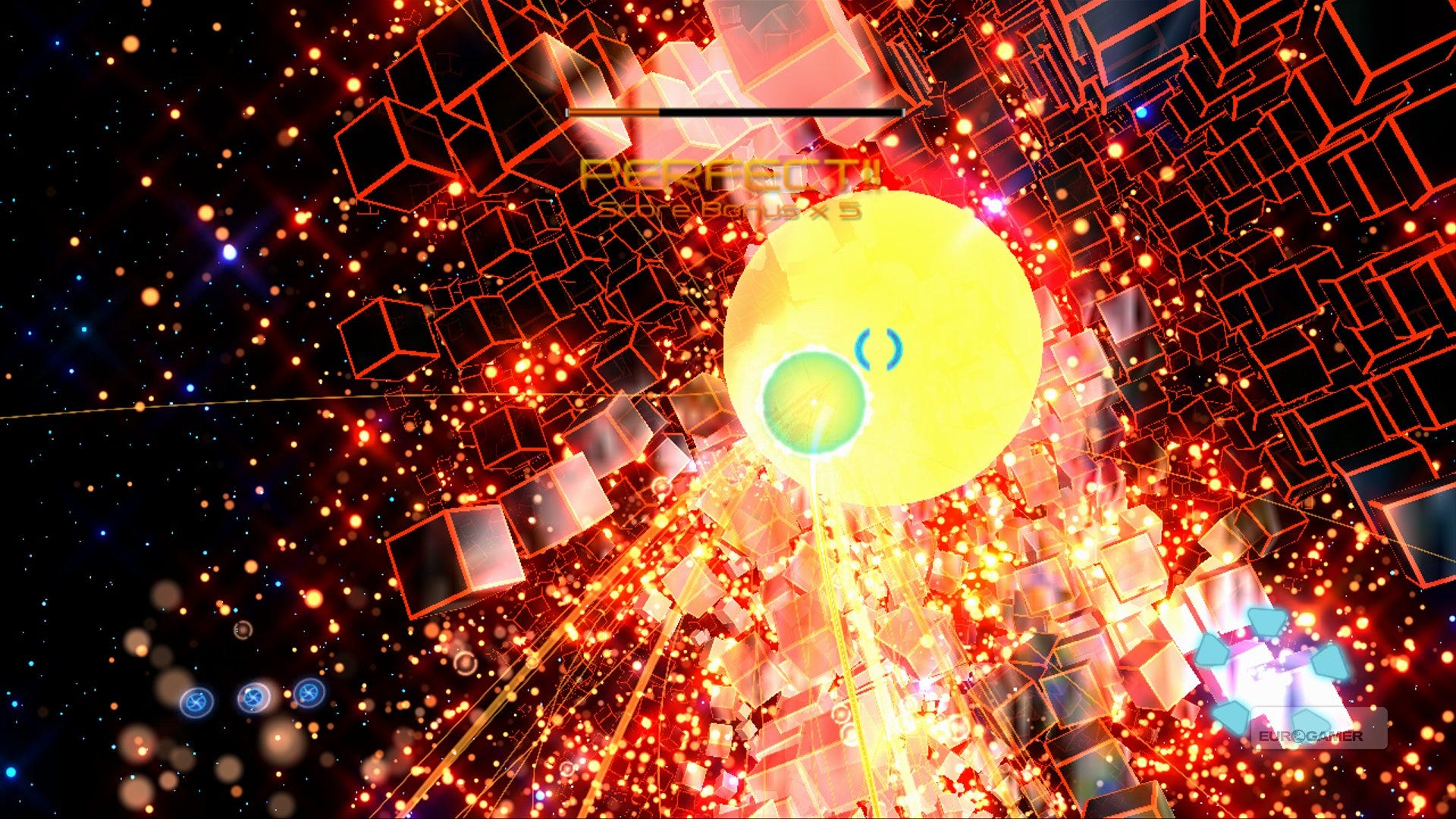
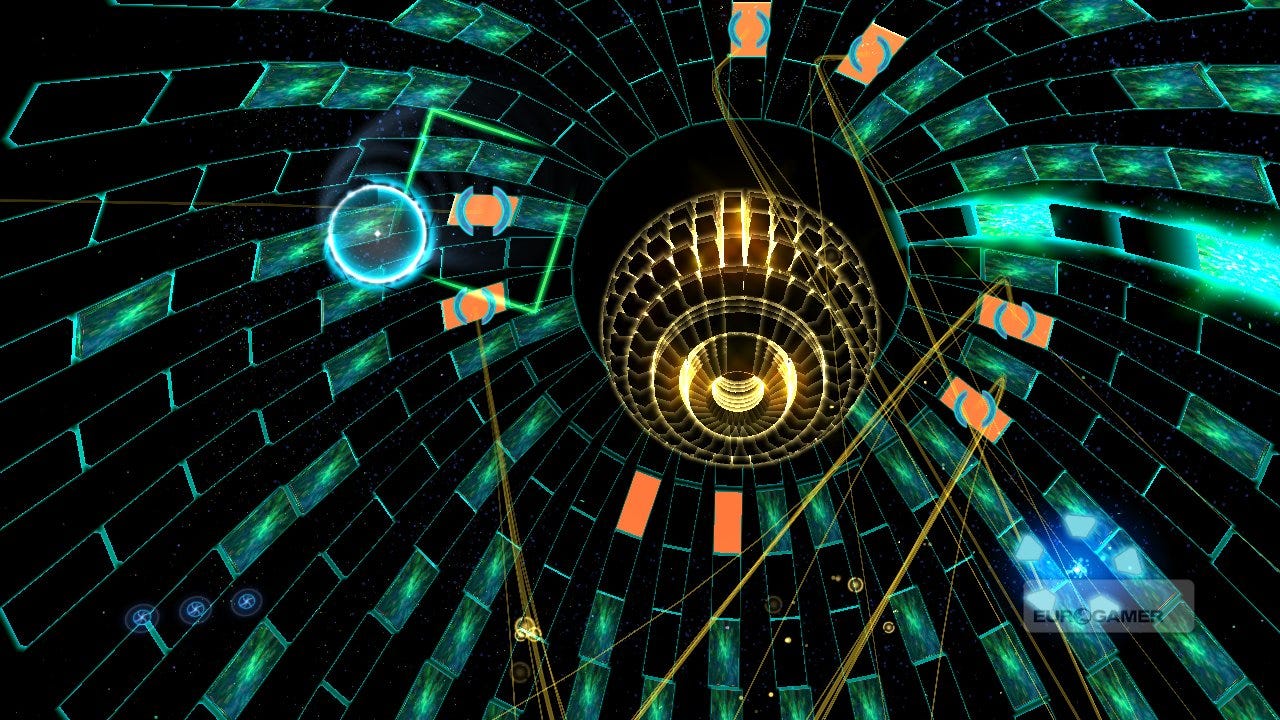
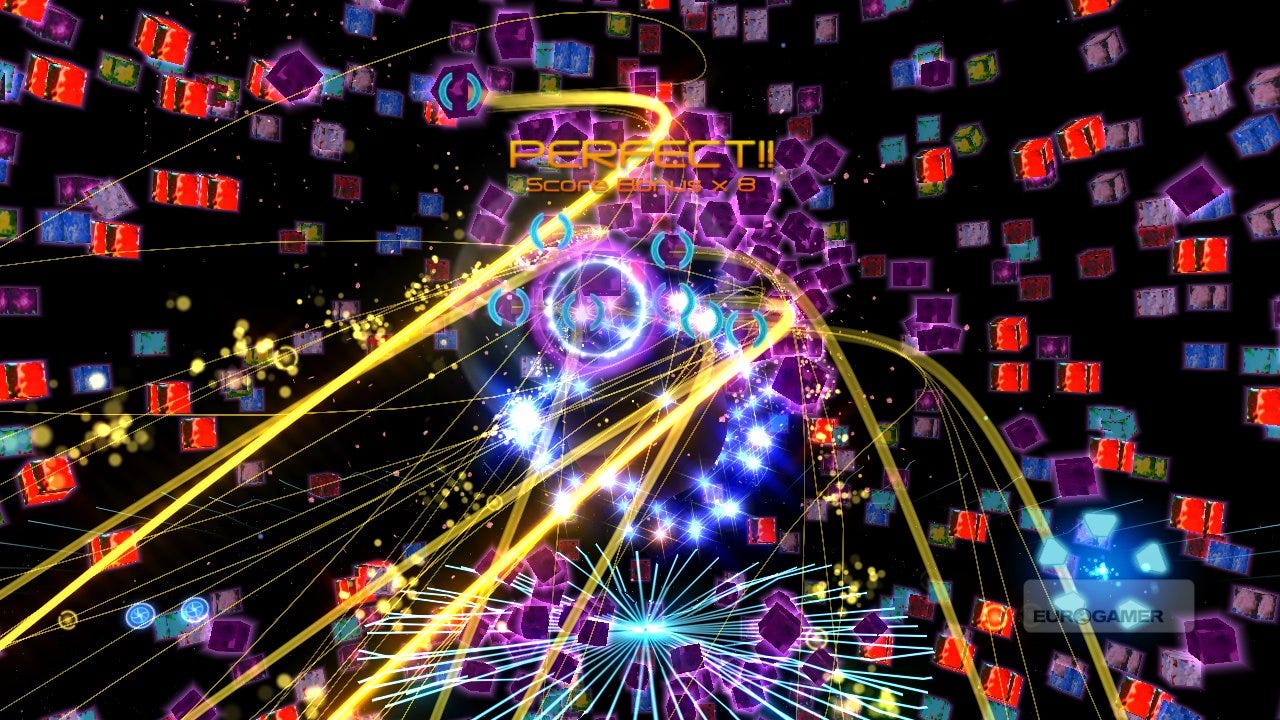
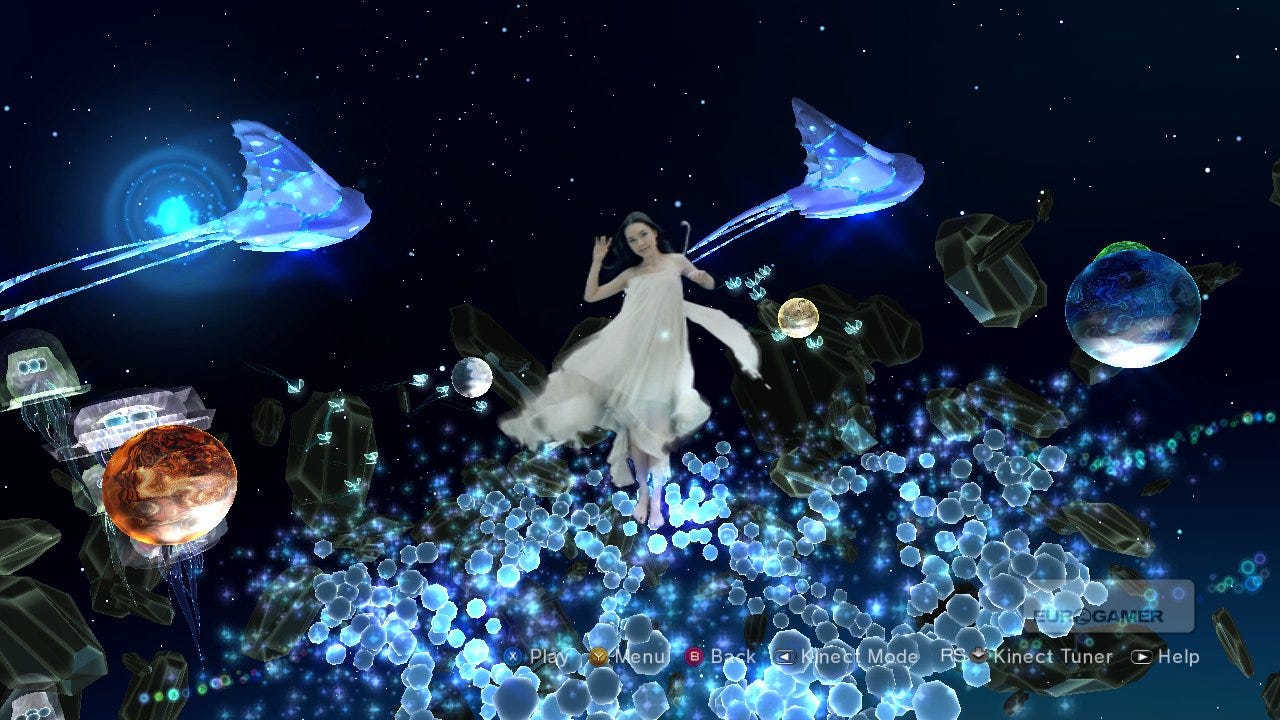
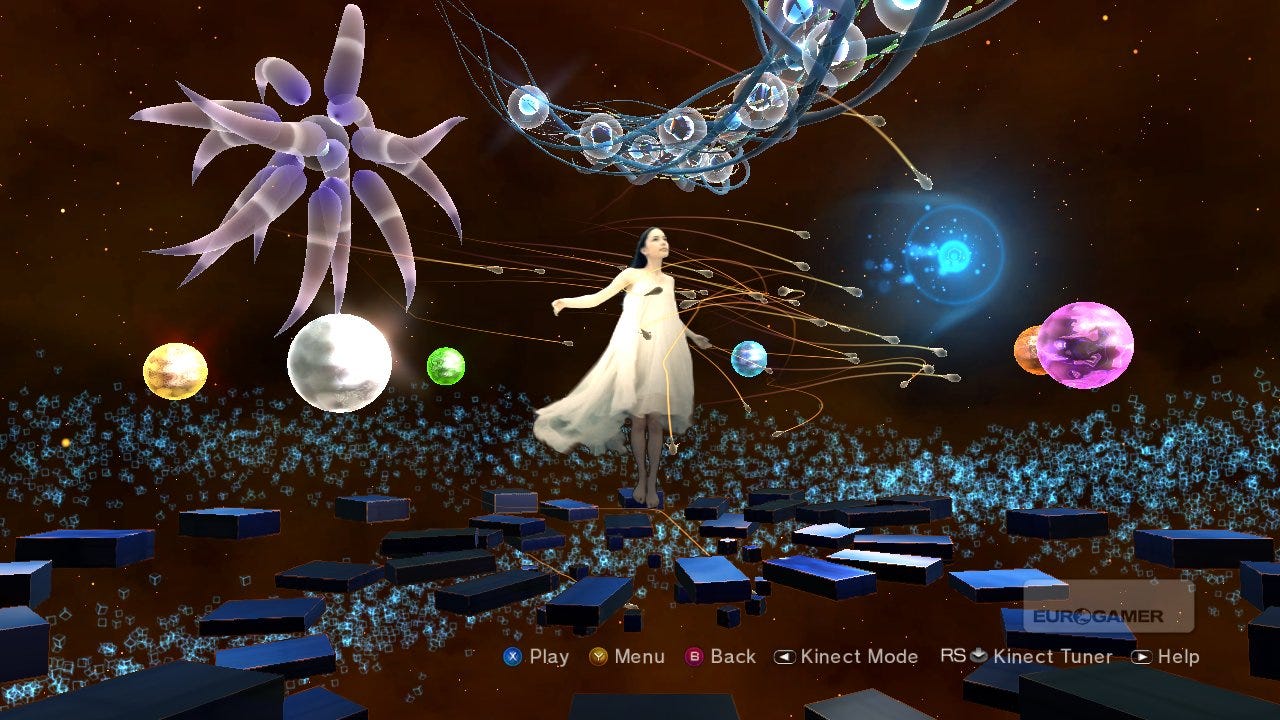
In terms of its actual mechanics, Child of Eden isn't so much a spiritual successor to Rez as an actual sequel. Your left hand is a snare-drum machine-gun, streaming weak bullets wherever it points. Your right is a paint-and-shoot laser, unleashed by flicking your hands. But Child of Eden's personality is very different; where Rez's wireframe worlds were spun from tension, darkness and ominous electronic sounds, Child of Eden is organic, joyful, luminescent.
Mizuguchi describes the concept of synaesthesia as his "life theme", a development mantra. He only reluctantly describes himself as a developer of rhythm games, preferring to think of his creations in different terms. "It's a new frontier, still," he says, talking about the mix of game mechanics, visual art and music that Rez and Child of Eden embody. "I still believe in the power of the sound, the music, to be emotional, to be a game in itself."
If you ask me, though, Mizuguchi's work is pure game. Trying to distance his works from that label and put them in the loosely defined category of "interactive art" does them a disservice. They marry the compulsive, trance-like euphoria of 2D shooters – particularly the Japanese art of the bullet-hell shmup – with the related euphoric qualities of music, and hypnotic light and colour.
They do what the best rhythm-action games do – send your brain into a happy pattern-matching reverie – but their way of doing it is entirely their own.