Pokémon Black & White Review

Monochrome magic.

Version tested: DS

If you're on the outside looking in, the Pokémon series probably looks like the same game released over and over for 15 years, each time to fresh brood of gullible children. It's not a fair or correct assumption, but I can see where you're coming from.

Pokémon reinvents itself to a greater or lesser extent every three years or so, but half-steps like Platinum and remakes like HeartGold muddy the distinction between generations. And where Silver and Gold's astonishing sprawl of new features more than justified their existence (and their re-release last year), Diamond and Pearl's more timid adjustments to the formula were less defensible.

It's about time for a spring-clean, and Pokémon Black and White are exactly that. Game Freak has abandoned the guaranteed brand recognition of Pikachu and his 500-odd friends for an entirely new cast of 156 quirky, endearing, and occasionally disturbing monsters. It's difficult to overstate how unexpectedly brave this is for a heavyweight Japanese series; imagine Capcom releasing a new Street Fighter without Ryu and Ken. It signals an eagerness to break with the past, a new spirit of regeneration.

Over the course of 40 hours, Pokémon Black and White has surprised me over and over again. The last time I could say that about a Pokémon game, I was still carrying around a Pikachu-adorned pencil case.

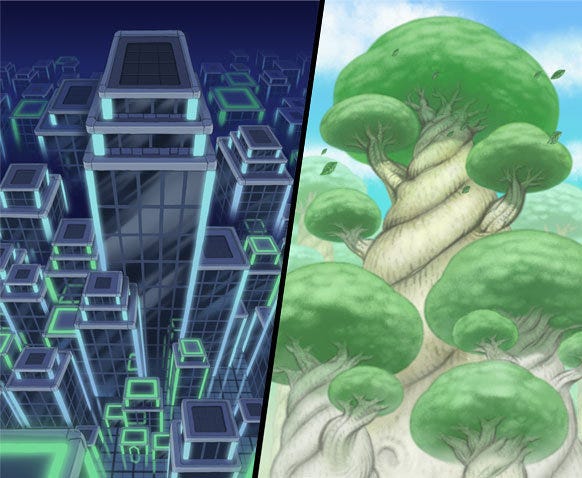
Here's the first surprise: it looks brilliant. Evidently Game Freak has finally hired some new graphic designers. Pokémon's monster design has always been exceptional, but otherwise the graphics were rarely better than tolerable.
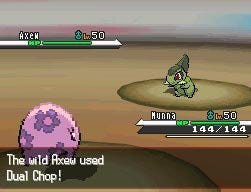
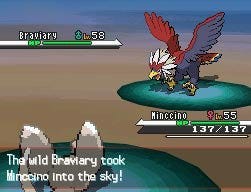
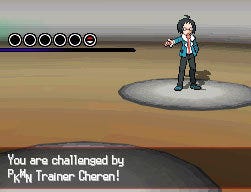
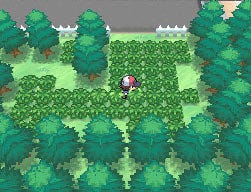
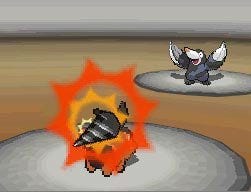
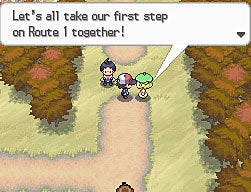
Now the battles come alive with entertaining monster animations, the cities are constructed of distinctive 3D buildings, and towns are connected by towering bridges that stretch over sparkling water and reveal distant skyline vistas. The sprites are bright and crisp, long grass sways in the wind, and the world's weather changes along with the seasons once every real-time month. Fittingly for what might be the DS' last heavyweight titles, they're among the best-looking on the platform.

And the second surprise: you don't always know what's next. Yes, you know that you'll make the familiar pilgrimage from town to town, collecting gym badges and eventually facing the Elite Four, but it's all about those new Pokémon.

Wander into the grass in a new area and you genuinely have no idea what you're about to meet. When a Pokémon evolves, you're excited about what it might become. New moves make you raise an eyebrow and read the description. It all feels new again, and it makes such a difference. There's not a Pidgey or Rattata in sight.

This sense of reinvigoration extends across the whole of Black and White. Game Freak is as willing to re-evaluate and throw out its out-dated traditions as its bloated cast. The biggest change is the distribution of experience points: monsters now get a far bigger share of EXP when they defeat foes stronger than themselves. This not only evens out the process of building a strong, balanced team, it makes over-levelling impossible. Grinding – what little there was of it – has been completely eliminated.

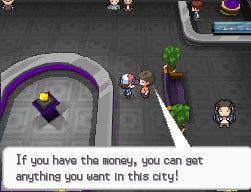
Pokémon Centres and Marts have been merged into one building, and there are Pokémon healers dotted around caves and inter-city Routes to prevent you hiking back to them three times an hour. TMs, the items that let you teach Pokemon new moves, are now infinite-use, so you can experiment with them more freely. This indicates a better understanding of what makes Pokémon so compelling: creating and customising your team.

Battling and trading with that team is no longer confined to the Centres, either. The C-Gear, Black and White's always-on connectivity device, lets you battle and trade anywhere via infra red, and collects information about other Trainers as they pass by on the street. Wireless and online functions are just a few stylus taps away on the bottom screen. You always feel connected; it's only now that Pokémon's ambitious community philosophy has been fully realised.

The age-old means of progression has changed too. Where before you'd be thwarted by a small shrub standing in the way of the next Route, or a small body of water to be Surfed over later in the game, the story now plays a much greater part in guiding you along. The HM moves are still in there, but they're used for exploring hidden nooks and crannies of the world rather than restricting your progress.

The story itself, which I'm not allowed to talk about much, is essentially about the symbiosis between people and Pokémon at the heart of the series' universe, questioning the relationship that trainers really have with their tiny monsters. It's a shame that it's not better written, especially as Pokémon has often shown itself capable of unexpectedly thought-provoking dialogue; it might have been genuinely touching. Behind that, Pokémon Black and White are still classic stories of childhood empowerment, sending kids out into a virtual world where adults don't tell them what to do.

These are truly vast games, offering easily a hundred hours each. Once the main story is over with, there are whole new areas of the map to explore, and those 500-odd older Pokémon suddenly open up for collection within them. It's exceptional value, but I can't help but wish that it were a little harder. All of the Gym Leaders fell on the first try, and none of the AI trainers offers you much of a tactical workout. For real challenge, you have to turn to other people.

Black and White could also make more frequent use of their new battle types. Rotation and Triple battles, both new and exciting battle modes involving three Pokémon at once, appear all of about seven times over the course of the entire story. Seeing them more often could have livened up many a dull trek through caves full of battle-hungry hikers. It seems counter-productive to introduce innovations and then barely make use of them.

Yamansk, for instance, is a Ghost Pokémon that "carries a mask that used to be its face when it was human. Sometimes they look at it and cry."

These are less complex games than HeartGold and SoulSilver, which were products of the Pokémon series at the zenith of its creative and cultural influence. There are no Pokémon eggs and breeding charts (at least not in the story campaign), no berries, fewer time-dependent events and Pokémon – though held items and the changing seasons restore some of that complexity.

Pokémon is still one of the most bewilderingly detailed RPGs out there, with complex stat buffs and dual-types and move interactions that could make your head spin – but the single-player game doesn't challenge you to understand it all fully. Perhaps that's a good thing. People can and do lose their lives to this stuff.

In many respects, Pokémon Black and White is a work of tremendous, surprising bravery. It rescues the increasingly convoluted Pokémon series from itself, disentangling those beautiful core mechanics from the complex tendrils of 15 years of iterations and polishing them to a new shine. Its connectivity is exceptional, it's mind-blowingly huge, and for the first time, it's beautifully presented.

Of course there's a lot that's the same. Of course there is. But with a great many small and well-placed innovations, a vivacious, inventive new cast and the biggest cosmetic makeover the series has ever seen, Pokémon Black and White makes it all feel new again. It reminds you what there was to love about Pokémon in the first place – and perhaps we all needed reminding.

9 / 10

Read the Eurogamer.net scoring policy

Comments (73)

Comments for this article are now closed, but please feel free to continue chatting on the forum!

  • Loading...hold tight!