The brains behind Pokemon Black and White

GameFreak reveals all in a rare interview.

It is one of the best-selling game franchises, a Nintendo behemoth with truly global appeal. And yet we know so little about where the Pokemon games come from.

They come from Japan, of course, but, more specifically, they come from a Japanese game developer called GameFreak – somewhat appropriately named given the fanaticism the Pokemon series commands from its loyal fanbase. But what makes the secretive independent developer tick? How does it go about making Pokemon feel fresh version after version? And how does it come up with all those crazy Pokemon names? Here, in a rare interview, Pokemon director Junichi Masuda and graphic designer Mana Ibe reveal all.

Eurogamer: How do you keep the Pokemon games fresh and relevant in the rapidly changing videogame market?

Junichi Masuda: When I create new videogames, I consider not just adapting the last element. First, I look again at all the elements, because the environment has changed. For example, there have been some technology changes and advancements. People may not like what they like in the past, trend wise. I take that into consideration when creating a new Pokemon.

Eurogamer: With this version, what makes it feel fresh? What makes it different to what's gone before?

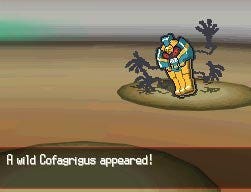
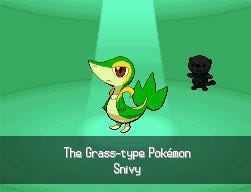
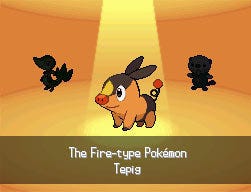
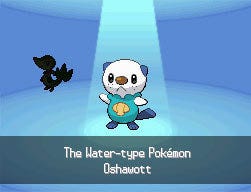
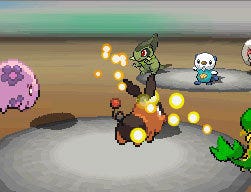
Junichi Masuda: We employed the same strategy as we did with Red and Blue. We delivered all new Pokemon for this new series. Players won't meet any old Pokemon up until they clear the main storyline.
Eurogamer: The battle system now includes three-on-three fights. Why is this important?

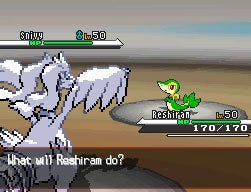
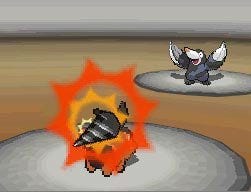
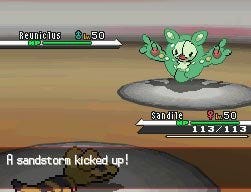
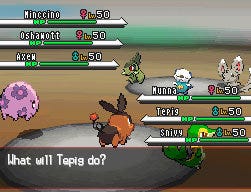
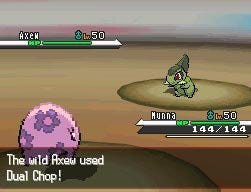
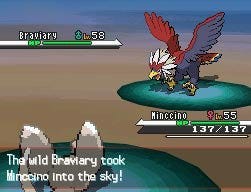
Junichi Masuda: We've introduced two battle systems. One is triple battle, the second is rotation battle. Triple battle inherited the method from the single or double battles we used to have in our past titles, but involves more strategy.

Both sides put out three Pokemon. The positioning is important because the Pokemon on the left is unable to target the Pokemon on the right, and vice versa. The Pokemon in the middle can attack any Pokemon.

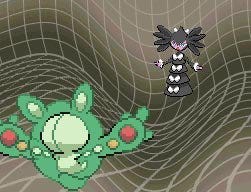
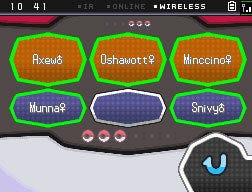
With rotation battles, both sides put out three Pokemon, but each turn you can only choose one Pokemon to battle against another. Only one Pokemon can attack at a time. So you can rotate one to the left or to the right, meaning both players can switch and attack in the same turn.

This battle system involves more luck. You don't know until you make the move and the rotation what the opponent is going to do. You have to predict what the opponent is going to do. Our intention with the rotation battle was, sometimes if you're against good players, most of the time you lose. But with rotation battle, even if you're not good you may win because of the luck rotation brings.

Eurogamer: How do you design a new Pokemon?

Junichi Masuda: At first I think of ideas about what kind of play I can include. I consider playing content at first, and then what kinds of new elements I can bring in, and the world and communication aspects.

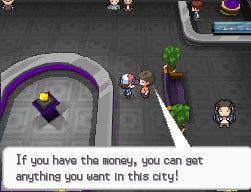
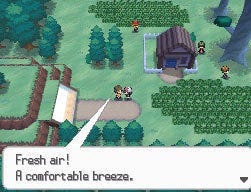
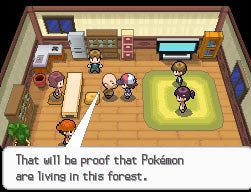
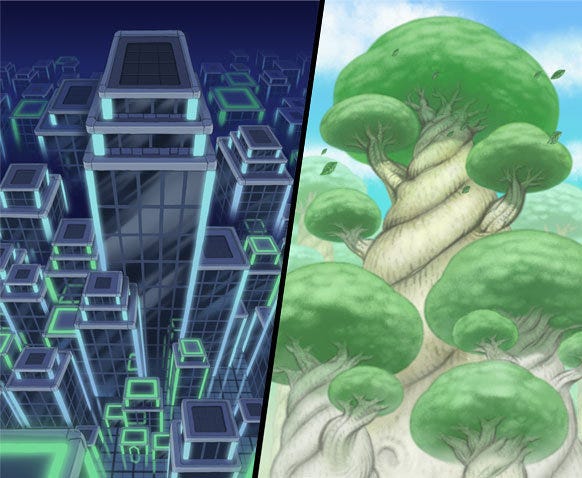
I bring up all the ideas at first. Then I start to think about what the world will be like. Which region? What town should we have? What type of gym should we have? I start to map the world next.

Once those are fixed I can start to think, so, this gym should have this type of trainer, so we should have this type of Pokemon. Then we start to think about the Pokemon characters.

You might think we always start to think from the Pokemon first, but actually we don't. We do it in this order.

There have been countless spin-off titles, making for over 50 Pokemon games in total.

Eurogamer: What makes for a good Pokemon?

Mana Ibe: All Pokemon shouldn't be just cold or frightening. What we consider first is players have some connectivity, a close feeling with these Pokemon. That's really important to have. For example, some Pokemon could have really edgy nails and could be really frightening to the players. However, if the Pokemon has a cute look, it could be something you feel close to.

Also, for example, if some Pokemon have really big mouths, that could be scary, too. But if the shape of the body is really cute, it will be something you feel close to. That balance is really important when we introduce new Pokemon.

We also consider battle balance. We sometimes need to have 20 electric, or a number of water type or fire type. Taking that into consideration, we introduce new Pokemon.

Junichi Masuda: What is different from the other videogames is that Pokemon could be your opponent, or Pokemon could be your friend. That's why she said we should create Pokemon the player could have a close feeling to.

Eurogamer: How do you come up with the Pokemon names?

Junichi Masuda: There are two different ways of approaching it. One is, sometimes our planning team already have the setting for the Pokemon, so they make a request of the designer team, saying, 'We like to have this type of Pokemon, for example fire type. This Pokemon has to have this feature.' At that stage they might have put some name they would like to have.

Another approach is, some designers come up with some Pokemon ideas. When they present their ideas to the planning team they sometimes already have the name – not fixed, but a temporary name.

So, most of the time we have about five names to one Pokemon. But then there's the issue of trademarks. We have to go through a legal process and check out whether we can use the names in the Japanese market. That's how we do it in Japan, first.

Overseas, of course we try to localise all of the Pokemon names - most of them - so other people overseas understand the original meaning we had from the Japanese. We try not to dilute the meaning. That's how we come up with all the Pokemon names.

Eurogamer: The names of the games are associated with colours. There have been so many games now. Will you run out of colours soon? What happens when you do?

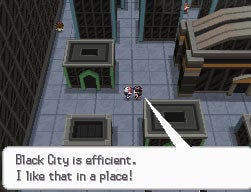
Junichi Masuda: This time, for Black and White, the main concept was extreme in the scenario. So, that's where the name Black and White comes from. It's extreme, different, opposite. This time was the first time we put the title based on the scenario and the world point of view. This title was based on the content of the videogame scenario.

Going forward, I predict we will continue putting titles based on the worldview, like we did for Black and White. But of course, it's really difficult!

Black and White are scheduled for release on 4th March.

Eurogamer: In Japan, local wireless DS features are used more than they are in the West, where it's harder to meet people who also play Pokemon. Do you consider adding depth to the single-player side of the game so those players get as much out of Pokemon as those who can play with friends?

Junichi Masuda: When I developed this videogame I tried to create a system that, even if you're playing by yourself, the single player can enjoy it. I always try to make the videogames something a single player can enjoy at first.

The element you can connect to others, that is something we added as spice to expand the videogame. Most people play by themselves up until they clear the main storyline. Up until the point of clearing the main storyline, most of the time players try to grow up the Pokemon, raise them, then once they clear the main storyline, they start to battle against others and exchange with others. So this videogame is totally designed for both.
Also, when I create videogames I do consider the situation in the West, for instance Europe. In Japan kids sometimes gather in the park and play against others. In Europe I've overheard there are not many situations like that, so I always consider this. But of course, until I came to Europe, I didn't notice much about the situation, so it's really important to come to Europe and get information.

More on Pokemon Black

Eurogamer: What process do you go through when localising Pokemon games? Is that the main reason why it launches in Europe months after Japan?

Junichi Masuda: For Black and White we totally changed the scheme of the organisation. This time we translated directly from Japanese to all other languages. Before, we localised from Japanese to English, and from English to other European languages. So this time it was Japanese directly to European languages.

That made the launch timing a little closer to the Japanese launch. This time, the launch in Europe is 4th March, which is two days before the US launch. So we're making an effort. This time we had many new localisation staff.

The gap between the Japanese launch and the European launch is because we always try to make the best videogame experience for not only Japanese users, but the people in other countries who enjoy localised videogames.

For example, we take care with the Pokemon names. We can all adapt Japanese names to Europe, but then sometimes it wouldn't mean anything to the European kids and players. So we always take all the processes seriously when we localise.

Eurogamer: The Nintendo 3DS has a number of interesting connectivity features. Have you begun to think about how the 3DS can change the Pokemon series?

Junichi Masuda: There are many new and good elements. The 3DS has advanced technologies. If we consider producing and developing new games for the 3DS, we would like to take advantage of all those new technologies and elements.

Eurogamer: Have you had any ideas?

Junichi Masuda: Yes, but nothing fixed.

Eurogamer: There have been hundreds of Pokemon down the years. Which is your favourite?

Junichi Masuda: I like Victini the best. Victini is something Miss Ibe designed. One of the reasons I like it is the idea of this Pokemon is it's a Victory Pokemon. It will lead to victory for players. Also, when I requested Miss Ibe design this new Pokemon, I said it should be a Pokemon that is more appealing to women than men. I liked that concept.

Comments (22)

Comments for this article are now closed, but please feel free to continue chatting on the forum!

  • Loading...hold tight!