The man who made GoldenEye

Martin Hollis on life, another life and art.

12 years ago Martin Hollis, the man who made the original GoldenEye 007, left UK powerhouse Rare 18 months into development of Perfect Dark to travel the States. It was a decision that rose more than a few eyebrows.

After consulting on the development of Nintendo's GameCube console, Hollis returned to the UK to start Cambridge developer Zoonami. In the decade since he's made a handful of games, including Zendoku, Go! Puzzle and most recently WiiWare title Bonsai Barber. Now, with big budgets and millions of sales a distant memory, Hollis looks towards a new decade and new opportunities.

Here, in an interview conducted at the GameCity festival in Nottingham, Hollis tells Eurogamer why he needs a break, reveals his plan to invent a brand new videogame genre, and considers what he might have done in another life.

Eurogamer: What are you up to right now?

Martin Hollis: I'm trying to work out what I want to do next. I'm recharging my batteries. I'm keeping my eyes open for new feelings, new kinds of game. I hope I'm not being too ambitious, but it's my aspiration to produce something that is genuinely new.

I've got quite a few things in mind, but I'm going to have to choose between them. It's too many things to talk about something in particular now.

Eurogamer: Where does this desire this come from?

Martin Hollis: It's a good question. I've been making games for so long that I'm no longer interested in the pure and simple goal, which should be respected, of just making a good game.

I'm more interested doing that and trying to push the field. Increasingly I feel the games that get made are typically from a fairly narrow set of possibilities, and I feel there's an incredible range of possible games that could be made.

Most people aren't really exploring that, and that's what really excites me. The Wild West – no one's even there yet. The real blue ocean of game design is what excites me most.
Eurogamer: Are you talking about inventing a brand new game genre?

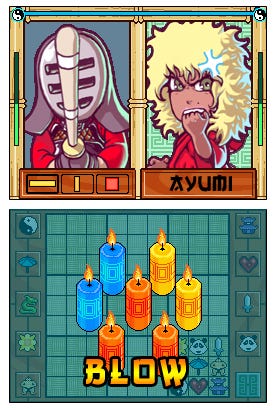
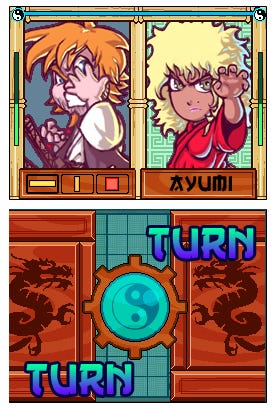
Martin Hollis: I'm thinking of new genres, yes. Exactly. Bonsai Barber was really cool and I loved to make it, but I've learnt some good lessons from that, and I wouldn't sit down to make another hairdressing game or another barbering game, because it doesn't feel like something that can be grown into a genre.

It's an interesting direction and it's certainly new and original, but it doesn't feel to me like something that can be grown into a genre. I want something where I've got a 10-year plan, where it's something where I feel I can really push for a long time on a big challenge in a new direction.

Eurogamer: Are you in a position to do that? In this economy, that's a privileged position to be in.

Martin Hollis: I'm not going to put my aspiration second. I'm going to wait until I feel I've found the thing I want to do. I'm not taking a hurried approach to it at all, really. It may be a year before I've got a project to talk about, or it may be longer. I don't know.

It is quite a privileged position, and I accept that. I am taking it seriously, but I'm not in a rush.

Eurogamer: Are you burnt out?

Martin Hollis: There are two meanings of burn out. I do need to recharge my batteries. Bonsai Barber was very hard.

Eurogamer: Why?

Martin Hollis: Because it was so new and that is tough work. We all have very high aspirations and meeting those was very difficult. We set high aspirations for ourselves and that's very difficult.

Eurogamer: Do you still enjoy making games?

Martin Hollis: Yeah I do. I wouldn't do it if I didn't enjoy it at all. There's no reason to carry on if that was missing. But I'm insisting on making projects for the last 10 years, really, I'm interested in.

Eurogamer: It's been 10 years since you founded Zoonami. How have you changed over that time?

Martin Hollis: The next decade is going to be a different decade – I feel that very strongly. I'm slightly more mature. I still have very mixed feelings about the traditional publisher/developer relationship. That's still very difficult.

Eurogamer: How so?

Martin Hollis: It's pretty much the same as it's always been, but it always feels to me that it's harder than it should be. I can't really explain why, but I always find it difficult over the course of a project to maintain a good relationship with a corporation that's outside the walls of the building. That's probably because of the way I prefer working with people, which is close to them and actually meeting them and talking to them as often as possible, rather than through documents or even email and voice conferences. That's not my natural habitat.

I do struggle, and sometimes I feel they're struggling as well to communicate well and maintain a good rapport.

Eurogamer: Has that had a direct impact on the games you've made?

Martin Hollis: I don't know if it has an impact on the games I make. It's been 17 years since I made any games on my own, off my own back, with no one else sending me money. I can't say objectively whether I could work like that, but I'm thinking about it.

I do know it takes something out of me emotionally – the traditional developer/publisher relationship. Increasingly I feel I have to rest and I can't go from one project into another.

Eurogamer: You can self-publish these days.

Martin Hollis: You can, but there are several questions you have to ask yourself very seriously. Am I good at marketing and PR? Do I want to develop those skills? Is it something I want to dedicate a good fraction of my life to? That's exactly the point. It is a symbiotic relationship.

Eurogamer: Does having to PR and market a videogame depress you?

Martin Hollis: I don't think so. I'm pretty pragmatic about it, generally. I'm very good at seeing other people's point of view, typically, and I can see exactly what it's like to be sitting behind a marketing desk and want products you can sell and people can comprehend quickly. I can see how those things are important and I sympathise entirely with that.

Eurogamer: Do you get bored of being asked about GoldenEye?

Martin Hollis: Not really. I try and take a respectful stance. I was very privileged to be there and be a part of that. Not everyone gets that opportunity. People do ask, 'Do you feel it's a bit of a burden?' No I don't, really. I'm proud of the work we did on that project. I'm content with my decision not to carry on in that exact line of work. I'm at peace with that.

It's an easy way for people to remember who I am and I don't really object to that.

Eurogamer: How would the last 10 years of your life have been different if GoldenEye hadn't turned out to be one of the greatest games of all time?

Martin Hollis: It would have been different in that portion, but I don't know how different it would have been overall.

Eurogamer: Would you still be doing what you're doing now?

Martin Hollis: Yeah, with a different flavour, but yeah, I think so. Looking at the world in 2010, my interest in technology, which goes back to my childhood, and my interest with creativity and with graphic art and music... There's nothing obvious I can think of that would be a better career for me.

Really I have to humbly accept it's my destiny to do that. If I had been born in the 18th Century I would have been a theatre director or something like that, but it's the 21st Century and it's videogames.

Eurogamer: Do you consider videogames to be art?

Martin Hollis: I consider it to be, potentially. Games merit that view today, but they're in the minority and they're not typically heavily marketed. There are games here at GameCity that merit that view. I'm pretty confident The Witness will turn out to be a work of art.

Eurogamer: What makes a game art?

Martin Hollis: For me it comes down to a feeling. You want to enjoy playing it, of course, but once that's run out, is there something else? Does it stay with you for a lifetime? Does it give you something to think about next week or next year when you're not playing it?

To me, that's what something that meets a certain bar of importance should achieve. The books I've read, the films I've seen, the paintings I love and the games I love, I carry them with me and I refer to them in my own internal mental life and I bring them up in conversations because their importance carries on and it becomes a part of the fabric of me.

A game that isn't artistic, maybe I enjoyed playing it and then I put it away and it fades into the background.

Eurogamer: What game do you consider to be art?

Martin Hollis: I'm trying to think of a recent answer...

thatgamecompany's Flower.

Eurogamer: Do you have time to play games these days?

Martin Hollis: I play an awful lot at the moment. Mainly I've been playing indie games because they're the more interesting titles to me. They have a higher density of ideas.

I hesitate to say Flower, but one of the interesting things about Flower was I couldn't play it because it was so emotionally provoking. I couldn't play it properly because as soon as I controlled it I felt an upwelling and I had to put it down. That's an achievement.

Another example is Shadow of the Colossus, which I haven't played because I've seen enough about it to know I wouldn't enjoy the feeling of killing those beasts. And yet still it's a part of me now even though I've made a considered decision not to play it. Again, an interesting achievement.

Eurogamer: Why did Flower spark so much emotion in you that you couldn't play it?

Martin Hollis: There's something magical I'm not going to be able to explain there, but getting analytical, I like the idea of holism and all of nature and humanity being part of one whole. I don't see myself as a tree-hugging hippy, but nevertheless in another life I could have been.

There was something very moving to me. The way the petals came together to be you, you suddenly leapt to the conclusion that that was you, that's unique and very moving.

More Flower footage for the win(d).

Eurogamer: Is it better to focus on art style over realism with downloadable and indie games?

Martin Hollis: At lunch today I saw some of the Newport [University of Wales] students' work – they showed five projects. I look at those and think, 'I'm not sure I could do that myself in three months.' Some of them look very good and the tools and technologies available to people off the shelf now do give you a leg up. With some energy and talent one or two of those young people can go a long way.

Being contrary, I can imagine an indie game that tries to be really realistic in a very narrow, controlled way, but I haven't seen anything like that. Because you're limited with resources everybody understands you have to choose other options.

But there's no sense in which you have to make a 2D game, and yet many people choose to do that for valid reasons and it's an artistic choice. It's a mostly influential choice for your entire game because so many types of genre will work well in 2D and not in 3D, or vice versa.

Crossing that wall is in fact a huge challenge.

Eurogamer: Thanks Martin. I look forward to seeing what you do next, and I hope you do recharge your batteries. It's easy to forget how draining making games can be.

Martin Hollis: It can be if you care.

Eurogamer: By saying that you suggest those who don't get drained don't care?

Martin Hollis: I don't know. I'm not making that judgement. I think I could choose an easier life.

Martin Hollis is founder and CEO of Zoonami and was the director and producer of Rare's GoldenEye 007.

Comments (31)

Comments for this article are now closed, but please feel free to continue chatting on the forum!

  • Loading...hold tight!