The headline, I'm told, became an all-too-regular mantra for Activision's beleaguered communications team long ago.
Surely, you might wonder, the people charged with maintaining the public image of a giant global business would have tried one way or another to get him to put a sock in it before more feet found their way into the big mouth of Bobby Kotick.
That said, while the odd gaffe might cause a temporary headache for the PR department, the Activision Blizzard CEO's reputation as a bit of a loose cannon has over the years generally been cause for the occasional rolling of eyes rather than heads.
This is, after all, the man who in 1991 picked up an ailing company riddled with $30m of debt, and steered it through a remarkable transformation to become the world's biggest third-party games publisher, along the way producing some of the biggest and best-loved brands in entertainment. Few people in business will ever match that.
But the aggressive, attacking tone of more recent remarks betrays an odd petulance that has surprised even those paid to douse the flames every time a B-bomb explodes in Activision's face.
The latest controversy comes by way of an interview with Edge magazine, in which EA, the creators of Call of Duty, and development darling Tim Schafer all receive a verbal volley from the Bobby-gun.
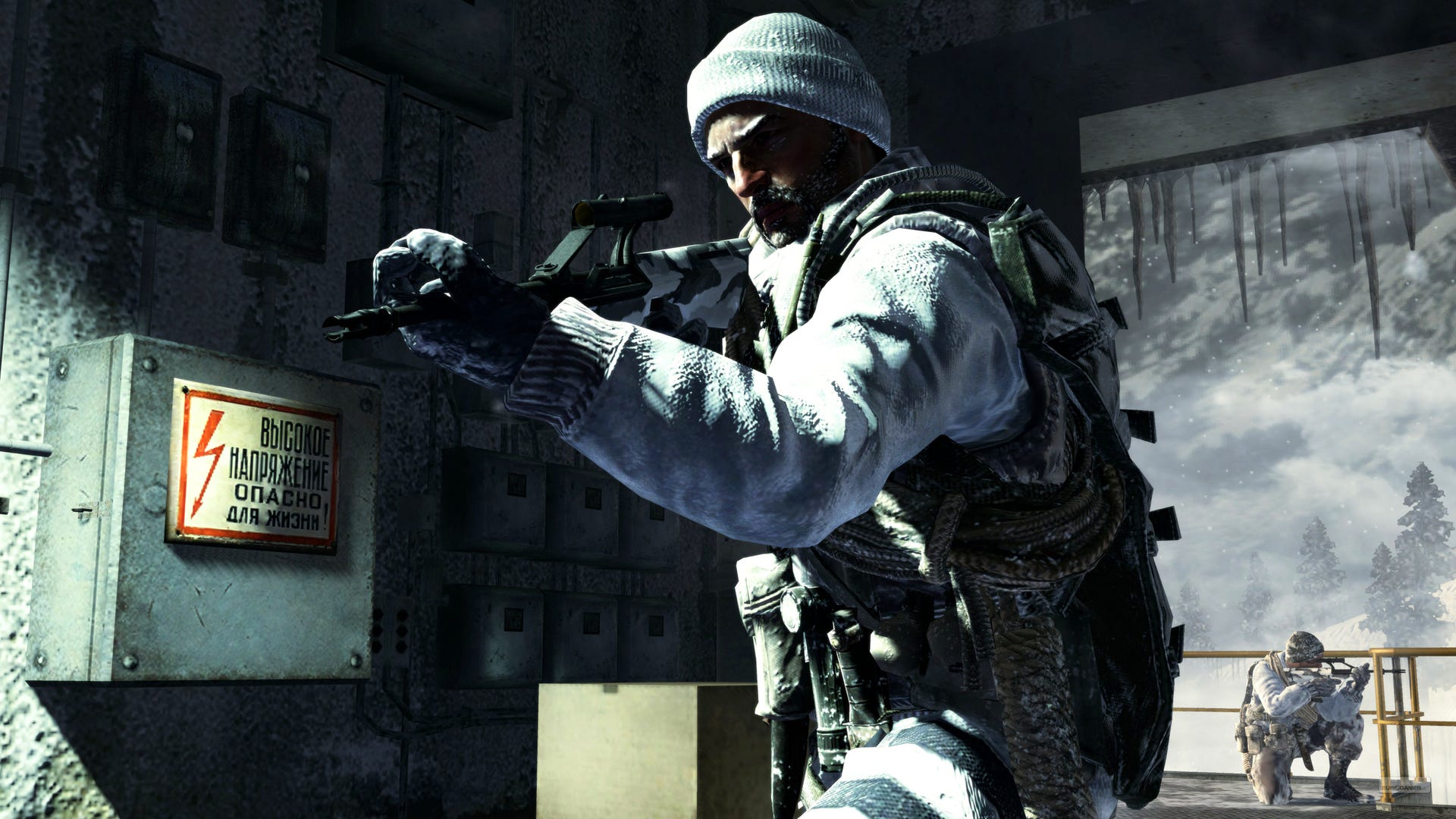
Viewed in isolation, are his comments - hitting back atSchafer's public insult, saying he feels "betrayed" by former employees, and criticising EA's business model - so unreasonable?
Hardly. He likely never did meet Schafer; EA vs. Activision is a long-boring clash of cultures and tit-for-tat willy-waving; and, as I'll come to, there are two sides to the Infinity Ward story.
But understood in the context of the events of this year in particular, they are not, to say the least, going to help.
The headline to the other big gaming interview Kotick agreed to over the summer, with Kotaku, captures the state of play: "A delightful chat with the most hated man in videogames".
You can see why, under the circumstances, the PR department thought it would be a good idea to place a couple of articles to 'set the record straight' and 'show the real Bobby'.
Unfortunately, as well as someone who clearly isn't the game-ignorant, consumer-loathing suit of caricature, he also likes to bitch about the competition. And, whatever one thinks of the press, it's obvious which bits are going to make the news.
So as the media soap opera rolls on, the interesting question has become not what he's said, but why?
Activision sources I've spoken to this past week acknowledge that Kotick has for some time been stung by the assumption that he has no interest in the medium that has made him his considerable fortune.
But that doesn't explain the scarcely believable decision to respond to an off-the-cuff insult (Schafer's "total prick" comment) with the straight-faced official release: "Bobby has always been passionate about games and loves the videogame industry."
Such a bewilderingly unnecessary action serves only to makes Kotick look vulnerable. And in a billions-of-dollars business, you can bank on any sign of weakness to be exploited by the competition.
Which is exactly what EA did through PR boss Jeff Brown's withering retort to Kotick's latest criticisms.
"His company is based on three game franchises - one is a fantastic persistent world he had nothing to do with; one is in steep decline; and the third is in the process of being destroyed by Kotick's own hubris." Ouch.
You don't need to be an Activision Blizzard shareholder to know which games he was referring to. But it's the final comment that will hurt the most - and EA knows it.
Kotick's Achilles' heel is the subject he has been most vilified for, and feels most painfully misrepresented over: Infinity Ward.
As one senior source put it to me: "Bobby was always a loose canon in respect of keeping secrets, revealing stuff in analyst calls that just wasn't ready to be announced. He's used to saying things without consulting the rest of the organisation."
But the build-up to and fallout from his sacking of Infinity Ward's Jason West and Vince Zampella was another matter.
"Bobby was very cut up about Infinity Ward - it's a two-sided story," says the insider. "Activision in the end acted too quickly, but equally Infinity Ward had behaved so extremely and inappropriately, what did they expect?"
The source claims Infinity Ward's bosses had for some time been "nasty" towards the "Activision machine", refusing to work with certain staff while becoming increasingly "diva-like" in their demands.
The success of Call of Duty, it is alleged, "went to their heads so they started treating the publisher like s*** and doing things that were inappropriate". In other words: "If they didn't like you, you were moved off [their titles]".
The friction is said to stem back to a disagreement over the direction of the Call of Duty brand after the second instalment. Activision wanted to turn it into an annual franchise and IW refused to play ball - with Treyarch enlisted to plug the gap.
It's believed the pair could have quit after the original Modern Warfare, only staying after they got "everything they wanted".
But by the time of Modern Warfare 2's release, this tension had grown into a full-blown - and ultimately unresolvable - power-struggle over the $3bn COD brand, which paved the way for the studio bosses' dramatic sacking.
Kotick sees this as a betrayal because he took a risk and backed the duo following the release of Medal of Honor: Allied Assault in 2002. Zampella and West wanted out of their relationship with EA and Activision offered them sanctuary, funding the project that became Call of Duty.
None of which is to absolve Activision of blame in the matter: rather to suggest the blame most likely lies on both sides.
Critics of Zampella and West now see them exploiting the (well-earned, in fairness) power they have accrued as game makers to play Activision and EA off each other and secure a new deal with their old publisher on their own terms.
Which gives EA the easiest of retorts every time Kotick calls into question its relationship with developers - hence Brown's statement. In essence: "Good luck with Modern Warfare 3, mate (LOL!!!)". (The schadenfreude is of course tinged with EA's still-raw recollection of its own hard-to-shake 'Evil Empire' reputation.)
As chief executive of a huge enterprise, his responsibility to shareholders will by definition put him at odds with gamers. But to suggest Kotick is not therefore passionate about the games industry seems to me wrong-headed and unfair.
The real problem is, as Sony president Howard Stringer nailed it: "He likes to make a lot of noise".
As the longest-serving CEO of a leading publisher, Bobby Kotick is also one of the most successful individuals in gaming.
But the one lesson he has apparently still to learn is that you can make all the noise you want, but the best way to silence critics is to keep on making great, successful games.
And with the future of previous safe bets like Guitar Hero and Call of Duty by no means certain, there ought to be plenty to keep him occupied.
