Zeno Clash's ACE Team

The mind and words of Carlos Bordeu.

Innovation sparkles as brightly as diamonds in the games industry, and is lusted after in equal measure. For every polished gem promising a safe return - every Assassin's Creed 2, every BioShock 2, every FIFA 10 - there's a raw stone with exciting potential. These, more often than not, are mined from independent sources before big corporations trample over the top with their metaphorical tractors of industry [let's wind it up - Ed]. Zeno Clash, made by Chilean developer ACE Team, is one such source. Flawed, but brilliant; a unique world of bird people, father-mothers, brutality and Gaudi-like constructions.

ACE Team bet big and the gamble paid off, as sales have allowed for a sequel, which was announced recently. This promises greater exploration, more RPG elements and an expansive, open-ended world. But ACE Team hasn't finished with Zeno Clash 1, with extra content set to arrive soon and the possibility of an enhanced Xbox Live Arcade port. At least, that's what Carlos Bordeu - one of three founding brothers of ACE Team - told Eurogamer. And he had much more to say, covering wild, disregarded Zeno Clash concepts, humble beginnings and the state of the industry.

Eurogamer: Zeno Clash is done, finished, out there. What's your reaction to what was eventually turned out?

Carlos Bordeu: Well, we're very happy with the reception the game has gotten. We really thought at several moments during the development that it was going to be the sort of game you either loved or hated. And we're really happy because it seems to be getting a lot more love than hate! In the media, the press, the people it has had a very good reception. We would have maybe liked to get to a bigger audience - I think a lot of people are wary about it; the game is kind of strange... I'm not sure. But we still have to do more work in terms of getting more media press and notes about the game so that more people try it out. But overall we're pretty happy with how the game was received.
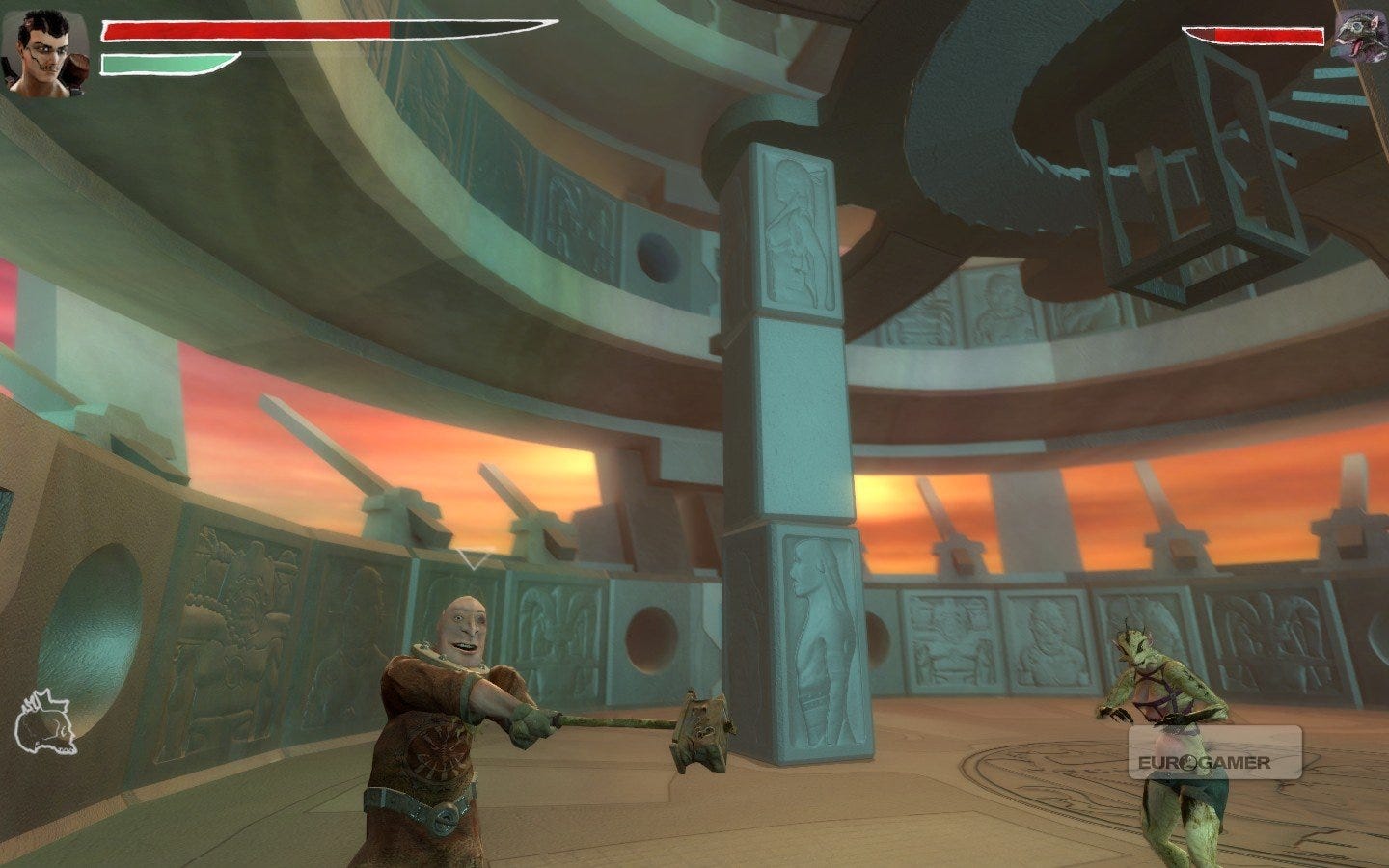
happy

He looks happy. Punch him.

Eurogamer: Did you have a backup plan in case it all went awry?

Carlos Bordeu: You mean like if we have some sort of plan in case the game was not successful? To be honest: not really. I mean this was a very big bet on our side. How we will move forward as a company and what we do next depended a lot on how successful Zeno Clash was, and I still think there's more we can do with it: we're currently trying to get it ported to a console, although we're still not ready to announce anything about that yet.

The truth is we didn't have a backup plan or anything.

Eurogamer: Consoles! All of them?

Carlos Bordeu: Xbox 360, because Source engine is properly ported for it. I think the only game that has been developed for PlayStation 3 was The Orange Box, and that was Electronic Arts internally. Source comes with compatibility for PC and Xbox 360, so that's our main goal.
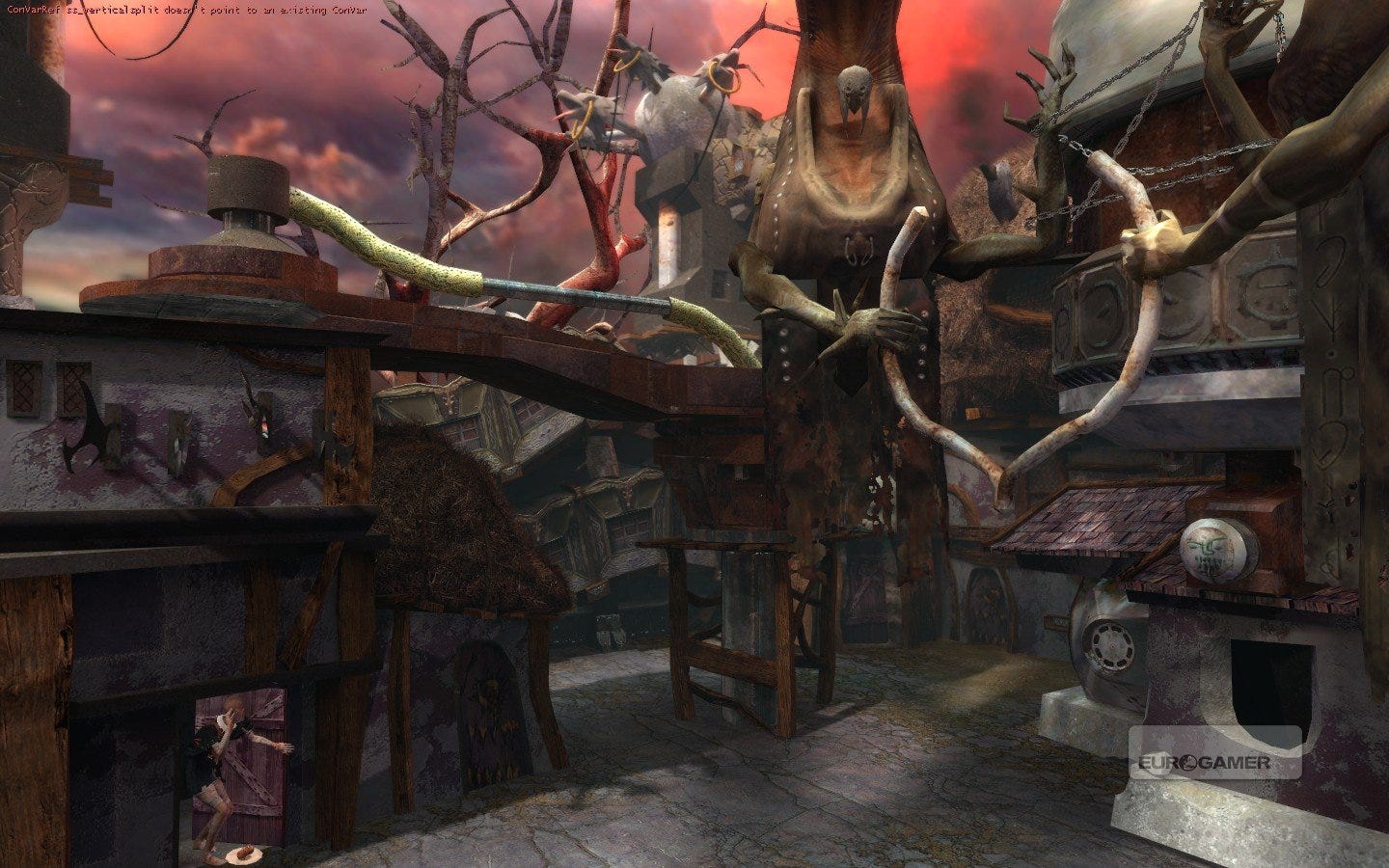
zenozoik

The world of Zenozoik: a hallucinated fairytale.

Eurogamer: How far along is the Xbox 360 port? Have you had a chit-chat with Microsoft?

Carlos Bordeu: We've been having conversations about a possible XBLA version of the game and we're currently talking with a publisher, but we still haven't closed that yet. But it's something we'd really like to do.

Eurogamer: Would you have to alter Zeno Clash much for Xbox 360?

Carlos Bordeu: Yes we would, probably. Usually when you port there is a lot of interest in adding new features and content so the console port is interesting and people who have the PC version will say, "Oh cool, the console version has these features added." I can't tell you what it would be right now, but yes, we are looking at adding a little bit of extra content.

Eurogamer: How did Zeno Clash originally come about?

Carlos Bordeu: Well, the story for Zeno Clash is very unusual, because many years ago when we were still a mod team and finished our single-player total conversion of Quake 3 - The Dark Conjunction - we started working with Lithtech's Jupiter system (the game engine of No One Lives Forever 2) and we built like a two-level demo of a game called Zenozoik. That's the same name as the world of Zeno Clash. That's the first time we got into the whole punk-fantasy world. The art style maybe wasn't as crazy as it is in Zeno Clash, but the game was sort of our first attempt at making a first-person game with fantasy elements. But the project was too ambitious and we were too small a team that the project never took off. It was a bigger game even than Zeno Clash. That's one of the biggest mistakes you do when you're starting out.

A couple of years later, as we were making this game and realising it wouldn't work, we said, "OK, we really want to make this game but how do we do it so we can get it out?" So we decided to focus on key elements of game design: the close-combat system, the art style. Focus on some elements but not this huge game we're not going to be able to finish.

Eurogamer: You mentioned being over-ambitious a long time ago. Were there any really wild ideas you had back then that now seem ridiculous?

woods

Curly caterpillar plants: check. Phallic rock formations: check.

Carlos Bordeu: The game was much larger in scale and we had some features to make it more like an RPG. You could solve quests by violent and non-violent approaches and that proved to be extremely hard, because everything had to have alternate solutions. For instance, you had this city with this big wall that you had to get into and you could either kill the guard and steal the key and get inside, or you could go and kill chickens or something and give them to him and he would let you inside. And doing all these alternate solutions meant doing twice the work for every objective, so that went completely off-scale and was very hard to implement.

And, yeah, the game had a lot of different ideas. It also had co-op; we were building Zeno Clash to work in co-op, which was also very, very, very difficult. You could die in the middle of the game and you went to a sort of Limbo and your friends could revive you - it was crazy but very, very large in scale.

Eurogamer: Are those RPG elements being reinstated in Zeno Clash 2, then?

Carlos Bordeu: The main feature we're bringing back is making the game more open-ended and making the progression of the game non-linear. Zeno Clash was relatively small, which was fine; we were a small developer and we had to focus on doing a really big amount of art and assets and lots of characters and fighting.

But the art style and the universe are very interesting if you put them in an explorable environment, because we see exploration as almost a gameplay feature in itself. It's really interesting when you can visit different places and you don't know what's going to be there. But it's especially interesting in the world of Zeno Clash. Let's say you're playing a fantasy RPG and you're going to go visit a forest or a village, you pretty much know and expect how it's going to look: forests have green trees, villages have these little houses - medieval fantasy is relatively, um...

Eurogamer: Boring?

kick

Kicker-boxer glory.

Carlos Bordeu: No, ha ha! I wasn't going to say boring, I was going to say standard. You know what to expect. We've all seen Lord of the Rings and lots of Dungeons & Dragons. But in Zeno Clash you have forests with colourful trees that aren't from the real world. The plants don't look like plants and the cities are like nothing you've seen. Exploration becomes even more interesting when you're in a world you don't expect.

That's one of the really strong things we want to do with Zeno Clash 2. We're not going to do a game the size of Oblivion or anything like that because we obviously can't. We're going to grow a bit, the studio, and hopefully be able to do more stuff.

Eurogamer: Is there a danger that by trying to make the game too open and expansive that you begin duplicating content to pad it out?

Carlos Bordeu: One of the challenges in designing Zeno Clash 2 will be mixing the nature of the first game with new elements. A lot of people appreciated Zeno Clash for its combat mechanics and we don't want to lose those fans. But by adding large, explorable areas and making the game bigger and spreading out the combat, I think we can get to a point where the game will become more interesting rather than less interesting.

Eurogamer: Smashing! And how many times was Zeno Clash bought? Do you have sales figures?

Carlos Bordeu: Ha! Oh by contract I can't say the sales figures. What I can say is that the curve has been constant for us with less drop-off than big-budget games. But we still feel we have much more to do in terms of getting out Zeno Clash to people.

Eurogamer: What's it like working on Steam?

Carlos Bordeu: For PC, Steam is becoming easily one of the best ways of distributing games. Steam and digital distribution will eventually overtake retail distribution, but for indie games like ours, Steam is considerably more important than retail distribution. That doesn't mean we're not looking at a retail release in the rest of Europe, but Steam is the most important way of distributing for us.

Eurogamer: You're busy working on Zeno Clash 2 and possibly a console port. Does that leave much time and space to make extra content for Zeno Clash 1?

Carlos Bordeu: Maybe we announced Zeno Clash 2 a little early. It was more of an announcement that we're starting work on the next project than we actually have a lot to show. I mean if you ask me for screenshots or anything, I wouldn't have them, because it's only been a month since we released the other game. We're pretty much in a design phase, so we're still working a lot on the first game.

We're currently preparing a new free downloadable content that's going to be similar to the Challenge mode but it's different: a pit challenge where you go down floors fighting opponents. We hope to have something to show in a couple of weeks - a video or something.

Eurogamer: What sort of release date are you looking at for that?

versus

I have dropped my kebab. Who did that? Was it you? You? You?

Carlos Bordeu: Um, for this sort of thing I wouldn't expect it to take more than a month - around that time. But I'm not completely sure because we're still developing it and we don't have a milestone schedule that we have to reach. I would say maybe five weeks.

Eurogamer: How do you think the indie scene is doing these days?

Carlos Bordeu: I think the indie game development scene has been growing very fast. Where casual games a couple of years ago were the boom - the new scene - I think independent games are now, and starting to become a strong force in the industry. Games like World of Goo, Braid, Killing Floor - the indie scene is becoming pretty important.

Indie developers have more liberty to work on stranger concepts and be more experimental. Games like Zeno Clash or Braid or World of Goo would be very hard to present to a publisher with a design document. On paper they sound too weird. Until you have proof of concept you can't go forward with these games. So independent developers are self-funding their projects and that's the way these games are being done. A lot of these are done on PC, which makes it a very strong platform in terms of innovation and moving the industry forward.

Eurogamer: Why is there an indie boom now?

fathermother

That's Father-Mother: a he-she. Giggle.

Carlos Bordeu: I'm not sure. Well, yeah, there is a strong reason: digital distribution. It has to be. When you only had retail distribution there was no way to get your game out there. But now that we have digital distribution you can sell your game. Zeno Clash was too small to be a regular retail game. Without digital distribution, Zeno Clash would never have existed.

Eurogamer: Now you have that proof of concept, will you leave the indie scene behind?

Carlos Bordeu: We want to try and make our games a little big bigger and we hopefully want Zeno Clash 2 to possibly be a retail game for Xbox 360 [Carlos Bordeu contacted us to tell us PS3 is also on the cards - Ed]. But we want to keep the independent feel of the company; we want to keep making these strange games that have our own personality. In creating Zeno Clash we created an image as a company, and we want to keep that.

Eurogamer: Would you turn down an acquisition offer from a company like Valve, then?

Carlos Bordeu: Ha ha! Depends on how much they pay! Ha ha.

Eurogamer: What do you think about the industry as a whole? Is it creative enough?

Carlos Bordeu: That's something that's been in debate a lot. The industry as a whole gets a lot of criticism for doing the same things over and over again, but I don't think it's doing it any more than Hollywood is with movies. There are the super-duper big budget projects that try to play it safe, and there are the smaller game companies that do the more risky games.

The games industry is a newer media - film has been out for many, many more years. There's still much more room to innovate in the games industry. There are still a lot more genres that you don't usually see in videogames that you see in films, such as comedy, suspense, romance. Eventually, as they become more mainstream and maybe more women or old people play games, we will see the industry grow and we will see more new, more innovative types of game.

Eurogamer: Are videogames as good as films at telling stories?

Carlos Bordeu: Videogames can be a very compelling way to tell a story and can be very artistic, but they range so much that the purpose for some is just to have fun - it's not about the story at all. Whereas in film that is - most of the time - the objective. You want to show something to the viewer and present them with a story. It's normal that films are better at telling a story than videogames, but that doesn't mean videogames can't do it. And I think as time progresses we will see some very interesting stories pop out.

crossbow

What's going on here, stupid-faced boy?

Eurogamer: Let's get back to Zeno Clash 2: what are the main concepts you're working on?

Carlos Bordeu: Well the first thing was the scope and making an open-ended game. We're looking at improving the melee and weapon combat and giving it something more in-depth - adding more attacks and doing something more dynamic, like playing with the environment and not having all levels as flat floors. We're also looking at the possibility of playing different characters. We still haven't decided completely, but it's an interesting idea. Stuff like that.

Eurogamer: And the RPG elements you're adding, will this be simply the option to choose a good or evil solution to a quest?

Carlos Bordeu: We're looking at having levels for characters, attributes, an inventory, objectives, side-quests and several other bits that make RPGs popular.

Eurogamer: Are you interested in multiplayer?

Carlos Bordeu: It is interesting, but it's something we often debate here about whether the effort is worth... if it's worth trying to tackle. We're still a small studio so we don't want to try to do more than we're capable of, which doesn't mean we're not going to do multiplayer, but maybe we'll keep it as something like a different game mode.

willynose

Look! A Cyril Sneer-osaur.

Eurogamer: How big is ACE Team?

Carlos Bordeu: Right now we're very small. After finishing Zeno Clash some people left to do other things, but right now in the office we're six. No, that's a lie. We're like nine people. But we're going to grow for this project and hire some people like artists.

Eurogamer: When, realistically, will we see Zeno Clash 2?

Carlos Bordeu: No way this year. Absolutely impossible. Beyond that, we have our internal estimations about the time we may take, but we miserably failed when we planned how long the first one would be, so if I told you now I would probably miserably fail again, so I'd rather not say! Ha!

Zeno Clash is available now on Steam for GBP 14.99. Carlos Bordeu is co-founder of ACE Team and artistic director of Zeno Clash.

Comments (30)

Comments for this article are now closed, but please feel free to continue chatting on the forum!

  • Loading...hold tight!