Where Credits Are Due
The ATEI 2007 arcade exhibition.

For all its pantomime - the bright lights, buzzing neon and showboating shoryukens - the rise and fall of the videogame arcade is a simple tale of supply and demand economics. Technological advance has never moved in tandem with stuttering five-year long console life cycles. For many years, no sooner had the brightest technology been squeezed into Nintendo or SEGA's latest mass-market games machine than the boundaries of what was theoretically possible in videogame hardware had widened. So pioneering developers instead outplayed their latest and wildest interactive dreams in the arcade, where the possibility of bespoke hardware in cabinets of any desired shape and size encasing the latest possible technology available presented far fewer restrictions on the imagination.
As a result, arcades have, year-on-year, signposted the future of home videogames: Space Invaders and Pac-Man laid down the twitch template, Street Fighter II micro-balanced competitive mechanics, Ridge Racer and Virtua Fighter the third dimension and Virtua Cop and Dance Dance Revolution new ways to interact with machines. At each stage the incessant consumer demand for ever-more incredible looking, sounding and feeling videogames was always best supplied by the flexible arcade medium.
However, home consoles have never been far behind each innovation, aping, refining and quickly surpassing the arcade scene's best ideas and bringing them to the sofa-bound masses. Thanks to ever-cheaper microprocessors and broadband, consoles can now stream orchestras, allow a dragon punch inputted in Bristol to connect with a jaw in Osaka and demonstrate graphics that make Virtua Fighter 5 indistinguishable on PlayStation 3, Xbox 360 or Lindbergh. Developers now struggle to fill home console hardware's shoes rather than straining to burst free. In short, arcades have precious few software tricks left to one up the home systems that ably meet modern consumers' demand for new and extraordinary play experiences.
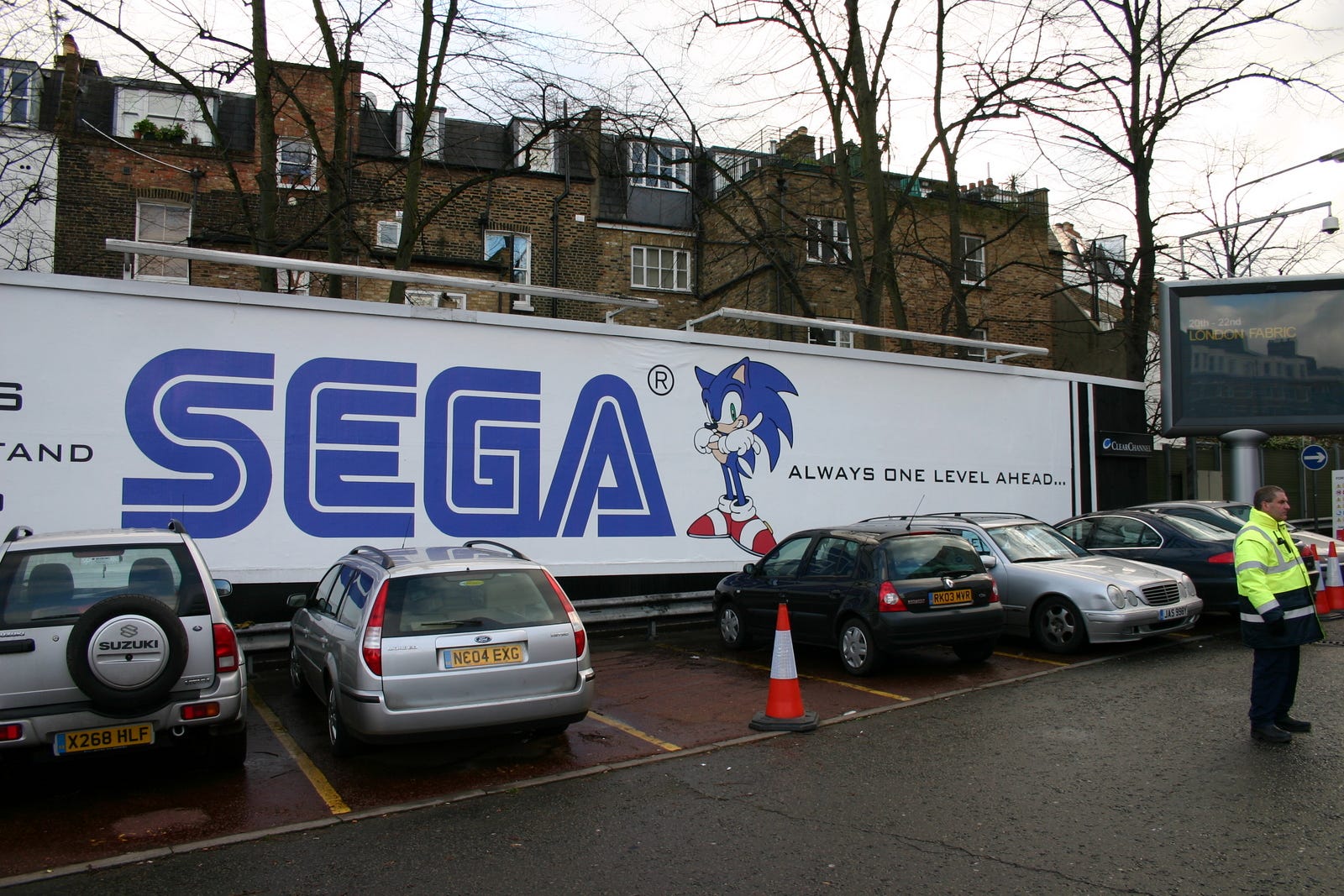
All of which has left the arcade scene limping bedraggled and near redundant far behind its mainstream offspring. But there is one aspect to the arcade experience that consoles can never better: bespoke hardware. Which explains why this year's ATEI show - the UK's annual 'slot-machine' show held at Earl's Court - revealed a line-up of extraordinary hardware innovations that revolutionise some well-loved franchises.
SEGA
The most conspicuous two-fingered salute to the home console scene came from SEGA's House of the Dead 4 Special cabinet. Dubbed a 'Motion Theatre Experience' the machine - consisting of TWO 100" XGA projector screens housed in their own sizeable room - places one or two players into a mining cart affixed to a 360-degree rotating disc. An attendant (let's see Nintendo package one of those with its next console) mans the room, strapping players into the cart with seatbelts and a rollercoaster-style safety bar before closing the entrance door. The cart then swivels between the two screens - one in front and one behind - as you shoot zombies from both angles in an HOTD4 redux. Cinematic surround sound joins in the sensory overload along with vibrating seats, recoil Uzi-style machine guns and, brilliantly, a blaster that fires bursts of air onto your face and neck each time a zombie screams too close to your face. The experience is, needless to say, extraordinary and, perhaps for the first time in five years, showed a heart-stopping videogame experience that will likely never be possible on a home console.
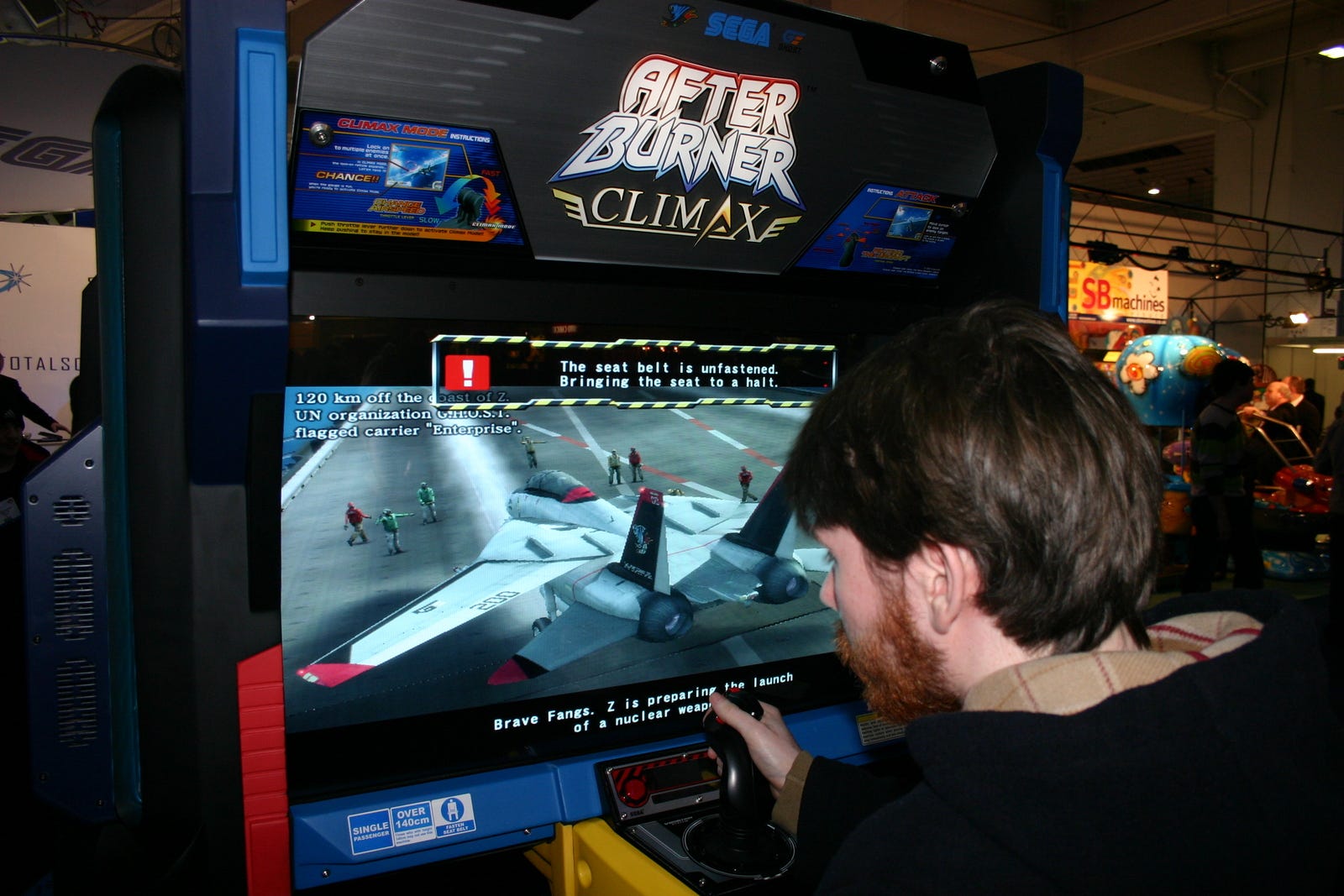
Similarly SEGA's Afterburner Climax, also powered by the PS3 conversion-friendly Lindbergh board, provides players a gut-wrenching experience. While sadly not housed in one of the huge hydraulic Cycraft cabinets that excited us so much last year, the 'Super Deluxe' Afterburner 2 cabinet still provides some white knuckle g-force feedback thanks to its three-point motion base. The game, a sequel to the late '80s hit, looks fantastic as you fly an F-14 Super Tomcat, F-15E Strike eagle or F/A-19E Super Hornet through 20 stages of Panzer Dragoon style on-rails shooting. Acceleration and the new 'Climax Mode' - a kind of light-speed jet-powered bullet time - are handled and triggered with a weighty gear lever and, for flush arcade owners (or extremely flush home owners) there's an option to link up two cabinets for co-op play.

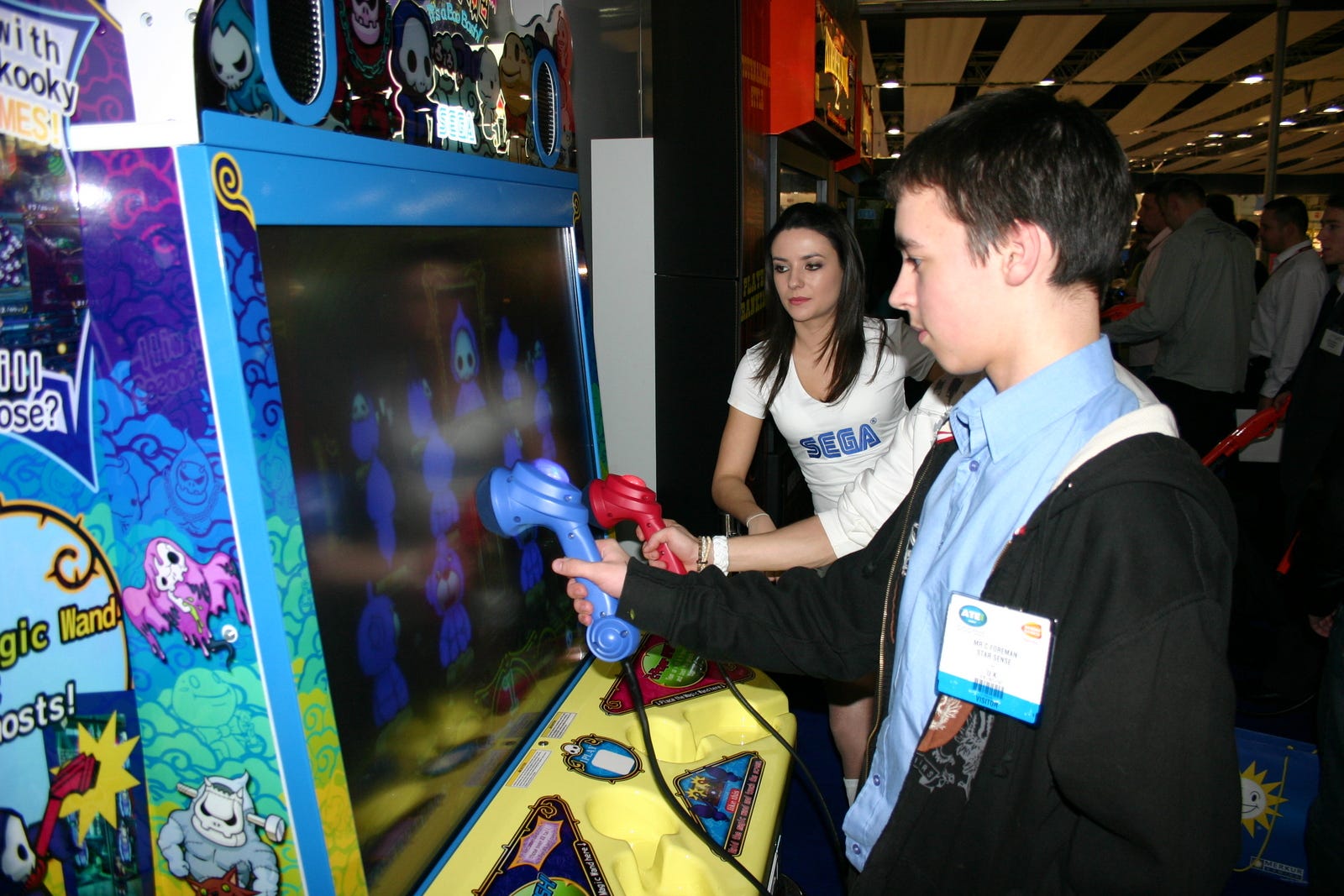
Manic Panic Crush, a Point Blank styled mini-game marathon has clearly looked to the DS for its inspiration. Boasting a 50-inch touch-screen (just think about the implications of that for a moment...) the game requires one or two players to use the 'Magic Wand' peripheral (essentially a big rubber sucker) to whack and swipe the screen in order to clear simple levels and bosses. Again, this is the kind of remarkable technology is simply not affordable/suitable for use in the home yet and, despite the basic gameplay, it signposted what might be possible in a few years' time.
Another year another Outrun 2 cabinet upgrade, although SDX Special Tours is a marvel to behold. A mammoth cabinet consisting of four two-seat Ferraris (F50/ Dino GTS/ 360 Spider and the 512BB) each in front of 62" monitor the gameplay has had some significant tweaks. Each car has two steering wheels and sets of pedals, which both players in the car must man. In linked mode four teams of two drivers race against each other with control of each team's car switching between players when it comes into contact with other cars, hits a wall or reaches a stage end. The sense of camaraderie this brings is heightened by a huge leaderboard above the cabinet which relays a live video feed of the leading player's face.
The rest of SEGA's line-up was less surprising. Virtua Tennis 3, having been debuted at last year's show and coming shortly to consoles was nonetheless very popular as was Ghost Squad Evolution - an upgrade of 2005's top earning light-gun game - and Too Spicy, a ridiculously-styled but enjoyable head-to-head shooting game. Let's Go Jungle, a new take on the classic Jurassic Park cabinet (both titles have players sit in a jeep) was essentially another FPS using a fixed gun peripheral. Gameplay was unremarkable but SEGA's précis of the story is so brilliant it's worth repeating here (all caps are SEGA's): "A young couple have taken a cheap holiday for a little excitement to an UNINHABITED island, untouched by man and technology. TOUR turns to TERROR! As armies of GIANT LIFE FORMS unleash a massive attack. They need to use their wits to get off the island... WILL THEY SURVIVE?"
Konami
I HOPE SO. Konami had the next biggest showing unexpectedly bringing with them the latest line-up of popular Japanese rhythm action Bemani machines. DrumMania V3, the thirteenth game in their fantastically fun drumming series, presents 400 songs to the player and this version seemed to have more balanced sequencing data that felt a lot more like playing the drums than some of the previous titles. GuitaFreaks V3, Guitar Hero's bitter forbear, was also present but the weighty and unwieldy peripheral combined with the sky-high difficulty will do little to drag Harmonix devotees away from their plastic Gibson SGs.
Beatmania IIDX14 Gold completed the rhythm set providing a massive draw to attendees thanks to its neon blue lights, chrome surfaces, finger-breaking keyboard based complexity and, crucially, the theme from Ghostbusters. Pro Evolution Soccer Arcade Championship 2007 pleased football fans as Konami brings its most beloved online footabll franchise to European arcades for the first time. Connected to Konami's e-Amusement network the game allows you to save play data and battle online in head-to-head matches using either the cab's stick or your own PS2 controller. We didn't have the heart to mutter Xbox Live.
Taito's Chase HQ2, with gently cel-shaded graphics and 23"Hi-res LCD screens looked pleasing but played poorly. Which is one better than all of Global VR's stable of franchised games. Need For Speed Underground, Aliens Extermination and FarCry Instincts: Paradise Lost were some of the worst games we've played in many years. Graphically all looked ten years out of date but it was the broken, repetitive and irksome gameplay that pushed us the hardest from their stand.
The final surprise of the show was Namco's Mario Kart Arcade GP2. The bright, primary-coloured cabinet houses four screens and kart seats and boasts as its dubious but proudly proclaimed USP: live play-by-play commentary which, according to the blurb, "makes the game intense". As well as featuring all the usual suspect characters the game introduces an incongruous-looking Mamechi "fresh from planet Tamagotchi", new courses and, controversially to long-time series fans, loads and loads of new items. Coins can be collected throughout courses and traded to customise the karts (and this data can be stored on special cards) but otherwise this is by numbers (50/100/150cc) Mario Kart Racing.
It would be wrong to describe ATEI 2007 as a resounding success - after all that judgement is left to the arcade operators whose livelihoods depend on these titles attracting your small change - but there did seem to be a concerted effort on the part of the Japanese developers represented to move the scene forward and distinguish the experiences that arcades can offer from that of the home. This might not signal an arcade renaissance - some UK arcades actually have to, y'know, buy some of these things - but it good to see that you can teach an old dog some new tricks.