With S.T.A.L.K.E.R.: Shadow of Chernobyl, developer GSC GameWorld proved that you can make an innovative, specs-testing FPS with a small team - but it will probably take you the best part of a decade to get it finished. Now hard at work on a prequel, S.T.A.L.K.E.R.: Clear Sky, which is due out in August, it's hoping not only to trim the production cycle, but also deliver a game that truly lives up to their initial concept. Following our preview session, we caught up with Oleg Yavorsky, the developer's PR director, to discuss unusual inspirations, the danger of revolutionary technology, and the trouble with making games for "non-intellectuals".
Eurogamer: S.T.A.L.K.E.R.: Shadow of Chernobyl took six years to develop, yet you're aiming to turn around Clear Sky in less than two. What's happened to speed things up?
Oleg Yavorsky: Six years is a long period of time. Children are born and start going to school within that period. Our big problem was we were developing our technology and the game simultaneously, which for us was a lot of headaches. When we wanted to try out a gameplay element, it wouldn't work because there would be some problem with the engine, which was still not finished. Then there was just this ambitious concept: S.T.A.L.K.E.R. was to be the ultimate game, with a mix of pretty much everything - shooter, RPG, survival horror, driving. We were inexperienced and took on too much.
Luckily, those experimental years were not in vain because we gained a lot of experience. With Clear Sky now it's a year and a half for the whole production cycle. It's still stressful, because it's a short period of time given the number of changes we want to bring in, but the important thing is we now have stable technology, and we know what things work and what things don't work for our game. Our primary focus now is to really develop the ALife system - that living, breathing environment - because this is where S.T.A.L.K.E.R. is unique.
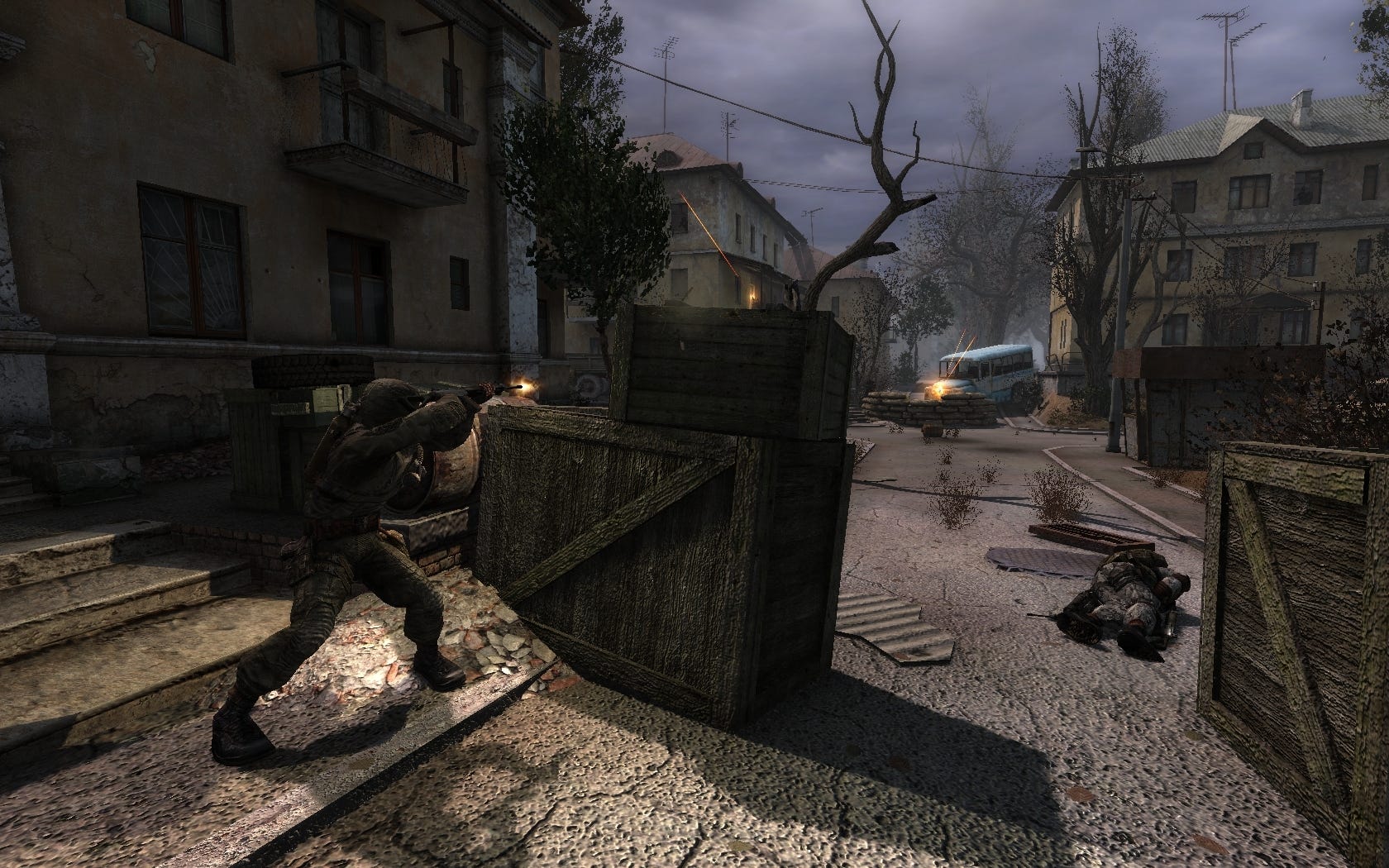
Piracy's a big issue, but where PC markets like Russia and Germany are concerned, Yavorsky sees it as an acceptable drawback.
Eurogamer: Were you pleased with the implementation of the ALife system in the original game?
Oleg Yavorsky: The initial implementation was way too complex and we had to disable a lot of it. At first, the concept was that any single NPC could go and complete the game, even ahead of the player. They were competing directly with the player, doing all those things like taking missions, fighting monsters, collecting important information, getting themselves better equipped, and communicating with others. We started implementing that and got it to the point where it was pretty much there, but it was all so chaotic that it was very hard to put that into a story-driven game and still have the player know where to go and what to do next. Nobody has fun getting lost in a huge game level. It was really hard to ensure that a player would not be frustrated that some stupid NPC had already been to a level ahead of him and ruined the whole scene. We had to pretty much start all over again and integrate the story into the ALife world. We created a whole set of mechanisms that ensured that story was preserved and tried to make sure ALife still had some limited presence in the game.
Eurogamer: Are you dusting off some of those more ambitious ideas with Clear Sky?
Oleg Yavorsky: This time, I definitely think the player will see more of the randomised unpredictable world going on around them, simply because we're making our NPCs smarter. We've developed the communication aspect with the player's ability to go and ally with factions, receive rewards, and become part of their missions, so overall the game is closer to our original vision. But as long as it's necessary to ensure players follow certain story elements, we'll preserve those.
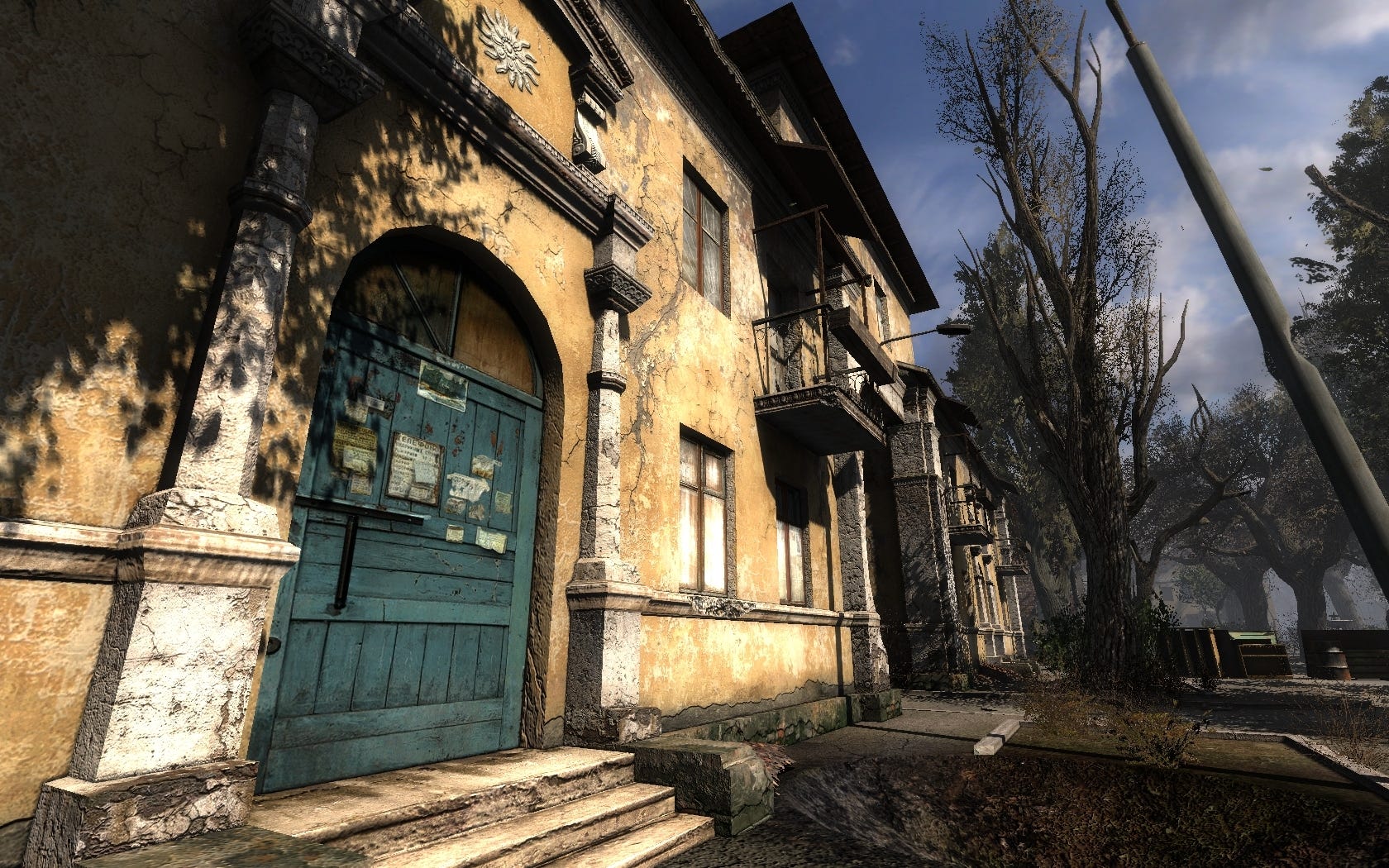
Very Chernobyl of them.
Eurogamer: That sounds like a tricky balance.
Oleg Yavorsky: Yes. The first, bigger part of the game is going to be pretty much open-ended, so the player will have extensive freedom to ally with factions. The concluding part will be more linear and straightforward and the player will be more guided.
Eurogamer: Is Clear Sky going to remain a PC exclusive now that you have a licence to develop on consoles?
Oleg Yavorsky: We think with our next releases we'll make them multiplatform, but for this release, it's going to be PC only. We've just started to figure things out with the consoles. The technology's pretty much new to us. We'd love to port Clear Sky onto consoles, but currently there are a lot of technical questions. We'll see if our technology runs on consoles and go from there.
Eurogamer: Is the PC market robust enough for you to be single-platform with Clear Sky?
Oleg Yavorsky: It is if you focus on the heavy PC markets. Russia is 98 percent PC still; Germany has a big piece of the market. There is a lot of piracy, but people are still buying games: with our game, they really were. I've seen people on the internet, and someone is saying, "I've just downloaded S.T.A.L.K.E.R.!" Someone else will say, "Hey, these are local guys - support them and buy it." Then the first person will say, "I just wanted to take a look - I will buy it! I will buy it!"
Eurogamer: Like CD Projekt's The Witcher, S.T.A.L.K.E.R. was based on a book - in this case, Roadside Picnic by Arkady and Boris Strugatsky. Does a basis in literature give you a different perspective when making a game?
Oleg Yavorsky: The book was an inspiration for us, but we intentionally tried to not copy all of it. We have our own unique setting with Chernobyl and we don't want to bring in any of the alien stuff from the novel - we just want to face grim reality.
As for a unique perspective, it's probably easier to come up with new gameplay ideas and mechanics if you have inspirations from elsewhere than the usual places. It helps to build up the gameplay meat around these bones quicker. In this way, it was definitely helpful to have this kind of source. But there's obviously a huge difference between a book and a game. Creating a game story is very different. You don't get to control everything as you do in a book, and we didn't always know the kind of solutions the player would come up with, which meant the story had to be looser.
Eurogamer: In the past, GSC GameWorld has said it makes games for a very specific middle- and eastern-European market. Is that still true? Does it affect the way you design games?
Clear Sky will be closer to the original vision of operating in a world of competing stalkers.
Oleg Yavorsky: It's always our intention to make games for as broad an audience as possible, but we've never had problems with getting Europeans to understand our games, and we have had problems with North America and Asia. It's just a different cultural mindset that makes our local topics less interesting.
Eurogamer: What kind of problems have you had?
Oleg Yavorsky: Just that the basic gist of the game would not be properly understood. We've always tried to find local topics that will be relevant and interesting to people all over the world.
Also, we've always created hardcore games, and the mass-market audience is now pretty much casual. Most of our successful games were based on big historical elements, such as with Cossacks. Cossacks were pretty well known in Europe, so ultimately that game was more appealing to a European audience than to other audiences. I hear it discussed a lot that European games struggle to find an appeal in North America, for example, just because they're based on different settings and characters, with different stories being told.
Americans like bright games, says Yavorsky, whereas European developers make dark ones.
Eurogamer: Do you think there's a different approach to gameplay, too?
Oleg Yavorsky: Yes. There is. Our games have always been hardcore, which has always been a struggle with publishers. Big companies always want you to make your game as easy as possible, so that any really non-intellectual person can play it. They want all sorts of tutorials to guide the player through, and this is something we've always been very resistant to. In our market we're used to having cheap games. That means all our audience play a lot of games and hence they're really hardcore about them - they want really challenging games, and they don't need to be guided through with basic explanations like, "This is your gun; this is how you move."
But then, everything, even up to the colour spectrum and how bright your game is, can be an issue. It seems that to appeal to North America you need really flashy, bright games, and you can see that every eastern European game is very dark.
In the end, I guess this just comes down to our culture and history - we're just different people, and that's that.
S.T.A.L.K.E.R.: Clear Sky is due out on PC on 29th August. Check out our preview for more.
