Will 2010 be the year everything changes in this console cycle? With PS3 sales on the up, two new motion control systems on the way and Nintendo yet to reveal what the Vitality Sensor's for, who knows?
Phil Spencer reckons he does. The Microsoft Game Studios boss is confident his team has what it takes to win the war, particularly with regard to shiny new secret weapon Project Natal.
We had a chat with Spencer about why he's feeling so chipper, what we can expect from Natal and why it's not a motion control system, actually. Read on to find out what he had to say.
Eurogamer: What are your goals for 2010? Where does Xbox need to go this year?
Phil Spencer: Well, it's amazing, sitting here at the beginning of 2010 and looking at the line-up. You know, it's almost cliched at this point and it's typical kind of PR speak, but I think we have the best line-up ever.
Eurogamer: No one's ever said to me, 'I think our line-up's a bit mediocre this year, I'm not sure how well it's going to go..."
This is Phil Spencer, corporate vice president of Microsoft Game Studios.
Phil Spencer: Sometimes when I've had to do [interviews], you want to boost the individual names. And we should go through that, right? We've got Alan Wake, which has been a long time coming, but I've been playing it a lot lately and it's really come to a point which is very special. Then there's Crackdown, Halo: Reach... I think Halo: Reach will be the biggest game to come out this year. I also think, from playing it, that it's one of the best, if not the best, Halo releases yet.
I can do the roll-call, but frankly if I just sit back and look at the collection of games that are coming out on the 360, the next generation of great franchises and brand new IP coming to market... That's not even talking about Natal, which for a lot of people will really change the face of what 360 is. It will introduce this platform, the hardware as well as the Live service, to a whole new set of customers.
So when I say biggest year ever, however you want to make fun of me as a studio head, what I am focused on is just the breadth of what we're doing this year. It's a challenging year because we want to get all that stuff done and make it great, but also an exciting year because it's just a great collection of games and entertainment coming to market.
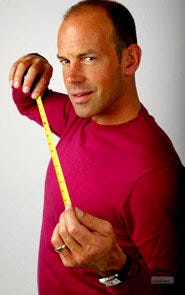
This is Phil Spencer, star of TV's Location Location Location Location Location. His opinions on Microsoft's 2010 line-up are unknown.
Eurogamer: There have been criticisms that Microsoft tends to take less risks than Sony when it comes to first-party development. How do you respond?
Phil Spencer: I don't agree at all. This picks up the discussion about Natal very well, because if there isn't risk in Natal then I don't know what's keeping me up at night. We're trying something completely new where there's no device in your hand. We're trying to build a set of new games, new experiences that will have the same quality metrics of our past games, but really entice both existing 360 customers and new people. It's a huge challenge, a huge investment and it's fraught with risk.
At the same time, when I look at Live and I think about the innovations in the XBLA space and the games that we've pushed forward, I actually would have agreed that a couple of years ago I thought some of the things we were doing online were not differentiated enough. But when I look at the last year and the set of games that has come out from us in the Live space - we brought that XBLA focus into the first-party studios about a year ago, and I think the change in the quality of games that have come out is remarkable.
Eurogamer: What kind of games are in development for Natal? Are you focusing on particular genres, on social and casual experiences, or are there Natal titles for hardcore gamers on the way?
Phil Spencer: We have a number of creative people in the studios, people like Peter Molyneux and Kudo Tsunoda. One of the things we did early on was distribute the hardware to the studios to see what would come out. We're not trying to be overly-prescriptive in the kind of experiences that get built, but to let our key creative talent experiment and work with the technology and see what comes back.
Eurogamer: What's it like being Peter Molyneux's boss? Do you have to rein him in a bit? Is he always coming in your office going, "I've got an idea for another game about a dog," and you have to go, "No, Peter, you're being insane?"
Phil Spencer: Haha! Working with Peter is amazing, he's a very creative, inspirational person. Sometimes it's like riding a bull with no saddle, and sometimes it's like reading a great novel, but it's a fun experience.
Bull or novel? Both, says Phil Spencer.
You don't want to rein those people in - that's what the job's about, right? If we can have your creatives really thinking outside of the box, coming up with the things that other studios other publishers wouldn't do, that's our job. We want to paint the face of our platforms with a very creative brush. People like Peter are instrumental in that.
At the same time we're doing a bunch of testing with users to see how people react. This mix of what consumers are telling us, as well as what our key creatives are coming back and saying, is really resonating well from an experiential standpoint. Right now, when I think about the studio organisation we have, it's hard to find a place where people aren't excited about how Natal will impact the experiences they're building.
So in terms of segmenting by genre or hardcore vs. non-hardcore, you should expect that over the years you'll see Natal experiences show up on almost all of the games - similar to the way you do with Live today. At the beginning of Live it was all about sports, racing and shooting games. Now if you found a game that didn't have some kind of Live functionality it would seem like it wasn't a complete game. I think Natal is likely to get there as well.
Is this the future of gaming? Phil Spencer's wife hopes so, she's sick of him tossing and turning all night.
Eurogamer: So we could see, say, a Gears of War game where you are wielding that invisible lancer?
Phil Spencer: You know, Cliff [Bleszinski] and Epic... They definitely have the hardware. In terms of new franchises or existing franchises, we're not trying to put gates up in terms of what people can do.
That said, the magic that I've seen show up in Natal... Somebody who looks at either hardware or software on the shelf and says, 'That's not really for me,' we put these people in front of these experiences and they instantly understand how to play the game. Our tagline is, 'The only experience you need is life experience.' Put them in front of the screen, tell them to do what they'd normally do and it's amazing how quickly they're having fun.
For us, social and casual areas that we want to invest in a lot are there, but in no way are we segmented or precluding any of our developers from working with the technology. I suspect that over the years, we'll see a lot of Natal games across all genres.
Eurogamer: We recently reported that Microsoft dropped a chip from Natal in favour of a software solution, in a bid to lower the price point. Has that changed the nature of the games being produced?
Phil Spencer: The games we've been creating have been in development for quite a while. As experienced with the launch of any new platform, and I consider Natal a new platform, the technology evolves, gets better and improves. That's totally what we've seen with Natal.
The feature set is very broad. You have facial recognition, voice recognition and full skeletal mapping, and all of this functionality is folding into one release. With the steps the platform team continues to take, more and more you can see how the games are going to be at launch, you can see the finality of the experience.
Going back to risks, there's always a ton of risks in getting things done, but it gives me a ton of confidence that we're on track to ship games that will really collect customers.
Eurogamer: Has the removal of the chip changed the Natal experience compared to what we've seen of it so far?
Phil Spencer: As you can imagine, there have been hundreds of decisions made on the technology. The goal is always to make the games better and the experiences better. In no way have we had to cut back on the development of the games we're doing - they're more feature-rich today than when we started them a year ago.
Not just because we're a year forward in development, but because we continue find new ways to use the technology. The progress on the overall technology of Natal is nothing but positive, we feel very good about it.
Is this the face which haunts your dreams, Phil Spencer?
Eurogamer: Was the decision to drop the chip related to cost? As has been suggested, was it to keep the price of Natal below the £50 mark?
Phil Spencer: The reason we make any decision with the platform we're building is always to look for the right experience for the customer... That's why we've made the decisions we have on Natal to date and will continue to make them towards launch. It's not about the plastic we sell, no disrespect to my friends on the hardware team. It's about the experiences that will light up customers and that's the path we're on.
Eurogamer: Are you hoping to get the price below £50?
Phil Spencer: We know that price is important. Xbox 360 has shown that we're conscious of price points, and I think the price drops we've done have resonated very well. The momentum we've had in '08 and '09 is a combination of the value of our platform and the content we have.
We understand, going into Natal, it's the same equation - we have to offer experiences and hit price points which really resonate with consumers. This is a broad consumer product. It's for the entire audience which has 360s today and the millions of people who will buy 360s because of Natal. We understand that only works if we hit consumer price points.
Eurogamer: Looking at what Sony's shown of the PS3 magic wand so far, how do you think Natal matches up? Are the two technologies offering very different experiences?
Phil Spencer: I think they're completely different. I don't think it's any secret that we looked at controller-based motion control for quite a while. We finally made the decision that we're not about following, we're about creating something new and unexpected. We wanted something where there's no interface and no abstraction between you and the games you want to play, and that was our focus.
I think any form of control, be it magic or not magic, is just an incremental step that other companies have already shown. For us this is about something brand new and I think Natal shows that. I don't think there are any similarities between the technologies, or the experiences for that matter.
Eurogamer: What about hardcore gamers? Do they really want to stand up and move around to play games, rather than relax on the sofa with a controller? And while the Wii has enjoyed huge success, some of its most popular games - Mario Kart, New Super Mario Bros. - don't have to use motion control anyway. Has the fashion for motion control died down? Isn't Natal a bit late to the party?
Phil Spencer: Talking about Natal as motion control is missing the point. Natal isn't motion. It's a natural user interface, it's voice recognition, it's complete mapping of the skeleton - it's a much different experience, and an experience as opposed to an input device.
I agree that coming to the market late with a motion solution would probably feel tired, given the momentum that others are having in the market, and that's why we made a step to actually create something new and something unexpected.
Any time we've sat down with consumers, be they consumers who own competitive platforms or who don't consider themselves gamers, and put them in front of these experiences, they instantly light up. Our user research is almost artificially high because people have such a fun time just standing and interacting with the experience. We almost have to discount it to some extent - 'Well look, they're just having a good time with Natal, now what about our games?' Because people are showing and telling us this experience is completely different and removes barriers.
That said, nobody should think that the controller is unimportant to us. It is important to us. I love our controller, I love the first- and third-party games we have that use the controller today. That will continue to be part of the platform, so it's not about precluding those experiences from existing - it's about continuing to evolve the platform.
You talked about hardcore gamers and what they want. I've been around long enough to remember that with Xbox 1, people said they didn't want first-person shooters on consoles. Now we look back and see that creators created experiences which resonated very well, and that's always the challenge. I think our community is up to that challenge.
Eurogamer: PS3 has just enjoyed its biggest Christmas yet, with sales up 76 per cent in the US, and Sony's suggesting the tide is turning. Some analysts suggest this is the start of a downward curve for Microsoft and an upwards curve for Sony. Meanwhile, third-parties like Ubisoft are backing away from the casual market, saying they're focusing more on PS3 and 360. What's your perspective? Is 2010 a pivotal year for gaming?
Or is it this face, the face of your more famous yet probably now less financially stable namesake?
Phil Spencer: I think we're coming out of a very strong 2009. We had great games that attached very well for both first- and third-party in '09. Look at Call of Duty and the attach rate on our platform relative to other platforms, which I think is 2-to-1. What you'll see is that gamers continue to see 360 as the place they want to play the best games. I think that's because we have the best games as well as the most vibrant, full Live experience.
If anybody's thinking about a downturn, I look at 2010 and I say, 'Come and see what we're showing - come and see the games and experiences we're going to deliver.' It's a line-up that I don't think I've seen from first-party in the time I've been here.
The roll-call is Alan Wake, Crackdown, Halo: Reach, Fable III, some great Live content. Then third-party comes in with exclusive content for Left 4 Dead 2 and Call of Duty, Splinter Cell's coming... And then Natal is launching this holiday. I think it will be a real decision point for people who aren't currently gamers on any console; that experience will be the thing that causes them to decide on 360.
So anybody who's looking at a downturn hasn't looked at our line-up of experiences, because it's truly amazing. It's a great collection and I'm proud to head up first-party as we bring these games to market.
Eurogamer: So whatever anyone might say about tipping points - you're not worried?
Phil Spencer: Worried? No! The challenge is always there to delight the customer. We continue to do that, as our sales success in '09 shows. In 2010 I think we'll continue the success we've had with new challenges we put in front of ourselves, like a great launch of Natal.
Phil Spencer is corporate vice president of Microsoft Game Studios.
