Little King's Story
Crowning glory.

Little King's Story is instantly familiar if you've played Pikmin, Animal Crossing, Harvest Moon or that rubbishy thing about wizards I've already forgotten about. The gameworld is cute, cartoony and brightly coloured. Everything in it is rounded at the edges. It's populated by people with improbably large heads and triangles for noses. They all want to talk to you and none of what they say is worth listening to. Everywhere you look there are logs to chop, holes to dig and coins to collect. It never rains.
However, there's more to Little King's Story than that. It's not just a glorious celebration of farming crops, finding treasure, living the pastoral ideal and making friends with cows called Pancho. It's also about monarchy, oligarchy, religious hegemony, the effect of industrial growth on socio-economic power structures, feudalism and genocide. But are the graphics any good?
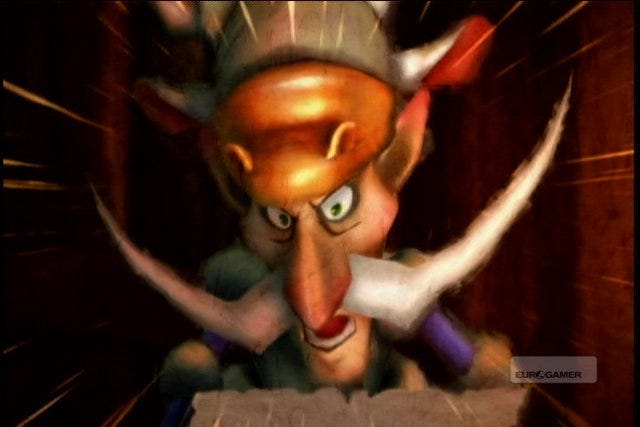
The visual style is certainly a big part of LKS's appeal. There's a soft sheen to everything, as if someone's smeared Vaseline over your telly. Cut-scenes look like moving oil paintings and tutorials are presented as chalk drawings on blackboards (note to younger readers: this is what teachers used in the olden days before it was all marker pens and holograms).
The pastoral theme is reinforced by the audio - Land of Hope and Glory plays over the title screen, and the rest of the soundtrack is comprised of every piece of classical music you've ever heard on an advert. Speech is subtitled as characters talk in weird backwards gibberish which is supposed to be cute, but often sounds like the dwarf out of Twin Peaks.
When the game begins you're given a shabby castle, a limited area to explore and a small number of citizens to command. You're also presented with a team of three advisors. Strapping lad Liam offers blackboard tutorials on demand while Verde saves your progress and provides updates on the status of your kingdom. (She's a hateful and unhelpful witch, but more on that later.) You'll spend most of your time dealing with Howser the Bull Knight, whatever a Bull Knight is. He's in charge of listing the buildings and power-ups you can buy and how much they cost. The options increase when you unlock new areas, defeat bosses or seemingly just when Howser just feels like it.
The task is to head out of your castle and meet your loyal subjects. And they are indeed loyal; they just wander about going "Good morning, my king!" and spouting nonsense about the weather, not one of them questioning the principle of divine right as a valid basis for a political system. Pressing B makes them line up behind you, and they'll then follow you blindly around doing whatever you say. Pressing A will make them perform a task, depending on what they're standing in front of at the time.
If you're standing in front of one of the special job workshops, pressing A will make citizens enter and emerge with a new hat and special skills. Farmers get straw hats, for example, and are best at digging holes and finding treasure. Soldiers get shiny helmets and last longer in combat. As the game progresses new job types are unlocked such as archer, carpenter, lumberjack and IT network solutions provider. Maybe not the last one.
At first you can only command five citizens at a time but as the game progresses this number increases, up to a maximum of 30. The challenge is to construct a team that's optimised for the task you want to accomplish. This is easy to begin with - if all you're after is digging some holes to find some gold, a bunch of farmers will do. But once enemies start popping up you'll need soldiers to defend you too. Archers are more effective, but they cost money, and maybe that cash would be better spent training carpenters so they can build that bridge across the river, or there's that extra health power-up you've been saving up for... And so on.
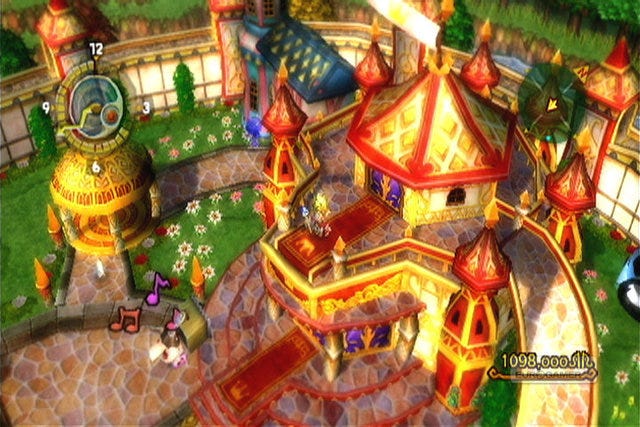
The gameplay soon settles into a cyclical rhythm. You use cash to build houses which produces more citizens, and give them jobs so they get more cash and defeat more enemies, which increases the number of citizens you can command and the types of job available, and opens up new areas to explore... And so on.
Repetitive? Yes. Dull? Yes, if you're the type of person who thinks all games are dull unless they feature 19 kinds of gun, monsters who look like they're made of genitals and a driving bit. If you prefer pretty, soothing, comforting gaming experiences, Little King's Story will hook you in like a lullaby sung by an angel who breathes morphine. The real world will slip gently away, and nothing will matter to you but hats and cows and lumberjacks, and not until someone comes in and says "It's Tuesday" will you realise anything else exists.