Killzone 2 Preview

Guerrilla outlines its multiplayer strategy.

We doubt you'll cry foul if we point out Sony's E3 conference was boring, but slotting between PS3 appointments elsewhere it's clear it didn't have to be: Resistance 2 was in grisly form, Sucker Punch is showing superhero free-roamer inFamous, and Media Molecule is stealing our hearts in LittleBigPlanet, as you'll be able to read tomorrow. Even as you were turning the air purple in the comments thread, we were watching Guerrilla's Eric Boltjes outline the firm's Killzone 2 multiplayer strategy.

Boltjes' session was hands-off - a slideshow with some video attachments, really - but it still happily ran to the 50-minute mark as he ripped through every detail. Killzone 2 is a 32-player online game, he explained, with a range of game-types, mix-and-match character classes, Call of Duty 4-style character progression and all sorts of unlockable options, backed up by heavyweight community services like leaderboards and clan management features.

The maps will cover various themes and locations, and will be optimised for groups of different sizes (eight versus eight, duels, etc.) albeit without hard-coded player limits to prevent you putting 32 players on a smaller map. But we're only shown glimpses of the maps, so it's hard to gauge anything about layout. What we are told is that there are several game-types (identified as assassination, body count, team deathmatch, capture-and-hold and search-and-destroy - although we hear something about "search-and-retrieve" later), that each map will support all of the game-types (called "mission types" by the developers), and that it's possible to play through multiple game-types within the same session on a single level. You could begin with capture-and-hold, for instance, then go to team deathmatch for round two and finish on assassination, and the winning team would be the one that won the most rounds.
1

Levelling up your online FPS persona has become all the rage lately. Thanks to all the rage, presumably.

It will also be possible to set up Custom Matches that specify the fine details of each (for instance, you can change the bomb timer length or defusal time on search-and-destroy). You can also enforce more esoteric restrictions, like reducing the in-game arsenal to nothing but sniper rifles. Boltjes goes through a lot of menu screenshots to demonstrate other customisation options: when joining someone else's session, for example, you can specify preferred maps or mission types, the region of the world you'd like to play in, the number of people that should be on the server, whether you're playing with friends, the average ranking of the competition and whether the game's passworded.

Individually, players will be able to specify a certain "badge" (class) to play as based on their existing preferences, and each of these will have two special attributes or abilities that distinguish it from the others. There's assault (special armour and a boost function), the scout (cloak, enemy-highlighting), medic (revive team-mates, dispense health-packs), engineer (repair things, deploy sentry guns), tactician (deployable spawn points, air-strike support from a gunship) and saboteur (disguise and something we can't make out on our notepad - sorry!). Those who find the initial classes restrictive will be able to combine two badges, with the resulting hybrid class inheriting a special ability from each originating class, so you could be a stealthy medic or an assault engineer, for instance.
2

The single-player hands-on demo at offer at E3 isn't much more exciting than the PlayStation Day one, which you can read about elsewhere on the site.

More broadly, individuals will progress by accumulating experience and levelling up, with 12 different ranks to attain and 46 "ribbons and medals" to unlock. To rank up, you gather points by killing and doing team-specific things like revivals and completing objectives, while ribbons and medals are a bit like mini-Trophies, unlocked by getting a certain number of headshots, for instance. Guerrilla is aware that it needs to support the endgame too, and promises special honour ranks for the top percentile. Other initiatives will undoubtedly follow post-launch.

One of Guerrilla's key objectives, Boltjes says though, is to inspire team-play, and there's a lot of stuff going on in-game weighted to this besides the class system. You can form four-man squads, most notably, with a leader and your own private voice channels so you can coordinate your actions. If you die, you then have the option of respawning alongside your squad-leader, albeit presumably after a cool-down time, something that wasn't covered in the initial presentation.

With all this team-play, of course there's a lot of infrastructure to support larger groups like clans. You have to rank up to a certain level to unlock the clan-creation option, but once you have you can give yourself a name and start inviting people to join from your friends list, or by recruiting from leaderboards among other things. There's a 64-player limit, but we doubt that will upset anybody (and if it does, we also doubt it's unchangeable). You can only be in one clan at a time, but of course you can leave, and it's possible to transfer ownership of a clan or nominate clan officers who can take over if you're out of town. Boltjes jokes that there are safeguards to stop you getting drunk and deleting the entire clan, but he's also being serious.

To compel you to join clans and fight each other, Guerrilla has implemented a clan score system called "valor points", which starts you off with a pot of valor (can we call it valour?) and allows you to wager it against other clans in a fight. Guerrilla says it will highlight the biggest valour-point totals changing hands and that it will be a hard road back if you run out, although there will be larger low-level clan tournaments with totals up for grabs if you do run out (think of it as non-league football, perhaps). All the way up the skill scale there's support for tournaments with a capacity of 256 clans if you can organise it.

All of this will, inevitably, feed into and allow you to orchestrate it from Killzone.com, the "Killzone Command Center", which will include a number of tools for coordinating your activities and tracking stats and progress. Your profile page will show you your progression towards ranks, ribbons and medals, and there will be four overall leaderboard types (individual, friends, clans, clan members) populated with weekly and monthly boards in a variety of areas. Over 100 player stats are supposedly tracked, so you can see who has the most headshots and compare your performance against others. Killzone.com will also host developer blogs, developer-run tournaments and other promotions to keep you interested.

3

Sony's community push is noticeably significant on all its 2008/9 titles, including LBP, Resistance 2 and Killzone 2.

While it's wide-ranging for those who dig into it, though, Guerrilla also wants inexperienced and casual players to be able to make their way into the multiplayer side of the game, offering an "Easy Join" option that simply matches your rank and relative skill-set to other players when you want to head to a server, and there's also the promise of introducing new content gradually, not least by separating it across various ranks, to avoid overwhelming people. That's hardly just a casual feature though (we'd certainly appreciate it), and good-for-one-and-all is a theme across a number of other inclusions. When you respawn, for example, it's possible to check out a video feed of the action at that location so you don't end up walking into a shower of bullets from a cluster of campers.

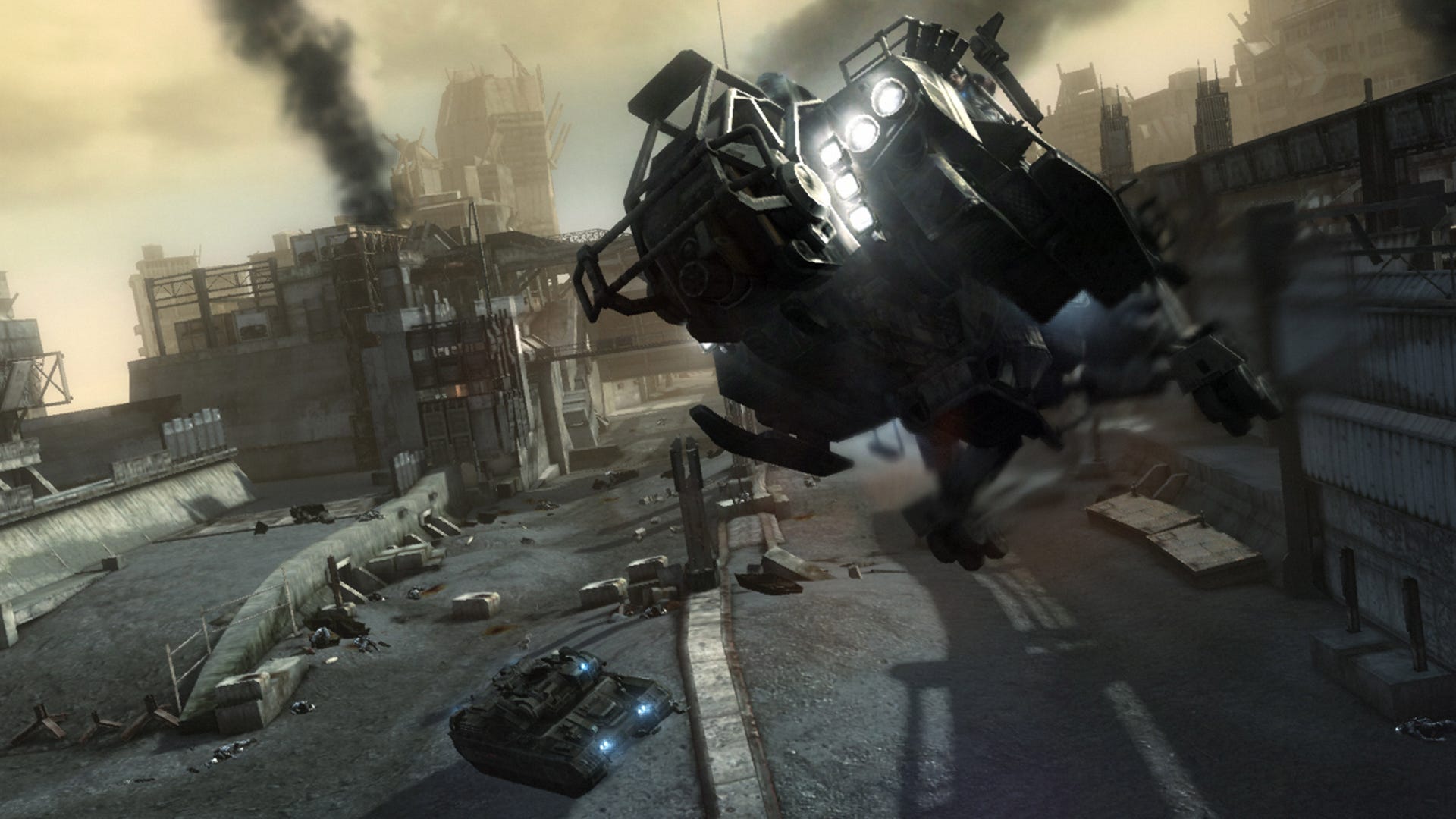
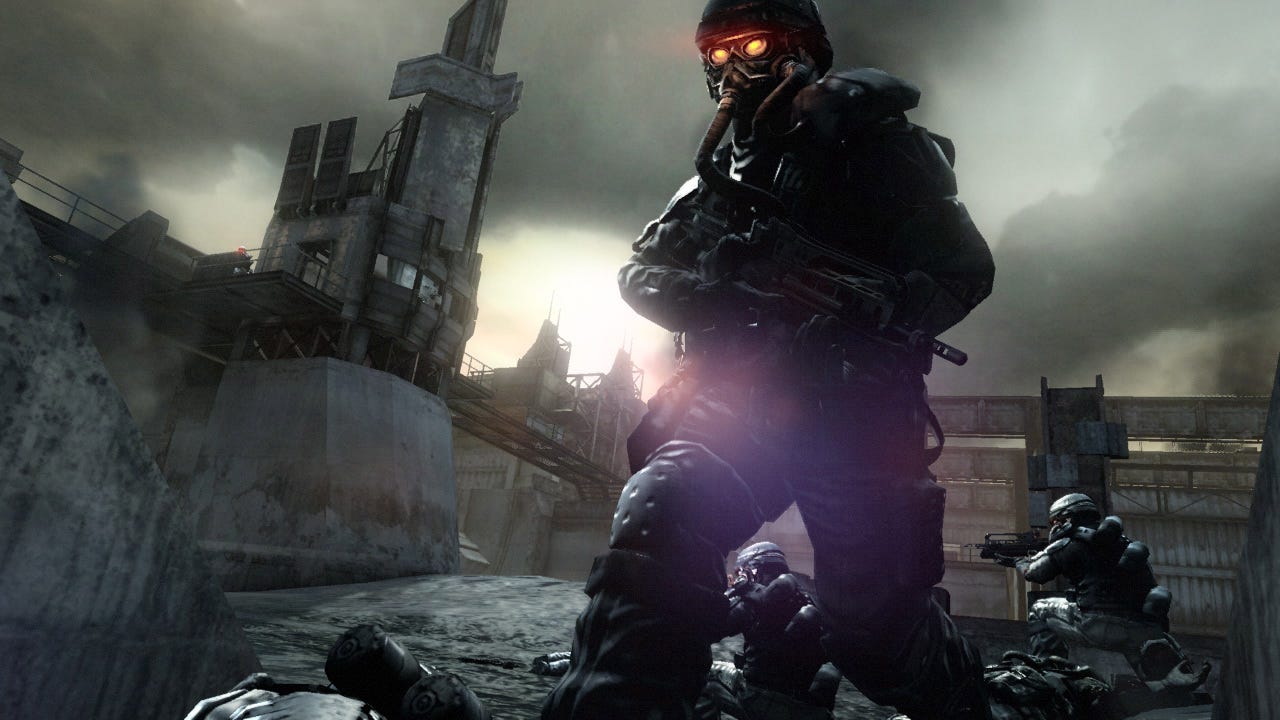
For all this talk of infrastructure and framework, we're not shown much of the actual game, although what we do see suggests graphical equivalence with the single-player campaign, and a mini-map inserted in the top-left. The videos remind us of Killzone 2's saturated graphics (especially the muzzle flare - a gunpowder rainbow in every barrel), leathery textures, high contrast thresholds and smoky corridors, and observing some of the night-time squad attacks in particular, albeit in brief, we'd estimate that the dynamic will be distinctive.

4

We still want one of those Helghast hats. We'd wear it to weddings.

There's a lot of work to do, though, before the game's ready in February 2009, and the developer will be polling the public for its feedback with a multiplayer beta test prior to release, and giving the press (and presumably public) hands-on with it at Leipzig's Games Convention to help gauge whether its ideas are working as planned. Boltjes' talk was meant to be all-encompassing, we suspect, and a few follow-up questions suggest the game's feature-complete on the online side: yes we're thinking about co-op for DLC, no there aren't controllable vehicles, etc.

What's clear is that Guerrilla's taking online multiplayer - and managing the needs of the community that supports it - very seriously. The devs' boss Hermen Hulst pipes up from the corner during Boltjes' Q&A to answer that multiplayer and single-player are "exactly equally important" to the Dutch studio.

Overall it's a comprehensive array of features, clearly influenced by the likes of Call of Duty 4 and Halo 3, and if Killzone 2's gameplay inspires the player numbers to fill out the framework, those players sound as though they will be well served. The key is whether once you've built it, they will come - and we should get a better impression of that once we've played it for ourselves in Leipzig next month.

Killzone 2 is due out exclusively for PlayStation 3 in February 2009.

Comments (41)

Comments for this article are now closed, but please feel free to continue chatting on the forum!

  • Loading...hold tight!