Hardware Test: PSP Slim & Lite Review

A new dawn, or a better old dawn?

Version tested: PSP

Aside from minor tweakings to the motherboard and abortive anti-piracy updates, Sony's PSP hardware has thus far remained pretty much unchanged since its debut in December 2004. However, the recent release of the PSP Slim and Lite - or PSP-2000 to give it its technical name - is Sony's latest, and perhaps last throw of the dice as it seeks to catch up on the runaway success of Nintendo's DS portable.

PSP Slim? Really?

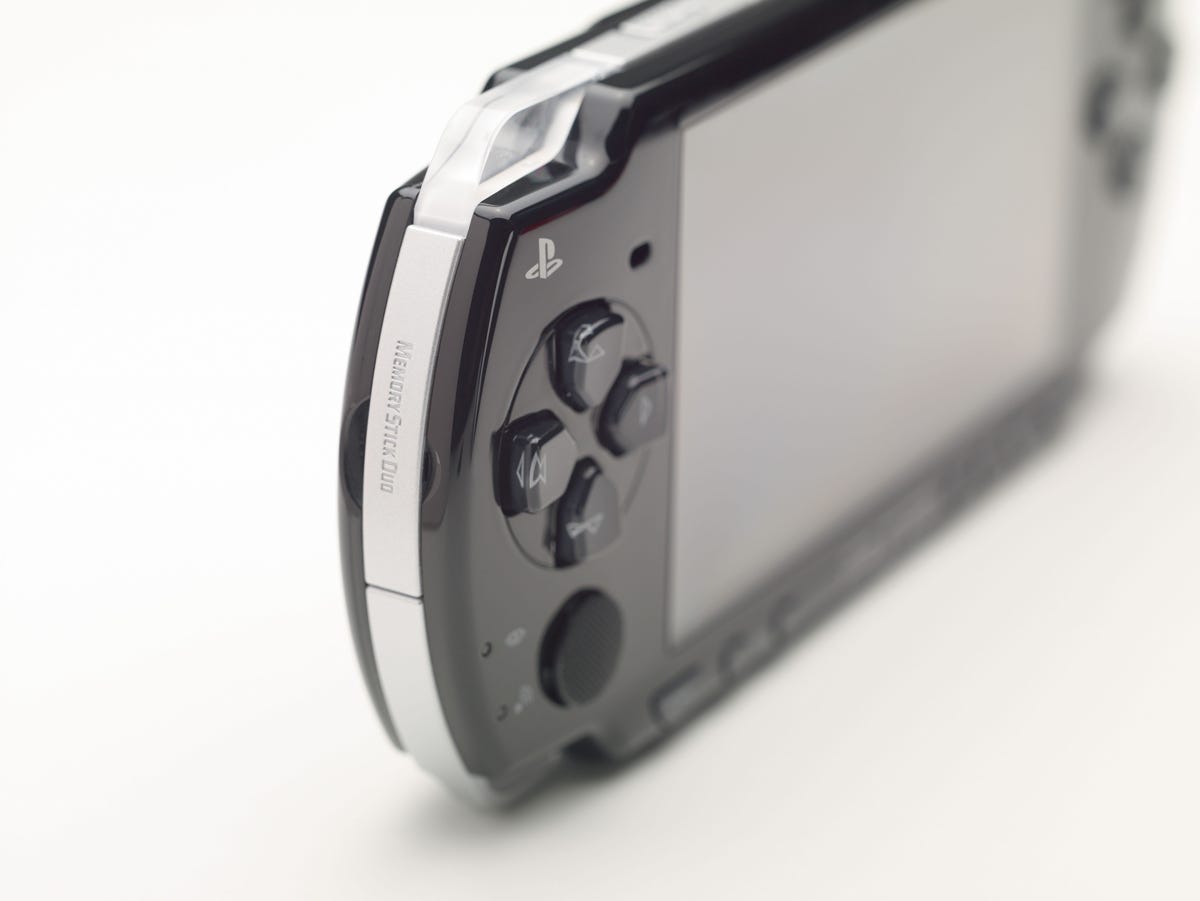
At first glance, the unit looks virtually identical to the launch model, but feels considerably lighter, and so it is - 30 per cent less hefty, according to Sony.

However, side by side with the original, perceptually there doesn't seem to be a massive reduction in the overall dimensions of the machine despite claims that it is 20 per cent thinner. What appears to be the case is that the PSP-1000's 'handles' on the reverse have been eliminated, with the back of the new handheld being completely flat. This is great for bulk reduction claims in press releases, not quite so useful in actually keeping a hold of the console during gameplay.

Additionally, the older unit's matt, scratch-resistant rear plastics have given way to yet more of the glossy, fingerprint-attracting materials that have historically made the PSP such a pain in the arse to keep clean.

Design Improvements?
1

Also obvious is that PSP-2000's UMD tray is considerably less substantial than its predecessor's, and the internal circuitry is far more exposed when the tray is open. The spring-loaded UMD release button has also been jettisoned in favour of prying open the tray using your fingers. It works just fine, but again feels a touch cheaper and flimsier than the original model, and lacks the indestructible feel inherent in the solid, child-friendly build quality found in Nintendo's handhelds.

Other than that, it's pretty much business as usual. The never-used infra-red sensor of the original PSP has gone - no big deal there - while the memory card slot and WLAN switch have been relocated to the left side, and top respectively.

More importantly from a gameplay perspective, hiding behind the headline changes to the PSP, the new model features a redesigned d-pad and button mount assembly, which both offer substantial improvements over the launch unit. Response is massively improved on the digital controller, to the point where Street Fighter Alpha 3 is actually playable now.

The overall impression you get with PSP-2000 is that Sony has taken an evolutionary approach to revitalising the hardware, at the same time including one of two tweaks designed to improve some of the less impressive aspects of the existing system.

UMD Cache Speed Boost

2

The UMD drive has always been the weakest element of the PSP, even though on paper the cheap-to-produce discs and surfeit of storage space should make it one of the strongest elements of the machine. The drive's slow seek times and poor data throughput have led to some pretty astonishing loading times on key games. Pro Evolution Soccer 2006 and WWE Smackdown vs Raw for example are often cited for clocking up loading times of three minutes or over - astonishing for a portable, pick-up-and-play handheld console.

PSP-2000 offers an intriguing pseudo-solution. The system is equipped with twice the RAM of the original model, offering 64MB of memory. It's a development Sony has clearly had at the back of its mind since day one, as even the first debug units available to developers back in 2004 had this much memory onboard. However, in PSP-2000's case, the memory is used mostly as a cache for the optical drive, increasing performance.

In rare cases this can add an extra second or two to loading times, but for the most part, there's a general improvement in the region of 10 to 15 per cent, depending on the title you're playing. In some cases, extra in-game data is loaded up to twice as quickly. So while the inherent loading time weakness has not been eliminated, it has at least been improved for the most part, sometimes strikingly so. You'd also expect new games to be optimised for the cache, providing real benefits in upcoming software.

However, over and above the performance, the new drive is also a significant improvement over the launch model in terms of noise, being virtually silent compared to the original.

USB Charging

3

Along with the UMD-reading issues, the battery life of PSP has also been something of an issue right from launch, lasting between three and six hours on average, depending on the game you're playing. The standard 1200mAh-rated battery in PSP-2000 is slimmer than the 1800mAh cell in the older model, but battery life remains much the same thanks to energy-saving efficiencies in the new design.

However, the new model allows you to charge (albeit excruciatingly slowly) from the USB socket, meaning you don't have to carry the power adaptor around with you all the time. The only disadvantage here is that you can't charge while playing - something limited by software as the custom, highly 'unofficial' firmwares out there have already removed this limitation. Hopefully Sony will follow suit in a forthcoming release.

Video Output

The extra 32MB RAM in PSP-2000 isn't limited exclusively to handling the UMD cache. The new PSP has the ability to output a much larger video display: 720x480 at 60 frames per second, up from 480x272 - effectively a 60 per cent increase in resolution. The cross media bar and video playback can be output both at 480i and 480p over an optional, very high quality analogue component cable that slots into the headphones socket.

4

This allows you to run MP4 and UMD video discs at the full resolution on just about any display, although the web browser makes no use of the extra detail level whatsoever, simply scaling up its original output. Disappointing.

New APIs in the PSP developer's arsenal allow for gameplay to be scaled up to the full resolution, although these additions are no good for the current crop of PSP games. Those games output at the native 480x272 with a large black border surrounding the action, so a good zoom option on your TV pays off big-time here. Gameplay is also limited to 480p displays - the 480i modes don't work here.

It remains to be seen whether developers will fully support the video output of the PSP, and also whether the full-screen video output APIs available to game-makers impact the performance of the system. Certainly, tests in the homebrew community indicate a considerable drain on system resources when the full-screen modes are in play, so I think it's fairly unlikely that full-screen video output will make it into many new games.

With regards the video output from component at 480p, the quality is very good indeed. These galleries should give you some idea of what to expect:

UMD Video

Up until now, UMDs could only be viewed on the PSP's limited resolution screen, but the fact is that every single UMD video release has been encoded to the same 720x480 resolution as offered by NTSC DVDs. Even anamorphic widescreen is supported, again just like DVD.

With its initial mainstream roll-out and Sony's talk of standalone players, UMD was clearly intended to be some kind of pretender to DVD's throne, but it's only with the launch of PSP-2000 that we actually get to see the movies as they were originally intended to be viewed, ironically just as the format is in its final death throes.

In terms of the full quality UMD offers, here are a few screenshot galleries:

While it's good to see these movies finally running at their highest resolution, even UMD's h.264 compression has issues squeezing 6GB to 7GB of data (the size of a typical DVD movie) down to a mere 1.6GB.

These three movies are all Sony encodes (so you'd assume they are of the best quality), but of all of them, only the relatively easy to compress Talledega Nights bears up to close scrutiny. Not an issue on the PSP's tiny screen, but the heavy blurring and macroblocking in fast action scenes looks quite off-putting when blown up to full resolution. Additionally, UMD as a standard doesn't support anything other than stereo sound, so don't expect anything more than Dolby Pro-Logic support from the format if you're looking for surround audio.

5

In short then, what looks beautiful on the PSP screen looks OK on your TV, but doesn't quite make the grade when put up against existing DVD picture quality. Considering the basic maths involved when it comes to the level of compression involved, I'm surprised Sony ever had the chutzpah to tout UMD as a competitor to DVD, or even hint at standalone players based on the format because even the most rudimentary of challenging video exposes the problems of compressing movies this heavily.

However, the full resolution video playback PSP offers extends to movies running from Memory Stick and this offers up an intriguing scenario in that your own backed up media could be encoded into the MP4 format, with the same standard definition video working on PSP, Xbox 360, PS3 or PC. And of course, with 4GB and 8GB memory sticks on the market, your own videos need not be so heavily compressed...

The Verdict

While the slimmed down PSP is likely to attract newcomers in the short term, it's obvious that the differences between Sony's handhelds old and new are hardly revolutionary. PSP-2000 fixes a lot of the niggling issues of the launch console, and attempts to minimise others, but I can't help but feel that the enhancements are only really going to be truly appreciated by those who already own the console, or have an eye for a great-looking gadget.

6

While Sony may be hoping that the new machine is worthy competitor to the Nintendo DS, the problem with PSP has never been with the hardware per se, more its entire conception of what portable gaming should be. There's never really been a signature gaming experience that PSP can truly claim as its own and the new version changes nothing. It comes across as Sony reducing costs and consolidating its position, while at the same time having some fun with the hardware in the form of cute tweaks and new functionality that will appeal to the old-timers. And in that respect, I have to admit that I find it irresistible.

PSP has always been an essential addition to my travel bag; and almost three years on from launch, it still has an inherent state-of-the-art coolness about it that I've never felt with the Nintendo handheld. Perhaps it's the excellent media player, the beautiful screen, or maybe it's the rare piece of software I come across that feels like a 'proper' full-on console title - the likes of Ridge Racer, Syphon Filter, Metal Gear Portable Ops and Pursuit Force providing the kind of gameplay DS doesn't offer.

For me, PSP has always felt like a technical wonder for the gadget-obsessed 'man about town' and that feeling just intensifies still further with this even more desirable revision. While I would find it hard to recommend to the casual gamer happy with his existing handheld (be it DS or 'phat' PSP), everyone else should seriously consider indulging their inner nerd with this lovely little piece of gaming technology.

Read the Eurogamer.net scoring policy

Comments (67)

Comments for this article are now closed, but please feel free to continue chatting on the forum!

  • Loading...hold tight!