From space exploration in Elite to sniffing around the bins in Dog's Life, David Braben's games have showcased a surprising range of different experiences. With his Cambridge studio Frontier Developments currently embracing politics with the ambitious thriller The Outsider, while also working on a sequel to last year's LostWinds (as well as gearing up for a return to space sometime in the near future), we caught up with the veteran designer at the Develop Conference in Brighton to discuss the industry's history, the struggles ahead, and why he doesn't want to end up doing the noses on footballers.
Eurogamer: You've got a lot of exciting projects on the go at the moment. How are they all coming along?
David Braben: They're all very exciting, but I'm afraid we can't say anything about them yet. The problem with all of these things is that giving little snippets of these kind of games just doesn't help: we have to show them properly each time. This is the trouble with things that are close to your heart like this, because you really want to talk about them, but you have to wait to do it in a sensible, managed way.
Eurogamer: A lot of people at Develop this year seem to be feeling a bit wistful, kicking off their presentations with a look back at the past. Is the videogames industry starting to get a bit middle-aged and nostalgic?
David Braben: We're still at the beginning of gaming in my view - we've barely scratched the surface. But as Churchill said, "We may well be at the end of the beginning." A sense of history is something that might be changing for the industry - at least in the sense that it's starting to have a history. Certainly 10 or 20 years ago, most of the things that were in the National Videogames Archive were still in use. There were still PDPs in use, the wonderful machines that Spacewar was first played on.
One of the things I think about at events like the Develop Conference is, compared to other industries like the film industry, we're an astonishingly sociable bunch. People talk openly to each other, when these are companies that, in the film industry, would be deadly rivals. It would be daggers drawn to even be in the same room. There's such a huge positivity, and that's maybe because we're such a young industry. Maybe we haven't learnt to hate each other yet.
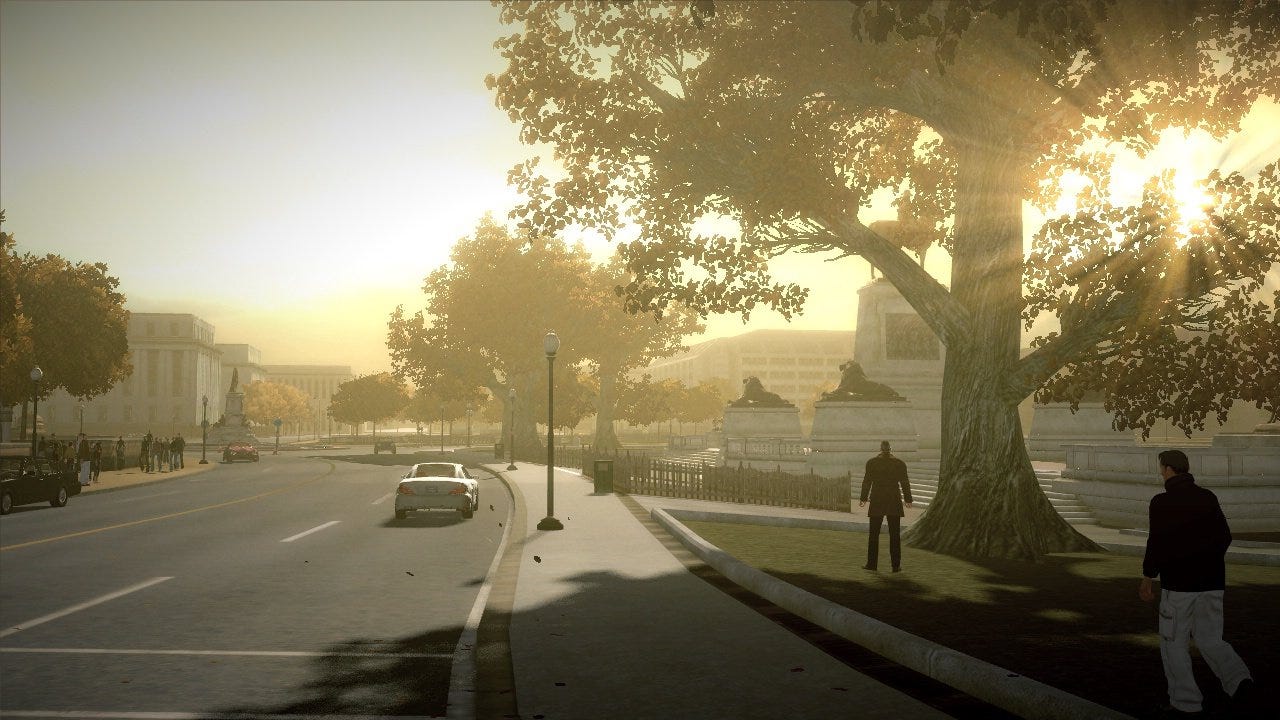
This interview isn't about The Outsider, but we're using Outsider screenshots to illustrate it. Out of lust.
Eurogamer: Do you think that's around the next corner, then?
David Braben: [Laughs.] I hope not. I really hope not.
Eurogamer: Having been making games for over 20 years, are you still enthusiastic about where the industry's going?
David Braben: To be honest, we still haven't scratched the surface of what I want to do in games: even ideas I had back then when we were making games like Elite, we still haven't been able to do. The word "game" is a bit of an albatross: what we're really talking about is building worlds, fantasy - you can create things that just aren't possible to do in any other way.
One of the things that Dave Jones said in his keynote was, "You can be a star in your own world." What I like, especially when there's a real richness to a world, to the story and the place, is where you can feel like you're the centre of things. That's very liberating. To show that there's a desire for it out there, look at the number of people who watch soap operas, which are fundamentally non-interactive, but people still want this sense of vicariously being a part of another world. I generally don't watch soap operas, but I occasionally get sucked into them - and they can be very compelling. We haven't yet got that feeling in games: but it will come.
Eurogamer: Are you saying the problem is the current level of interaction?
David Braben: In games, most interaction involves killing, unfortunately. But that's a very simple interaction to do in a way where it feels quite realistic, for better or worse. At the moment, interactions with characters feel very unfulfilling. Whether it's real characters across a computer network, or artificial characters in a game: these are not very fulfilling relationships. It's really very little of interest: it's either stealing stuff from them, killing them and then stealing stuff, or having a bit of voice chat, if you're lucky. At a fierce rate it's getting better, as things like WOW are starting to show, things which are starting to get a different feel about them, but we're still at the beginning.
We shouldn't kid ourselves about the depths of the relationships that are available - other than the purely chat room stuff where the relationship isn't really in the game. Where it gets interesting is when you can't distinguish AI from a real character, and I know that's still a long way away, but we were saying 10 years ago, when will you not be able to distinguish computer graphics from the real world? We're getting ever closer. Some game graphics are astonishingly good.
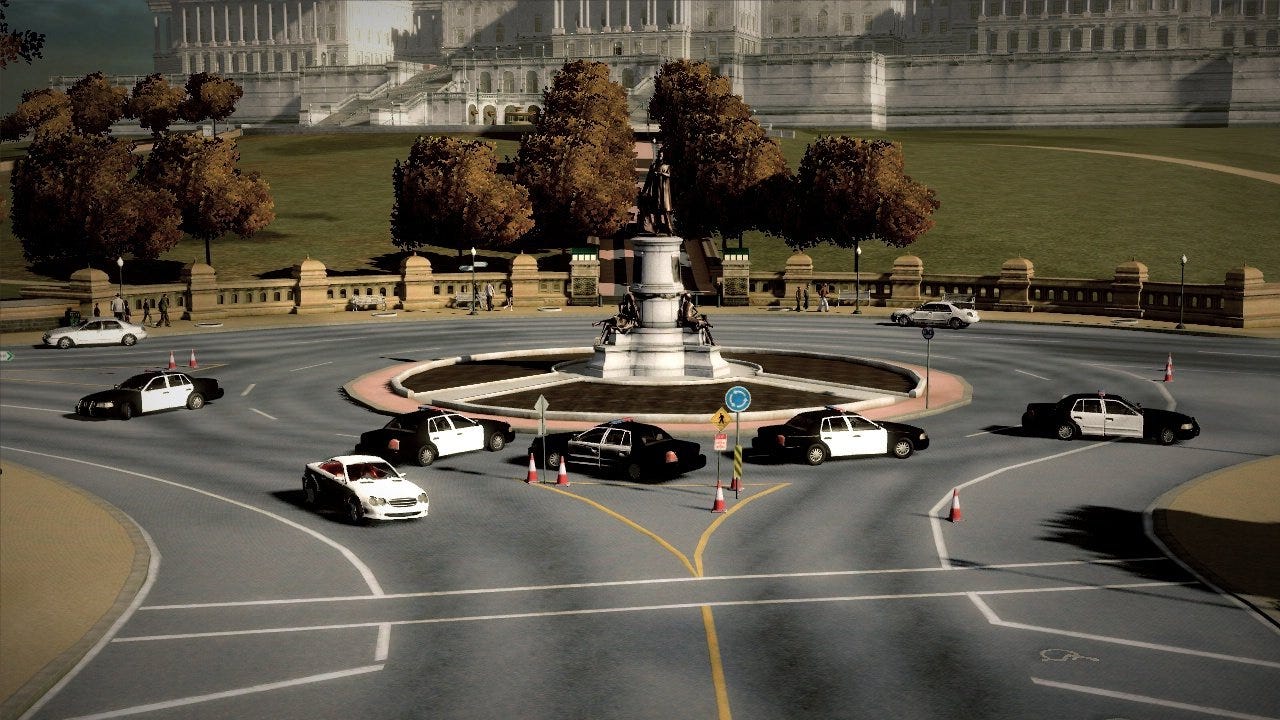
Wanty want!
Eurogamer: So AI is the next hurdle?
David Braben: It's a big hurdle. It's something we've been working on for a very long time, and to tell the truth, it's been getting better by degrees and we haven't noticed. We see AIs dive for cover, and we say, "Oh, that's fakery." But there will come a point where you say, "Okay, you believed it: does it matter that it's fake?"
Eurogamer: Have you had a chance to see Milo & Kate yet? Peter Molyneux's been fairly open about it being smoke and mirrors, but good, complex smoke and mirrors all the same.
David Braben: I think there is absolutely nothing to be ashamed of with good, complex smoke and mirrors. With all of these things, we're building interesting worlds, and there are so many different ways you can do that. Milo & Kate showed some of that, and some of the things we're working on will show some of that too. There are so many different dimensions to it: I often bore on about film, but it shows how much more there is out there that we haven't touched yet in the game space.
Eurogamer: On that subject, Frontier's worked on a wider range of games than most developers: downloadable games, simulators, kids' games, dog games. Is it hard for a team to keep focused when they're switching back and forth between projects so much?
David Braben: I think it's a breath of fresh air. But it isn't easy. The problem is, in the eighties, Frontier - or me, as it was at that point - was labelled as just doing space games. I'd done Elite, and Virus, Zarch, Frontier. That's why, with Dog's Life, I wanted to break out of those shackles. But then with Dog's Life, the Wallace & Gromit games, and the Rollercoaster games, there's a danger of being labelled as just doing games for kids. It's the label I hate, but I absolutely love the challenge: that's the important thing.
There's a danger that comes from doing the same thing over and over. I read several years ago about someone who worked in games and just did the noses on footballers: that was their job. How soul-destroying is that? And it's that in microcosm. To do different challenges is what life's all about.
Eurogamer: Can you explain a little about some of the ways Frontier approaches design? The original LostWinds apparently came out of a weekly in-house challenge?
David Braben: Yes. We started something a few years ago called Game of the Week, and the idea at the start was that someone would present a wacky game idea on Friday afternoon, and then the rest of the company would pull it apart. It worked like that for a few weeks, but then we found that you don't always have somebody with a good idea at the right time, and then it might also clash with a deadline, so that changed a bit, but it's kept going in various forms: a forum to discuss game ideas.
And what happens is, quite often somebody presents an idea and you think, "Mmm, no, that's not all that good," but then someone else says, "But if you did it this way..." and then it turns into something quite interesting.
Good thing that last image wasn't a picture of a cow or something.
Eurogamer: With LostWinds you got an entire game out of this, but do bits and pieces often find their way into other projects too?
David Braben: Absolutely. Thrillville had loads of different challenges within it, and loads of them came from that. Ironically, it can also be a victim of its own success: people might be reluctant to put their own ideas out there if they're afraid that they might be hugely valuable. That's sort of a fundamental contradiction in this industry: people want to be creative, but they also want to be a part of it.
The real thing is: it's very easy to have ideas. There are a lot of really interesting ideas floating around. The hard thing is making them work: having time to do a decent job, where you can sit down and accept criticism. We talked about making kids' games. That is a very hard thing to do, because the easiest thing to do - and I've done a lot of it, going all the way back to Elite - is making games for yourself. It's when you're making games for people who may not get things just like that, that's when you need to explain things in a slightly different way, and that's actually where it gets very hard.
One of the things that does irritate me very slightly is when people say, "Kids' games - they're just poor versions of other games." They're not! That's just how people see them, but they really, really aren't.
Eurogamer: NESTA issued a report earlier this year saying that things look bleak for the UK industry: a brain drain tempting qualified developers abroad where there's a lot more in the way of tax incentives, and poor educational standards. As a UK developer, how do you feel about the future?
David Braben: The real problem is that this has been triggered by the fact that educational standards have, in my opinion, fallen quite dramatically, and that's a tragedy. There are a lot of complex reasons for that. In parallel, countries like Canada are making it very attractive to head over there. So there is a brain drain - and the people coming up through the education system are nowhere near as well trained as they were five years ago. That's a huge loss and a real worry. And it's not just for the games industry. It's for any industry that's reliant on stem subjects. This is going to be a real problem for the country, not today, but in 10 years' time, when those people are becoming seniors then. And it's not worldwide: it's fairly specific to this country.
And don't forget LostWinds 2, which exists somewhere. The original is still one of the better WiiWare games released to date.
Eurogamer: Why do you think that is?
David Braben: There's been quite a dumbing down. One of the problems we've had is the proliferation of courses. There are so many universities now, and the gold standard of what a university should be is getting lower and lower.
One of the reasons I became vocal about this is because of the removal of maths from a great many computer science courses. That means that many of the really important subjects that we need people to know about are then taught as black boxes: people can't understand the innards, because you need maths. So you've got people coming out of training who can use a tool, but can't do the difficult stuff under the bonnet. If you're going to do something new, you need that deeper knowledge.
Eurogamer: Finally, Dave Jones' keynote gave a sense of a few preoccupations playing out in all the different titles he's made over the years. Do you feel there's a common thread running through all of your games?
David Braben: That's interesting. I don't really think of them like that. From a selfish point of view, the way I see it is that with every game I've learnt something different: Elite was very much a technical piece of experimentation, I learnt such a lot from that. I essentially learnt how to program. With Wallace & Gromit, I learnt such a lot about comedy and humour which I'd never understood, just by talking to the people at Aardman. Dog's Life: getting a game to appeal to kids is a real challenge. I don't think we quite did it - we did it by degrees. But we were much more successful with things like Thrillville: young children would sit down and play the game, and you'd come back and they'd still be playing it several hours later. Without help.
David Braben is the founder of Frontier Developments, which is currently working on The Outsider and LostWinds 2 behind closed doors.
