Dungeons & Dragons Fourth Edition
The original pen and paper RPG. On your PC.
The last time the chaps at Eurogamer were brave enough to commission a feature about games that aren't videogames, some readers went mental. So a word of warning: if you're one of those readers, this article is about the original role-playing game, Dungeons & Dragons. Which, in case you aren't aware, isn't a videogame. But wait! Before you wander off, spitting rage all over your keyboard, come back! Because it turns out that a new subscription model and a suite of online tools take the new 4th Edition of the game closer than ever to the medium that it helped inspire. Besides, as well as just helping to spark the whole videogame medium, the Dungeons & Dragons rules form the actual bedrock of many of them (from the Gold Box series to Baldur's Gate and beyond). So even if you have a pathological distaste for non-videogame games, maybe it's still worth your while reading on to find out how the new 4th Edition rules are shaping up.
By now, even if you do have a pathological distaste for traditional gaming, you probably know the story: Dungeons & Dragons was created in 1974 by Gary Gygax and Dave Arneson, evolving out of the Chainmail wargaming rules that Gygax had co-authored a few years earlier. Inspired by a wide range of pulp fantasy and riding the tail-end of the wave of popularity that saw Tolkien embraced by the forces of flower power, it established the role-playing genre and shaped the fledgling videogame medium. Over the years it's seen two major revisions: the 2nd Edition, released in 1989; and the 3rd Edition, which was launched in 2000 (and further re-launched as version 3.5 in 2003). The latest incarnation, 4th Edition, is due to be released around the world on 6th June. And it's a pretty big deal. The initial shipment to the UK will consist of three containers, or 56 pallets in total, which adds up to just under 50 tonnes of rulebooks. If you really want to, you can do the math, but my own calculations reveal that's a lot of rulebooks.
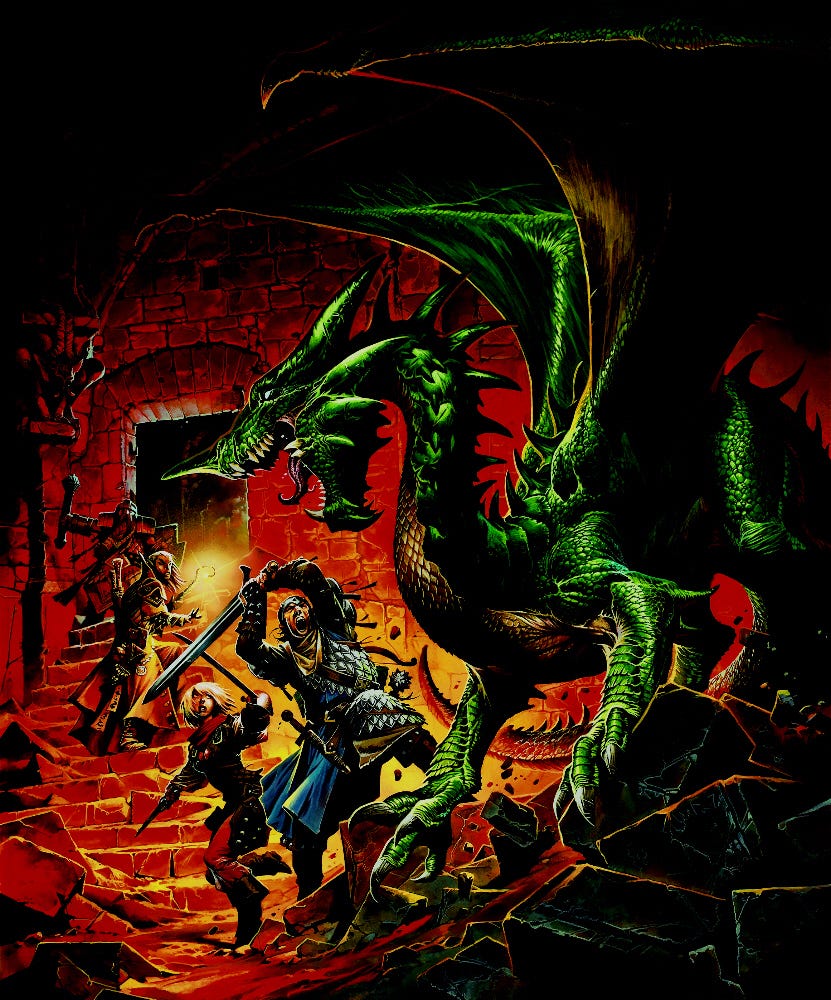
Initial work on D&D 4th Edition began in 2005, although some of the ideas predate this, having existed in the heads of the designers ever since the launch of 3rd Edition.
Over the years, Dungeons & Dragons has also directly inspired several officially licensed computer games, and aside from one or two duff games (such as the terrible The Temple of Elemental Evil, for example), there have been plenty of classics. The Gold Box series kicked off in 1988 with Pool of Radiance, for example, while The Eye of the Beholder series introduced first-person adventuring a couple of years later.
There were also a couple of minor masterpieces set in the Dark Sun universe, and then in recent years BioWare and Black Isle Studios turned their attention to the licence, producing critical hits such as Baldur's Gate, Planescape: Torment, and Neverwinter Nights. There haven't yet been any official announcements about officially licensed games based on the 4th Edition rules (indeed, in the absence of any official word, it looks like Dungeons & Dragons Online will be sticking with the third edition rules). But it's almost a certainty that they will arrive in due course.
So how do the new rules shape up? We spoke to Charles Ryan, marketing manager with Esdevium Games, who will be handling the release of the game over here (and who, until recently, worked directly for the game's publisher, Wizards of the Coast, in the US). The first thing to note is that the physical products have received a makeover. The game will still be predicated on three core rulebooks, but there's a new logo, and tweaked art style, and magic items will be moving over to the Player's Handbook (instead of the Dungeon Master's Guide, where they have traditionally resided). That leaves more room in the Dungeon Master's Guide to provide more advice and tools for building adventures, although, as ever, the game will also be supported with pre-prepared adventure modules. These, though, will be graced with new serial numbers: H, standing for Heroic (saving village); P for Paragon (saving the kingdom); and E for Epic (saving the world).
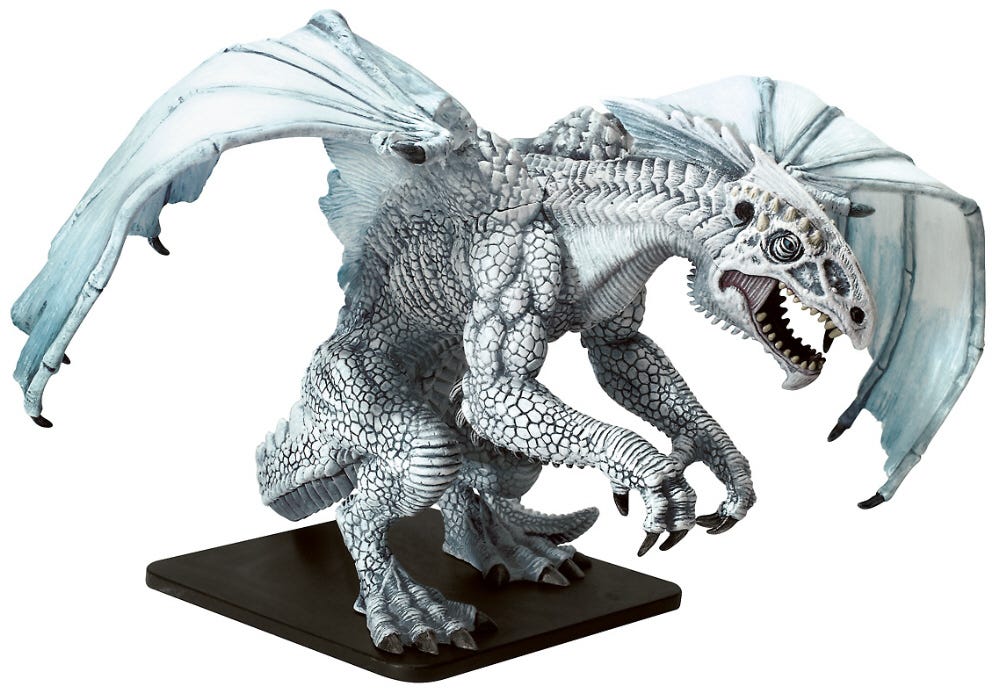
A new version of D&D is a huge undertaking: each rulebook amounts to 500,000 words, not to mention balancing all of the rules and putting the finishing touches to the story and setting.
Combined with a new character level cap (30, as opposed to 20 in previous versions of the game), these new demarcations reveal one aspect of the way the rules will be changing. They are an attempt to address the 'sweetspot' that has arguably existed at character levels between around 5 or 6 and 12 or 13, that made adventuring at those character levels much more fun than lower or higher levels. "The mechanics are designed to scale more consistently in 4th Edition," says Ryan. "The goal - and I think they've succeeded - is to make a game where there really isn't any difference in how much you're going to enjoy a first-level play versus a 30th-level play. They're going to feel different because they're about different things, but there's no sweetspot."
Most of the rule revisions, though, are an attempt to streamline the D&D experience, making it easier to set up and to play. "Ensuring that everybody has a good time at the table - ensuring that the core experience remains getting round the kitchen table with your friends and throwing the dice and having some fun," as Ryan puts it. He describes the 3rd Edition of the game as a 'great toolbox', pointing to its flexibility, and certainly the underlying d20 System served as the basis of various other games (notably the Star Wars RPG). But the upshot of that versatility is that actually playing the thing requires a lot of preparation on the part of DMs and players and even then it can still prove clunky in practice (talking about his own experiences as a DM, Ryan reckons he spends an hour preparing for each hour of play). "So the idea was to streamline the gameplay experience, with a little bit more focus on what makes the game fun to play."
One important change for gamers is that encounters are structured differently under the new rules. The old rules treated enemy parties as individuals, essentially. The new rules introduce party tactics, with differentiated roles for enemies, but more clearly defined roles for party members, so it's more difficult to come up with a character who has so many skills that they bring little to the party. The new rules also expand the range of tactics for big solo monsters: miss a dragon and they'll attack you with their tail now, instead of simply waiting till their next turn to attack.
So in many ways the game is a return to the roots of D&D at the expense of some of the universality of recent editions. "The core concept is the same," agrees Ryan. "You sit around the table and have a good time with your friends, rolling dice, moving little guys around the table, fighting monsters, kicking open doors, killing monsters and taking their stuff, making your character better. So the co-operative play, group storytelling, medieval fantasy, all those elements that are familiar are not changing." What will change is that play is faster, preparation is less, and, of most interest to Eurogamer readers, the new game will be making several concessions to the online era, from fostering an online community, to making it possible, if you've got an internet connection, to play D&D whenever and wherever you want.

The original D&D was shaped by the likes of Tolkien and Michael Moorcock. The tastes of newcomers to gaming are now shaped by the electronic worlds that were once inspired by D&D - games like WOW. The 4th Edition rules will, in turn, take some inspiration from this.
The biggest change over previous editions, and the one that takes it closest to the orbit of videogaming in its own right, is the fact that it will be going online. At the heart of this transition will be Dungeons & Dragons Insider, or D&DI - a subscription service that will provide players with a suite of tools that will enable them to set up faster, and play more easily, and over the internet. Not all of the tools will require this fee: some will be entirely free; some will be partially free; and some can be shared among players by using 'guest passes'. Pricing is USD 15 a month (or USD 10 a month for a year), though UK pricing is not yet announced. And while various third-party applications have allowed pen-and-paper RPGs to be played online for a while now, this is the real deal.
There's a character generator, a character visualiser, various ways to track your character's progression, ways for DMs to build encounters, a digital gaming table, a database of rules, Dungeon/Dragon magazines, and organised/tournament play. The character manager will allow you to create your character (using house rules if necessary, but tagging this for other players to see), print character sheets and save them online. The character visualiser is similar to those that you'll have seen in various MMOs but much more detailed. It can produce images that can be exported to a character sheet, or as a JPEG, or to the online game table as a digital miniature. As for the online game table, it provides DMs with dungeon tiles and digital miniatures, but they can also draw their own maps, import images, and even implement a fog of war effect.

New rule: you can only dress like this if you have a sufficiently scary mallet.
Crucially, however, it doesn't provide any sort of rules adjudication. DMs can force untrustworthy players to use the in-game dice, but it won't do their legwork for them. What it will do is allow the traditionally pen-and-paper D&D to be played online. Or you can just print the materials out and play offline - allowing the game to be played in a spectrum of ways: from around the table, to fully online, with various stages in between (such as playing with some players round a table, and some online, for example).
And that, in a big nutshell, is the 4th Edition rules. It's due for release on 6th June, though D&DI will be scaling up gradually. The official adventure campaign kicks off with Keep on the Shadowfell, which is already out. It includes quickstart rules and takes players up to 3rd level, though the sequels will eventually take players all the way through the 30 character levels that are supported by the game. Forthcoming publications include all of the major tomes that any self-respecting dungeon explorer would expect: Adventurer's Vault; Martial Power, Draconomicon; The Manual of the Planes; and a new starter set for newcomers. So if you've ever thought about dabbling with those old-fashioned non-videogame games, perhaps now is as good a time as any to start.
You may also like...
-
Why Can't Games Do Sex?
-
Dear Esther Review
-
Girl Vader stars in Kinect Star Wars trailer
-
UFC Undisputed 3 Review
-
Assassin's Creed 3, Splinter Cell: Retribution coming this year?
-
Total War: Shogun 2: Fall of the Samurai gameplay
-
Motorola Xoom 2 Tablet Reviews
-
Metal Gear Online to be switched off in June
-
If I Were in a Sealed Room With a Girl, I'd Probably XXX trailer
-
Mojang won't sue FortressCraft dev, "bored" by Minecraft clones
-
Will there be a PS3 version of The Witcher 2?
-
PlayStation Vita trailer launches new Sony campaign
-
App of the Day: Candy Train
-
Happy Action Theater Review
-
Resistance: Burning Skies PS Vita release date
-
Wii RPG Pandora's Tower release date
-
Project Draco's final name is Crimson Dragon
-
Why Devs Owe You Nothing
-
Infinity Blade's Chair: "we're in the golden age of gaming"
-
Eurogamer.net Podcast #100: Ellie returns! And we filmed it!
-
Skullgirls trailer features Nurse Valentine
-
Remedy discusses Alan Wake 2
-
Only Modern Warfare 3 made more money than Skyrim in 2011
-
ModNation Racers: Road Trip Review
-
Who Killed Rare?


Comments (34) Latest comment 4 years ago
Comments threads automatically close after 30 days, but please feel free to continue chatting on the forum!
Comment below viewing threshold Show
/looks at Dragon Age
Comment below viewing threshold Show
PS3LOL!
Comment below viewing threshold Show
'Tis how I read it I'm afraid!
Comment below viewing threshold Show
Core Races: Dragonborn, Dwarf, Elf, Eladrin (High Elves who get short-range teleport), Half-Elf, Halfling, Human, Tiefling.
Core Classes: Cleric, Fighter, Paladin, Ranger, Rogue, Warlock (Shooty-attack magic powers), Warlord (Battlefield commander who can heal people a bit like a cleric), and Wizard.
Comment below viewing threshold Show
Ordering this now, I don't know why I didn't do it last week otherwise I'd have it in my hands tomorrow for a nice read on my day off
Comment below viewing threshold Show
Aping computer game thropes is probably not going to persuade anyone to put down the controller, and if initial reaction to the new rules is anything to go by, the established player base is going to be a bit miffed with some of the nonsensical elements that have been tacked on. Why does a Rogue now have a double jump?
Comment below viewing threshold Show
I trye to get 3 or 4 people around my house on a weekly basis for games, but the actual people vary and we playa wide selection of games, which I prefer to a single drawn-out RPG campaign.
I'll take it back up when I retire, even crippled with arthritis I should still be able to toss a d20.
Comment below viewing threshold Show
my mates don't smell that bad really
they do suck at roleplay, however. tried to play star wars rpg with them once, they mostly proceeded to smoke pot and then all their actions were " lies stoned in a corner", would love to play d&d with some people who actually enjoy it though!
think that's why i'm looking forward to the online stuff...
Comment below viewing threshold Show
That said, The Dark Eye > DnD
Comment below viewing threshold Show
I see what you did there! Well played.
Comment below viewing threshold Show
Do the maths. This is Eurogamer so anglicise your americanisms.
Anyway my only issue with 4E so far is that they've got rid of the Lawful Evil and Chaotic Good alignments.
Comment below viewing threshold Show
Trouble is, it seems like it's now gone pretty much all the way to becoming a board game rather than an RPG. Never could be arsed with any kind of battle map.
Comment below viewing threshold Show
I guess I could try and get some friends instead (can you pick those up at bars like you can women, or do you need some kind of special skills or tools?), but that really seems like an awful lot of work to just to play a game.
Comment below viewing threshold Show
Seconded.
Comment below viewing threshold Show
It's not a good RPG but it's also not that bad for what it tries to do (dungeon crawling), it's even one of the best D&D combat experiences on PC. Gimme a mix of BG's freedom, BGII's quests and interesting party characters, tToEE's combat system and an isometric 3D game engine with all kinds of options (swimming, climbing, horse riding, etc.) and you have the game we should have had years ago. Sometimes I hope a publisher other than Atari will pick up the D&D rights, most D&D CRPG's of recent years have been underwhelming. Hopefully the 4th edition of these rules will sparkle a revival.
Comment below viewing threshold Show
My only experience with d&d were my My house mates at uni used to play d&d.. and they were probably the coolest kids on campus and threw the best parties..
I think you're looking at yourself in the mirror and presuming everyone who plays games are like yourself?
Comment below viewing threshold Show
The Warhammer Fantasy Roleplaying Game, however, is quite simplified, but great fun.
Comment below viewing threshold Show
Kudos to Eurogamer for writing an article about a true Rpg..
Comment below viewing threshold Show
The online stuffs will suck horribly.
Comment below viewing threshold Show
[link url=http://dnd4.com/rumors
]http://dnd4.com/rumors
[/link]
I don't play any more, but I have just bought a set of original 1st edition AD&D rulebooks to read through again. I hated the system at the time (preferring RuneQuest) but looking back it wasn't bad. It was intended to promote storytelling, not precision.
Comment below viewing threshold Show
Compare this multi-book moneymaker to the Hero system: All you need in one book, and a more malleable system than the "if all you have is a hammer" d20 system. Or Warhammer FRP.
Then again, back when I bought PnP RPGs I tended to buy the weird stuff like SLA Industries and Bloodshadow anyway...