Tomorrow, Double Fine Productions CEO Tim Schafer will deliver a keynote presentation to the Develop Conference in Brighton. He's set to discuss the studio's ten year anniversary, presumably with reference to hit titles Psychonauts and Brutal Legends.
But before all that kicks off, Eurogamer sat down with Schafer for a more general chat. Read on to find out about his favourite films, his favourite games, his attitude to Bobby Kotick and his view on holodecks.
Eurogamer: Hello, Tim. It says you're going to be revealing the secrets to your success tomorrow.
Tim Schafer: [Laughs] That was nice of them! The title of it was like, 'Successful, creative, and then GSOH'. And I was like, what does GSOH mean?
Eurogamer: What does it mean?
Tim Schafer: It means good sense of humour.
Eurogamer: Oh right.
Tim Schafer: Is that an expression?
Eurogamer: Is it an internet speak thing, like LOL?
Tim Schafer: No, because if it was it would be misspelled and there would be a number in there. There would be a 4 or a $ sign.
Schafer resplendent. That's just how he rolls.
Eurogamer: So you know how to make funny games that are successful, and everybody is going to turn up to your talk so they can copy you.
Tim Schafer: I don't know if I would advise anybody to copy me. Sometimes the things I do, or we do as a company, come from an actual compulsion. It's more like we have to make those kinds of games. Is it a plan? Or is it we've sat down and thought the best thing to do would be make funny games? No, it's more that's what we feel compelled to make.
Eurogamer: Why?
Tim Schafer: It's almost an inexplicable force from within. I do think there is definitely a place for comedy in games that's wide open and needs to be filled. Games take themselves so seriously. There are a lot of people who like comedy and humour and would like games more if they had more of that in them.
Eurogamer: Why is comedy in games untapped?
Tim Schafer: The industry is imitative. A lot of people are chasing the last thing that was a big hit. What we need is a big hit comedy game. As soon as we have one, everybody will follow, of course.
It's just like with movies. Easy Rider was one of the first indie movies that ever made a massive profit, because it cost almost zero to make and then it was a huge hit. People were like, 'Oh, that's an interesting business model. Spend no money and make a lot of money'. Eventually Miramax or whoever turned that into a real art form or a business. Now we have a really active independent movie scene.
Easy Rider. Dennis Hopper RIP.
If you're making smaller works that aren't so expensive you can do more of them, and you don't need every single one of them to be a blockbuster. You just need to be a tidy little business, and then every once in a while one of them will break out as a hit.
I was watching a documentary about the making of Casablanca. It's one of my favourite movies. And they were asking the guys who made it, 'What did it feel like to the most beloved movie of all time?' And they were like, 'We had no idea. We made 50 movies that year, and that was just one of them', which is an interesting take on that.
Eurogamer: What's your favourite movie of all time?
Tim Schafer: Casablanca! For years I was like, Casablanca is number one, Road Warrior is number two. That's why Grim Fandango and Full Throttle, and even Brutal Legend, you can see a lot of those two movies somewhere.
Eurogamer: What is it about Casablanca that appeals to you so much?
Tim Schafer: Casablanca is just a really well crafted, tight, economical, stylish, melodramatic story with great characters and a great setting. It's also very authentic and sincere. Yeah, I stole a lot of that for Grim Fandango. Or referenced! Homage!
Eurogamer: What's your favourite game of all time?
Tim Schafer: Different games at different times have hit me over the head. The first time I played Super Mario 64, it had this huge impact on me. It broadened my mind out to 3D. It was that feeling of how exciting it is to just explore space. That's probably what led me to getting into console games and making Psychonauts.
When I was younger I probably would have said Zork, the text adventure. The last five years I've liked crazy things like Katamari Damacy. I always like games where you're seeing the crazy imagination of one or a group of people.
Like in Psychonauts, it was that same feeling. You're surrounded by the creativity and imagination of one person, or a group of people who have worked together like a band. That is always inspiring to me. So when I'm playing a game like that I get inspired.
Eurogamer: So do you have a favourite game of all time?
Psychonauts, best Milkmen of any game ever.
Tim Schafer: Of forever? Of all time? That Mario game was definitely very influential at the time. I don't know. Brutal Legend? Wait...
Eurogamer: You've been in the business for a while now. You have to say you're excited about all the new stuff you make, but, really, does anything excite you?
Tim Schafer: Obviously I hope anyone who's played them can tell they're labours of love. They're not just something we toss off or do for a quick buck. They're obviously something we put our whole selves into.
It does get tiring, just because you spend a long time with that one idea. It's like a marathon race. It's not a quick sprint. A big thing you have to worry about is how to keep yours and the team's motivation as you're going through projects.
Eurogamer: What, in 2010, gets you motivated and excited?
Tim Schafer: The new games we're working on... I can't really say until the announcement, but there are things about them that are new and different.
I'm not the kind of person who gets excited about new technology, like a new controller. I am curious to see how Kinect does, and if it has the same broadening effect the Wii does.
Brutal Legend. Best nuns of any game ever.
Mostly it's just when you're sitting at lunch with your friends, and you're talking about some movie, and you get that flash of like, oh, that could be a great game! The more you talk about it the more ideas you have, and then you know something's catching fire. That's just as fun now as the day I started.
Eurogamer: I get the impression your new games won't be big-budget monstrosities like Brutal Legend was...
Tim Schafer: We won't be announcing a big monstrosity, no.
Eurogamer: Are we talking about an Xbox Live and PlayStation Network game?
Tim Schafer: I'm very interested in those kinds of things. Those could be a way of getting creative ideas out there without risking $30 million on them. When you risk $30 million on something, publishers want to mitigate their risk.
If anything is in your game that might alienate a single customer, they have to take it out. That's something that's really hard to work with.
Eurogamer: So you are making an Xbox Live and PlayStation Network game?
Tim Schafer: I have not said anything of that kind. What are you talking about? You have to go to my talk!
Eurogamer: I was talking your old colleague Ron Gilbert...
Tim Schafer: Lies! Lies! Complete fabrications!
Eurogamer: ...And he was saying the same thing.
Tim Schafer: The more directly connected you are with the player, the better. There are so many levels between you and the player. With Brutal Legend, just trying to get things to them... We had some DLC that we tried to get through the system. There are so many levels of bureaucracy you have to get through.
It's interesting to see what will happen, because now we talk about it like it's a different type of game. At an awards show there will be the best downloadable category. In the future that's going to be more of the norm.
Eurogamer: Microsoft used to have a cap on the size of a downloadable XBL game could be, but they scrapped it.
Tim Schafer: Yeah. Hard drives are getting bigger on the Xboxes. Why wouldn't they want to distribute everything that way someday?
What we don't want is to have them look cheap. The great position that we're in now is we have this engine from Brutal Legend that we invested millions of dollars in, so we can make a smaller game but have it look really nice. We can have all the shaders, effects and tech we built for a bigger game in a smaller game.
Eurogamer: Now that the dust has settled on Brutal Legend, what is the first word that pops into your head when you think about the experience you had making that game?
Brutal Legend again. Just pipped to the post by Bus Simulator 2008 for best buses in any game ever.
Tim Schafer: It was really, really exciting. It was something I wanted to do for a long time. I got to meet so many childhood heroes of mine, I got to work with a great team, and make this game that we're really proud of.
It was frustrating when we got reviewed in terms of what people were expecting and what the game actually was. I feel like not enough people got to experience it the way they could have. Part of that's our fault.
When a game takes four years to make, you get used to playing it so much that a lot of things just seem natural to you. One of the things I wish I had done more is tutorialise in the game just naturally how to play the strategy part a bit better, so people understood it more.
I tried to fix that by writing a thing on my web page about how to play it, and people said I was just trying to tell them why they were holding their iPhones wrong... That's not what I was trying to do. I was trying to make up for the fact that I didn't put enough tutorials in the game. Still, I really like that game and I'm very proud of it. And I will play with anybody online, anytime.
Eurogamer: You had a high-profile dispute with Activision over Brutal Legend. I've read the lawsuit took its toll it came at a time when you were busy with the game. Is that true?
See?
Tim Schafer: It took a lot of my time, and it caused me to have a big crunch at the end of the project to write the dialogue. There is a total of 35,000 lines in the game. 20,000 lines of that I wrote in the last couple of months of the game because I was so distracted with that whole lawsuit.
I can blame it on that, but the odds are I probably would have put it off until the end anyway... Who am I fooling? I'm a procrastinator. I still haven't written my Develop speech yet.
Eurogamer: You don't think the lawsuit affected the quality of the game then?
Tim Schafer: Oh no, not at all. If anything, it's great to have a period of time with no publisher. It's scary because no one's paying you, but it's really great when just you and the team can sit there with the game and push it towards what you think is good.
With some publishers, you spend all of your time getting ready for the next green light meeting. There are all these hoops you've got to go through. That can be distracting and take you away from what you need to do, which is play the game, listen to the game, and... [Puts on awesome Irish accent] The game will tell you.
In print that's going to look really pretentious because I didn't get my awesome Irish accent over the top.
Eurogamer: I'll put it in brackets.
Tim Schafer: Yeah, put it in brackets. [Irish accent] Ah, the game will tell you what she wants.
I don't even know why Irish.
Eurogamer: If you had the opportunity to work with Activision in the future, would you say, 'No chance?'
Tim Schafer: I never actually talked to them, really! I never actually met them, it was all lawyers. They did not... I don't know what to say about those guys. I don't want to get sued again.
It's a small industry. You don't want to burn any bridge because you never know. But once somebody sues you... Maybe that bridge is pretty burned.
You can't waste your time getting mad at a company, because a company doesn't really exist. A company's just an idea. It's like, in the old days I used to be really loyal to companies. I used to be really loyal to Atari growing up because I had an Atari computer, and I was constantly confounded by the different choices they were making.
I was like, 'Oh! Why is my loyalty not being rewarded?' And then I realised, oh, that's because I'm being loyal to a collective corporate structure, which is absolutely meaningless. So, hating Activision, loving Atari, it's all the same thing. There are people over there I hate, don't get me wrong.
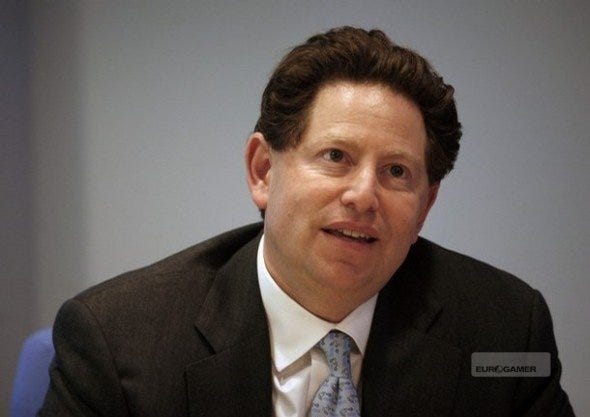
Eurogamer: What do you think about Bobby Kotick? He's a person.
Bobby Kotick. He's a person.
Tim Schafer: He is. Well, allegedly. Ah... I don't know.
Eurogamer: I'll tell you what I think.
Tim Schafer: What do you think?
Eurogamer: I think he's a bit misunderstood because he's trying to make lots of money when people think he has an obligation to make gamers happy.
Tim Schafer: His obligation is to his shareholders. Well, he doesn't have to be as much of a dick about it, does he? I think there is a way he can do it without being a total prick. It seems like it would be possible. It's not something he's interested in.
Eurogamer: Why should he care?
Tim Schafer: Well, he makes a big deal about not liking games, and I just don't think that attitude is good for games in general. I don't think we're an industry of widgets. I don't think we can approach it like we approach bars of soap, where you're just trying to make the cheapest bar of soap.
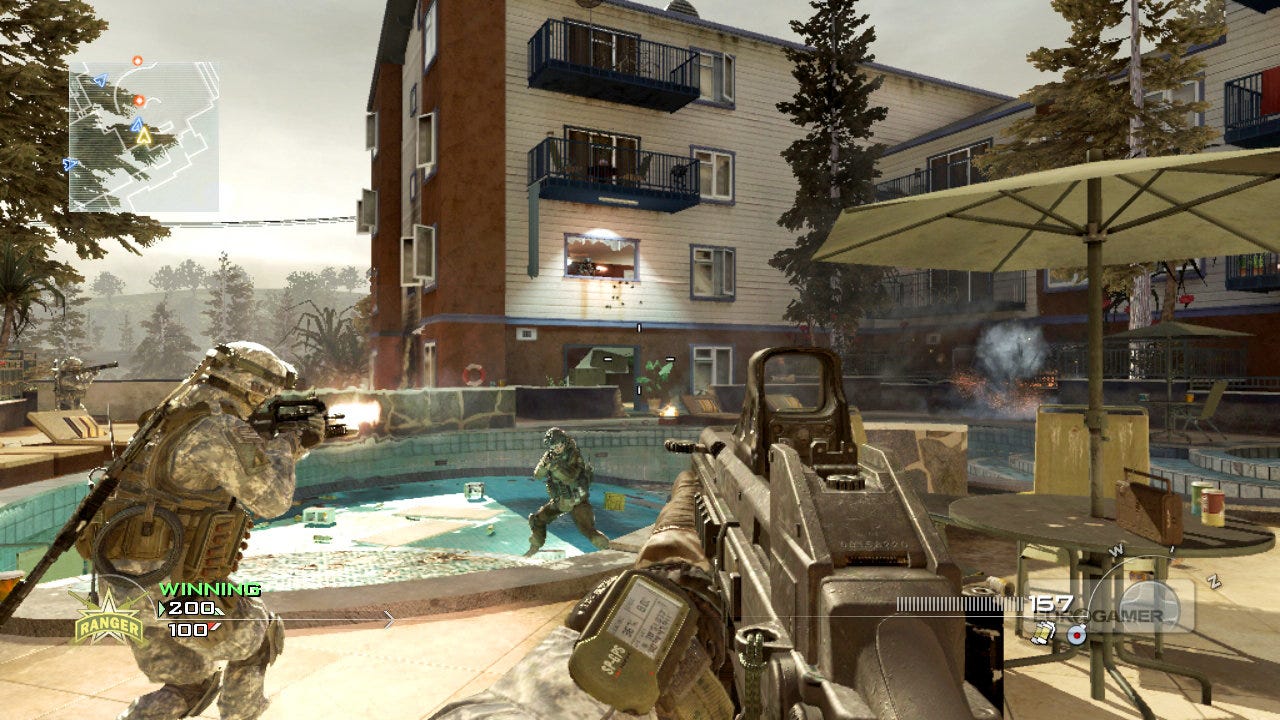
Modern Warfare 2 pleased more than just the shareholders, to be fair.
He definitely has that that kind of widget-maker attitude. I don't think he's great for the industry, overall. You can't just latch onto something when it's popular and then squeeze the life out of it and then move on to the next one. You have to at some point create something, build something.
Eurogamer: Do you remember when he was quoted as saying, 'I want to take all of the fun out of making games?'
Tim Schafer: I've never understood the context of that. What did he mean by that?
Eurogamer: I've heard Blizzard describe it as a joke that didn't come off.
Tim Schafer: Isn't that what politicians say every time they make some sort of racist joke or inappropriate comment? They're like, 'Oh, that was just my lame attempt at humour.' Because everyone's willing to believe they have a bad sense of humour.
I don't understand why he would want to do that. Hopefully he'll go back to another industry soon.
Eurogamer: He's too successful.
Tim Schafer: He could go to an industry that makes more money. Ball bearings... Something that suits his passions more. Weapons manufacturing?
Eurogamer: Psychonauts. You shopping that around?
Tim Schafer: I would love to do another one. It's not like I'm against doing sequels. I'm against not doing new things. If I had made a sequel to Full Throttle, like they asked me to, there wouldn't have been any Grim Fandango. And if I'd made a sequel to Grim there wouldn't have been a Psychonauts. So it's mostly just that I've got some other new idea I want to do instead.
Psychonauts was the first thing I made that I actually owned. That and Brutal Legend. So it's the first thing I could do a sequel to. The trick would be convincing a publisher it's been out there long enough, that it's had enough time to get around. People ask me for it all the time.
It's one of those games that's easily extendable. Everyone you meet, any interesting character you've ever run into, you ever thought of what it would be like to go inside their mind, that's another level of the game. It has endless possibilities. And I love those characters. And my nephew really wants me to make it.
Eurogamer: Why don't you do it then?
Tim Schafer: I didn't say I wasn't doing it.
Full Throttle. We get it, Tim. You like bikes.
Eurogamer: Would you need a publisher or could you do it yourself?
Tim Schafer: I would love to do it ourselves but we'd need a few million dollars, which developers don't tend to have. I think Epic does.
The main thing that's stopped me is that we can only do one thing at a time. If we can get it to the point where we're making multiple games, then we can work on the sequel while we're exploring new IPs at the same time,
Eurogamer: Have you got a publisher for the games you're working on now?
Tim Schafer: Uh-huh.
Eurogamer: Are you saying who it is?
Tim Schafer: Not really right now. They're going to announce the games pretty soon.
Eurogamer: Is Brutal Legend something you would like to return to?
Manny needs a sandwich.
Tim Schafer: All the games, we always wrap them up. I'm always happy to leave them, really. They're not like, dying to be returned to. But some of them, like Psychonauts, there's obviously more you could do with it.
With Brutal, there's a lot of stuff we had to remove for the first game that I would love to see the light of day at some time, stuff that was really cool.
Eurogamer: Like what?
Tim Schafer: Other factions. There were whole factions we had to cut out, which were really hilarious and fun to play. But there just wasn't enough time to do that whole story. The world was about three times the size of what it was in the game.
I really wanted to do a sequel so I could work with Ron James Dio, but that sadly cannot happen. I had a whole plan for him.
Eurogamer: What happened there then?
Tim Schafer: He died.
Eurogamer: I know, but what was the gameplay around his character?
Tim Schafer: I wanted him to be... Well, I don't want to go into it. He just passed away. I feel a little strange talking about it.
Eurogamer: Microsoft has talked up Kinect and Sony has talked up PlayStation Move. Will they really help broaden the audience?
Tim Schafer: If parents come in and see kids running around and jumping around, they can understand more, they can see how the motions of the player affects the screen more. That'll cause them to be able to relate to it more and get more involved. It could drop one of the barriers people have towards games.
The Wii definitely did it. You saw people who never played games before playing games all of a sudden. But I don't know if it converted all of those people into gamers or anything.
Eurogamer: Some doubt motion control can apply to the games core gamers play, like Brutal Legend.
Tim Schafer: That's because there have been years and years of working towards this controller. When we think about ideas for games, we think about that controllerWe still haven't learned entirely how Kinect works, or what works on it, what doesn't.
Eurogamer: When you first saw the tech, did you think, 'Wow, I could make something great with that'?
Tim Schafer: No. At first I didn't think of anything at all. And then some of us were talking about an idea I got really excited about. I think it's more about the ideas. It's just so new.
It'll work with games that were, from the ground up, conceived to be Kinect games. Not ports of existing games. That's what we haven't seen yet. All the new games that would be imagined for the Kinect.
Kinect: will make your arms pretty buff.
It's easier to think about casual games for it because there's this practical thing of standing up and sitting down. When you're playing Fallout 3 or whatever, you're just flopped out and you're playing for hours. People wouldn't want to do that by standing up just doing it with your arms. Even though it would make your arms pretty buff. You'd build a whole special suite of models. You'd be able to recognise other Fallout 3 players on the street.
Eurogamer: It would be like in Fight Club.
Tim Schafer: Exactly.
Eurogamer: That's all it would do, though. You'd just have big arms. The rest of you would still be out of breath and overweight. What about 3D gaming? Is it a gimmick?
Tim Schafer: I really used to like the View-Master! If it ever gets to look as cool as my old View-Master, then I'll get excited...
That's the kind of thing I don't feel like I have anything to say about. It's cool. It's the kind of thing I'd love for someone else it figure out. And I would happily benefit from it after someone else did all the work.
You heard it here first, folks - the Viewmaster is the future of gaming.
What if you could do it all holodeck-style? You could sit in the middle of the jungle and you'd be actually playing those games. Think the future. That would be subconscious, because when I'm in the jungle I'm sitting in my chair.
Eurogamer: So it would be like The Matrix?
Tim Schafer: Oh, maybe it would be more like The Matrix. And it would all be in your head.
Eurogamer: Because nobody could do that stuff, because nobody is fit enough.
Tim Schafer: Especially if they spend all their time playing videogames.
Eurogamer: They'd have really big arms, though.
Tim Schafer: Well, if they were doing all this fitness stuff for games, maybe it would be a game where you would end up being really fit by playing. You wouldn't notice it because you're running for your life from a pterodactyl and you're like, ah. And then you're like, good workout.
Tim Schafer is the head of Double Fine Studios.
