Tech Comparison: Red Faction Guerrilla PC
Mission to Mars.

I've been waiting for this one for quite some time. THQ's Red Faction: Guerrilla is one of my highlights of the gaming year, a superb case of technological innovation marrying beautifully with a strong concept to make a hugely entertaining, immensely fun game quite unlike anything else. My appreciation for the game grew further after I talked with the team for the RFG tech feature, and I was extremely curious to see how the PC version would pan out.
My only criticism with the original game was that the performance level was somewhat held back by the hardware available - the PS3 and Xbox 360. The game possesses an immensely variable frame-rate, operating between anything from 20FPS to 40FPS, with general performance somewhere at the mid-point. However, more than that, image quality in the game was compromised by the lack of v-sync, which resulted in over 40 per cent of the 60Hz output of the consoles consisting of torn frames.
The PC format should, in theory, allow you to play the same games without so many of the technical constraints, and we've reached the stage now where even the entry-level dual-core CPUs and enthusiast graphics cards offer performance way in advance of the consoles. I was itching to see how Red Faction: Guerrilla would play with its technical limitations removed. Those graphics and that destruction model with enhanced frame-rate, resolution and no tearing would be something utterly brilliant.
In terms of the package, THQ looks to have done PC owners proud. Red Faction: Guerrilla has everything the console versions have, a couple of very minor but nonetheless welcome graphical additions and, laudably, we're told that all three of the console versions' premium DLC packs come on the disc at launch. PC owners are used to putting up with delayed launches of console conversions, but at least they're getting the full package when they buy the game. Good stuff - Capcom (among others) please take note.
In terms of the overall look of the game compared to the console versions, here's a 720p and 1080p shot comparison between the PC and Xbox 360 builds. However, all three SKUs support 1080p in some fashion or other, so check out the more comprehensive 720p and 1080p comparison galleries.
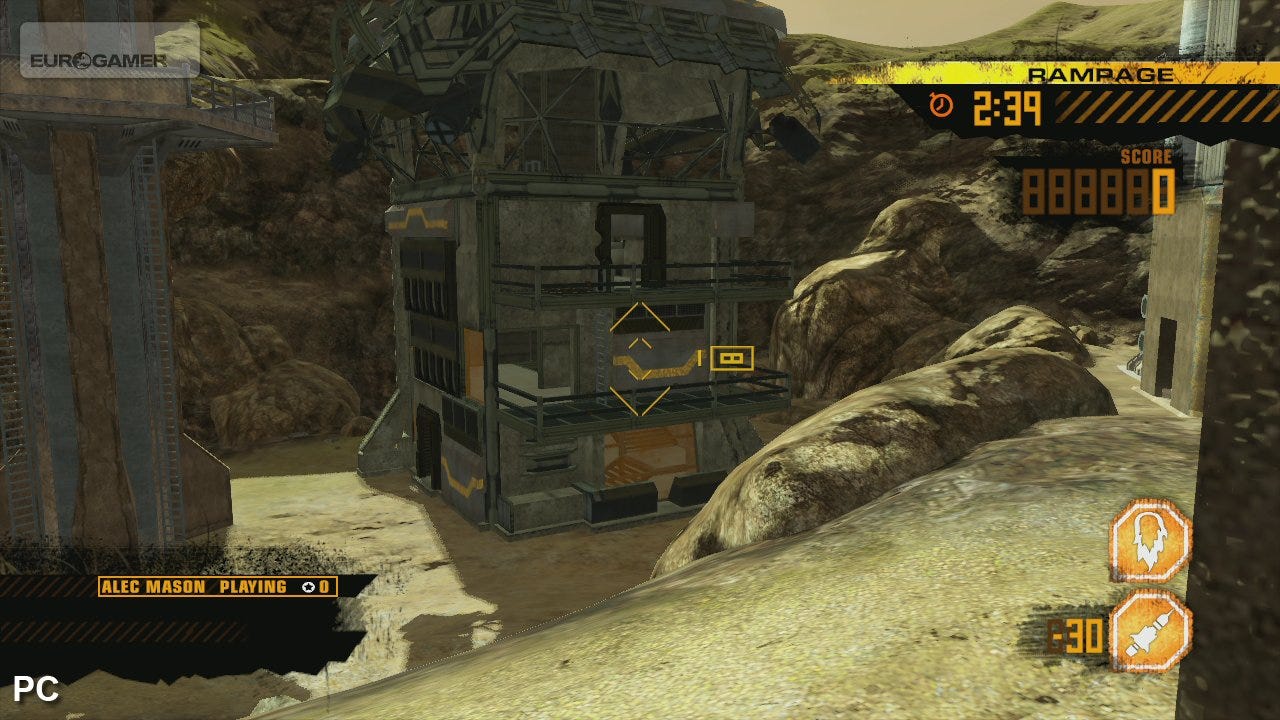
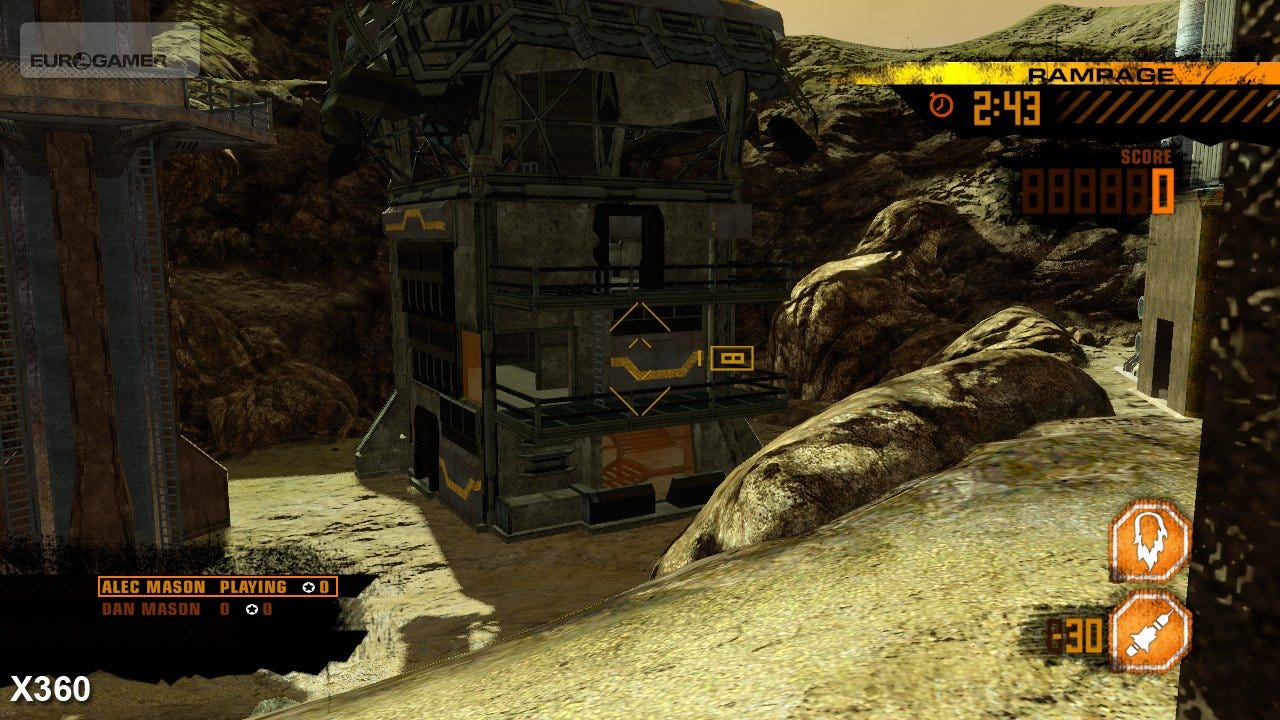
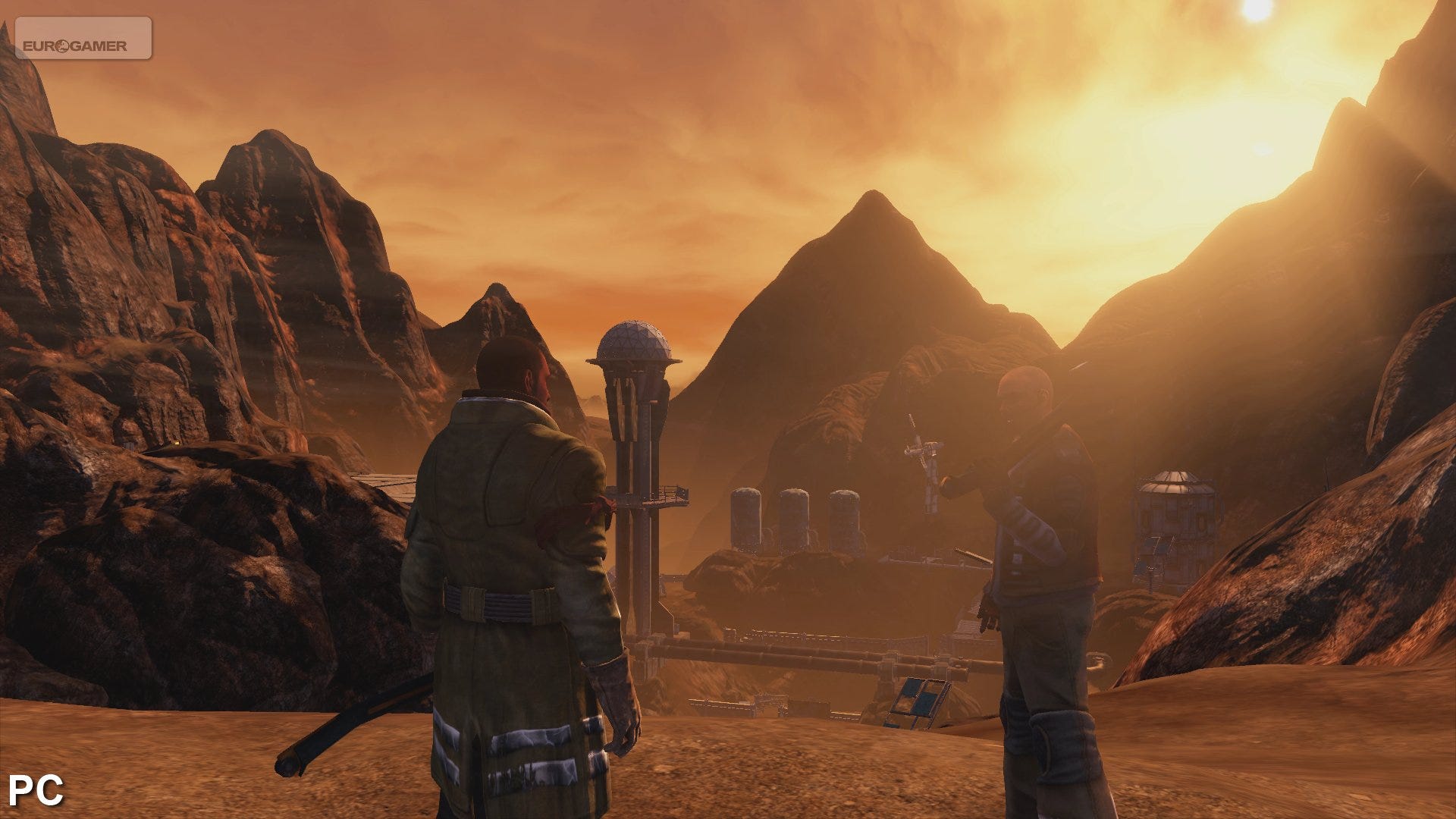
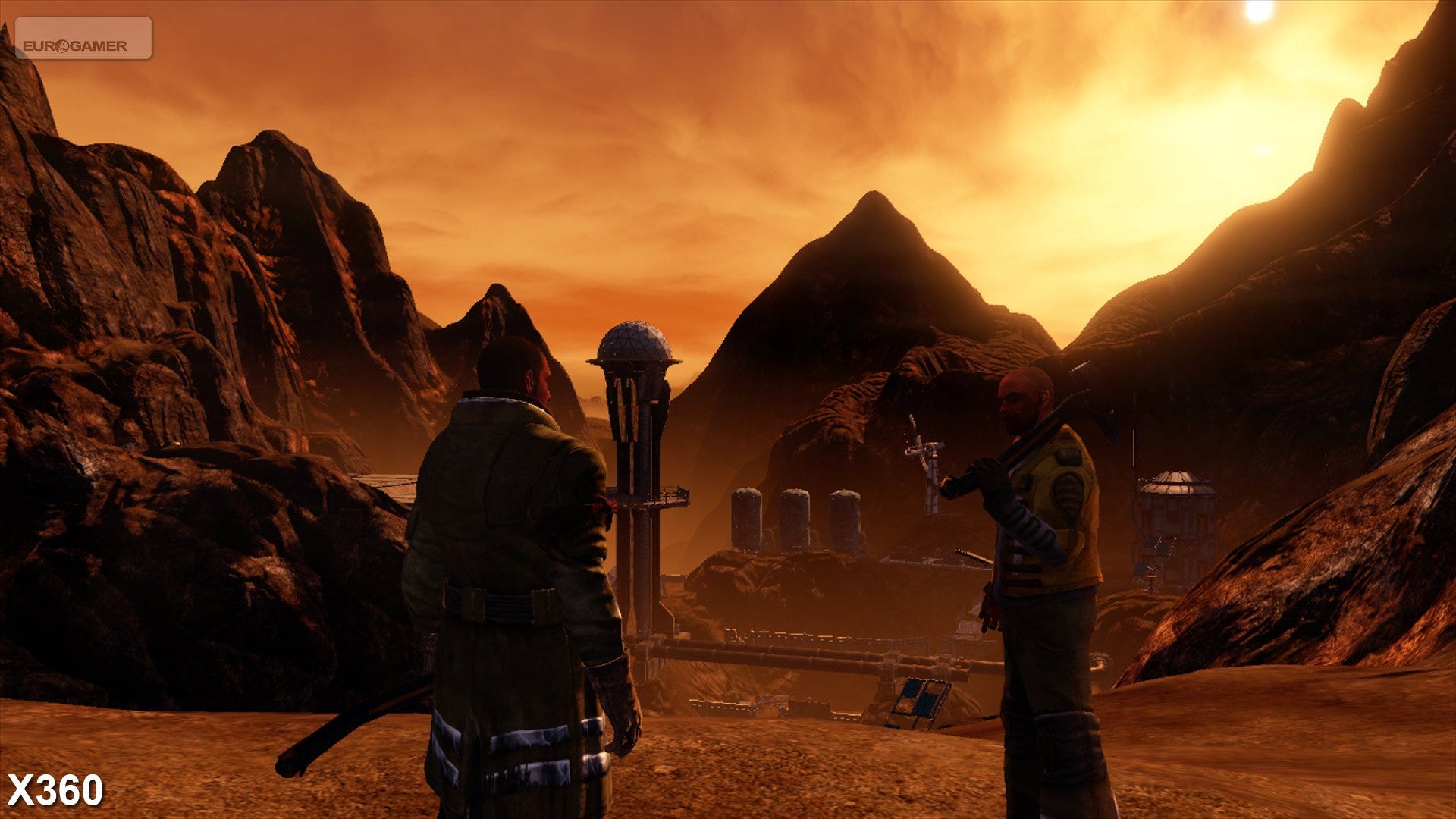
The hardware I was using is a standard Core i7 920 CPU clocked at 2.66GHz, 3GB of DDR3 RAM, running the 64-bit rendition of Windows 7. For the record, we were told by THQ that our review code was actually submission code, so it may well be that performance will increase in the final retail build, or via a patch. In particular I'm hoping for stronger SLI/dual GPU performance in the future.
First up, it seems that Red Faction: Guerrilla exploits multi-core CPUs. However, based on performance-monitoring of the four CPUs inside the Core i7 processor, the game appears to be optimised for dual-core chips. What was quite impressive was that thanks to Windows' ability to shift load to any given core, I found that the game was playable at 1080p high settings (losing frames only when the big bangs kicked off) using just a single CPU combined with the GTX 275 graphics card. Give it two cores though and performance is much more solid in general gameplay. With a decent 2.6GHz dual-core CPU coming in at less than £60 these days, RFG should scale nicely across a number of AMD and Intel CPUs.