Cursed Mountain
Cliff hanger.

Most mythology, by definition, has been around for donkey's years - when you're dealing with ancient legends and creation stories it's hard to come up with new material. One way around the problem is to write your own, but encapsulating the cultural history of a civilisation in a believable and interesting way - within the confines of time, budget and narrative arc - is no mean feat.
It's good, then, to see a developer making an effort to diversify from the usual menagerie of Judeo Christian angel/demon dichotomy or the faux Oriental MacGuffin. Initially, Deep Silver's choice of ancient Buddhist scriptural influence seems like an odd direction for a game which has been billed as survival horror. After all, isn't Buddhism about peace, understanding and cultivating exciting new strains of tofu?
Well, sort of. There's certainly more than an occasional nod to Buddhism's respect for life and common decency in the Cursed Mountain demo I'm being shown, but there's a great deal to do with the darker side of the mythology too.
Players control professional climber Eric Simmons, on a quest to locate his brother Frank. His impetuous younger sibling is late back from an expedition in the Himalayas in search of a Terma, a repository of ancient Buddhist wisdom hidden somewhere on the summit of the sacred mountain Chomolonzo. This being the eighties there are no handy mountain rescue helicopters or GPS systems to rely on; Frank needs to be fetched the hard way.
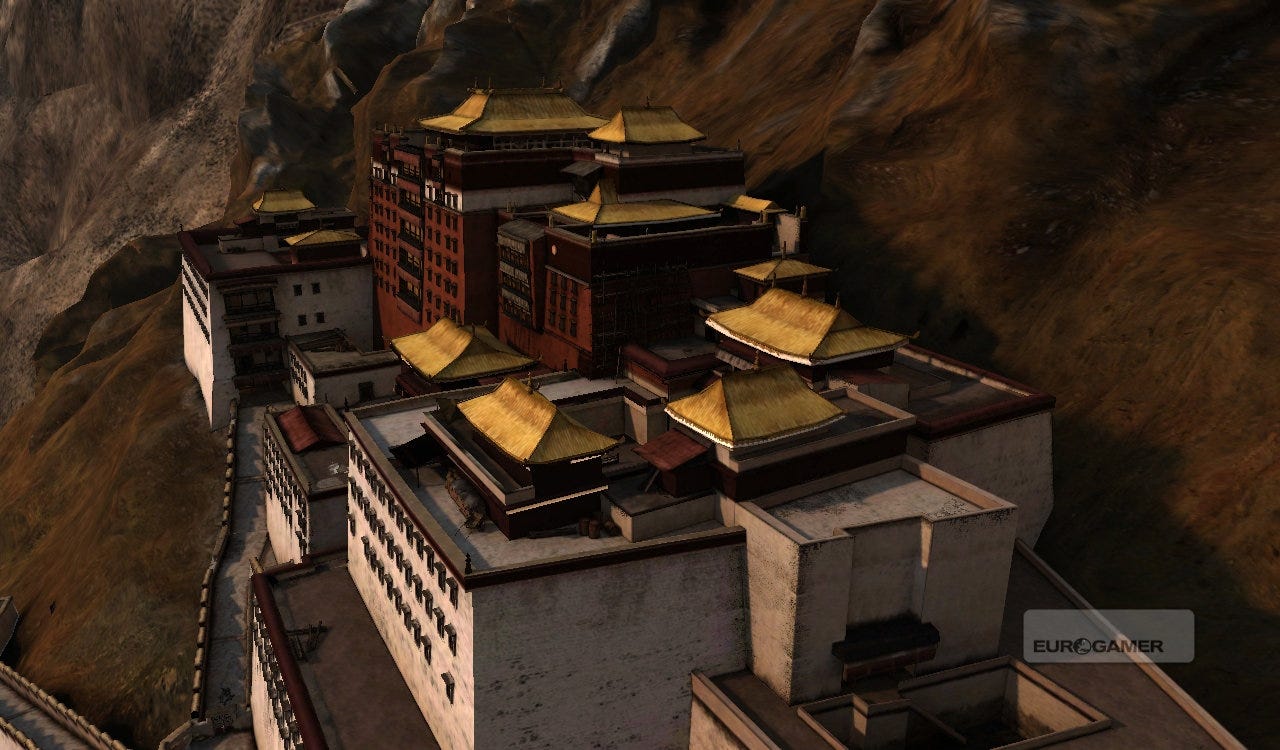
Handily enough our Eric has been climbing nearby, and as such is acclimatised and hot to trot when he's called in to go looking for his brother. Arriving in Lhando, the highest city in the world at 5000 metres up, he must gather information on the nature of his brother's quest before kicking on his crampons and heading uphill. It's not long before the mysterious and perilous nature of his undertaking becomes apparent, however - there are worse things on this mountain than frostbite and gooey Kendal mint cake.
Turns out the peak is under a terrible curse: anybody who dies there is bound forever to the Buddhist equivalent of purgatory, known as the Bardo. This is a realm in between life and death in which souls are considered for Nirvana; those found wanting are usually returned to the lifestream to be appropriately reincarnated.
Being trapped in this non-world for centuries is no picnic - the souls you'll encounter during Eric's approach to the peak are twisted, malignant beasts, stripped of humanity and compassion over the course of their time in the howling void.
Thankfully, Eric has a few advantages when dealing with the denizens of the Bardo. One of the first items he accrues is a pickaxe belonging to his missing brother. Being members of a terribly close family, the Simmons boys share a 'psychic link', enabling them to share memories when they encounter objects which the other has held, or entering places where they've been recently.
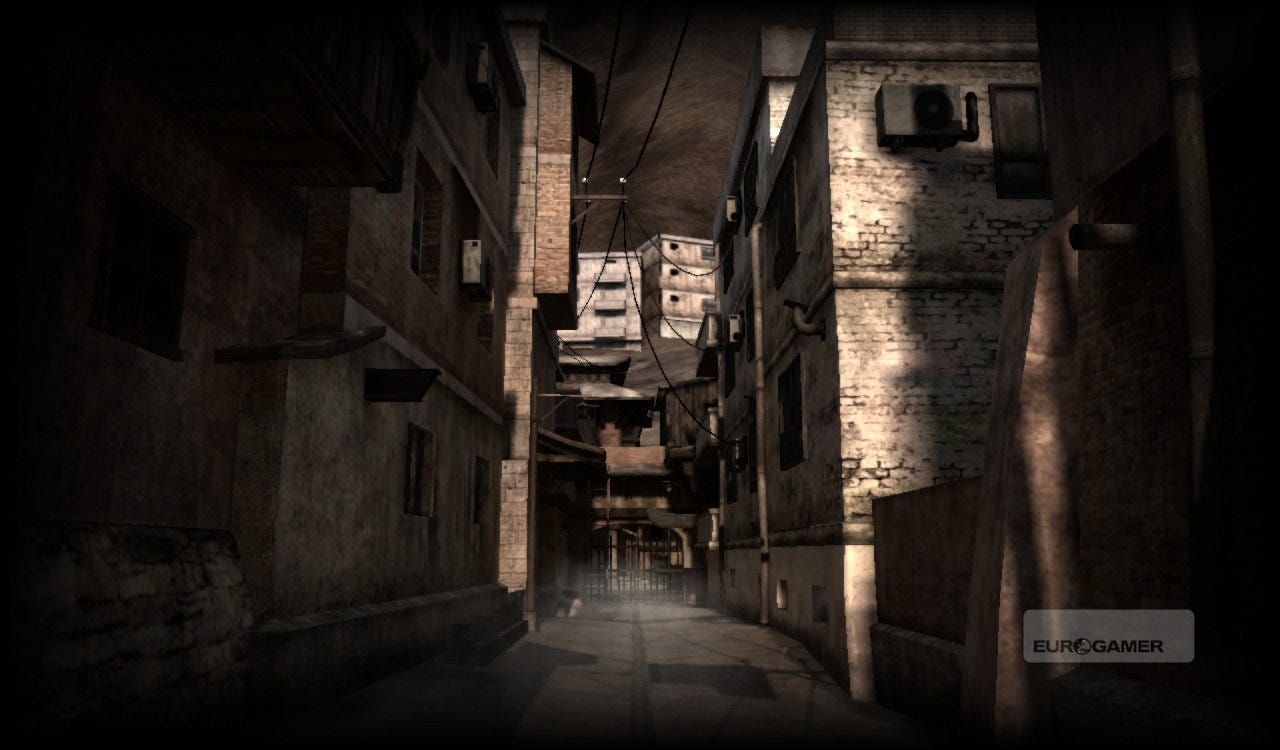
As it happens, the pickaxe has also been enchanted by Buddhist prayer rituals, enabling it to interact with the Bardo, defeat the trapped spirits and free them from their imprisonment. This is done in two ways; firstly the axe is a basic melee weapon, and slashing with a tap of the Z button damages spirits directly. Secondly, ritual items and charms can be attached to the head of the axe, turning it into a ranged weapon which shoots bolts of spiritual energy.
When spirits appear, they're often accompanied by a manifestation of a 'shadow rift' - essentially a spiritual barrier which boxes the player in and forces them to fight rather than flee. Combat then usually follows a three stage process. Initially comes melee crowd management, a matter of knocking away enemies in order to line them up for ranged damage.