Condemned 2: Bloodshot
Tramp stamp.

Ethan Thomas, Special Crimes Unit Investigator, hunts down serial killers, and everyone knows that the best way to hunt down serial killers is to bash hundreds of tramps in the face. Ethan certainly knows this. Does it haunt him? Does he dream of going under railway bridges and lobbing nails into soup kitchens?
The answer is yes. So much so that, one year on from the events of 2005's Criminal Origins, we catch up with Ethan living the very life of the folk he once battered, trying desperately the blot out the nightmares and hallucinations which have tormented him ever since. Bearded, unkempt and a drunk, he starts the game fighting with people who've stolen his booze stash.
A year living rough certainly hasn't blunted Thomas' combat prowess - in fact the first thing that will strike players is how much more developed the hand-to-hand combat feels. Monolith's recent claims of the game featuring proper two-handed combat are credible, and in some regards Condemned 2 has more in common with EA's Fight Night than your average rough-and-tumble action-adventure.
As part of the game's enforced initiation ritual (so, tutorial), you face off against various burly thugs, each one demonstrating a different combo. The left and right triggers represent your calloused fists, and the combat is fast, responsive and intuitive as you slug it out. Rather than allow you to mash dementedly, the game demands you follow instructions and appreciate the benefit of combos, timing, blocking and parrying.
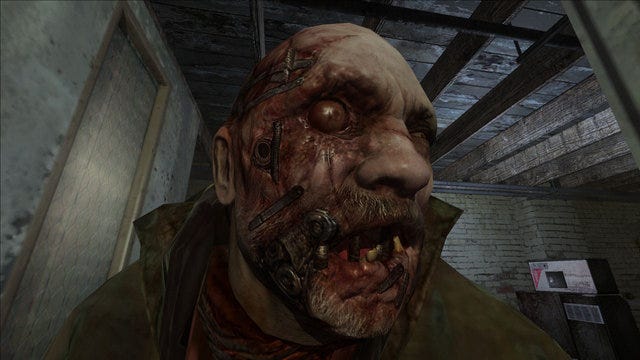
Holding down both triggers at the same time acts as a basic blocking tactic (and Wolverine impression) by bringing your arms together in an 'X' formation. However, leaving your block until the moment an enemy is poised to strike has the added benefit of forcing your assailant off-balance, giving you the opportunity to strike back with a left-right-left combo. If you manage to rain down a left-right-left combo without taking any punches in return, you deal even more damage. Doing all this is surprisingly challenging for an opening level, but the right side of insane.
Shortly after all this frantic pugilism, you get to brandish a 2x4 and really experience the brutality of the reworked combat engine, wrapping bits of wood and discarded pipe around the heads of anyone who challenges you. Elsewhere, the kick manoeuvre is now far more useful, giving you valuable breathing space when enemies bear down on you. Clicking both sticks at the right time aims a kick that has the potential to send them reeling - useful for lining up combos that take a little longer.
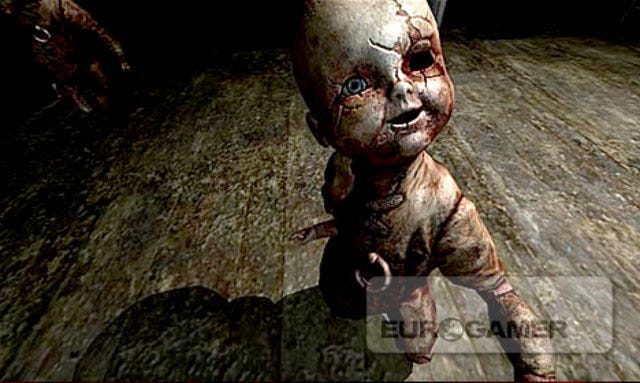
On the slightly more controversial side, the ability to pull off Manhunt-style environmental kills (such as the old head-in-the-TV favourite, and apparently about 40 in total throughout the game) adds an even more wantonly gratuitous layer of brutality to what is already the most realistic videogame violence we've seen. The melee combat is very satisfying, uber-violence or not. Punching is raw and realistic, and time spent here hasn't stopped Monolith reprising the dark, oppressive atmosphere of Criminal Origins.
Laying into aggressive lunatics doesn't always involve lead pipes and axes. There is the new Let's Be Friends system, whereby you lay down arms and hug it out [no there isn't - Ed]. You also get to brandish firearms with a limited stock of ammo in them. While this might prove jarring to anyone used to traditional first-person action games, the limitation quickly shapes the intense atmosphere and fuels the tension, as you know how important it is to conserve bullets. Having played through the opening trio of levels, it's hard to report on quite what has been added to the weapon arsenal, with the sequel on similar form both in melee and firearms terms. If that persists, expect the usual shotguns, pistols and occasional machinegun in the firearms camp, and 2x4s, pipes, axes, electrical conduits and so on for melees.