WRC2 - FIA World Rally Championship Review

Point-to-pointless.

Version tested: Xbox 360

Do you know what the most exciting thing about the World Rally Championship is right now? It's not that Mini has returned to the sport since leaving after the Summer of Love. By far the most remarkable thing about world-level rallying at the time of writing is the fact that, with two events to go, there's no certainty Sebastian Loeb will drive his way to this year's championship.

There, bam.

I appreciate that, if you're not a WRC follower, the above statement is likely to have hit you with the force of a sickly seahorse. So know this: Loeb has been an unstoppable winning machine since the dawn of time. (Or, at the very least, the past seven years.)

Whether he manages to squeeze a magnificent eighth title into his trophy room is actually irrelevant, though. The lesson that we should all learn from this previously unthinkable scenario is that things, inevitably, move on.

But judging by WRC2, Milestone's been skipping school. 12 months on from the developer's first stab at steering the official WRC licence and there's disappointingly little evidence of evolution. In fact, if you read last year's WRC review (God bless you), I ought to point out that I've neither lost my mind, nor am I trying to fob the editor off with a sneaky cut-and-paste-and-tweak job here. The two articles risk ending up suspiciously similar because the games are, in most areas, identical.
1

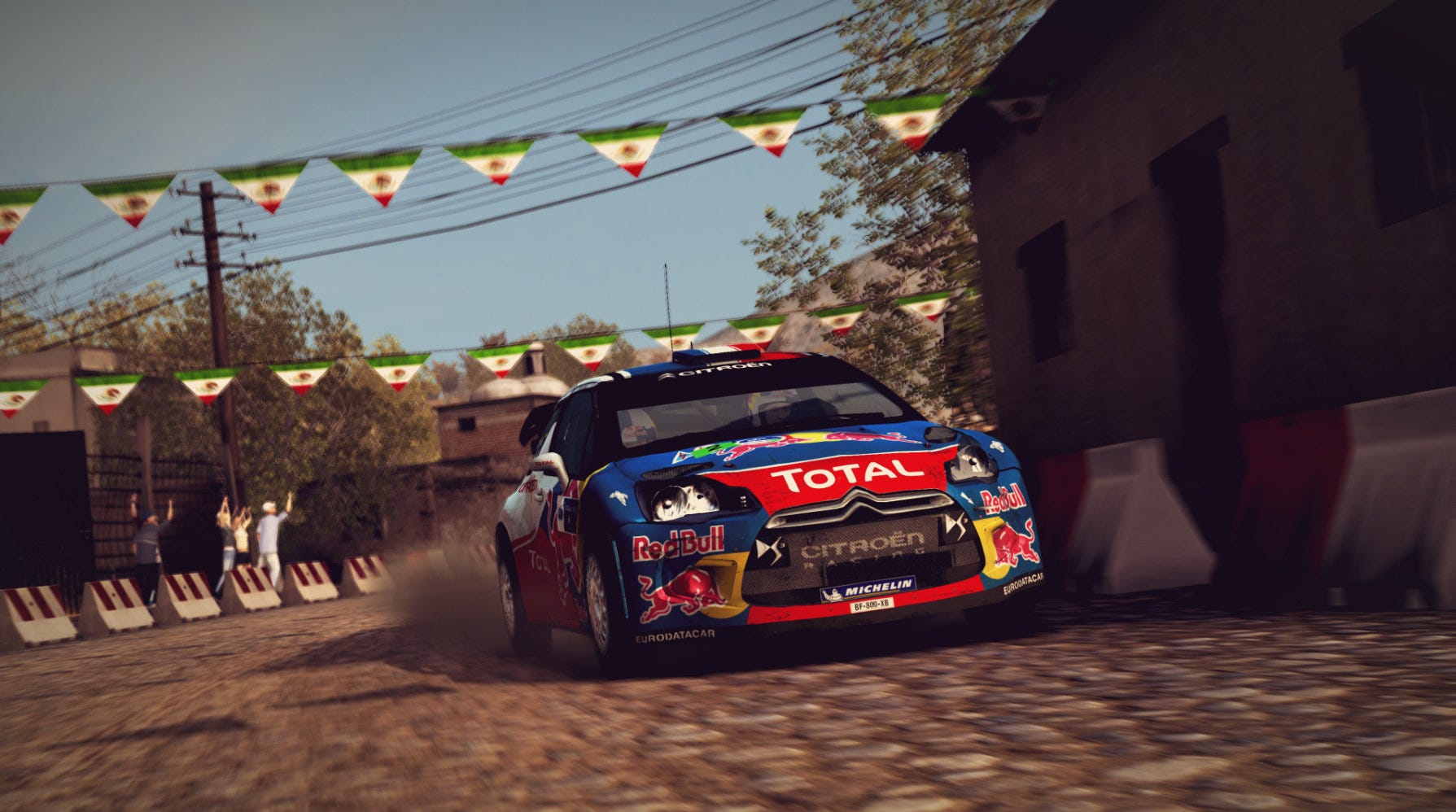
Like much of the game, WRC2's dimly revamped visuals recycle elements from the first entry.

Despite a quick graphical makeover, the initial menu layout and options (The Road to the WRC, WRC Rally School, Single Player, Hot Seat for two, three or four players and online) are a mirror image of 2010's game. Trying to spot significant differences in all but the career mode becomes as tricky as getting a straight answer out of James Murdoch.

Yes, Rally School does offer an extra slab of six (often stupidly short) lessons compared to last year's equivalent, and the (solid, ghost-based) 16-player online options now include a Quick Match element entirely dedicated to the new Super Special Stage inclusions. You'll also spot a 'rewind' option borrowed from GRID, along with a 'Look to apex' Shift 2-inspired counterpart (the effect of which proves hard to notice in play).

And, of course, the official licence also dictates that you get this season's car categories: WRC, SWRC, PWRC, FIA WRC Academy, WRC Group B and WRC Safari (think classics like the Escort RS 1600, Evo III and, er, Peugeot 504) - though in practice this has little impact.
2

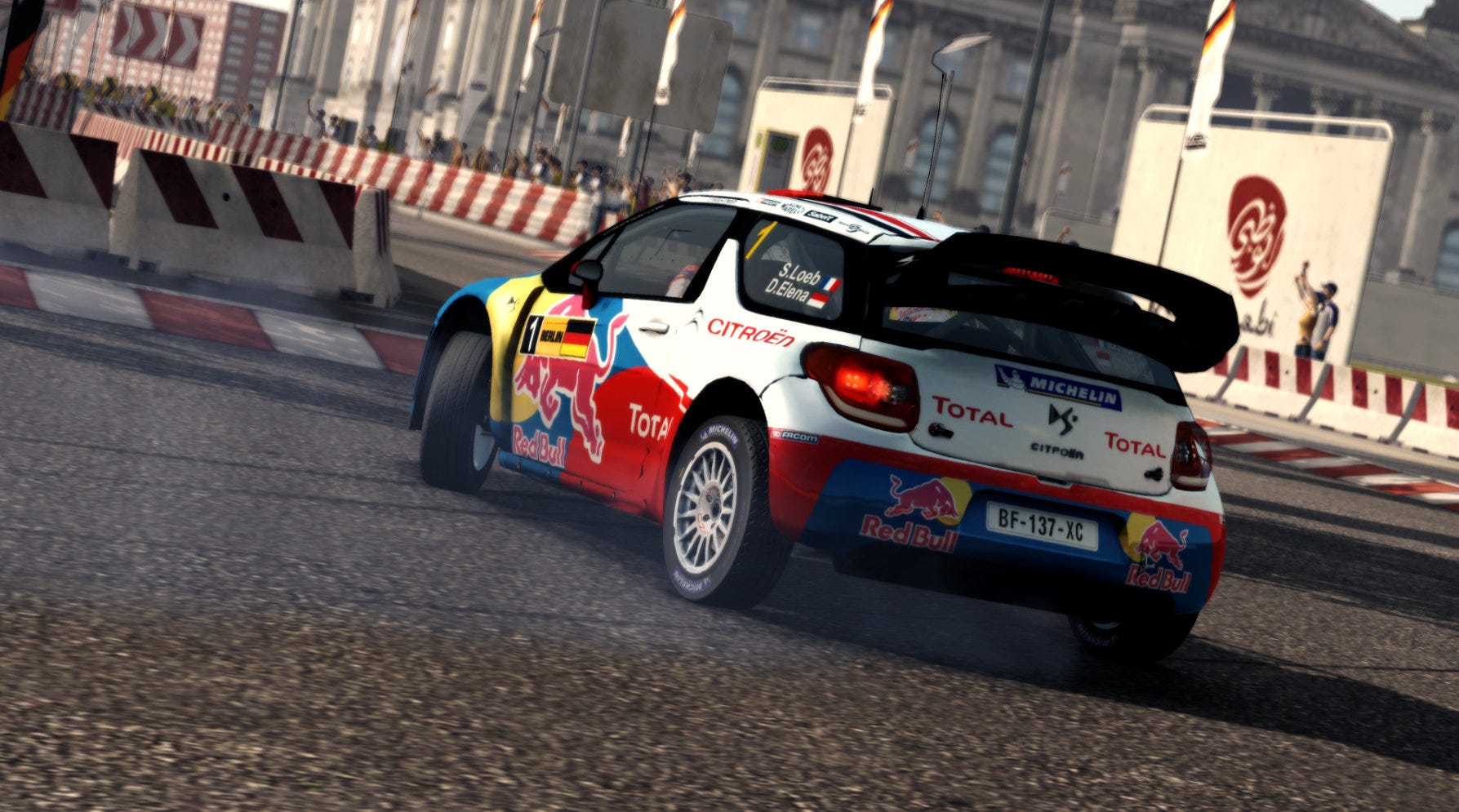
You get a decent and expansive rallying roster, from 2011's cars to 1960s classics.

In just about every other respect, though, things are just as they were in 2010 and at no time is this more disappointing than when behind the wheel. Last year's game had a knack of separating you from the on-track action by providing little-to-no feedback when it came to what the car's tyres were up to, and WRC 2 fares little better in this regard.

You can go entire stages - certainly when on tarmac - with your joypad's vibration motors (which you'll have to activate in the options, incidentally) seemingly on strike. But even then, there just isn't enough subtlety and range within the handling to tie you to the road surface and convey the illusion of driving in a manner that ever becomes intuitive. Like WRC, however, you can learn to anticipate car behaviour through trial and error.

You'd think switching to a wheel would improve matters drastically, but you'd only be as half-right as Kimi Räikkönen's decision to try out rallying. Without having to tweak the settings there is noticeably more default rumble feedback on a Fanatec GT2 but, as with pad play, there's simply nowhere near as much communication from your vehicle as you'd want. You get the sense that the necessary detail is buried within the code, which a little tweaking would presumably exhume - not least because the car's behaviour is always in line with real-world expectations, and last year's model did display elements of realism. For 2011, however, everything has been dumbed down.

Combine this muted and disproportionately forgiving handling dynamic with a revised, excessively heightened sense of speed and the result makes Dirt seem like Richard Burns Rally. Although less noticeable during traditional rally stages, taking a WRC class car on Berlin's Urban Rally (a Special Stage inspired inner city track, with more promised to follow via DLC) looks like someone's pressed the fast-forward button. All that's missing is the Benny Hill theme.

So that leaves the improvements to the career mode. As with the original game, the goal is to work your way through the junior rallying ranks and get picked up by a WRC team. Where things alter considerably are in your ability to now hire a chief engineer and mechanics crew to R&D car parts - brakes, engine, gearbox, suspension, aero bits - which are normally ready to be implemented in your ever-growing garage after a rally event or two. Similarly, the curtailed sponsor dynamic of the first game gets reworked into a team manager who 'negotiates' (i.e. unlocks) new sponsor logos to stick on the panels of your car.

3

New for this version are the misleadingly named Super Special Stages - here they're not that super.

However, both of these elements adhere to Milestone's firm view on player progression. Access to better equipment and more income is double-locked behind skill and reputation level barriers, both of which evolve according to a strictly laid plan. The result is that the game opens up unevenly, with periods of disappointing inactivity with regards to the R&D and sponsor aspects, while the lack of variables within the structure (all the mechanics you can hire are essentially the same, for instance) removes the opportunity for individual strategic decisions. Progression doesn't feel organic but rather artificially calculated - you're effectively always playing WRC2 the way Milestone wants you to play it.

Still, in light of the game's facsimile approach elsewhere, it's a decent addition. As are other touches, such as the continual mixing of different rally classes regardless of which level you have reached - you still get to dabble in Group B and WRC '08-'10 events during the WRC tier, for instance. In lower classes, the diversity is more pronounced: R2, Debut, Production, S2000 and Safari are slotted in as you power through the cumbersome camber of Italian stages, tame the terrifying Catalonian tarmac, slither through sinuous Alsace or face ten other types of international road-based challenges.

But what's most frustrating is that there were really simple things which, regardless of production schedule, team size or budget, could have been fixed and which would have made the experience so much better. The menu progression is still unintuitive and clumsy, the overall experience is infuriatingly lifeless and lacks personality, there is a desperate need for a more relaxed approach to progression, and even the smallest of focused tune-ups to the handling feedback would have contributed to a greatly enhanced drive.

4

The new urban Berlin track is good press release fodder, but fails to excite in practice.

WRC 2 is a very slightly improved game, but a year on, gaming has left it behind. If you're new to the series, pick this one; like the original, despite its deficiencies, there is fun to be had if you allow yourself to be sucked in. But a sequel to a game with noticeable flaws that rolls up unashamedly unchanged can't be allowed to powerslide past unnoticed.

Like everything in life, video games must evolve, and assuming success is achieved by maintaining the status quo is both unrealistic and foolish. Just ask Sebastian Loeb.

6 / 10

Read the Eurogamer.net scoring policy

Comments (33)

Comments for this article are now closed, but please feel free to continue chatting on the forum!

  • Loading...hold tight!