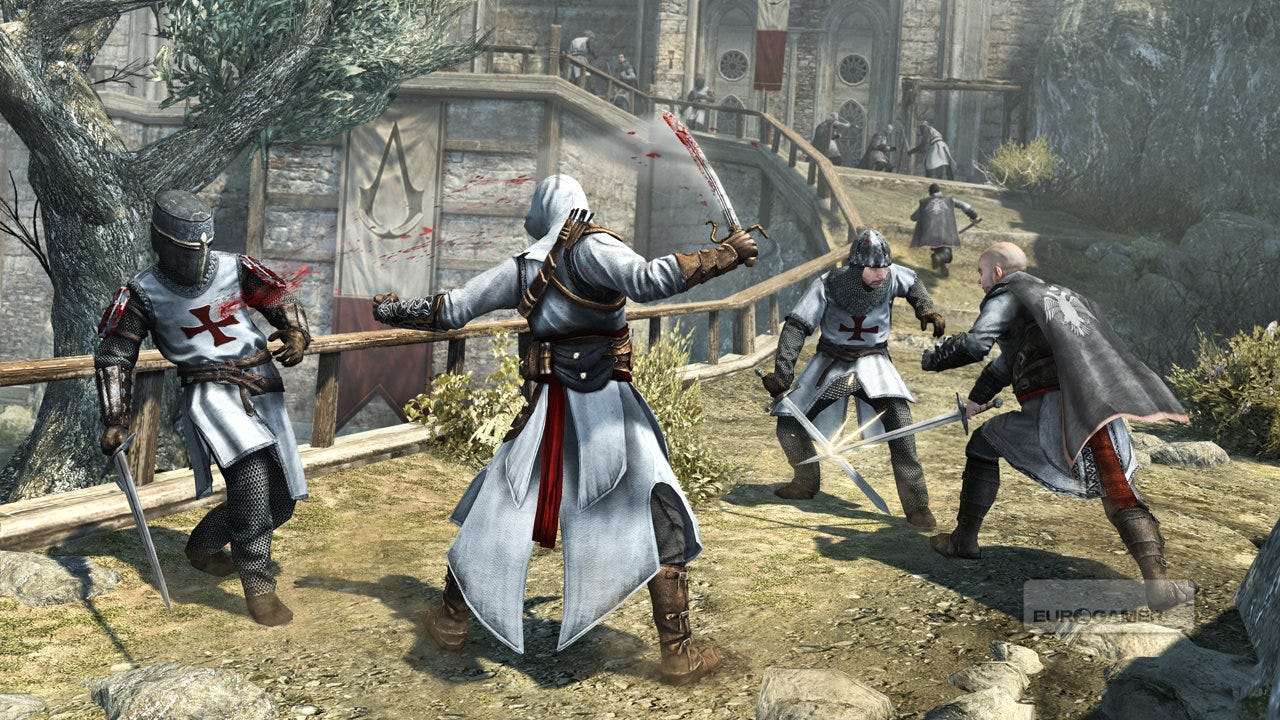
Assassin's Creed: Revelations Preview

Turkish delight on a moonlit night.

There's long been a link between Assassin's Creed and Metal Gear Solid, and it goes deeper than the furtive glances exchanged in various throwaway references to each other over the past few years. It goes deeper, too, than the murky tangle of their respective plot lines, interminable to all but the most dedicated scholars of the game's own brands of high-minded nonsense.

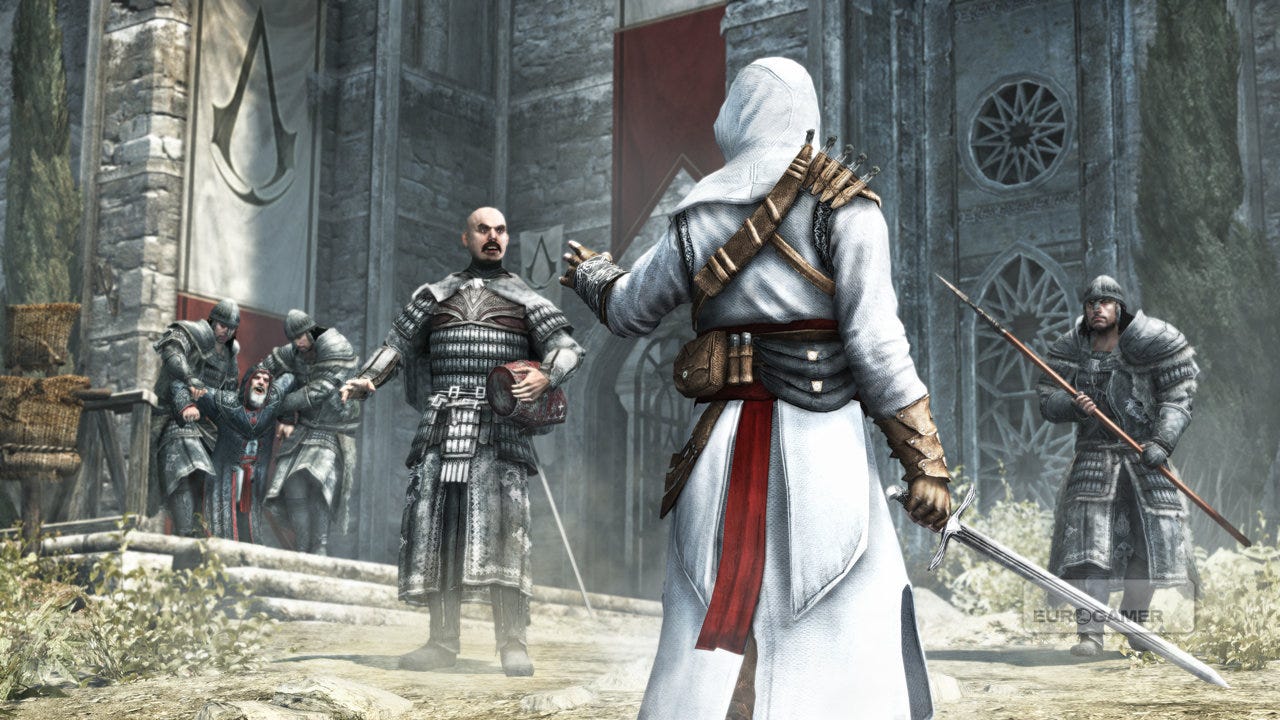
Game characters live and die in the blink of an eye, but rarely do we ever see them grow old. Yet Metal Gear Solid introduced an older, more forlorn Solid Snake in Guns of the Patriots, and now it's Assassin's Creed turn to grey at the temples as it bring us an older, more mature lead in Ezio Auditore.

There's a weariness to Ezio, a cool wisdom sitting alongside a humanity that's sadly far from commonplace in the medium. "I think Ezio is one of the most influential characters in the gaming industry," creative lead Alexandre Amacio says in what's only a slight overstatement, "and he is because he's a real character. He's not a static fake sort of character. He's had a beginning - and you've seen him being born - and you've lived through his entire narrative curve. Having him be older reinforces that, and makes him all that more real and all that more powerful."

Ezio's not the only character in Revelations - Altair returns, as does Desmond Miles as he plummets into the darker recesses of the animus - but he's certainly the star once again. The perhaps unintended hero of Assassin's Creed, Ezio has quickly eclipsed Desmond as the lead of the series - and there's a sadness knowing that after Revelations he'll be exiting the stage.

For Assassin's Creed it's not quite the end - Desmond's own story, and indeed the plot line started with 2007's Assassin's Creed is, as we recently revealed, to be finally wrapped up next year - but the series is finally beginning to move towards a conclusion of sorts.

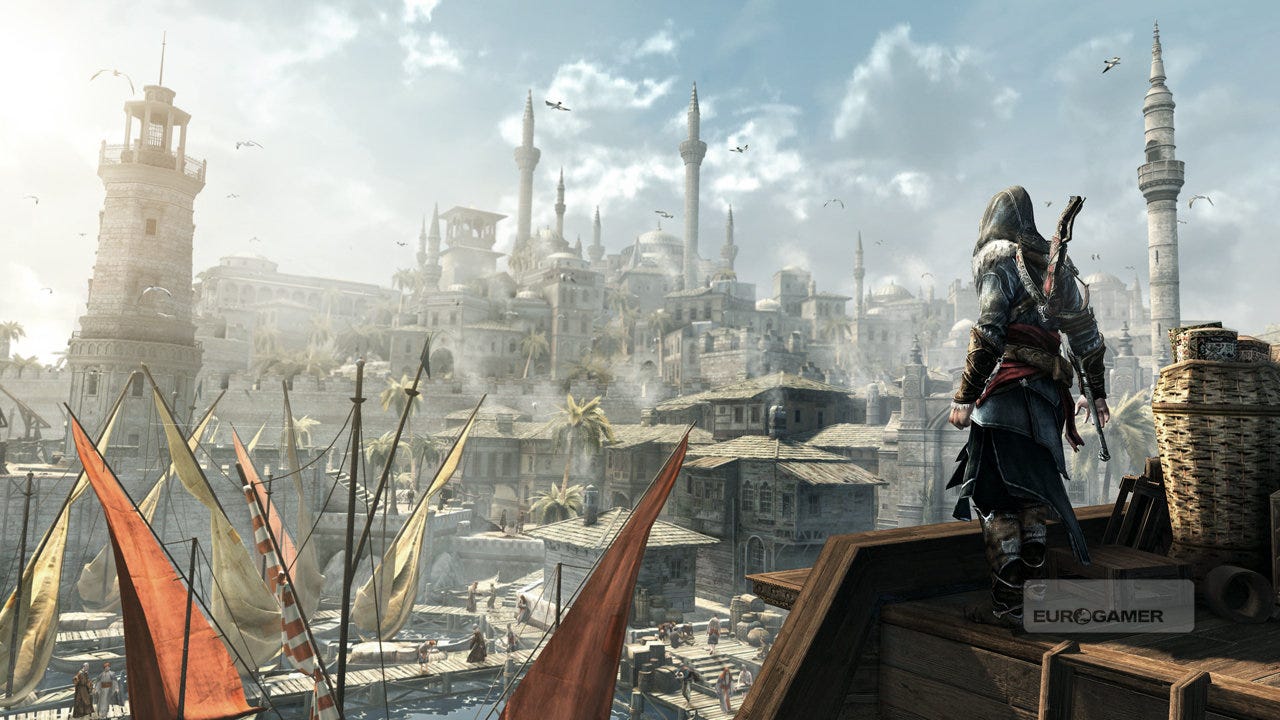
The three separate strands of Assassin's Creed's previous entries are slowly being strung together - while Desmond lies comatose, Ezio flees in pursuit of the Masyaf keys left by Altair and finds himself in Constantinople. As a backdrop it's thematically perfect - straddling two continents, with Europe and Asia meeting either side of the Bosphorus waterway that splits the city in two, it's the crossroads of the world and the perfect meeting point for the series' far-flung protagonists.
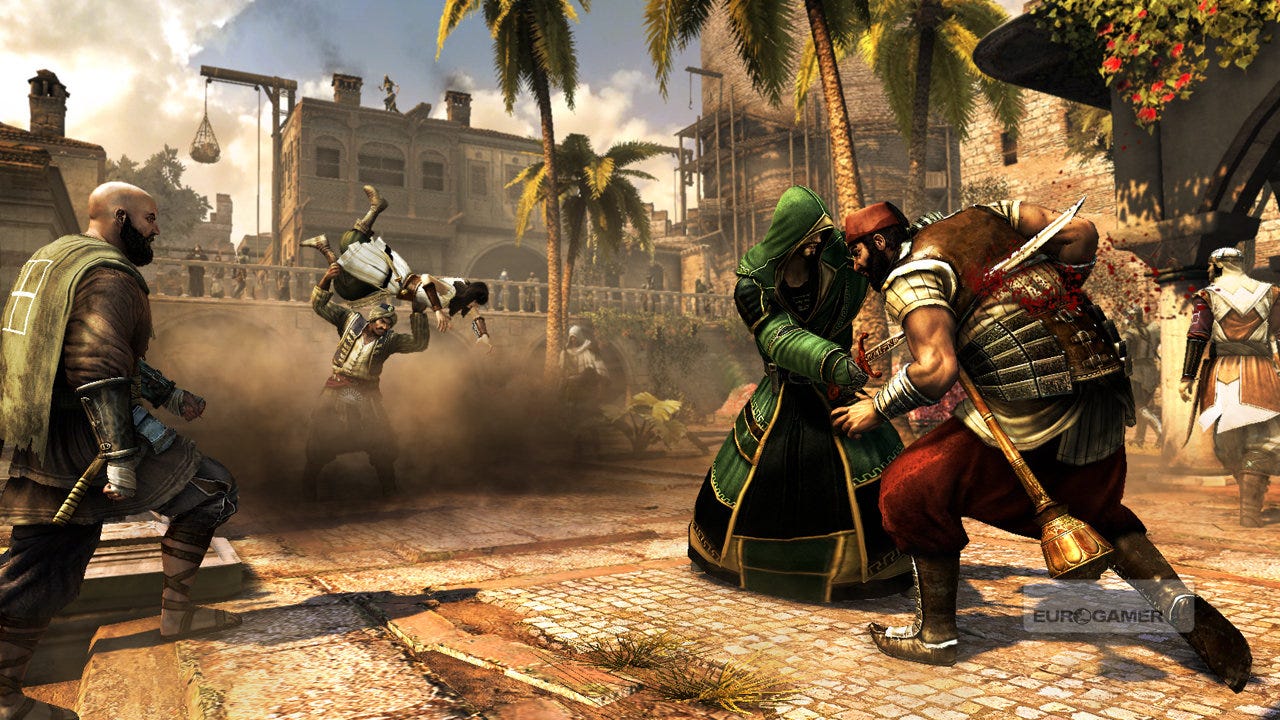
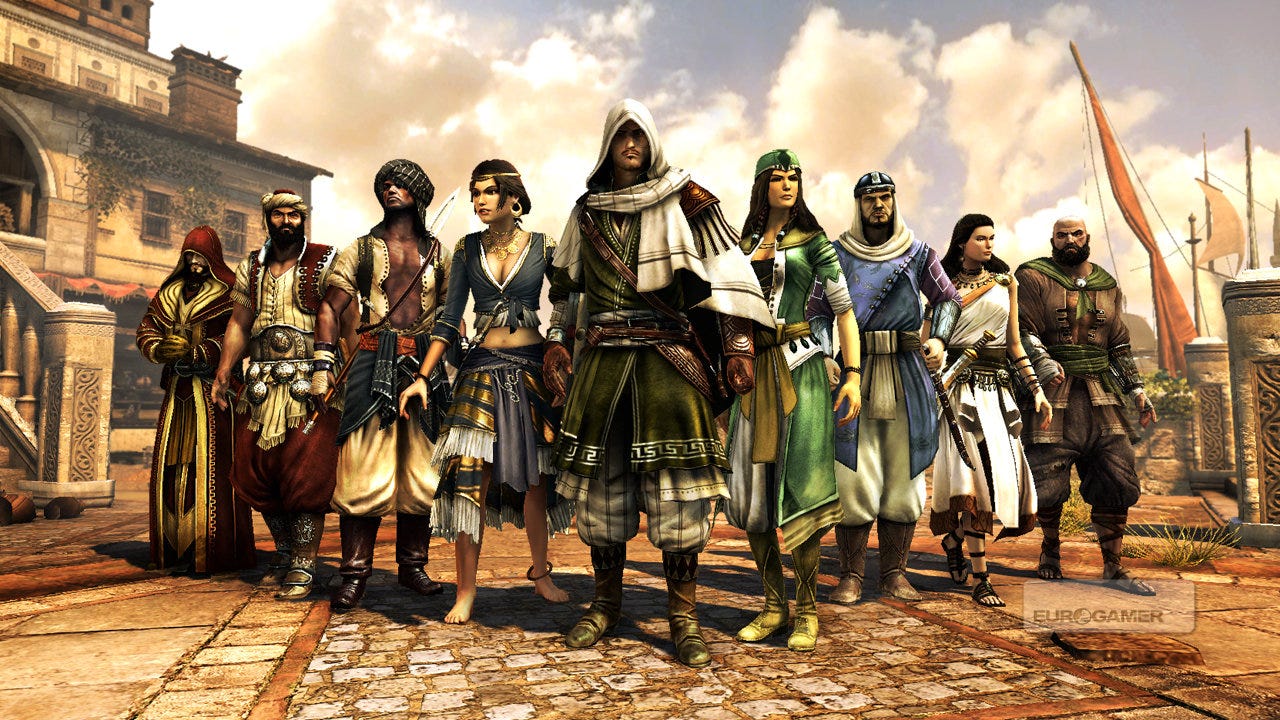
It's also, helpfully, a quite stunning location. "Very early in the process, Constantinople just jumped out," Amacio says on choosing Revelation's city, "It's a hub of different cultures - ever since ancient times, you have the Greeks, the Romans, the Byzantines and then the Ottomans - it's littered with various different monuments to explore. It has that richness."

Constantinople's historical richness is met with an architectural one: it's a vivid confusion of styles and influences, split here into four distinct districts. First there's Galata, where the European touch is felt; designed primarily by Italians, it's constructed from the same kind of refined stonework that's typically framed Ezio's past adventures.

Constantine, on the other hand, is a world away, a more impoverished district that's conversely a maze of colour. Rotting wood gives way to vibrant red and orange fabrics, which themselves blend brilliantly into the chaos of the adjacent Byzantine district, a mess of merchants that provides a constant hum of activity. Finally there's the Imperial district, cast in stone that belies the influence of the East and where Constantinople's most imposing sight can be found.

The Hagia Sophia stands proud over the city, a stunning embodiment of the flux that's forever gripped the city. First an Orthodox and then a Roman Catholic Cathedral, at the time of Revelations it's a mosque, and a focal point of the Ottoman Wars that are slowly escalating in the background.

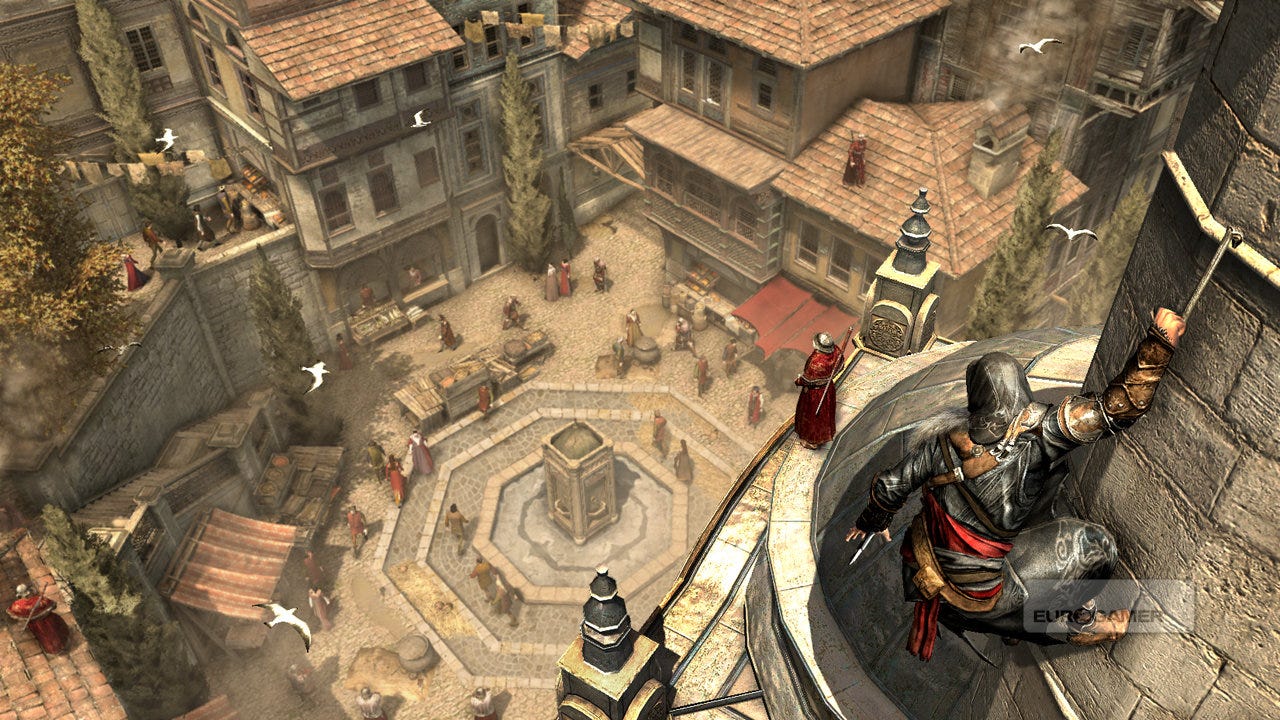
More importantly, though, it's a delight to climb. Naturally there's an achievement for reaching its peak in under thirty seconds, and scaling it at speed reveals a new, more dynamic method of traversal. "I was looking for something that upgraded navigation," says Amacio, "because I felt that navigation remained very static since Assassin's Creed 2 - whereas between Assassin's Creed 1 and 2 there was a big difference."

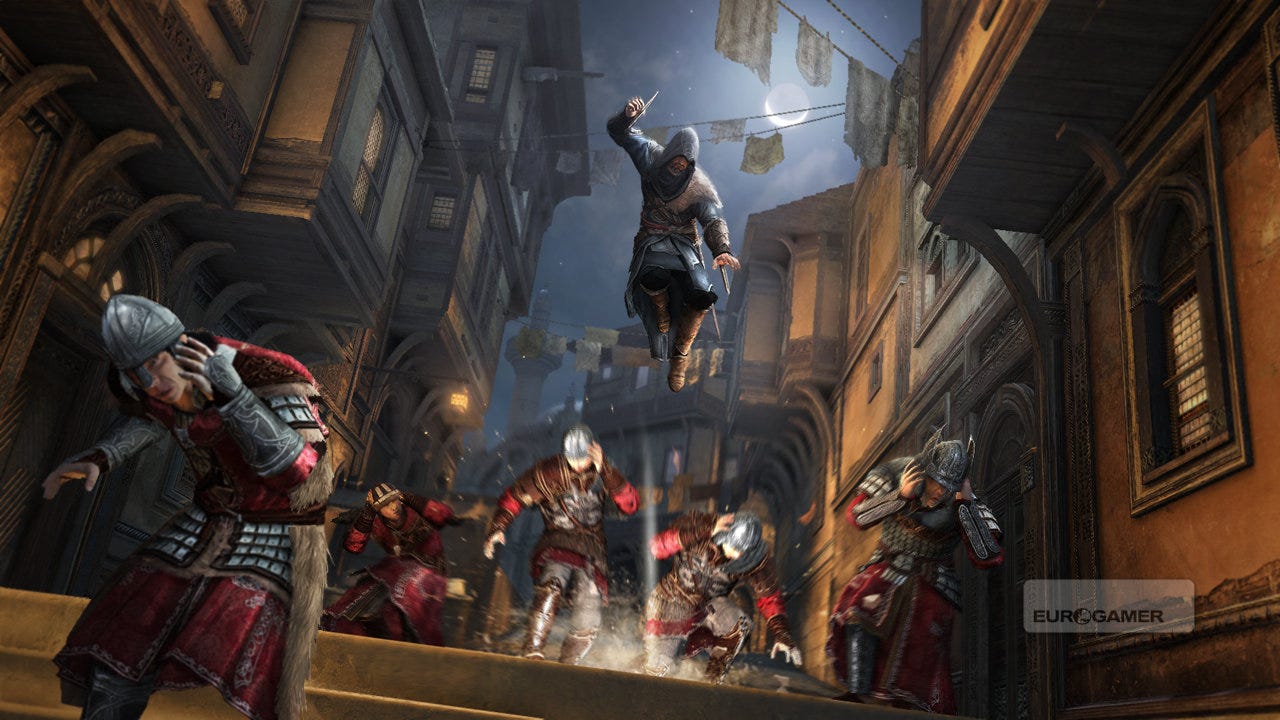
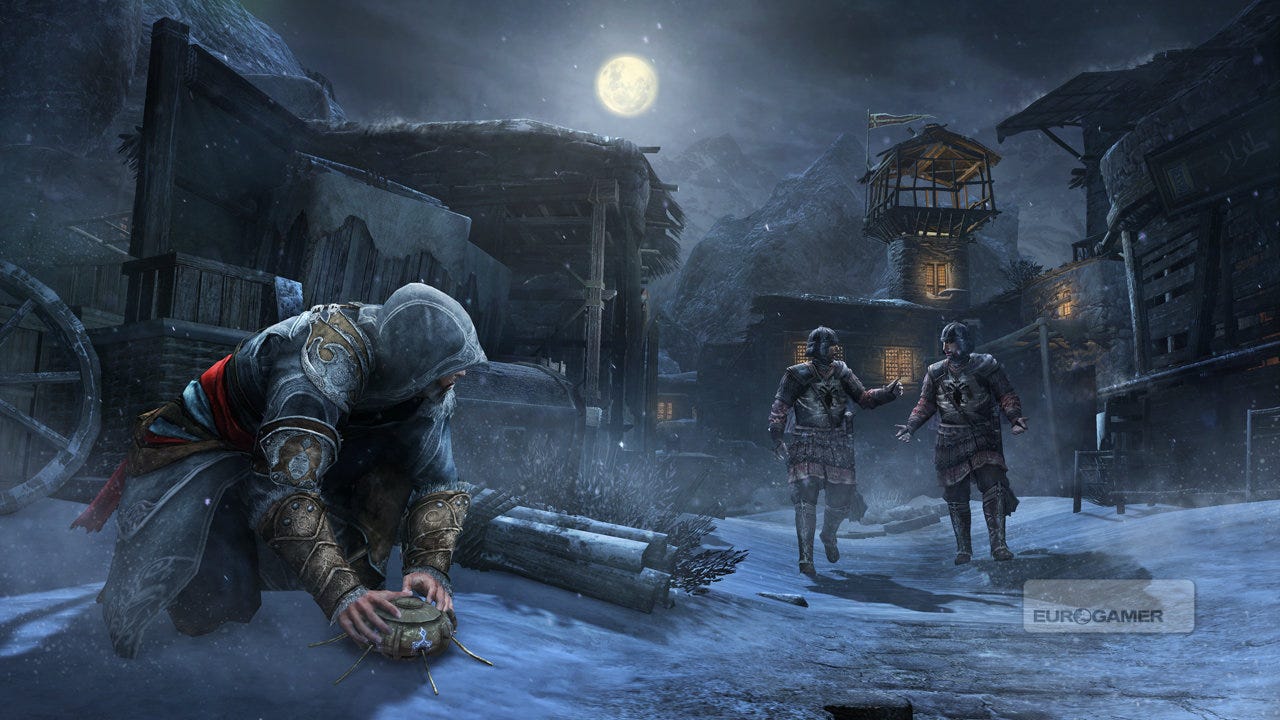
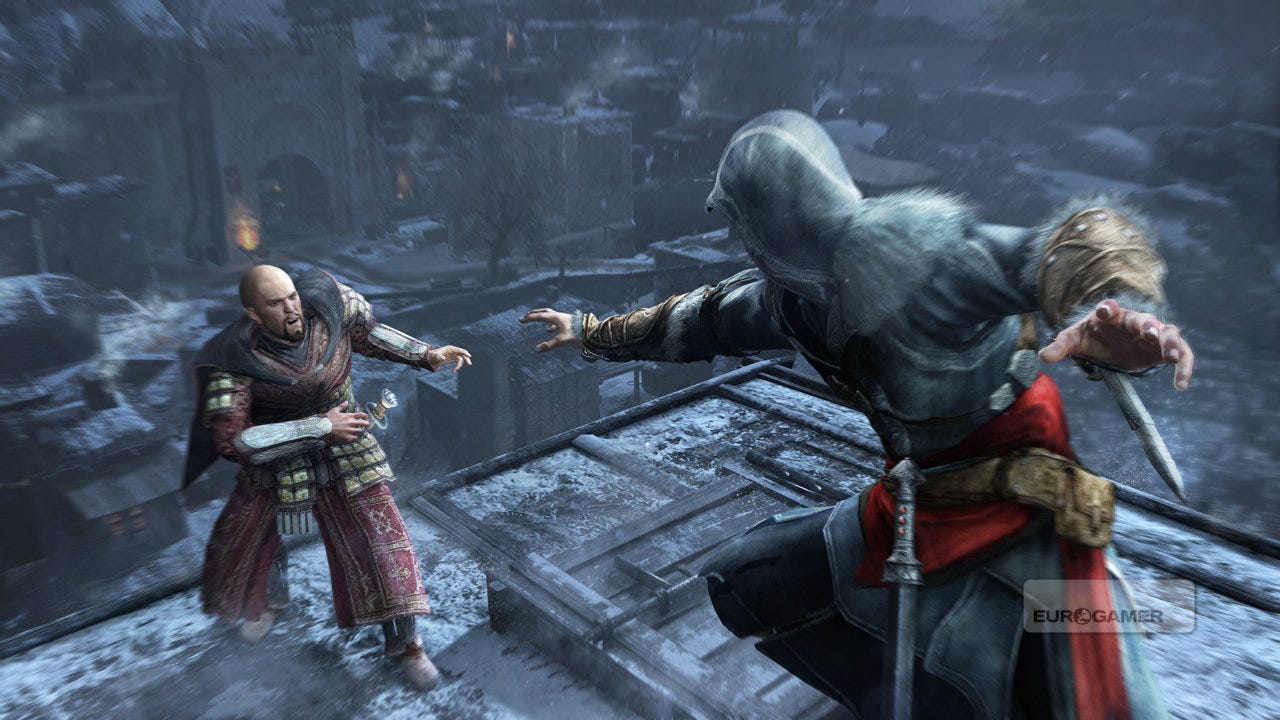
That something's a hookblade, a small attachment to Ezio's hidden weapon that has a profound effect on the game. Clambering up facades is that little bit quicker, the hookblade lending extra reach, while leaping from roof to roof is now that little bit more dramatic - Ezio will stretch out when flying towards a ledge before athletically pulling himself up in platforming that's got a touch of the Nathan Drakes to it. More explicitly, the hookblade works in tandem with zip-lines that course across the city lending Assassin's Creed: Revelations an effortless and efficient form of traversal.

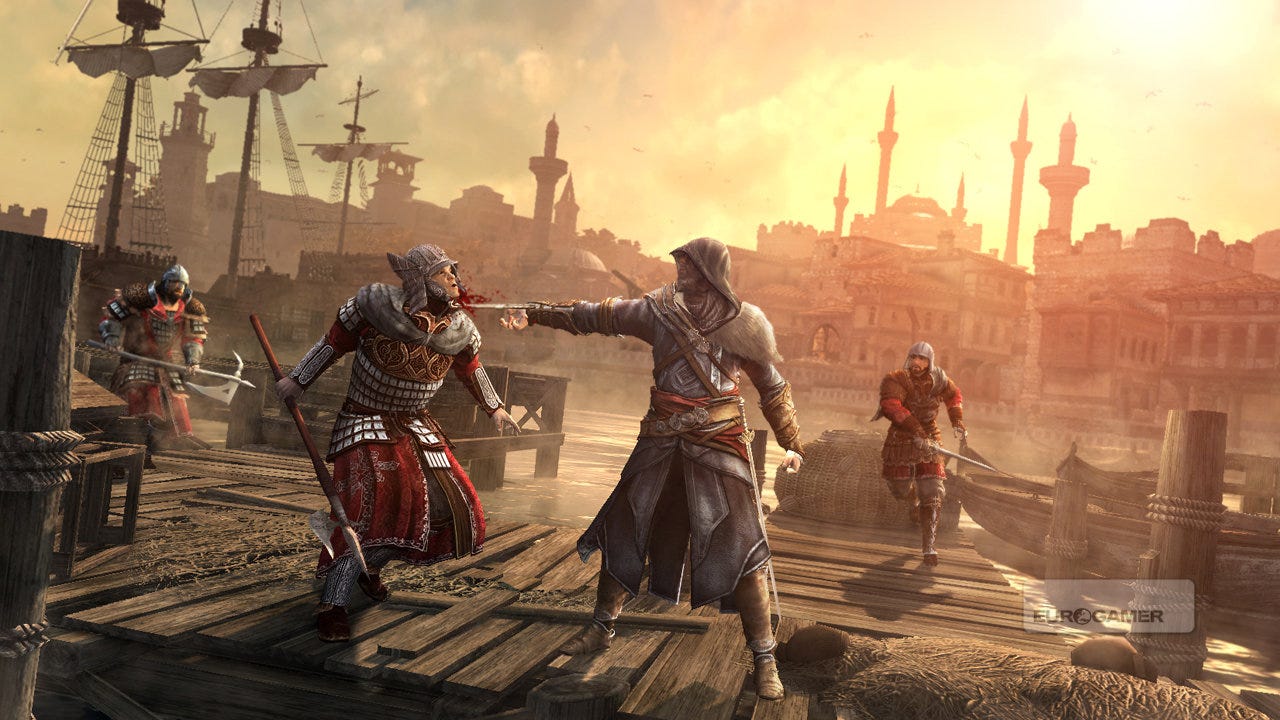
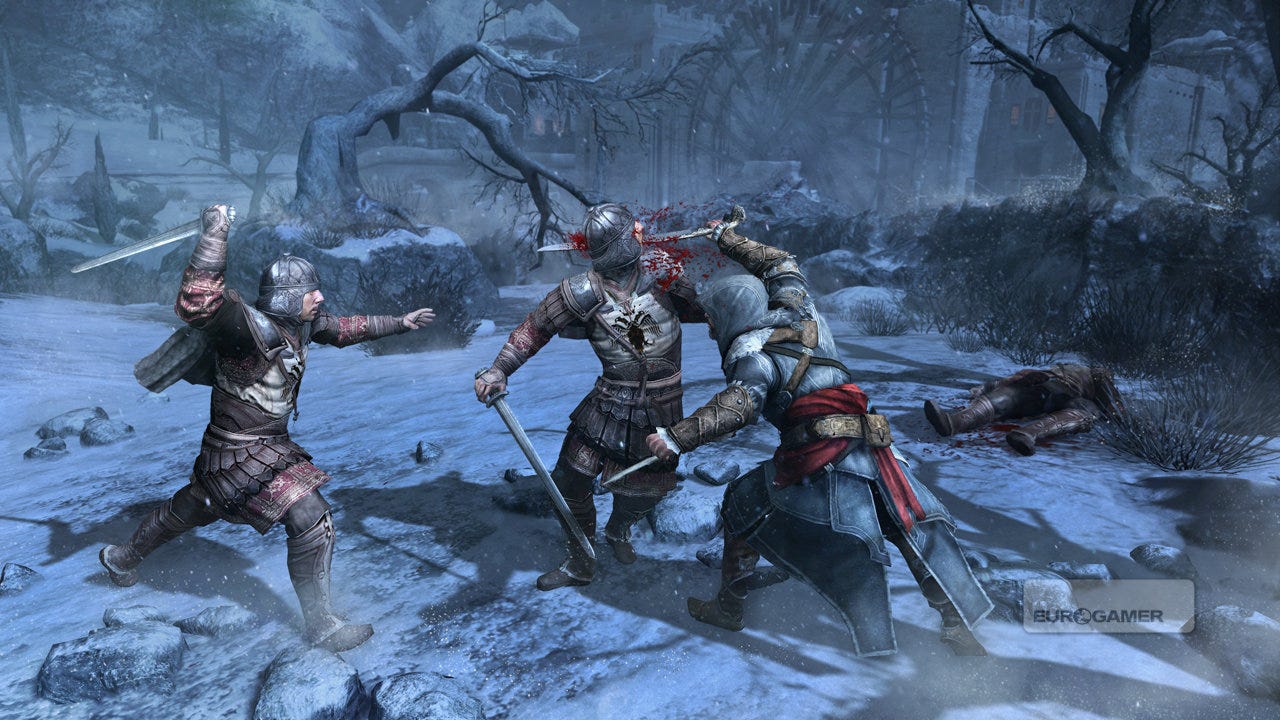
It's also felt in the combat too, helping smooth some of the series' stilted swordplay as Ezio reaches out to sweep enemies from their feet and hooks his way from combatant to combatant. Flee from the fight and the hookblade can be used to snag nearby scaffolding, sending it tumbling down into the path of pursuers. "Our mantra was that everything we added to the game had to not only bring something new but it needed to consolidate or merge two of the major gameplay pillars," says Amacio, "That way we really reinforce the core experience."

There's added dynamism too in the storytelling, which is now less forced, more fluid and more in tune with the game world. It's a move that's been spearheaded by Amacio, a man whose last project was, interestingly, the arrestingly bold Far Cry 2. "First of all, I'm a huge fan of the Assassin's Creed series," he says, "But there was a couple of elements that I thought could not so much be improved but rather be evolved. I have a very specific view on narrative, and how we should be telling stories in games. In my opinion we should never be telling a story, we should be playing a story."

Amacio's approach sees a subtle but perceptible shift - cuts between gameplay and cinematics are now less violent, and often there's a seamless blend between the two. Sometimes it's through the West Wing walking and talking approach, Ezio walking under the player's command while a character guides him, doling out information and pointing towards the next mission at hand.

Other times the transition is slight but just as effective - Ezio's missions are now more in tune with the story, his purpose and the scope of play being brought closer together. "I feel that open world games as they become bigger and more complex are very big on the horizontal," Amacio states, "which is very good for depth but it sort of dilutes the core element, the core feeling and what exactly the meaning is of playing a specific game. The way that we're setting up the missions, making them more narrative and less systemic missions - we're trying to avoid that."

All of which may sound like anathema to those who revelled in the diversity of Brotherhood, a game that offered a wealth of diversions across its city. Revelations is no different - it even goes as far as to introduce a tower defence mini-game at one point, with Ezio commanding fellow Assassins to protect an outpost from onrushing Templars - but it's in keeping with the tone of an more mature and more responsible Ezio, a man who's now shouldering the burden of the secret war between the rival factions.

He's fronting a game that's more mature and certainly a little wiser than its forebears too. Assassin's Creed may well be reaching saturation point with its recent annual releases, but when they're as smart and polished as this we'll be sad when they're gone.

Comments (33)

Comments for this article are now closed, but please feel free to continue chatting on the forum!

  • Loading...hold tight!