Saturday Soapbox: Tempus Fugitives

What does 'retro' even mean these days?

So the Wii is to lose its backwards compatibility in its slimline Christmas makeover. Thousands of tiny GameCube discs will gather dust as another format slips further down the conveyor belt of history.

It's hardly a surprising move. The number of people who actually use the Wii to play old GameCube games is surely a tiny fraction of the console's audience, and certainly anyone picking up a Wii at this point in its lifecycle is unlikely to be doing so to play Doshin the Giant.

And, let's be honest, it's not as if these old games are in much danger of vanishing completely. Compared to the recent past, today's games market is positively throbbing with retro. Digital downloads and the rise of iOS as a platform have meant that games from yesteryear actually make commercial sense once again - whether it's HD remakes of popular classics, digital emulations sold over Xbox Live or PSN or old Spectrum and C64 titles sprouting on the iPhone.

The conspiracy-minded will point out that Microsoft, Sony and Nintendo want to make it harder for us to play our old discs on new hardware so they can resell us those games as commercial downloads. There are legitimate technical reasons why hardware emulation is a flawed compromise, but we shouldn't be so quick to cry foul when companies that make their money selling games do things designed to help them sell games.
1

Retro games are no longer consigned to the hobbyist ghetto, but are back on the market as viable products in their own right.

Retro is, if not big business, then at least part of the business of games, and that can only be a healthy thing in the long run. Too many games fall between the cracks, available only to dedicated gamers with the technical savvy required to find and run them through homebrew emulation. Too many great games are lost to the world, kept alive but in captivity by the insular nature of hobbyists.

Games are made to be played by everybody. Spectrum games are virtually unplayable on the iPhone touchscreen, but I buy them anyway. Partly out of kneejerk nostalgia, but also because I like the idea that the original creators can still earn some royalties for something they crafted 30 years ago.

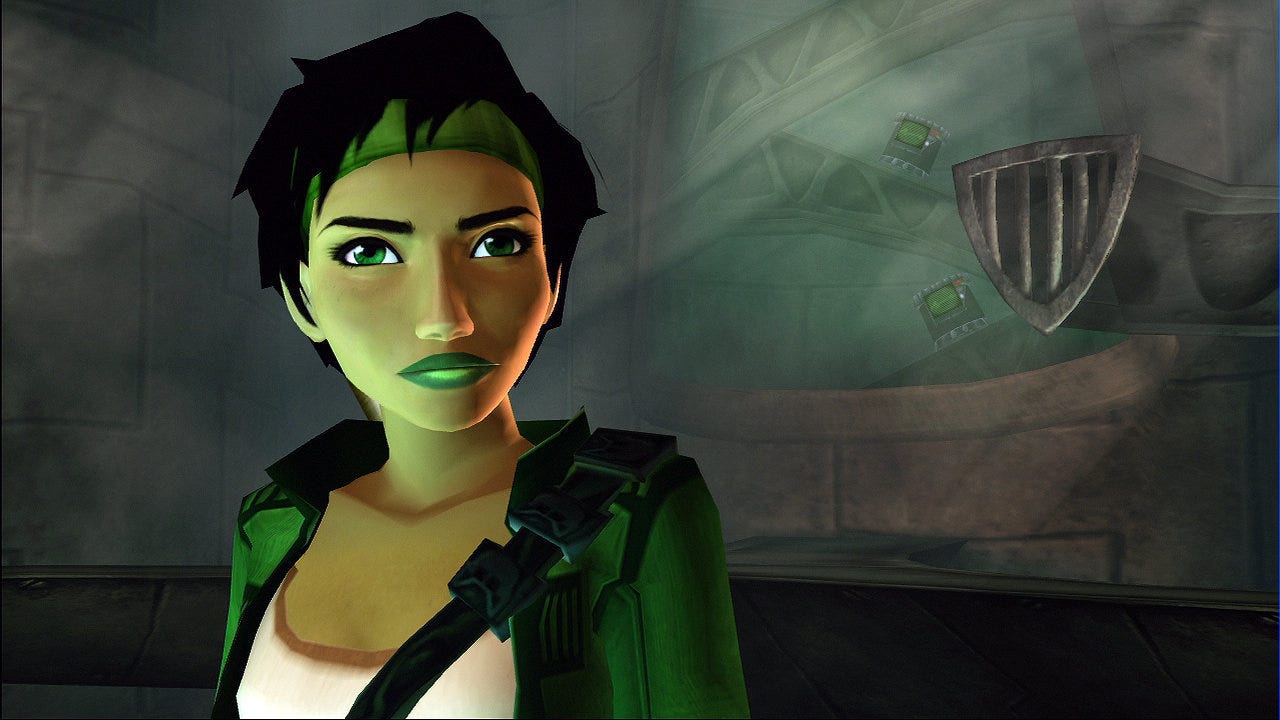
I like the fact I can fire up my PS3 and download a PSone game I missed first time around. I like that Beyond Good & Evil is back on the market, where new fans might find it. Access to these games isn't a right, so I consider my purchases to be a thank you to the original creators as much as a commercial transaction.
2

If you don't want to pay the price of a burger for a timeless classic, you're a soulless monster.

But then, gamers' relationship with the past has always been a strange one, and it's really only in the last 10 years that the idea of 'retro gaming' has gained any traction. Even the fact that there's such a thing as 'retro gaming' speaks volumes about the way successive hardware generations have trained us to compartmentalise and box off great swathes of our shared history. Is the GameCube retro now? What about the PlayStation 2? New games are still being made for it, yet in our minds, it's already old news, yesterday's tech, a benchmark against which we measure how far we've come. I'm as guilty as anyone, and I squirm when I re-read reviews where I've used "last gen" as a criticism.

We don't describe Dickens or Poe as retro literature. When you buy Ghostbusters on Blu-ray, you're not consciously outing yourself as a retro film fan. When The Beatles' back catalogue was added to iTunes, there wasn't a wave of protest from retro music fans complaining that it should have been free because it's so old. Other media have a smoother evolution, with no marker posts to tell us when something has passed into nostalgia. Books, films, songs - they exist and continue to exist, and our tastes are usually defined more by genre than age.

Gaming never had that continuity. Our hobby is relentless in its forward vision, and we mark the years by the passing of old technology. The Atari 2600, the NES, the Amiga, the original PlayStation, the Dreamcast - all rings in the tree stump of gaming. Obsolescence is built into the DNA of games, and it's coloured our perception of their worth as creative works.

Is that healthy? I don't think so.

There have been some well-meaning attempts to balance out this desire to toss aside the old and obsess over the new. There are lots of video game museums, but even that carries with it the stigma of decay. These are old things, it says. Artefacts of a bygone age. As always, it views the game as a technology, not as a creative work.

This in turn leads us to devalue them. From pirates downloading cracked copies of the latest PC games to console owners grumbling about DLC and subscription charges, we gamers can have a gross sense of entitlement at the best of times, always looking for a way to argue that something should be ours for free.

3

Backwards compatibility or digital download? Who cares? Just enjoy the bloody game!

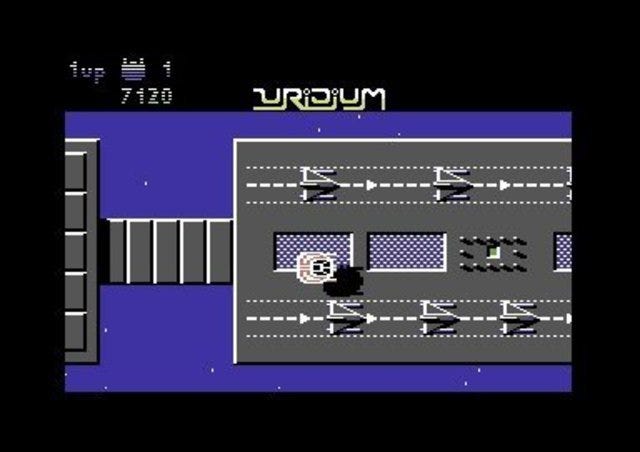
Nowhere is this more damaging than where retro is concerned. When Nintendo added the Commodore 64 to its Virtual Console, I was overjoyed. Admittedly the pricing structure leaves a lot to be desired, but it still saddened me to see people quibbling over whether Uridium was worth a couple of quid, or whether it should be bundled with a dozen other titles for a few pence. Are we really so spoiled that we'll begrudge a genuine classic its second lease of life and grumble at tossing a few coins in the hat for a legendary coder like Andrew Braybrook?

We need to embrace our gaming heritage, not lock it off in vaults. This isn't an attack on the retro community, which I very much consider myself a part of - but as the sole and voluntary custodians of gaming's past, we have adopted some unfortunate beliefs over the years.

4

The iPhone has brought classic simple gameplay back into fashion.

The emulation scene is rooted in honest passion, but it's also seeded the notion that once a game passes a certain ill-defined age, it belongs to the world, free to be ripped and uploaded for all to play. That attitude rescued a lot of classics from oblivion, and it's understandable that those who poured unpaid hours into keeping the light flickering in the darker corners of the gaming archives will feel some umbrage at having those titles snatched away from their unsolicited care and thrust back into the ugly, crass marketplace of 2011.

It's personal. The games we love don't just inspire passion because of their technical merits, but because they're a conduit back to the people we were when we first played them. We imagine a sliver of our own youthful DNA in their code, and feel grubby when it's repackaged and sold like some gaudy trinket. Don't they know that Shockway Rider is special?

We need to untangle our relationship with old games. Appreciate the art while accepting the commerce, love the content without getting hung up on the context. That's why I'm happy to see old games brought back to the marketplace in compilations and official emulations.

Games were made to be played, but they were also made to be sold. By blindly insisting that games become less valuable with each passing year, we demote them to functional status, like a washing machine or toaster. They deserve better.

Comments (57)

Comments for this article are now closed, but please feel free to continue chatting on the forum!

  • Loading...hold tight!