L.A. Noire
California screaming.
It's easy to get a peculiar feeling when viewing a new Rockstar game for the first time. It's the feeling that what you're watching might change video gaming. This familiar feeling was creeping up my spine as I sat in a demo booth for L.A. Noire.
Few people would argue against the notion that Grand Theft Auto III changed everything, but it wasn't overnight. GTAIII wasn't a proven success right away. Rockstar reps have said that the game rocked the industry creatively, but it was the runaway financial success of Vice City that made the industry's movers and shakers pay attention.
It was a similar case with the far more story-focused San Andreas. It was more notable for its hidden sex scene than for its wonderful world-building and characters. A few years later, though, people stood up and took notice of Rockstar's achievements in those areas with GTAIV and Red Dead Redemption.
These are a series of one-two punches to different aspects of game design; the only difference this time is that the jab that set up L.A. Noire's cross wasn't a Rockstar game. Rather, it was Quantic Dream's Heavy Rain, a game whose achievements (and failures) in interactive storytelling hardly need recounting.
Now, before Heavy Rain fans get excited or Heavy Rain haters get deflated, it's worth stating that the two games aren't very much alike in most ways. They're very different in terms of gameplay and, especially, aesthetics. Heavy Rain's bleak vision of the modern city is replaced by the glitz and glamour of late 1940s Los Angeles, juxtaposed with the brutality of one of the most violent times in a violent city's history.
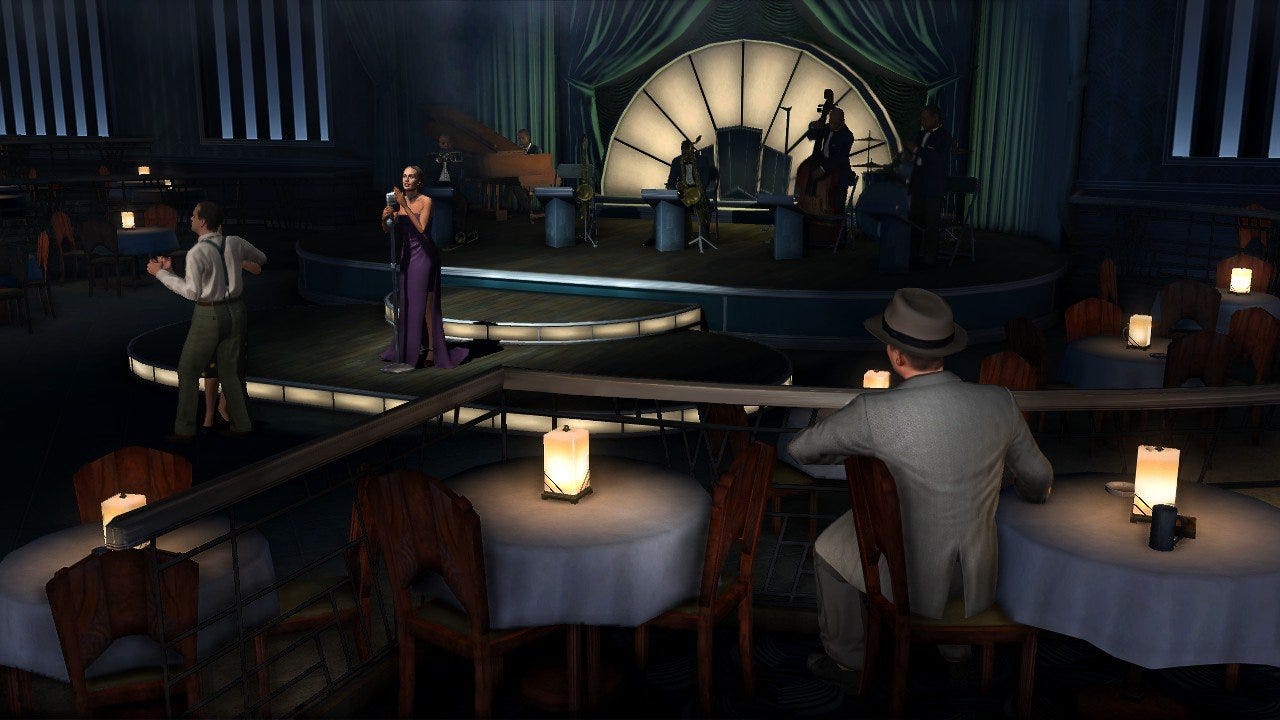
However, the two games seem to share some similarities in their design philosophy. Both games like to take their time in telling their story. Neither game is afraid to take the reins off to let you explore the environment – to really let you step into the character's shoes and walk around for a while.
In L.A. Noire we step into the shoes of Cole Phelps, an American soldier returning from World War 2. In an attempt to atone for sins committed in the war, he joins the police force, and quickly works his way up to detective. From that point, there are different "desks" or "beats" that he can work as an investigator, such as Arson and Murder. Each desk, we're told, has six or seven cases that can be worked on, most of which last between 45 and 90 minutes. L.A. Noire developer Team Bondi actually pulled some of these directly from the pages of old Los Angeles newspapers, though of course changed the names of those involved.
In the demo I was walked through, Phelps was working the murder beat.
The Red Lipstick Murder
She was a pretty young thing. You could vaguely imagine that without the missing part of her skull, the smears of blood, and if she still had warm blood to bring life to a smile... she might have been a looker. Not so pretty by the time we arrived on the scene though. She lay on her back, spread out completely nude in a park with playgrounds nearby. Letters were written in red lipstick on her stomach.