Fight Night Champion
Hurt the ones you glove.

There was a time when I wouldn't have taken a second glance at Fight Night Champion. But ever since Eurogamer asked me to transfer my arcade fighter fanaticism to a preview of UFC Undisputed 2009, I've realised that strategic stamina control can be just as intense as setting up cross-ups and frame traps. This epiphany then prompted me to sample the other simulation of the moment, namely Fight Night Round 4.
Moving away from the familiar Dash Straights and Machinegun Blows, I discovered something less instantly gratifying but no less technically rewarding. This was a boxing simulation in its purest form, both as a martial art with an elegant dance of full body movement, and as a sport where the only way to deal damage is by propelling padded knuckles above the belt line. But the transition from arcade to simulation was far from easy.
For those weaned on a stick and six buttons, the switch to dual analogue control is initially met with frustration bordering on deep-seated loathing. Those first few bouts are a harsh lesson in the nuances of pugilism, but after gradually getting to grips with leaning, weaving and effective counterpunching – rather than just flailing like a rabid wolverine and getting rocked for your trouble – you'll start to develop the boxing fundamentals.
In Round 4, this translated to Total Punch Control, a system that used circular motions on the right stick to convey the bread-and-butter of boxing ballistics. While this was technically sound, there were many who disliked the strict recognition that would often turn a well-timed hook into an unplanned uppercut – which, if you'd spaced for the former, could leave you wide open for a galling counterpunch.
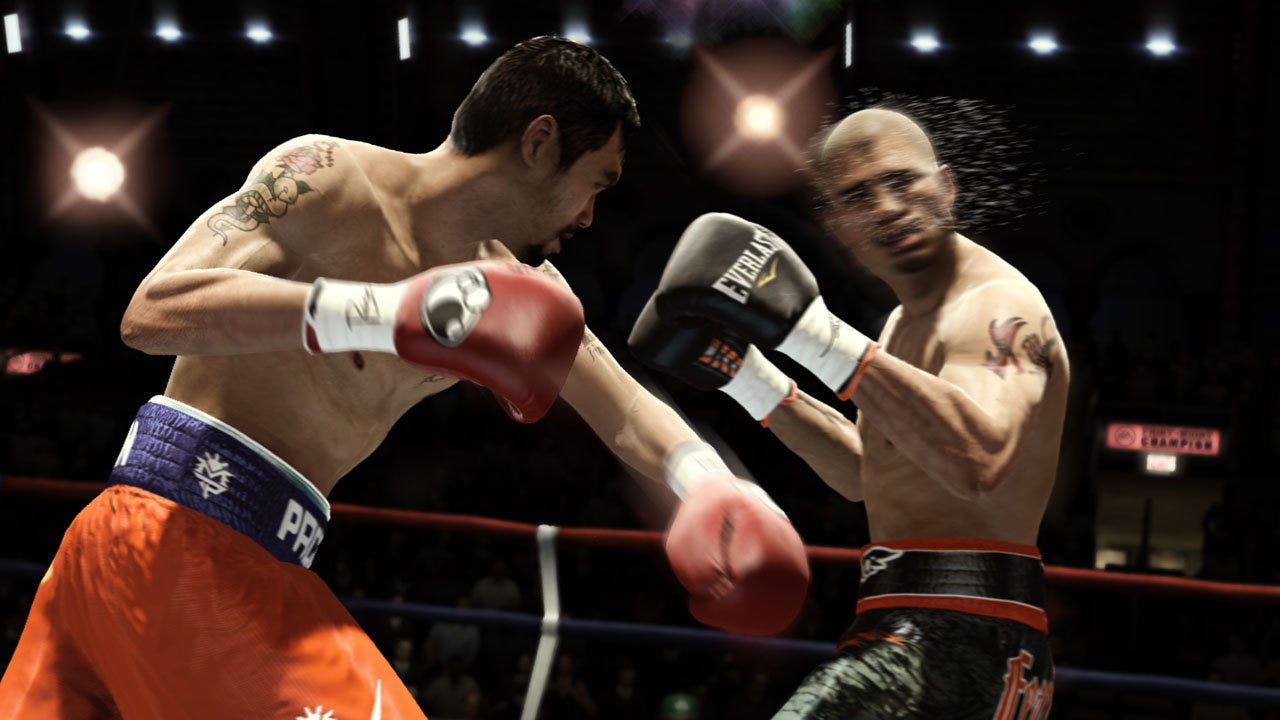

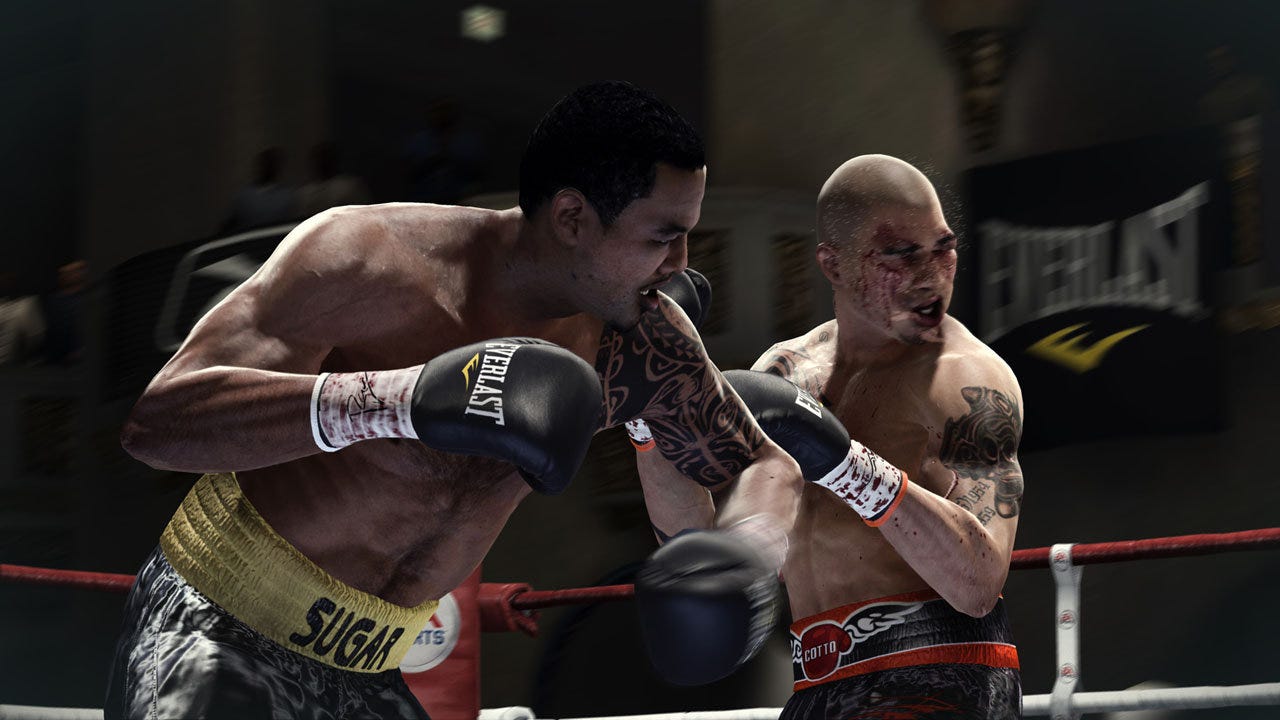
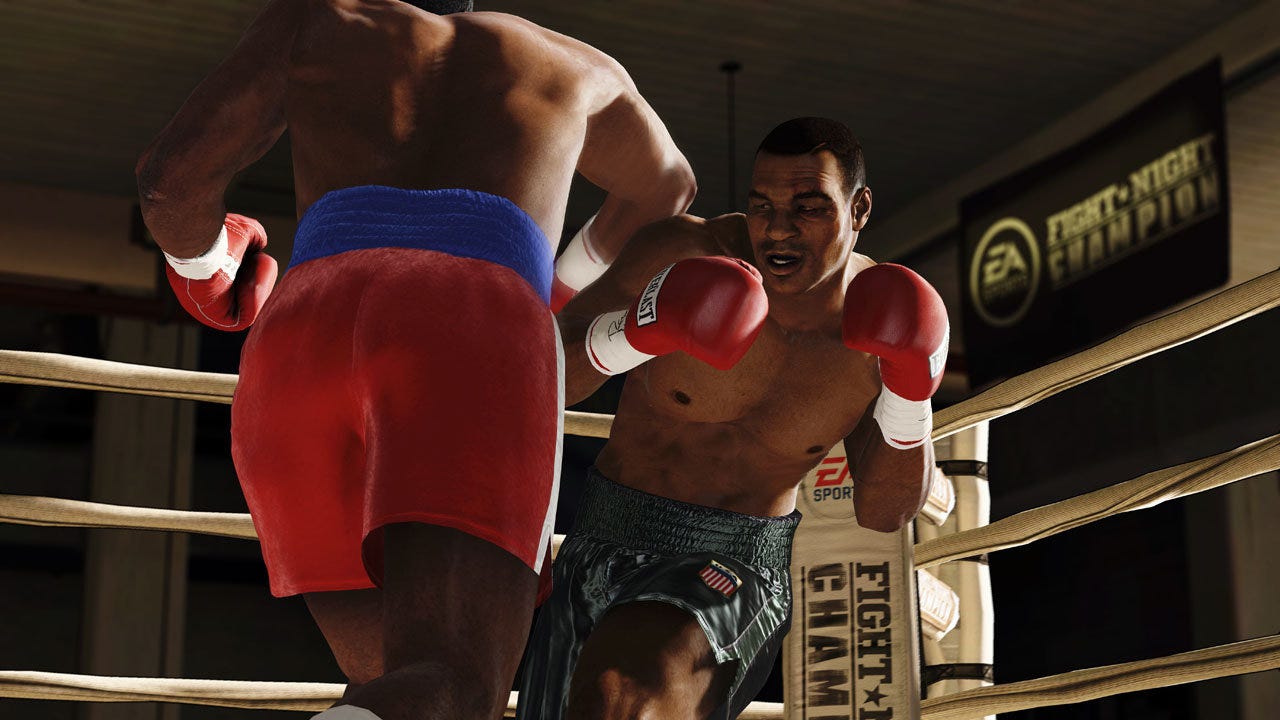
Champion's more elegant solution is the revamped Full Spectrum Punch Control. This system ditches the motions from the previous game in favour of directional inputs which translate to straights, hooks and uppercuts when tilting the stick either up, down or to the side. These three punches form the basic tools of your striking offense; in order to give the exchanges more depth, in-between inputs will result in flared straights and hookercuts.
For those who dislike the idea of using the analogue stick, Champion's default set-up has the face buttons working in tandem, giving simultaneous access to the three standard punches. This means button-pushers lose out on the fancier thrusts and swings, but as a compromise that allows fighting game traditionalists to enjoy the boxing without diluting any of the analogue sophistication, it works well and is unobtrusive.
A reworked Power Modifier means you can now load every type of strike, including jabs and straights. Furthermore, blocking only requires you to hold down the button, which depending on your boxer's Reflex and Blocking ratings, will automatically guard against oncoming punches whether high or low.
As a trade-off, effective combinations can now find their way past your defence and hit home. So while you still need to keep your hands up, timing your block as a punch connects or leaning and weaving out of the way is still the most effective method of avoiding damage and setting up lethal counterpunch opportunities. But unlike Round 4, where the counter system was almost too powerful, counterpunches now have a narrower window of execution and feel more balanced.
When you combine all these revisions with a faster tempo and more fluid animations, Champion's combat feels more faithful to the sport. You have to make use of your fighter's strengths as an inside brawler, outside sniper or conventional all-rounder. You have to manage your stamina effectively so that you apply consistent pressure, but not to the point where you have no stamina left if the fight goes the distance. And you have to mix up your strikes by landing combinations on both the body and head. With perseverance, Champion comes into its own and you'll come to understand and appreciate its many improvements over Round 4.
EA Canada has also been busy with the new Champion Mode. This tells the story of Andre Bishop, a young boxing prodigy who is trying to fulfil his late father's dreams by becoming the Middleweight Champion of the World. Cue leather jackets, bad haircuts and plenty of dun... dun dun dun... dun dun dun... dun dun derrrrrrr. That's an obvious dig, but EA Canada has in fact risen to the challenge.
It's not going to win any literary awards – all the characters fit into stereotypes like jealous brother, corrupt boxing promoter, old-fashioned trainer wearing a flat cap – but the five-to-seven hours it offers are oddly compelling. It also helps that Bishop is genuinely likeable and by the second half of the story, you'll savour the moment when he falcon-punches the cocky smile off the arrogant heel's face.