Are Facebook games getting better?

Move over, FarmVille.

The biggest gaming platform in the world has 500 million users and zero respect. Traditional gamers and developers bemoan the lack of complexity of Facebook games and the shady business practices of those who create them. It's not uncommon to hear the word "evil" tossed around during discussions of social gaming giant Zynga. But that's changing.

Once the domain of farming simulators and text-based gangster games, Facebook is now home to in-depth role playing games, full-blown MMOs and some of the biggest names in game development. Names like Ubisoft, Electronic Arts and Square Enix.

Sid Meier is crafting a new version of Civilization specifically for the platform and indie developers are creating unique experiences you can't find anywhere else. There's more to Facebook games than just FarmVille.

From the developer's perspective, there's a lot to like about the world's largest social network. For starters there's the massive built-in audience and the potential for monetisation that hundreds of millions of users provide. And money makes people take notice.

Unfortunately, the pursuit of profit doesn't always result in great games. That's part of the reason that the current generation of social games is often treated with such disdain - FarmVille isn't seen as a game, but a way to make money.

"The traditional way to develop these games seems to be to cobble together a strong viral-monetising machine. Then, if time permits, maybe add something like a game on top of that," says David Whatley. He's the president and CEO of Simutronics Corp, the company behind Facebook RPG Fantasy University.
1

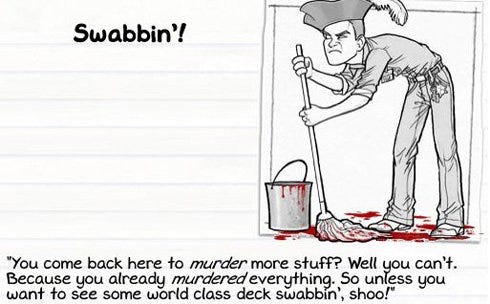
Fantasy University parodies everything. Even Scrubs.

"With FU we put gameplay first, and we knew [we] would have to figure out how to fit the viral and monetising bits in there over time. A product like FU is very heavy on high-quality content and rich game mechanics, both of which we are rapidly expanding as we go."

While Simutronics may not be a household name, the developer has been around for more than two decades, crafting MMORPGs like the GemStone series and DragonRealms. But developing MMORPGs is expensive and it's not easy to compete against the likes of World of Warcraft. So Facebook offered a new opportunity.

"Facebook represented a new type of gaming platform that had a more reasonable development and operational cost structure," Whatley says. "You can launch a online game using cloud-based infrastructure that scales as you grow."

Fantasy University is a deep, menu-based RPG that's rife with cultural references. Think of it as Harry Potter if Harry, Ron, and Hermione made fun of Spongebob and Star Wars all day. It's funny and engaging and it's unlike anything on the platform. It's a hardcore game for a hardcore audience. But it seems that audience isn't taking notice.

"FU is growing steadily, though hardly at a rate commensurate with our wildest dreams," Whatley says. "We found out that, again much to our surprise, the crowd that seems most likely to get a kick out of FU's snarky take on modern culture is exactly the crowd that loathes the idea of Facebook games."

So, in spite of the huge audience of Facebook users, Simutronics is planning to make the game available to even more players through OpenID. But FU represents quite the quandary: gamers complain that there's no good games on Facebook, and then when one shows up, they don't play it.

The platform itself is what's turning off many players. It's not just the games.Maybe gamers just don't want to play games on Facebook?

"I think part of it is the wide reach of the platform itself," says Scott Jon Siegel, a designer at Disney-owned social game studio Playdom. "Facebook and social networking have become so ubiquitous that there's almost an anti-establishment backlash against their popularity.

"Another part of it has to do with the established library of games, and a major misconception that we can do no better. Because social gaming is still in its early stages, most games in the space aren't really indicative of what I see as the platform's true potential."

If there's one thing gamers like it's familiarity - names they know, franchises they trust. Popcap has managed to score a pair of hits with Facebook iterations of puzzlers Bejeweled and Zuma, two of the few casual games that have respect amongst the traditional gaming audience.

On the social network they've both been trimmed down into bite-sized, one-minute rounds of gameplay. It's as fast and exciting as ever, and there's an extra touch of competitiveness thanks to the inclusion of leaderboards featuring your very own Facebook friends.

That ability to tap into the social aspects of Facebook is what's attracting plenty of other big-name developers. While the lead design duties of Civilization 5 were handled by his much younger protege Jon Shafer, Sid Meier has been hard at work on a project called Civilization Network.

2

The Zuma frog wants to steal your soul. And free time.

According to the game's Facebook page, Civ Net will be a persistent world with everything you'd expect from a Civilization game. Except it's on a social network. And it's free.

EA, too, has taken notice. Aside from spending loads of money picking up social game studio Playfish, EA is also taking some of its biggest names and bringing them to Facebook. And you can thank EA2D. The internal studio is best known for browser games like Mirror's Edge 2D and Dragon Age Journeys, and now it has its sights set on Facebook with the upcoming Dragon Age Legends.

Set to be released early next year, just prior to Dragon Age II, Legends is described as an "action-packed, strategy RPG." And if there's one franchise that can change the way people think about Facebook games, it's the bloody, violent Dragon Age series.

"We want Dragon Age fans to play Legends for a long time and we have ongoing content plans to introduce great gameplay features to keep the core Dragon Age fans engaged," EA2D GM Mark Spenner explains.

3

You can't do this in FarmVille.

"We love BioWare games and admire BioWare as a studio, so we also want to help bring more people to the Dragon Age franchise. We think we can reach a broad audience and introduce them to the franchise. To achieve either of these goals, we need to make a great game that stands on its own and hits the quality bar that people expect of a BioWare game."

Dragon Age Legends is indicative of the way developers are beginning to recognise Facebook as a viable platform. Instead of simply trying to follow the next big Facebook trend, many developers are instead trying to craft more engaging game experiences that leverage the strengths of the platform.

"From the outset of our development effort on Legends, we've had to change the conversation in our studio," says Spenner. "By default, the team wants to make great core gameplay."

Hopefully gamers will take notice. Facebook games continue to improve in quality, even if games like FarmVille and Mafia Wars garner the most users and make all the headlines. It may take a while for the knee-jerk reaction to Facebook games to change, but there are many talented developers working hard at making Facebook a place for gamers.

"I think it's up to the less risk-adverse among us to keep pushing quality gaming on that platform," says Whatley. "Even at its best, this might be a long road before gamers regard Facebook as a source for high quality gaming experiences. But if it's going to happen, we aim to be one of the pioneers."

Comments (49)

Comments for this article are now closed, but please feel free to continue chatting on the forum!

  • Loading...hold tight!