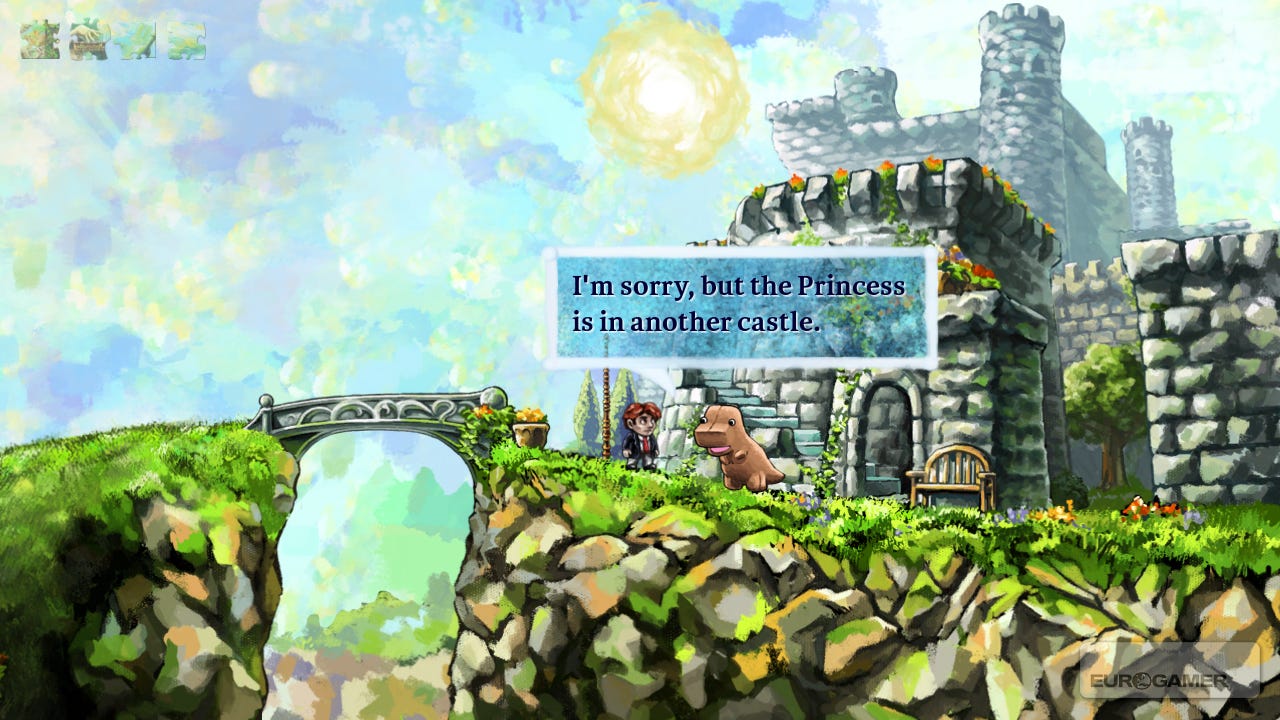
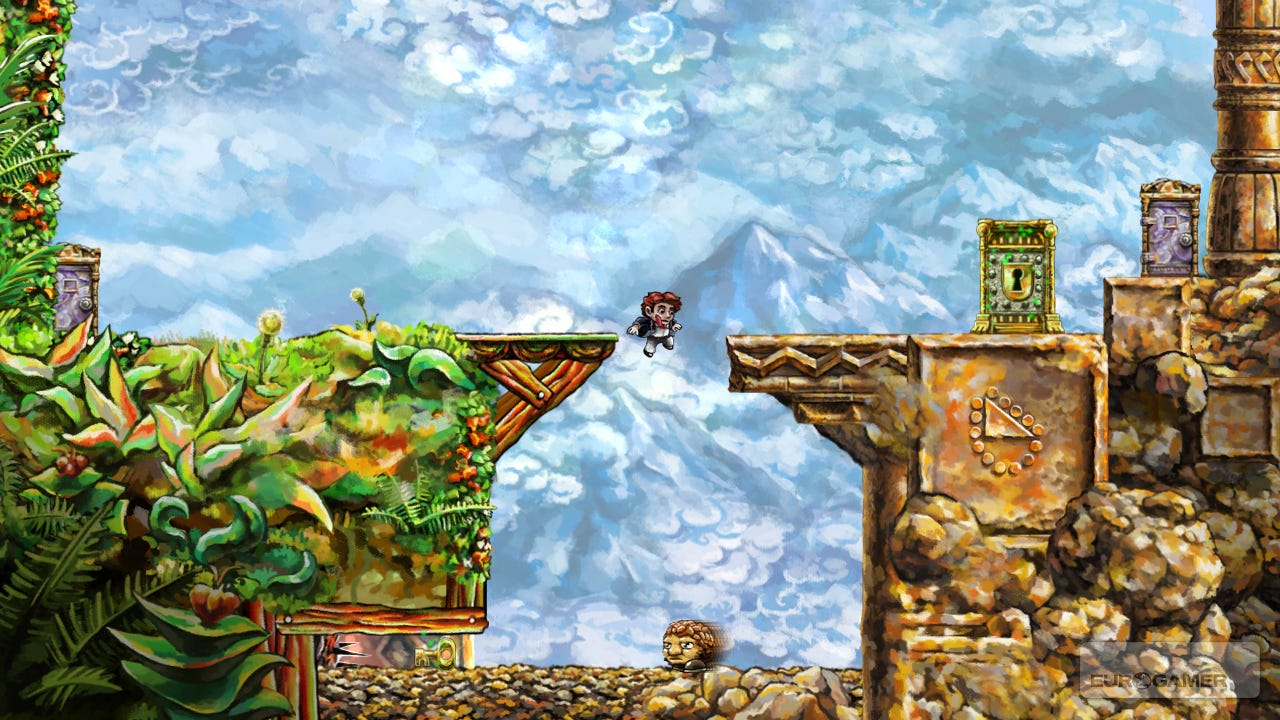
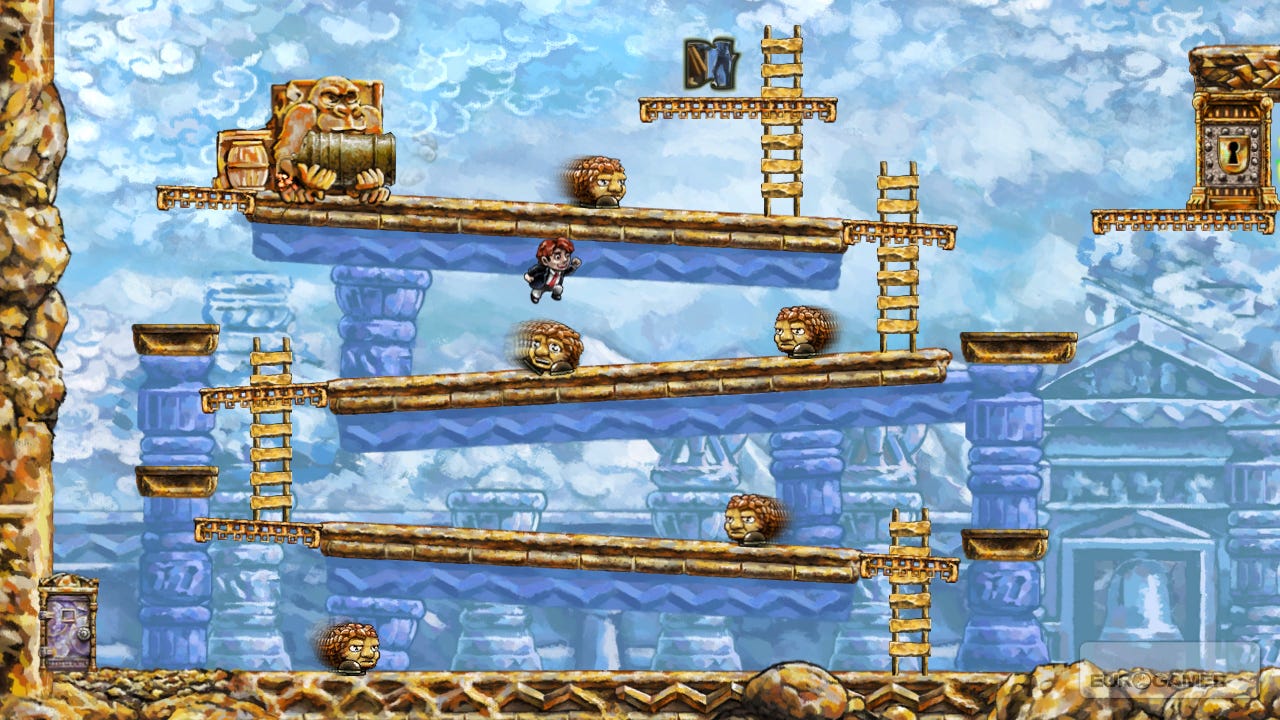
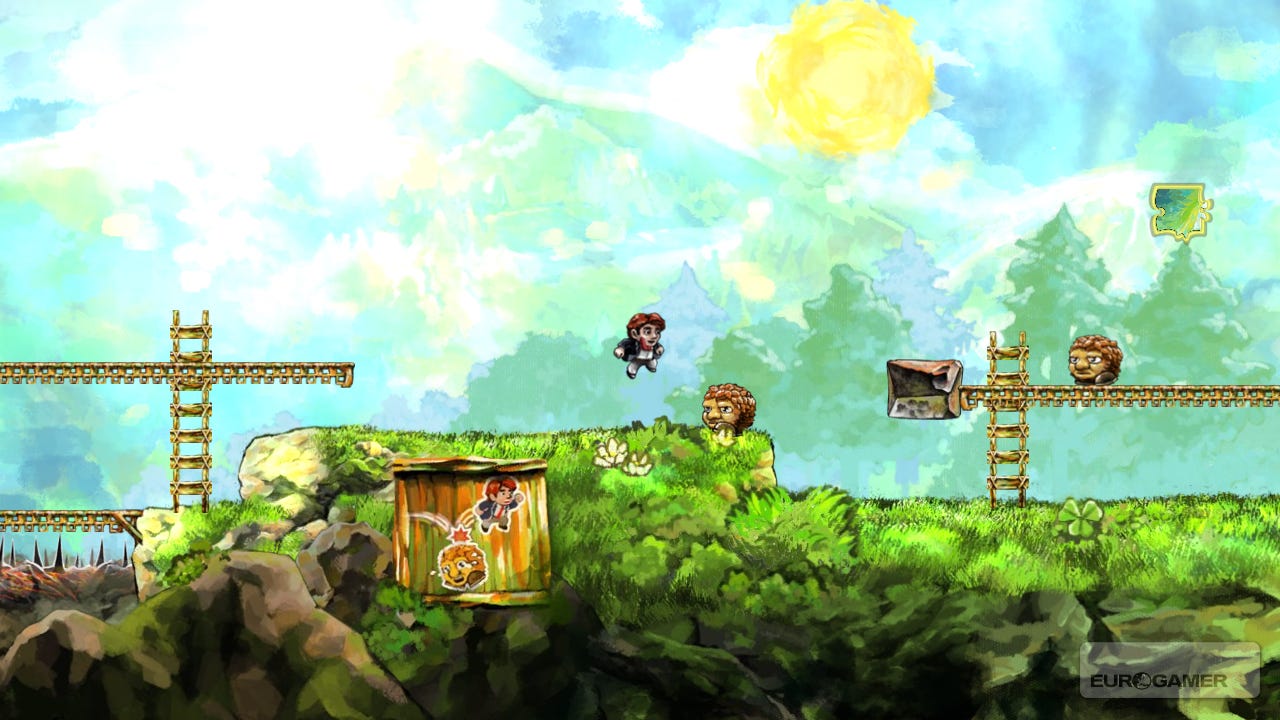
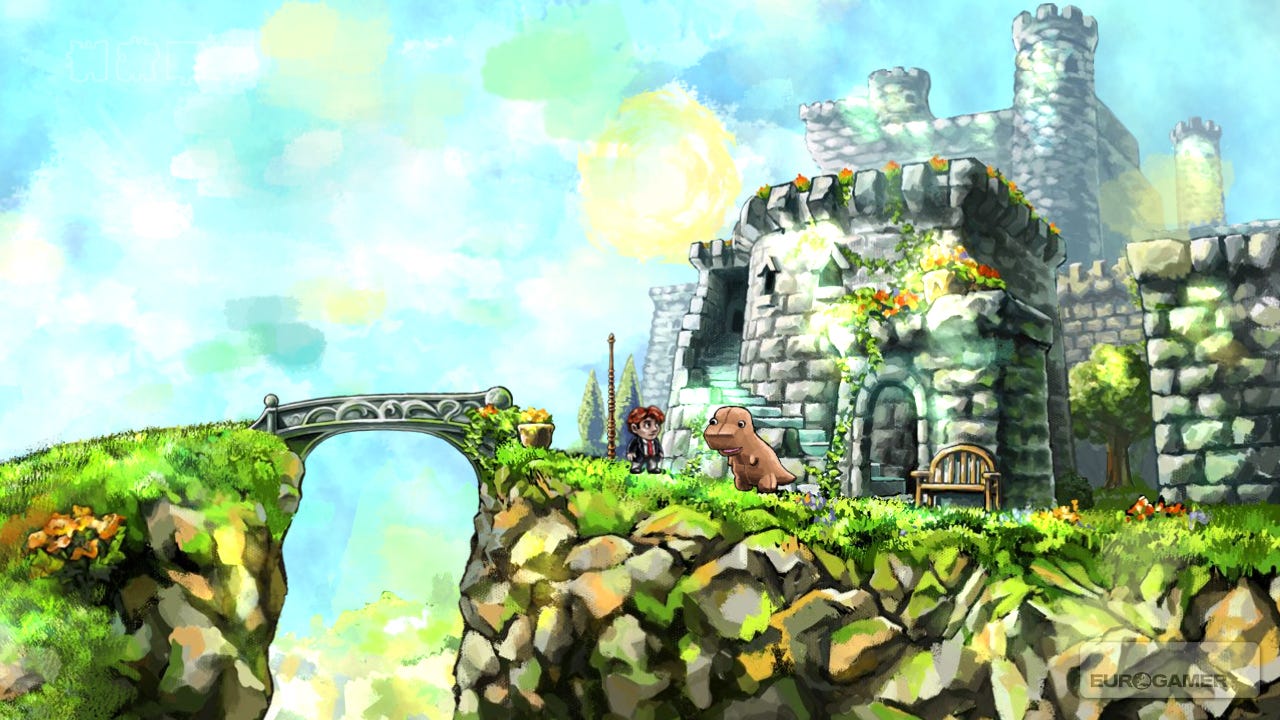
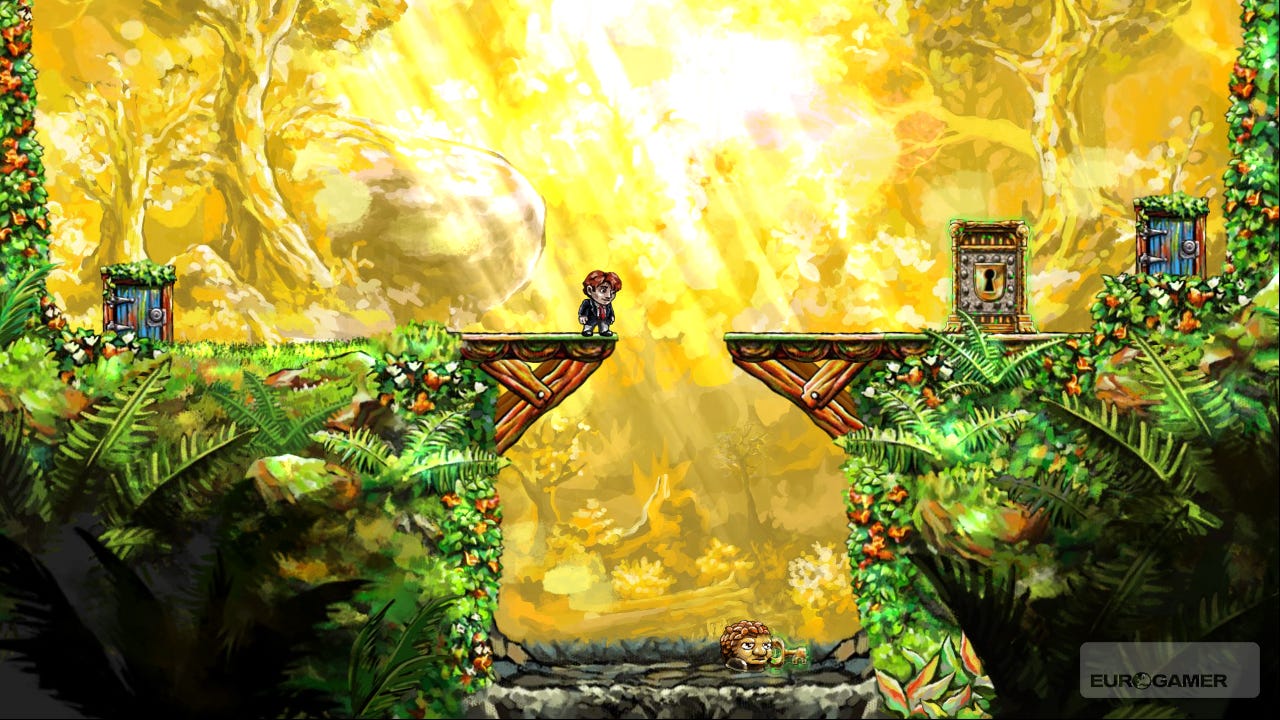
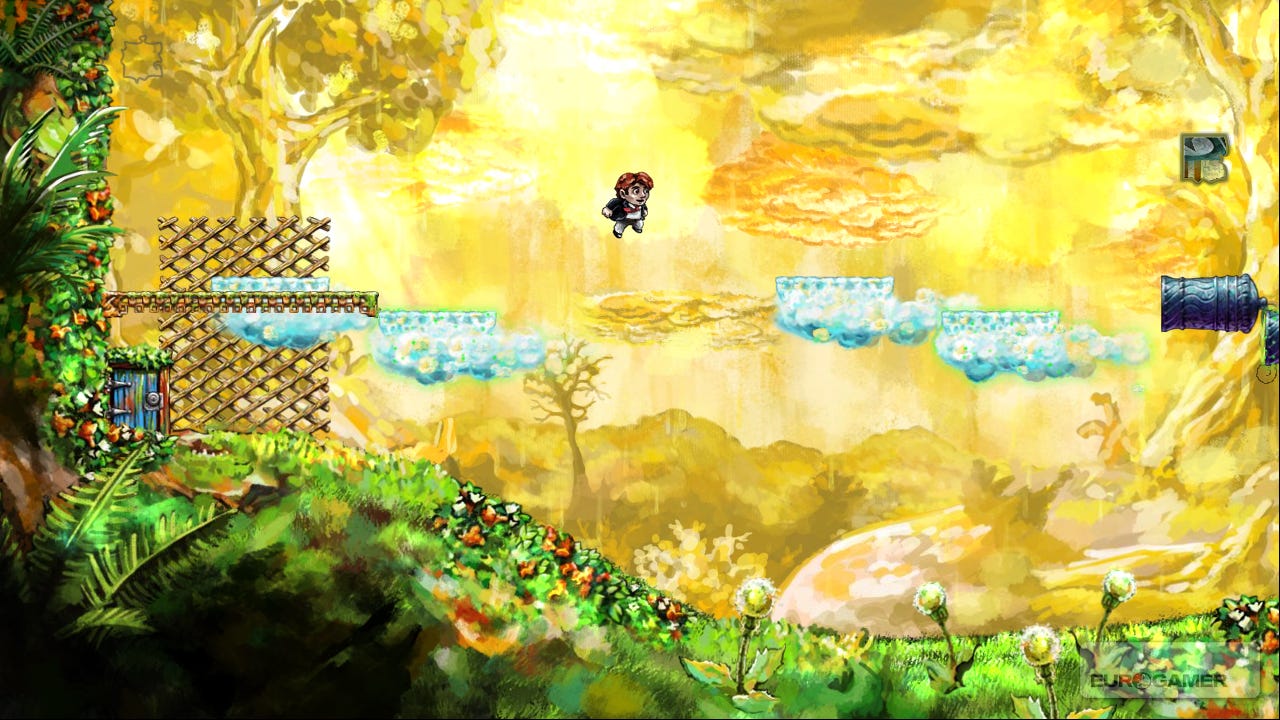
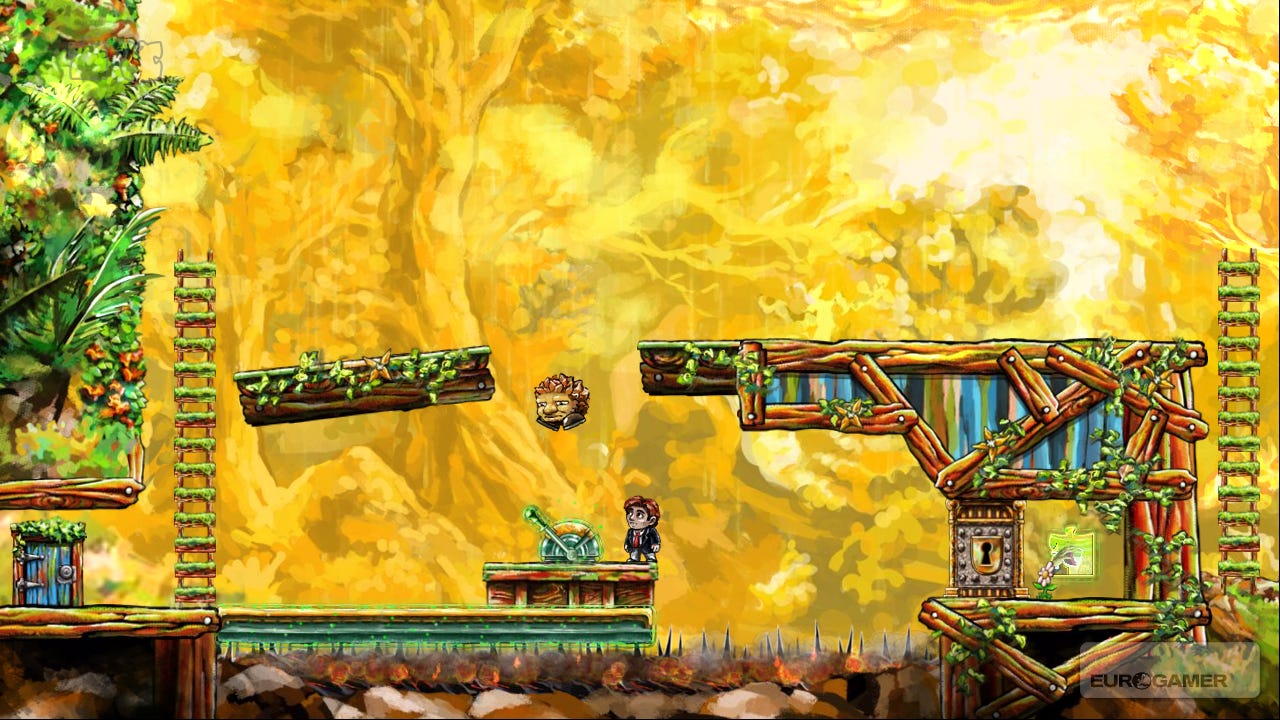
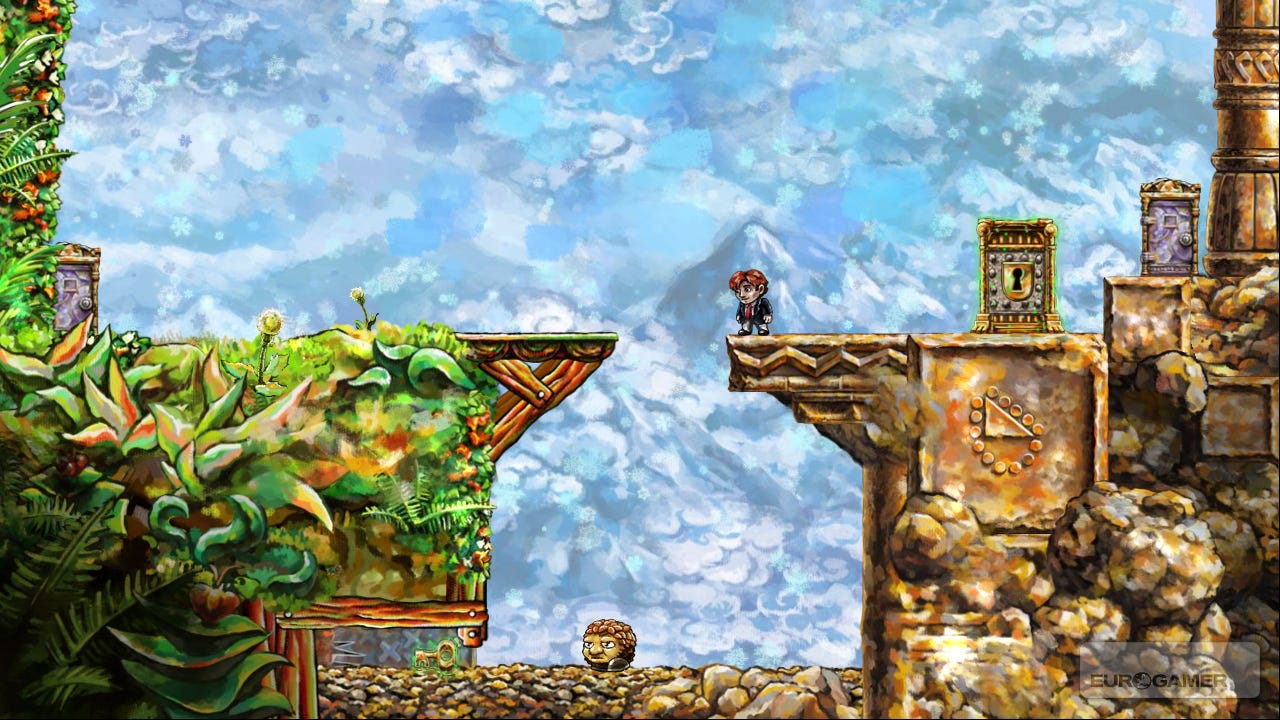
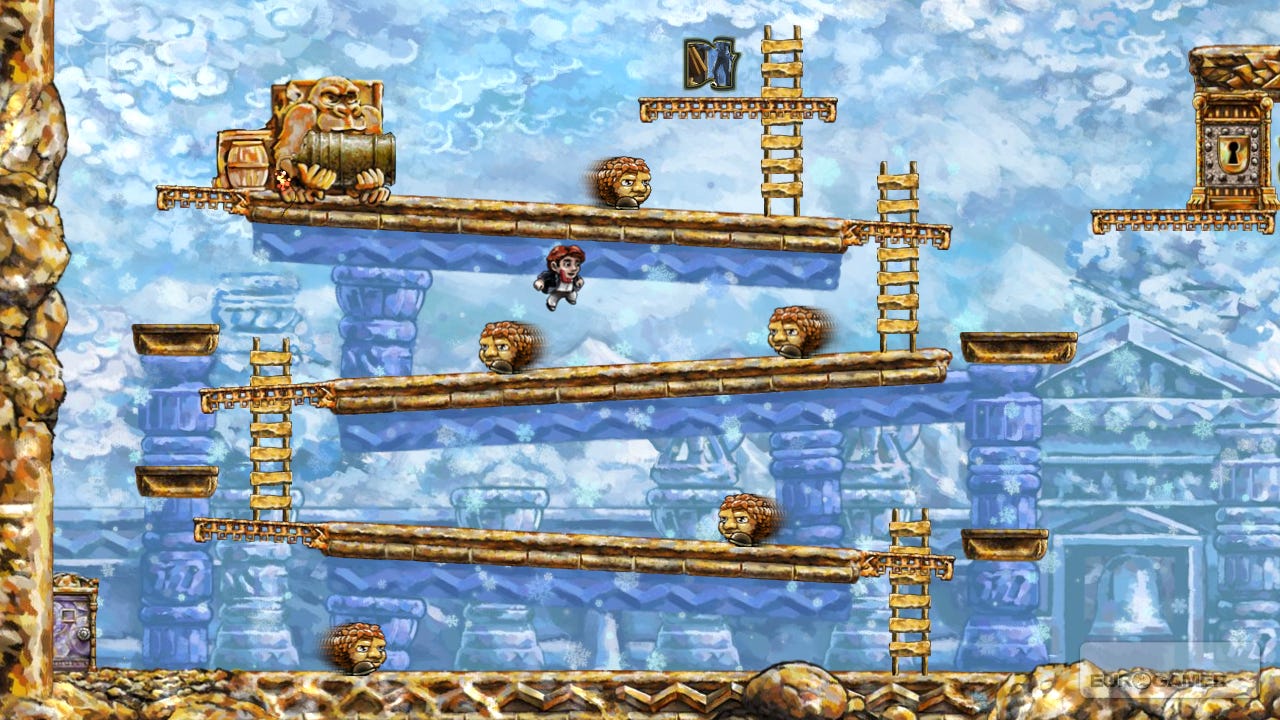
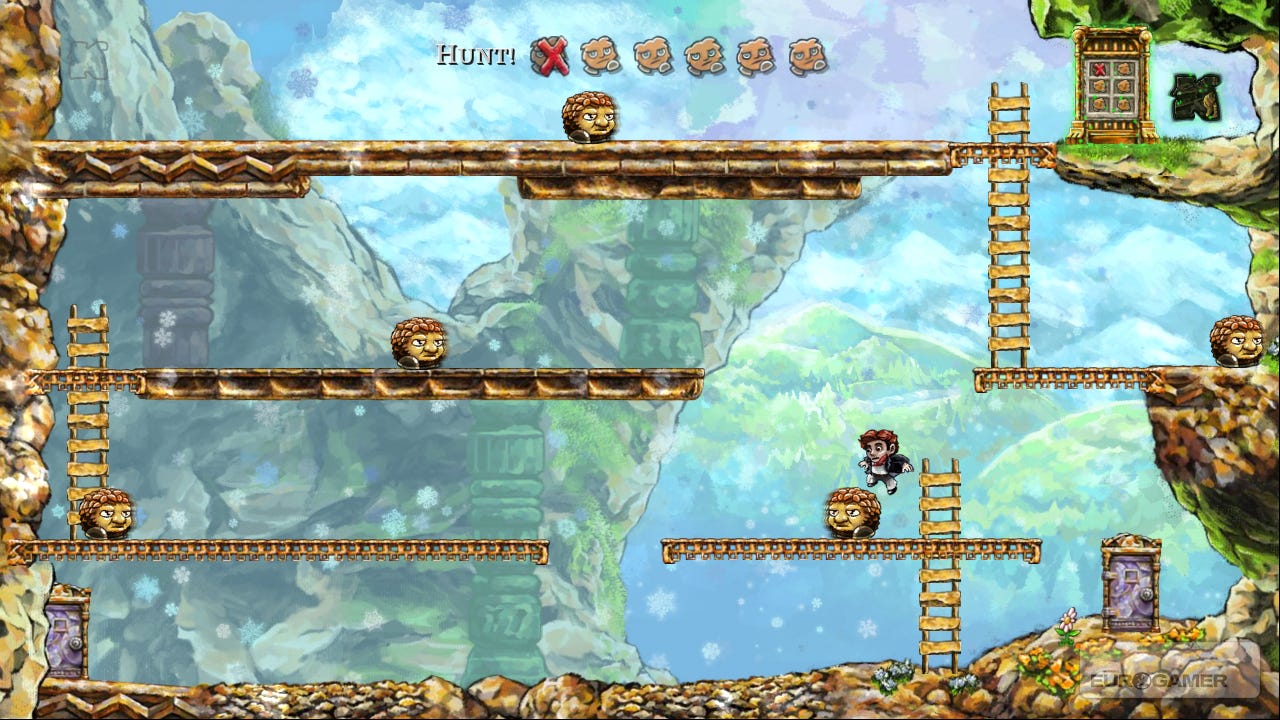
When Jonathan Blow released Xbox Live Arcade game Braid in 2008 his life was changed forever. Almost universal praise greeted the captivating downloadable game - even Eurogamer awarded it 10/10. Braid, and by association Blow, became overnight sensations.
Now, some three years later, Blow is hard at work on his difficult second album, the mysterious first-person 3D puzzle game The Witness. It rekindles memories of Valve's mind-bending Portal (Blow denies any such influence), except there are no guns and nothing can kill you. It is a game Blow describes as Myst brought up to date. And it is a game we know next to nothing about.
Speaking to Eurogamer at the GameCity festival in Nottingham, Blow reveals his motivations, game design philosophies and recounts the magic that was Braid.
Eurogamer: Do you consider yourself to be a game developer or something else? Are you an artist?
Jonathan Blow: I consider myself a game developer. I do consider that I make art. I don't think of myself as an interactive artist, because to me that means... There are these people who make these museum pieces that are interactive in a way I would say is not high quality. We do much better interactivity than that in the games business.
There's something about the fact it's a game that makes that important. When you say I'm just making an experience, the default way of doing that produces something that's not a very satisfying or rich experience. That's mostly what you see among people who make interactive art.
If you train yourself as a game designer and you know how to make a good videogame, then if you wanted to go make a more abstract experience, you have more of a skill set to do that.
But even that is not really what I'm doing. I very clearly am making something that stands on its own as a good game, but that goes in a different direction from most games people are making.
I have a different reason behind the games I'm making than most people do, but they're very definitely videogames, and they're very definitely trying to be good games and interesting to play.
Eurogamer: You have complained about the amount of money spent making 3D games visually impressive when most gamers don't notice all the hard work. But how do game developers feel about that?
Jonathan Blow: I wasn't trying to detract from that line of work in any way. Anybody who's going to design a videogame hopefully has their own personal idea of what's interesting, and that's how we get a diverse world full of different games. So from my personal sensibility I look at those games and I'm like, this isn't how I would do it because I don't like the way this is interacting.
The first example was in a first-person shooter - there's all this stuff that's gotta look good, but really you're just running through and you're not stopping to look at anything because the game design doesn't want you to stop and look at anything.
From one point of view that's totally fine. We have a long history of making first-person shooters, and we know what people buy. People do buy a game more if it has these nice graphics, and sometimes they stop and notice small details.
Eurogamer: Is that what you spend all that money on, just those sometimes?
Jonathan Blow: That's part of it. Even if people don't notice details explicitly, they affect their impression of the game. You might have some very detailed things and people might run past it really fast, but it feels better visually and abstractly to play than if those details weren't there.
I'm not saying those things are useless. I'm just saying there's potential there in a different direction that isn't tapped by those games. That's what I want to do by making a game that is at the player's own pace. You just walk around. It's not a fast action game in any way. There's nothing in the world that's going to kill you, ever. So the question then is, given those constraints - I'm just walking around casually, there are no threats, all these puzzles are very laid back and waiting for me to come to them - how then do I still make a game that's interesting by modern standards and that modern players are going to want to play? That's an interesting design challenge.
Eurogamer: How you will achieve that is something you're clearly holding back.
Jonathan Blow: Yes, sort of. What I have showed is a ramp up at the beginning of the game of concepts. The black and white spot puzzles, if the game did that and only that level of interest, it wouldn't be something you'd want to play for five or 10 hours. Some people might, but a lot of people wouldn't. It's just a little simple.
The game doesn't stop there. It keeps building in complexity and intensity and in things you find to do. I actually don't know how long of a game it'll be in terms of an average playtime, but I would guess it's at least 10 hours, right now.
What I showed was walking around this courtyard and solving this simple puzzle. That would not last for 10 hours. The question is then, what does? There's just a bunch more in the game I haven't shown yet. I will show it at some point, when it's ready, but it's a little early.
Eurogamer: When you were making Braid, did you experience a magic moment after which you knew it was an amazing game?
Jonathan Blow: No and yes. When I was working on the game I was being very detail-orientated and there were a lot of things I cared a lot about, so I was trying to make a high quality thing. But at the same time it was really unlike a lot of videogames.
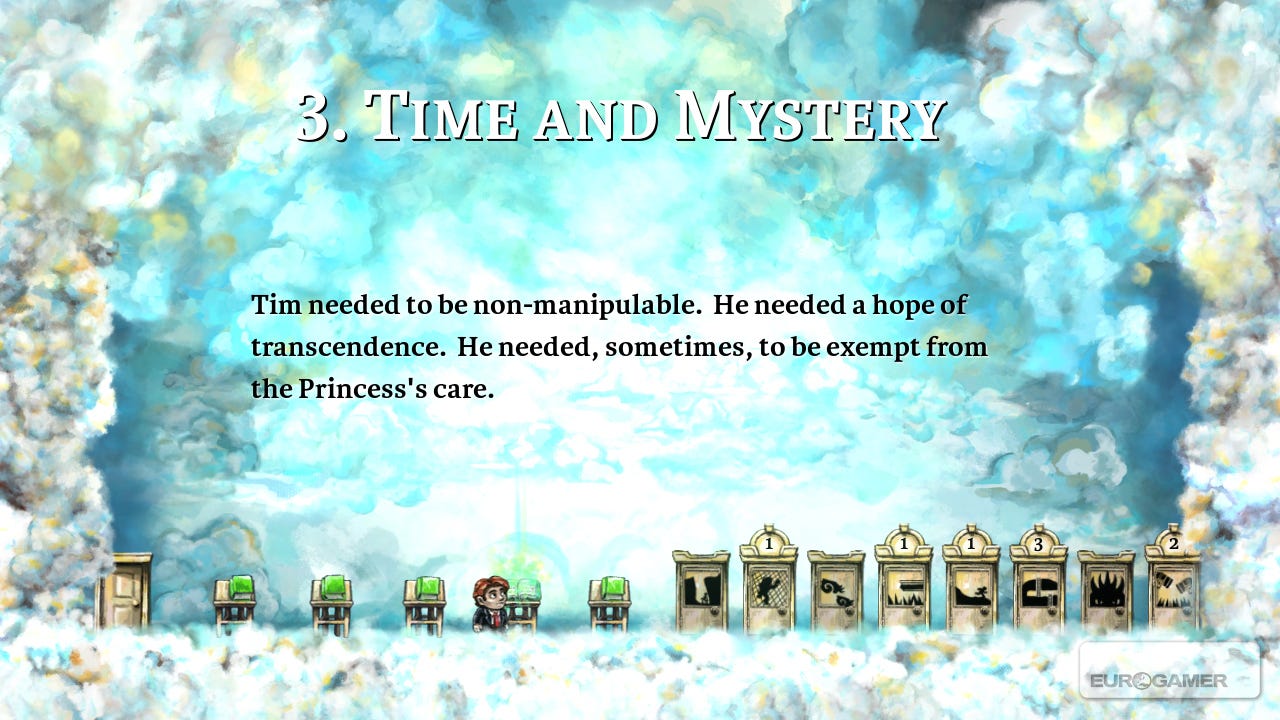
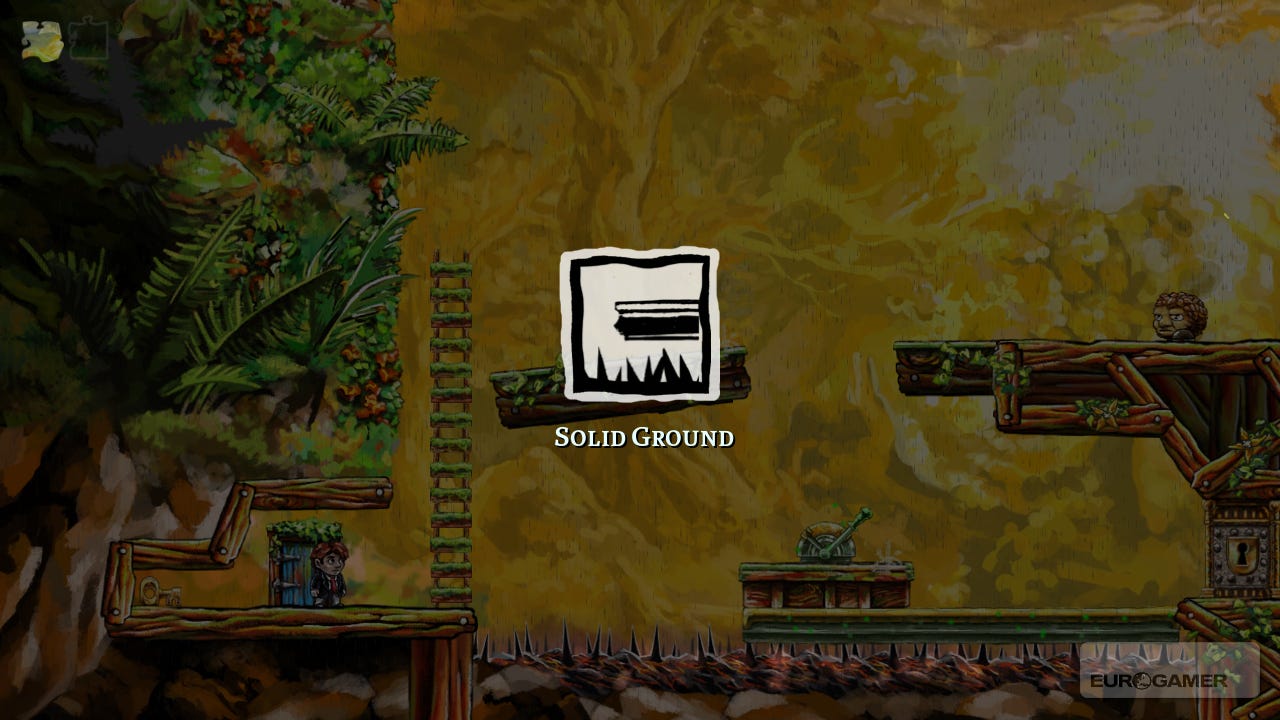
Before you can really play a level you get hit with these screens of text. What is that? Very unusual thing to do in a videogame. It's hands-off. It lets the player approach challenges. It doesn't sound like most games. The way the music gets warped by rewind is a philosophical decision. But in the abstract, if your goal is to make the game sound really good, it's like, oh, you're messing up the music. There are all these weird decisions.
So I felt some people out there were going to appreciate this game as a whole, but I expected it to be maybe a little more divided, where some people loved it and some hated it. That is how it was but the percentage of people who hate it is at least in terms of critics smaller substantially than the people who love it. That's why the Metacritic is pretty high.
Eurogamer: While you were making it did you ever think it was a 10/10 game?
Jonathan Blow: I knew it was amazing for me. And then the question is, is it going to be amazing for people reviewing it? I hope, for enough of them. Braid was a very exploratory game. I figured out what the game design was as I did it, as the game showed me things. At some point, when most of it's there, it's like, wow, this is really cool and I'm really excited to make this game.
But of course that was in year one of development out of three-and-a-half years. I lose that feeling because you just get so used to it. You're with it every day and you're working hard on it every day. I just had to have faith. I had to remember that old feeling I had about how exciting and neat this was.
Two years after that I had to have faith that my judgement was good and this really was that exciting, and when I finally release it other people will find it that exciting, which apparently enough people did. There's that magic moment, but you don't know if other people are going to see it.
A big part of game design that's very subtle, it's not just about rules and game mechanics, but there is a big communication aspect. That's one of the things I find myself specialising in as a game designer. The Witness is a lot about communication. You have this exciting thing you see, and a big part of your job as a designer is how do I communicate this to enough of the players?
Some people are going to get it right away. Some people might not see it unless I make the graphics really nice and they don't detract from it. When I make the graphics nice I have to make sure they don't distract from this important thing that's happening. Maybe I need to take out this game mechanic because it's not central to the thing. It's like if you were pruning a bush top to make a nice sculpture or something, but the sculpture was a communication.
Eurogamer: Have you had a similar wow moment with The Witness?
Jonathan Blow: Yes. It was also very early on when I had the very first idea, which was before Braid was done but when it was in the final weeks. I took a little bit of time off and I thought about other things. I started thinking about an old game I did a prototype of years ago that didn't quite work, and I wasn't satisfied with it. I looked at it and there was one central piece of it that wasn't the core game mechanic but was a cool thing I was going to do in that game that was really kind of magical.
I looked at it and I was like, you know, that magical part can stand on its own without the rest of that game, so why don't I just take that and build something new around it that fits it? As I did that the core ideas for the game came very quickly and I was very excited about it. It was a bummer because I had to finish Braid before I could do anything.
I didn't get to work on it right away, but I did eventually and it's been very exciting. I'm not at that point where I'm totally used to it yet. It's still cool. Soon, though, I'll be used to it and I'll need to remember why it was exciting.
Eurogamer: And then you'll probably start thinking about other things.
Jonathan Blow: Yeah. Well, I kind of know what the next game after this is.
Eurogamer: If The Witness is a 2012 title, you're thinking very far ahead.
Jonathan Blow: This other game is actually an older game I prototyped a long time ago. And then I revised it and I revised it, and I was never quite satisfied with it, so it's been sitting on the back burner. I'm still not totally satisfied with it, but it's getting better, and I see the path to doing it. I'm not totally sure it's the next game after The Witness, but it seems like a good possibility.
More on Braid
-
Review: Braid
Everything changes.
-
News: Indie Game: The Movie download date announced
Coming to iTunes, Steam next month.
-
News: HBO options TV rights to Indie Game: The Movie
Meat Boy/Fez doc wins acclaim at Sundance fest.
-
Screenshots: Braid
Eurogamer: Will you always work on "made by Jonathan Blow" games with only a handful of people?
Jonathan Blow: That's the only way I know right now to make a high quality game. There is a lot of attention to every detail. Braid was like that. I gave a talk about Braid and I pointed out some things I guarantee nobody in the audience had ever noticed in the game. Those were details I cared a lot about when I was doing it. The Witness is that same kind of thing.
Even if people don't observe and notice the detail consciously, they feel the sum of all that. It helps make the game feel special. If I were to start a big studio, I'm going to more abstractly sit back and creative-direct three or four games that I don't have that level of detail of influence on, I could do that, but they wouldn't come out the same.
So for this game at least, I want to make sure it has this detailed eye. For this next game, probably. However, it takes a long time to make these games. Probably three years again. If I only can make a game every three or four years, I'm 39 almost, so how many more games can I make before I'm dead? Not that many, suddenly.
Eurogamer: You mention The Witness is roughly 10 hours long. Call of Duty is six or something.
Jonathan Blow: I don't know for sure how long it is, but it's in that neighbourhood. Who knows? But I have this long list of games I want to make. Every time I get an idea I type it into a file and there are 80 things on that list right now. I don't think I can make 80 games in this lifetime. They would have to come out pretty fast. Obviously I can only make some portion of those and I'm going to hopefully have new ideas that are even better as I get more experienced as a designer. But I do want to make some of those.
Right now what I'm doing are very much like art games. That's why I feel they want that personal touch. I might try and do this thing after this game is done where I maybe do two games at once – and they still have a lot of personal attention – but they're not quite art games in the same way. They're more, here's a game that represents some kind of gameplay I just want to get out in the world because I feel like it's good to make. It has a personal touch but it's not exactly the same kind of art game.
Jonathan Blow is the creator of Braid. His next game, The Witness, will launch Christmas 2011 at the earliest.