Dragon Age II
Blight club.

Splattered with sexy blood and fairly creaking under all of that carefully-crafted history, Dragon Age was a decade in the making. The sequel, on the other hand, has been in development for a couple of years at most.
And yet, like those creepily precocious tweenage murderers in a certain kind of horror film, it's learned a lot in a very short space of time. The first game was about world building: this is about knocking that world into a slightly different shape. How you feel about that agenda may depend, initially at least, on which kind of RPG you prefer.
Or perhaps that should be which kind of BioWare RPG you prefer. Dragon Age II will still meet all of your chatting and stabbing requirements, and you'll still be gathering and managing a large party. However, a little of the streamlining polish of the Mass Effect games has been applied to proceedings.
The story's a bit more controlled, for one thing. There are choices to be made and consequences to unfold, but you're wedged firmly into the shoes of one fully-voiced character, Hawke, from the very start. While you can mess around with Hawke's gender, face, and class, you can't tamper with his or her race or – to a certain degree – eventual destiny.
The game's wider story will give you a massive chunk of Hawke's life to screw around in, however. Set after the Blight, Dragon Age II charts Hawke and his journey from refugee to hero.
A recent hands-on Xbox 360 demo, meanwhile, has a much more limited scope. There's a bit of story - Hawke meets up with Dragon Age: Origins alumna (alumnus? alumni? cohort?) Isabela, a pirate captain, and helps her kick in some baddies – but the real focus is on getting a sense of how the game feels.
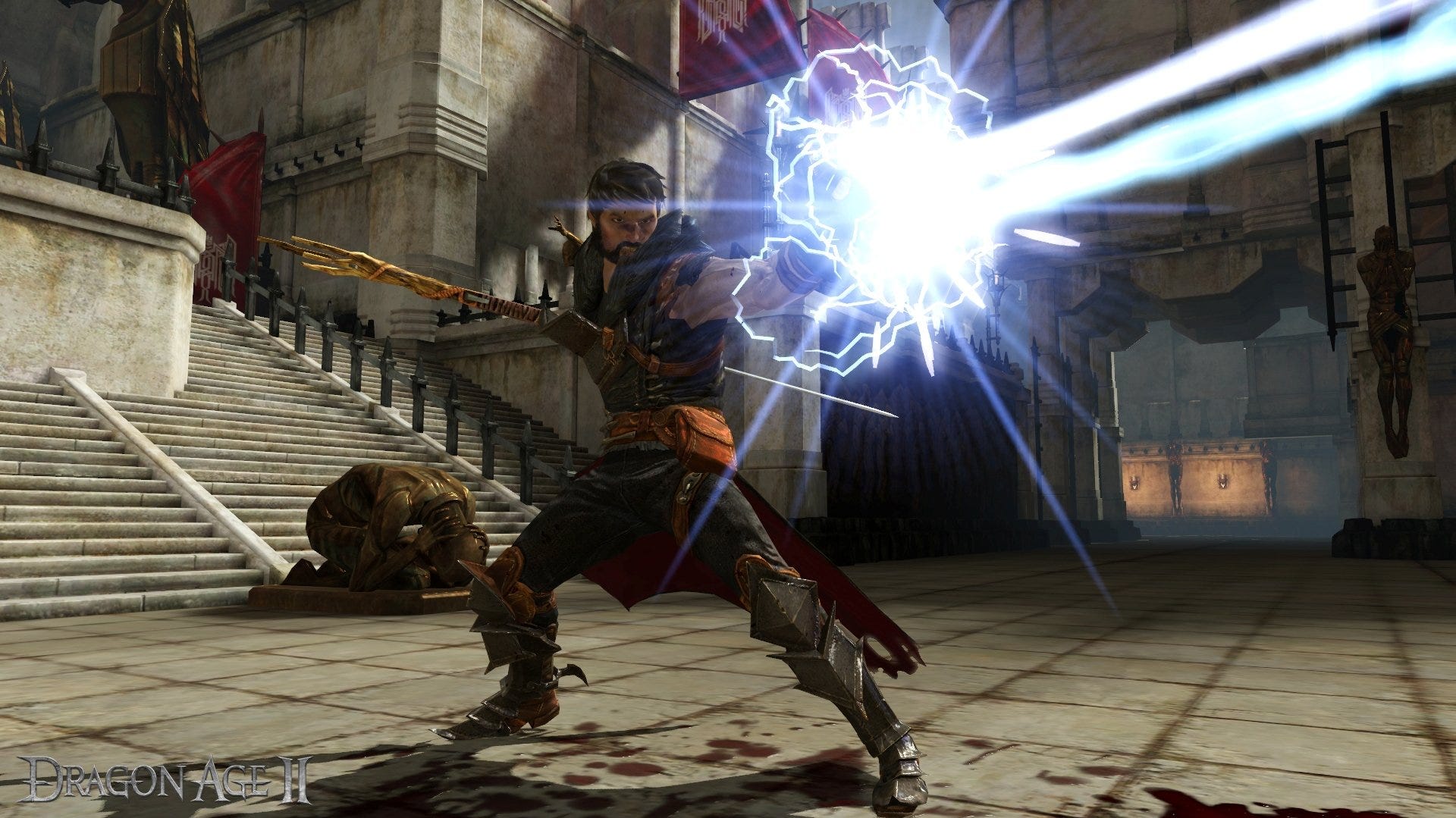
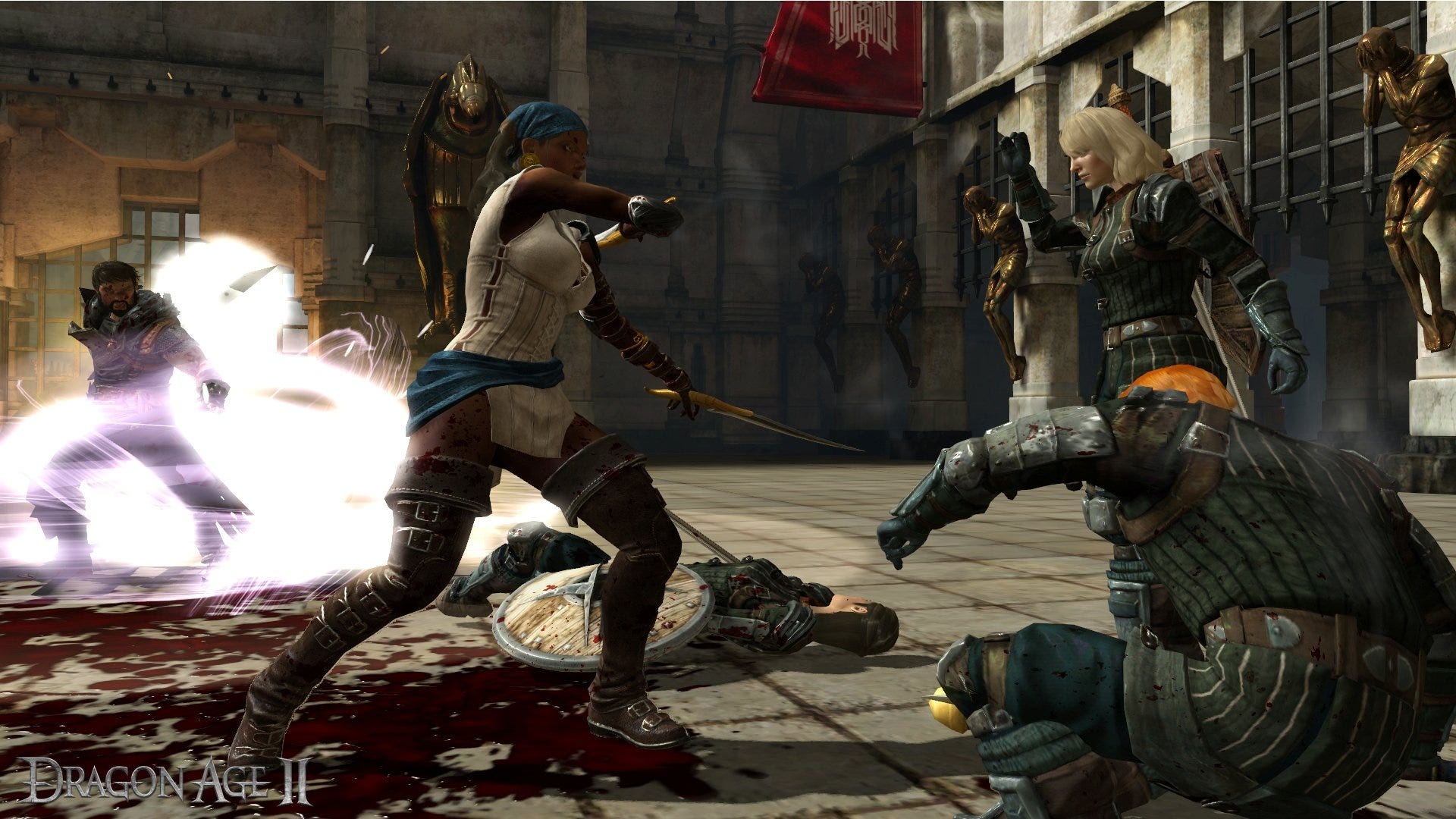

The demo is set in the city of Kirkwall and in a district which I think is called High Town - this being a fantasy world it's probably spelled Huyjklle Taurne, however. In any case it's an imposing place, with broad stone streets strung between the towering bulks of huge grey buildings. It's an area with so many colonnades, sweeping arcs of steps and craggy finials on display that you can almost hear Kevin McCloud weeping at how bourgeois it all is.
Due to the grandeur of the location it's a safe bet to suggest you're going to spend a lot of in-game time in High Town. For now, however, its primary use is as a means of showing off the Rogue class.
Hawke may have a more defined background this time but he still has a range of classes to choose from: Warrior, Mage, and Rogue. The Rogue, to quote the BioWare rep who's on hand to make sure I don't steal anything, is "the scalpel", lithe and mean-spirited in combat, and ready to spring in and out of the danger zone like a tooled up member of Stomp! before plunging a knife into you and disappearing once more.