Halo: Reach • Page 2

The long goodbye.

"Remember Reach." The marketing slogan for Microsoft's latest sci-fi blockbuster is so very Halo. Portentous, epic and heavy with martial sentimentality, it also has a slightly overconfident belief in the resonance of the fiction behind these excellent shooters.

Reach, it is assumed you'll know (and care), is the name of the planet where humanity's war with the Covenant - in full swing by the time Master Chief's adventures began in Halo: Combat Evolved - started. Reach was invaded and catastrophically wiped out by the zealous aliens in their search for the artefacts of a lost civilisation. This genocide and the doomed struggle to stop it are the events portrayed by this, Bungie's fifth Halo game (and its mawkish advertising).

Reach is also what people will call this game, though, and that slogan sounds as though it's inviting you to venerate it before the fact. After Halo 3: ODST's flat stop-gap, Bungie and Microsoft are fervently willing this game to be a classic, and its position as a prequel and as Bungie's last Halo has infected both publisher and developer with a kind of backwards nostalgia for a brand new game. Remember Reach; this is where it all began; this is the game we were always trying to make; this is a monument to Halo's greatness. Gaze on it and be humbled, and think of the non-existent millions who died to bring it to you.

Among ODST's sins was that it never really felt like an event. That certainly isn't an accusation you can level at Reach, even if the heart-string-tugging hype is wearing thin. And in no way can you begrudge Bungie the desire to bow out at the top of its game. But it sets an intimidating bar. Can Reach really be the best Halo yet?

Pound for pound, feature for feature, in terms as objective and coldly analytical as possible - it's certainly close. But in your heart, you know that it isn't, and it couldn't ever be.

More on Halo: Reach

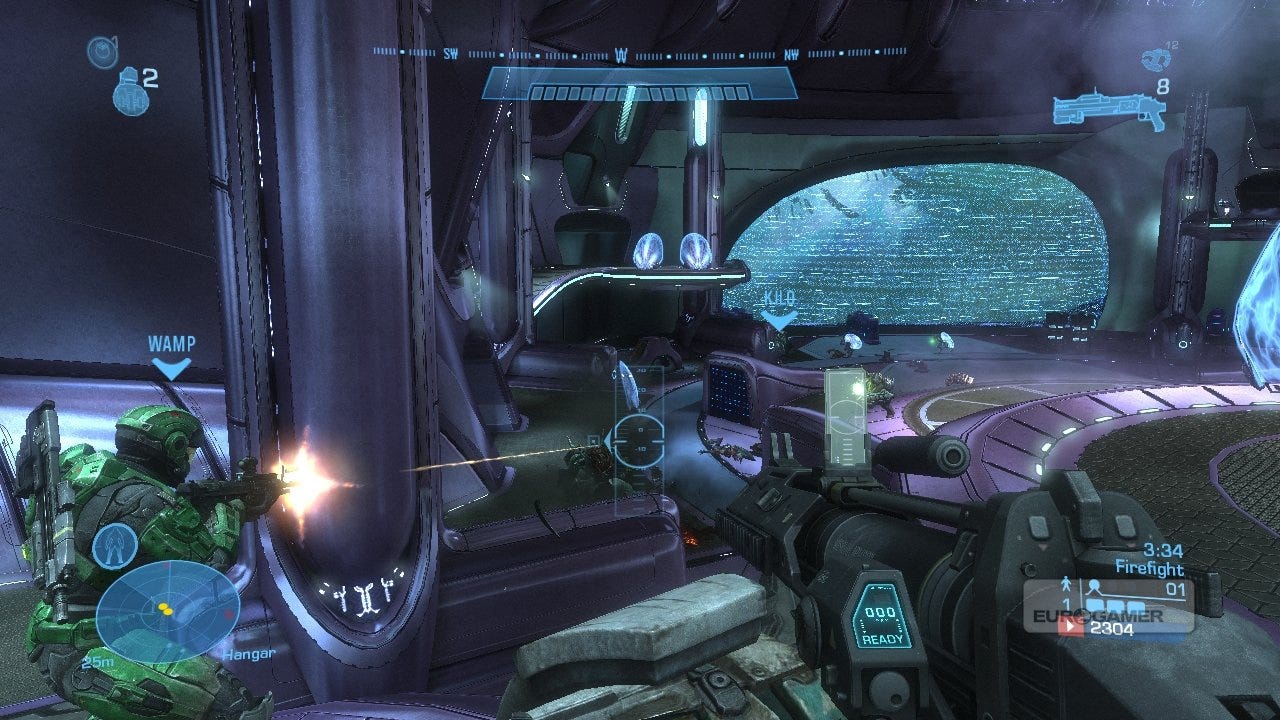
That's not to say that it isn't as complete a package as the series has seen, produced to a scale and specification easily comparable with the mighty Halo 3. In fact, the multiplayer is enhanced by the addition of ODST's Horde-alike, Firefight, as well as vastly improved matchmaking. The campaign, meanwhile, is a solid 10 hours of seismic spectacle that rarely puts a foot wrong in its pacing or design.

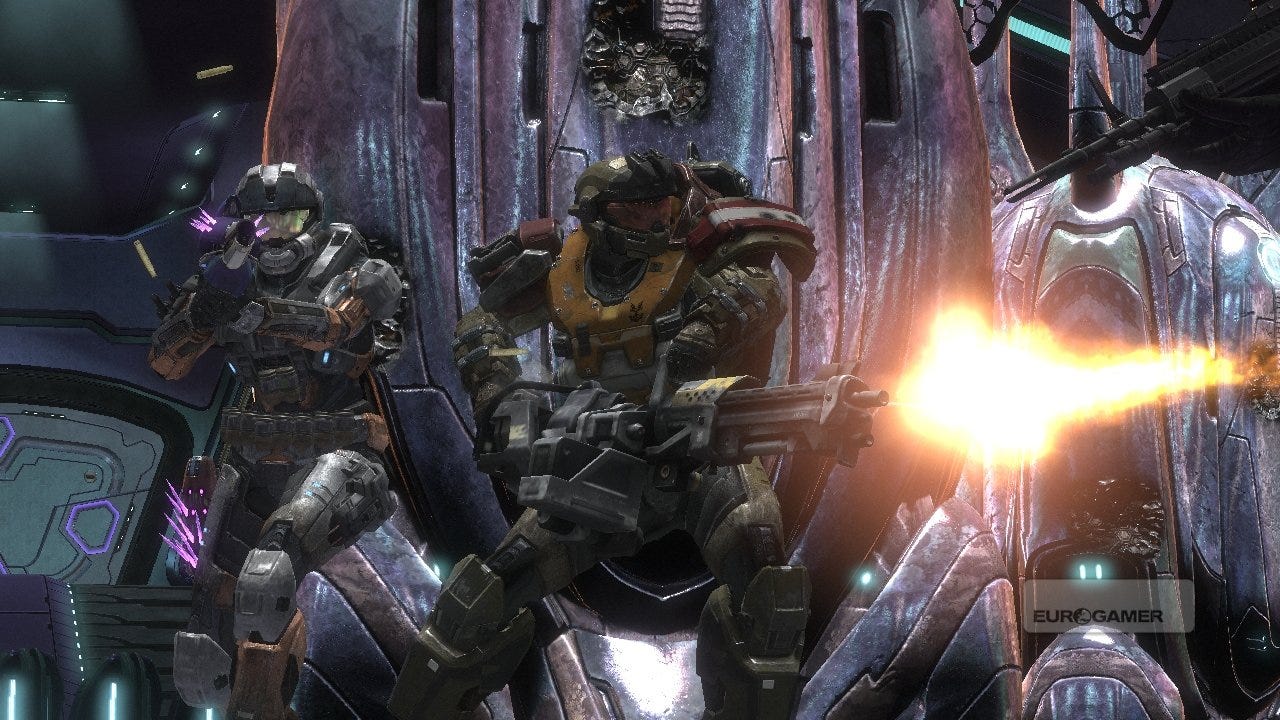
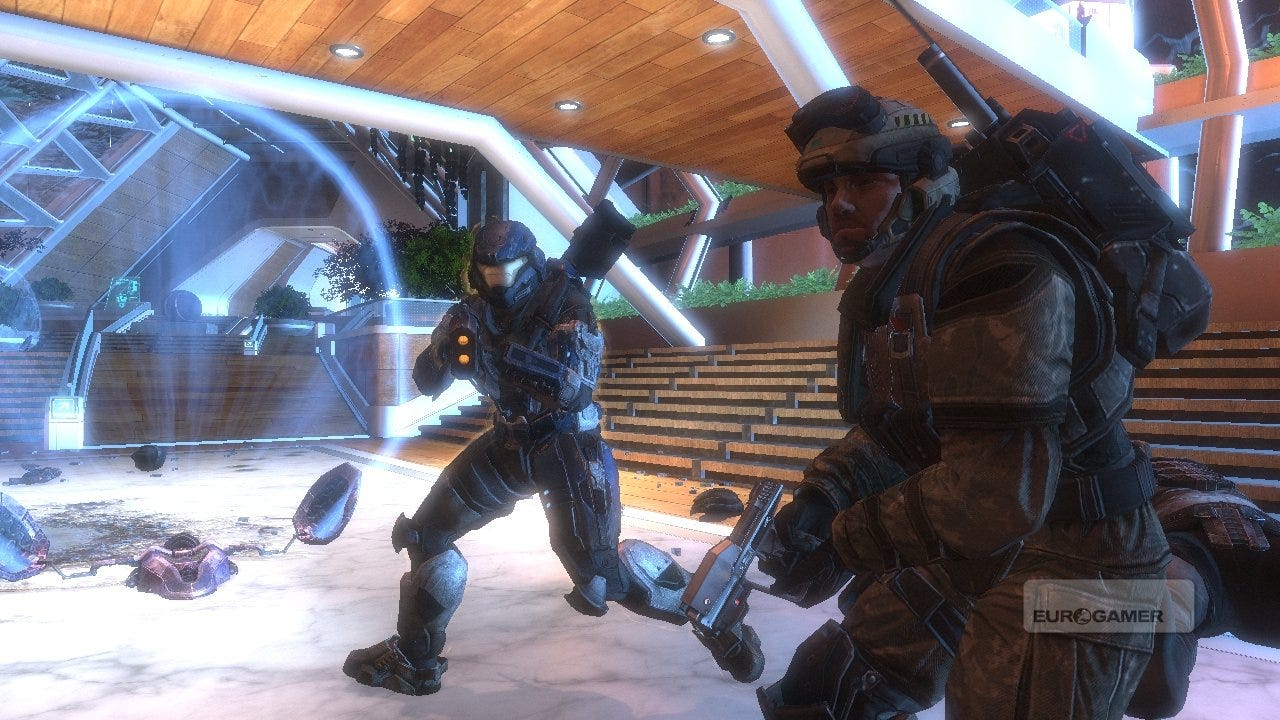
Feeling, perhaps, that Master Chief's iconic boots were impossible to fill, Bungie has neatly dodged the issue by making the player not merely faceless but nameless, a customisable cypher attached to the Noble squad. The limelight is thus widened to take in your team-mates, an inoffensive bunch of soldierly clichés; noble commander, stolid heavy, silent sniper, spiky tomboy and street-talking scrapper.

Aiming for both the human frailty of ODST's marines and Master Chief's towering, monosyllabic super-heroism - and consequently achieving neither - these bland characters never find the place in your heart they're supposed to. As a result, Bungie's predictable lunges at camaraderie and pathos fall wide of the mark, and all you're left with is a lot of po-faced exposition between the explosions.

One of Reach's few faults is to take its story too seriously. Bungie has occasionally been guilty of forgetting, George Lucas-style, that it was making pure pulp, but the endearing cartoonishness of Chief, Cortana, Sergeant Johnson and company kept the brush-strokes broad in the past. Somehow, their comic-book adventures were more stirring than this terribly earnest requiem for the soldiers and victims of a war against purple space-aliens. It left me cold.

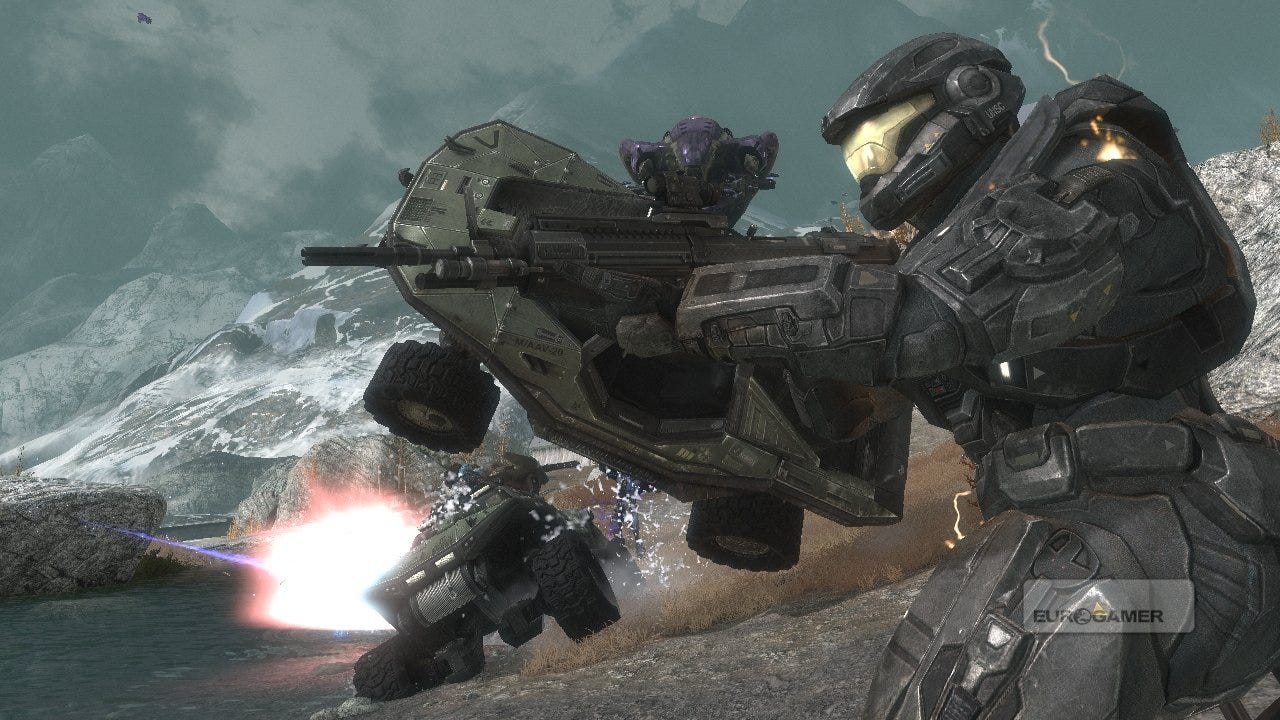
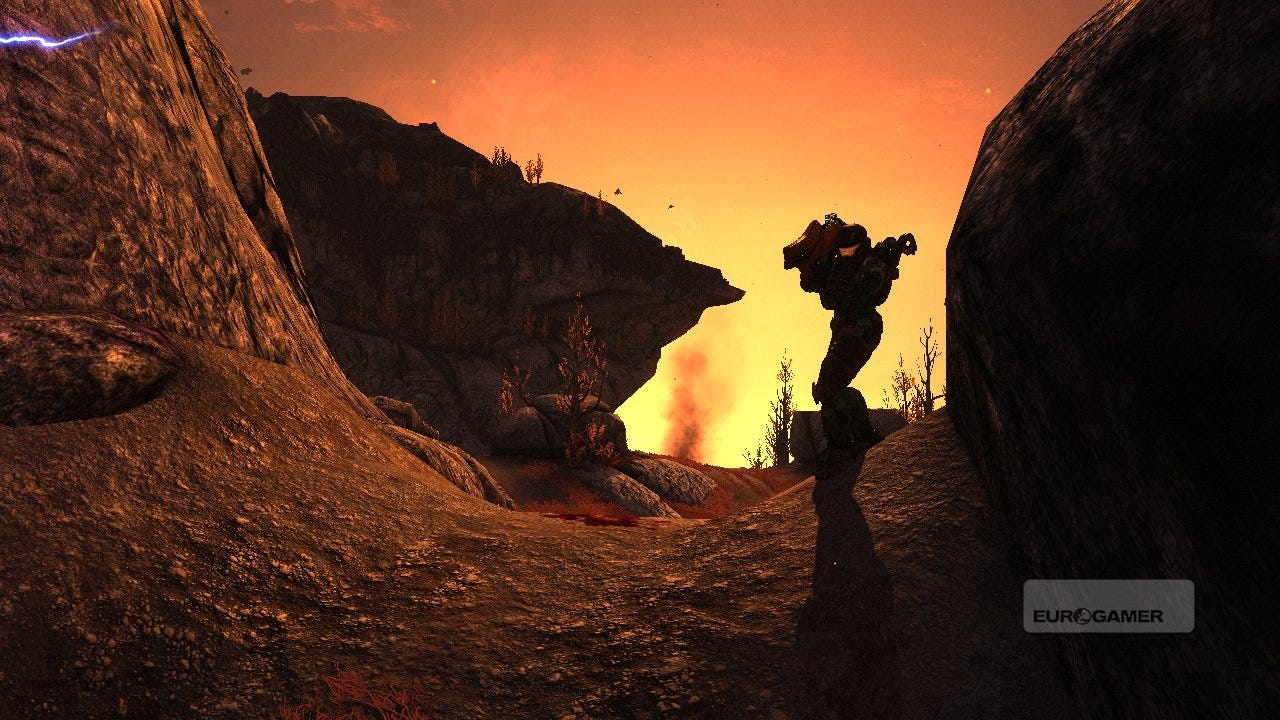
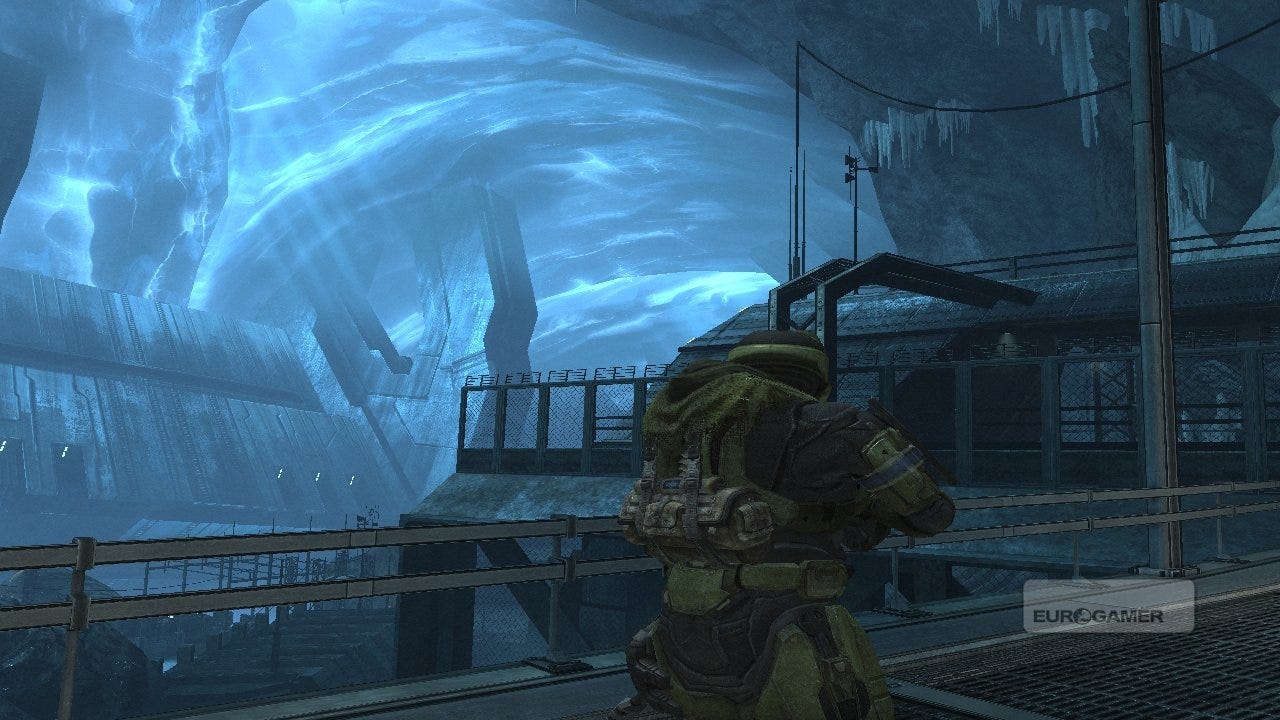
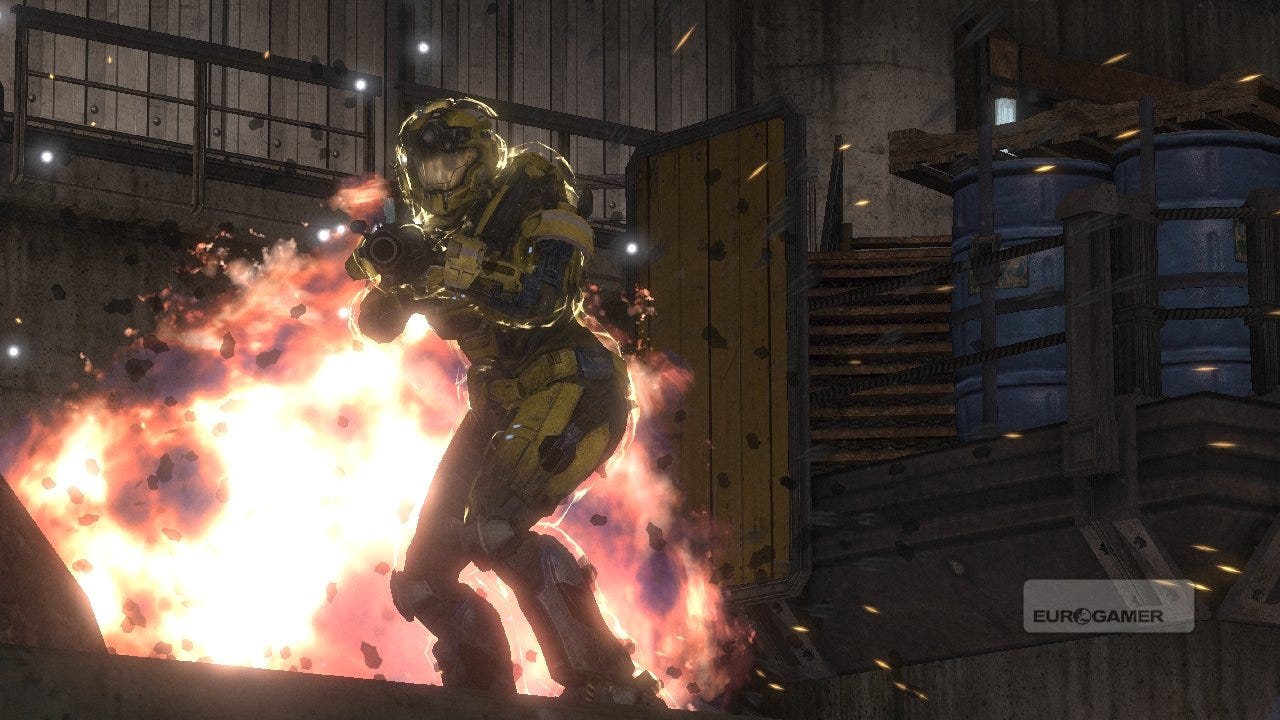
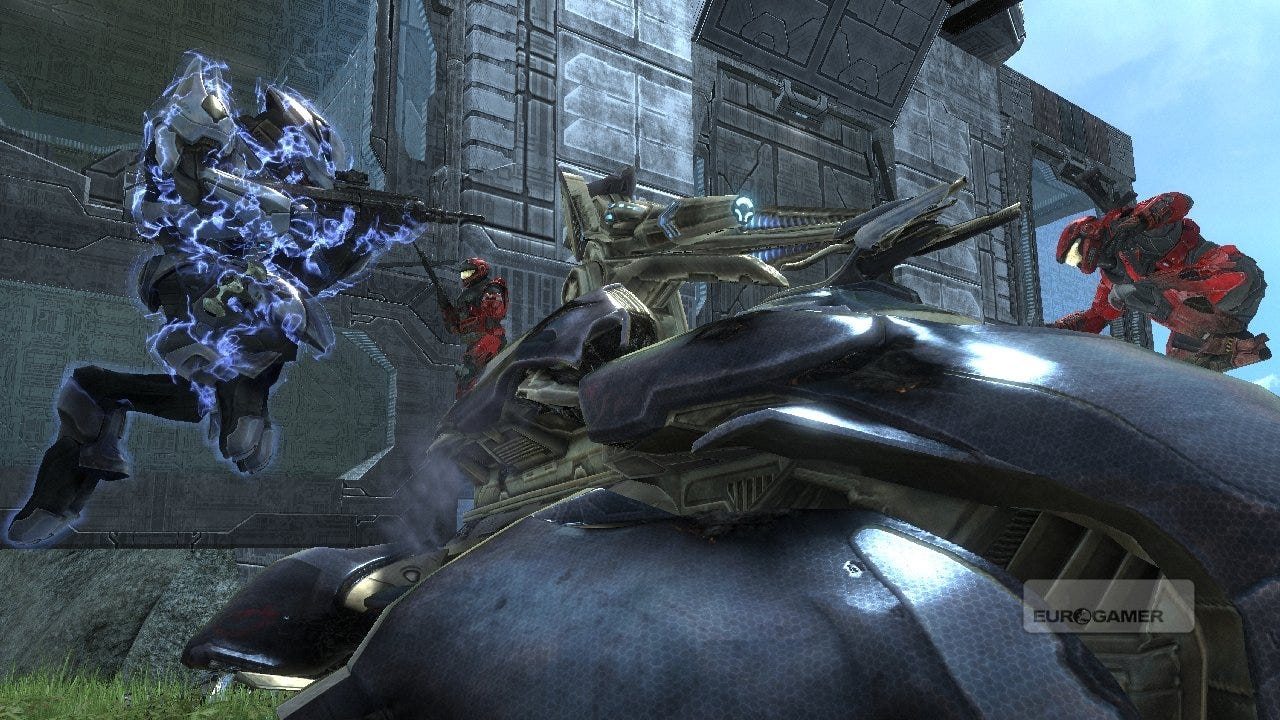
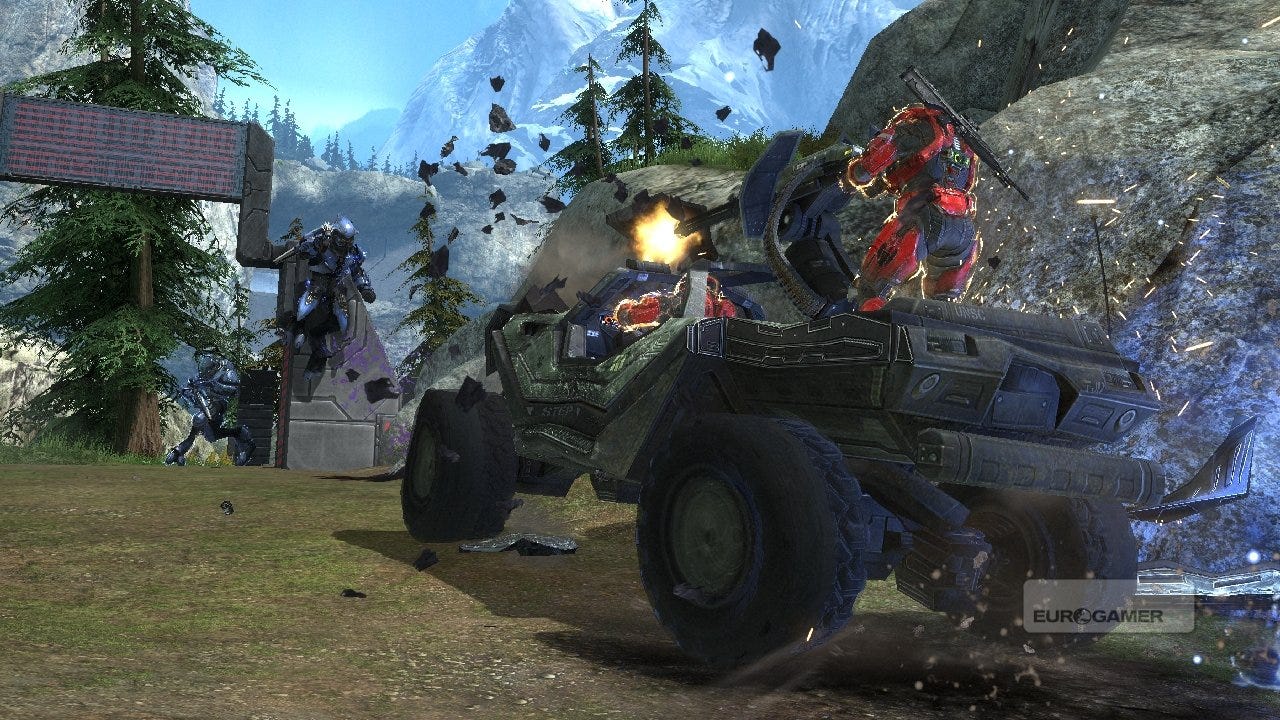
Not visually, however. Reach might give away some frame rate here and texture detail there to more scripted rivals, but it is a stunning-looking game, with a huge tonal range and a a great eye for dramatic staging. Forget any worries that it would mark Halo's retreat into the world of brown of the military FPS. It's maybe a touch less vivid, more autumnal; but rich colours, warm lighting, artfully weathered textures and some astonishing, painterly skyboxes combine to give it the hand-crafted look of 1980s airbrush sci-fi art, and believe me when I say I mean that as a compliment.

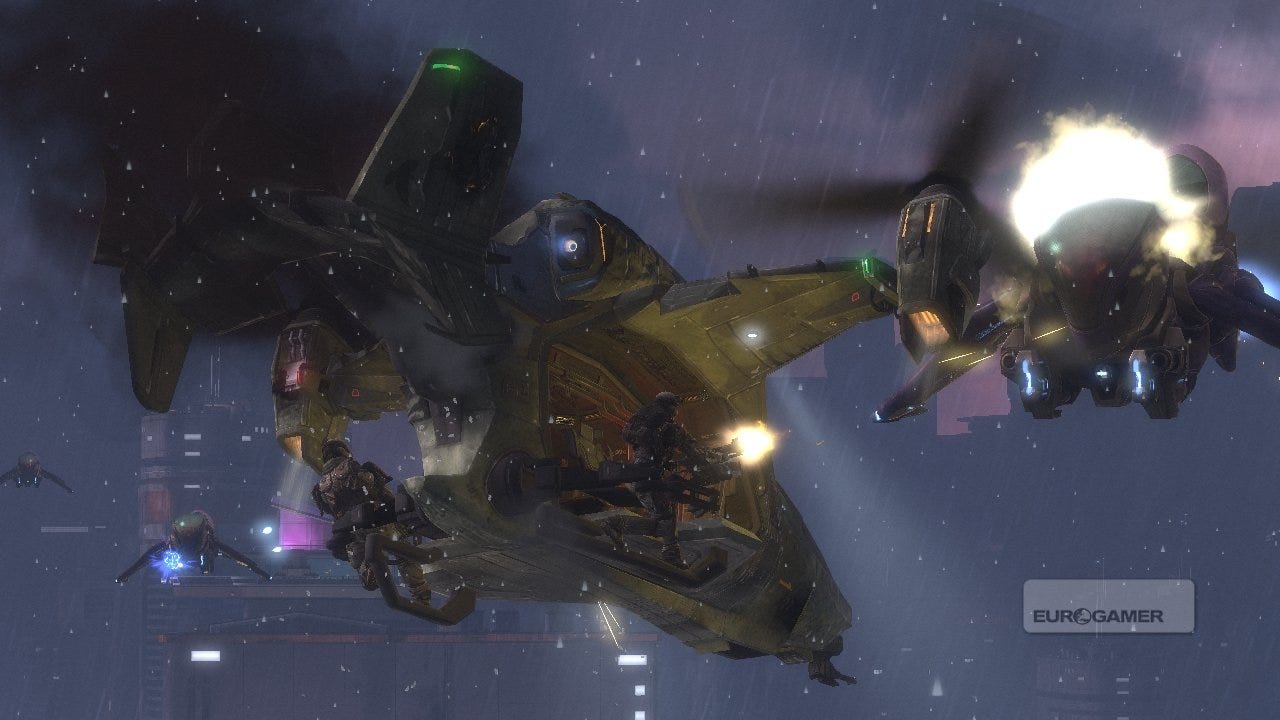
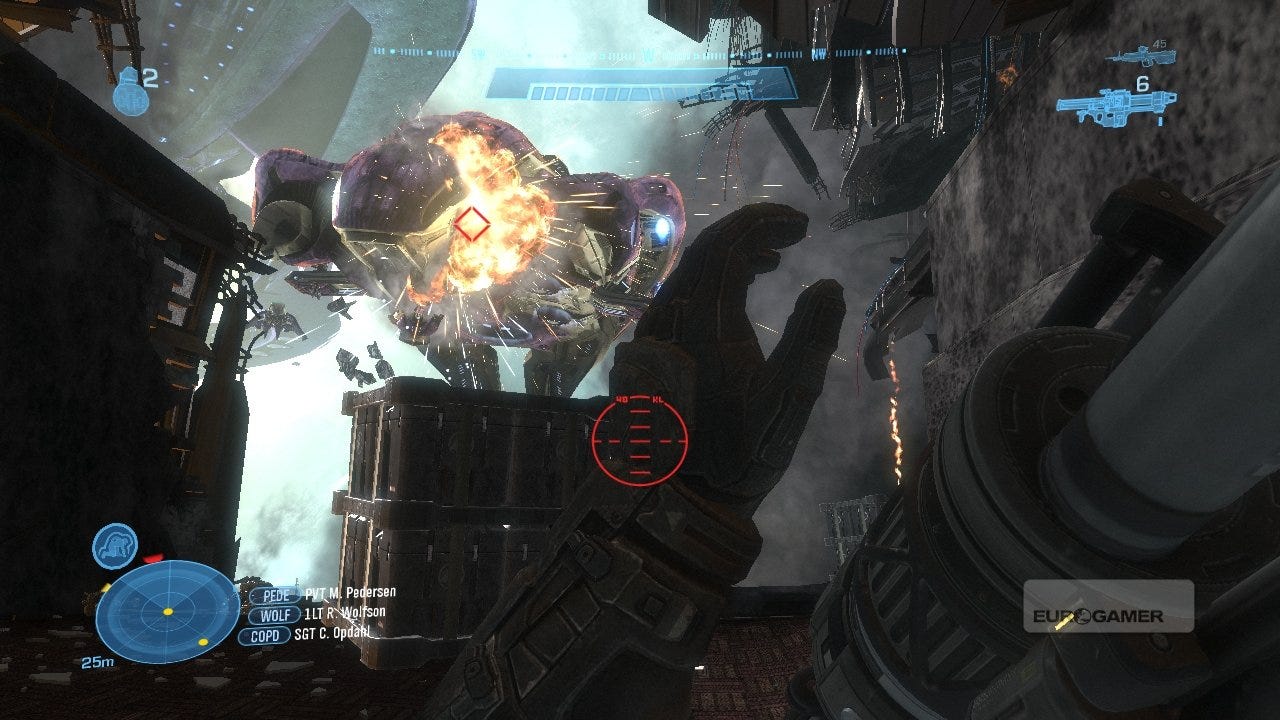
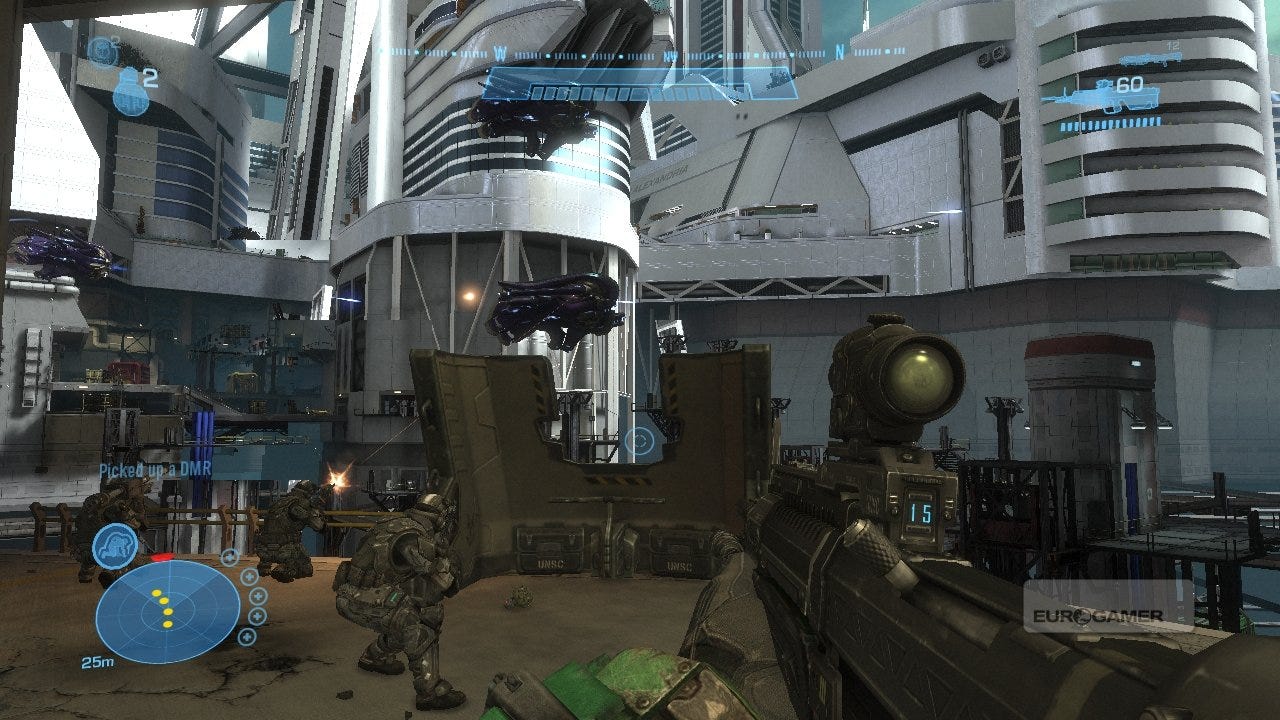
One of the things you most want from a Halo game is to witness visual drama on an immense scale - to "see things you people wouldn't believe", like Blade Runner's Batty - and Reach doesn't disappoint here, either. You'll watch giant star cruisers disintegrate, city-cized Covenant war camps twinkle under a night sky, mile-wide death rays scour a burning city as you pilot a Falcon chopper between skyscrapers. It's maybe a little more restrained than the orgasmic spectacle of Halo 3, but that's not saying much, nor is it a bad thing. Marty O'Donnell's score soars, pounds and rocks out for all its might in an attempt to match this visual bombast, but it can't summon a memorable theme this time.

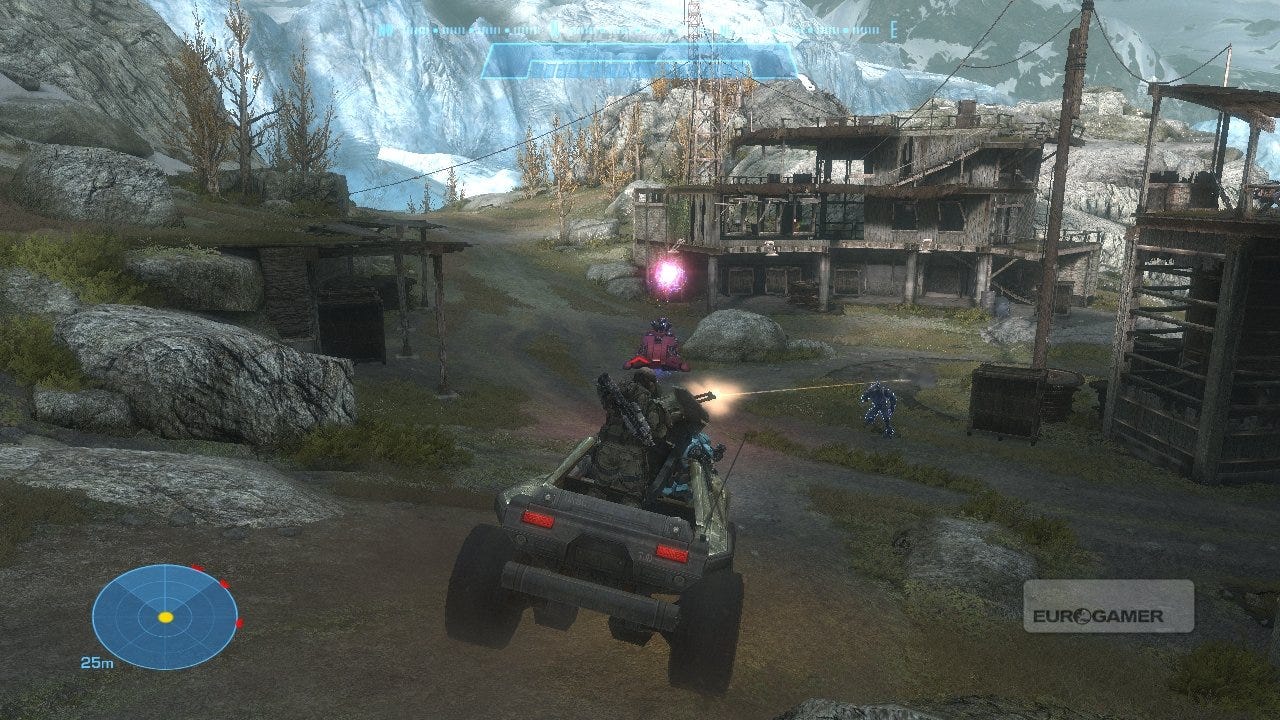
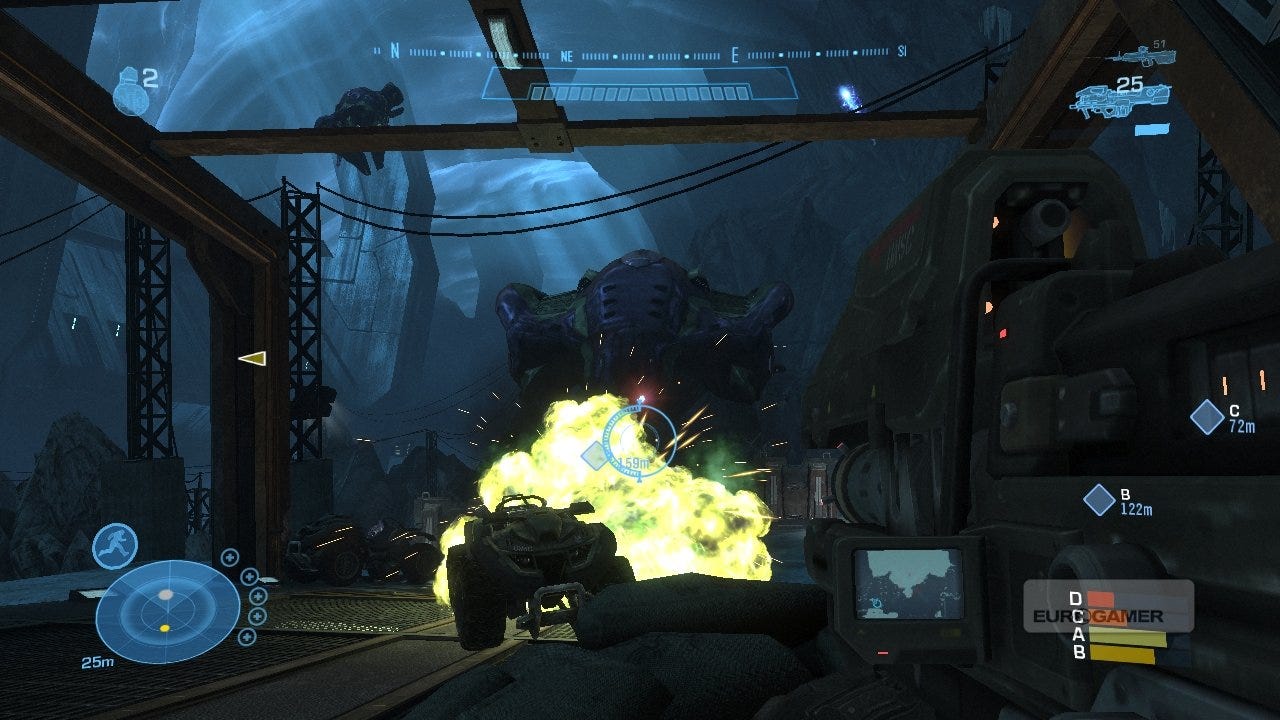
Bizarrely for a prequel - but inevitably for a game that's such a transparent attempt to close the book on Bungie's Halo - the campaign often feels like a valedictory compilation of the best bits of the first three games. Here's the moonlit sniper attack on a Covenant base; here's the Scorpion tank trundle through a swirling maelstrom of enemy vehicles; here are the running battle in a rural sward, the entrenched firefight amid towering architecture, the escape from a doomed ship.

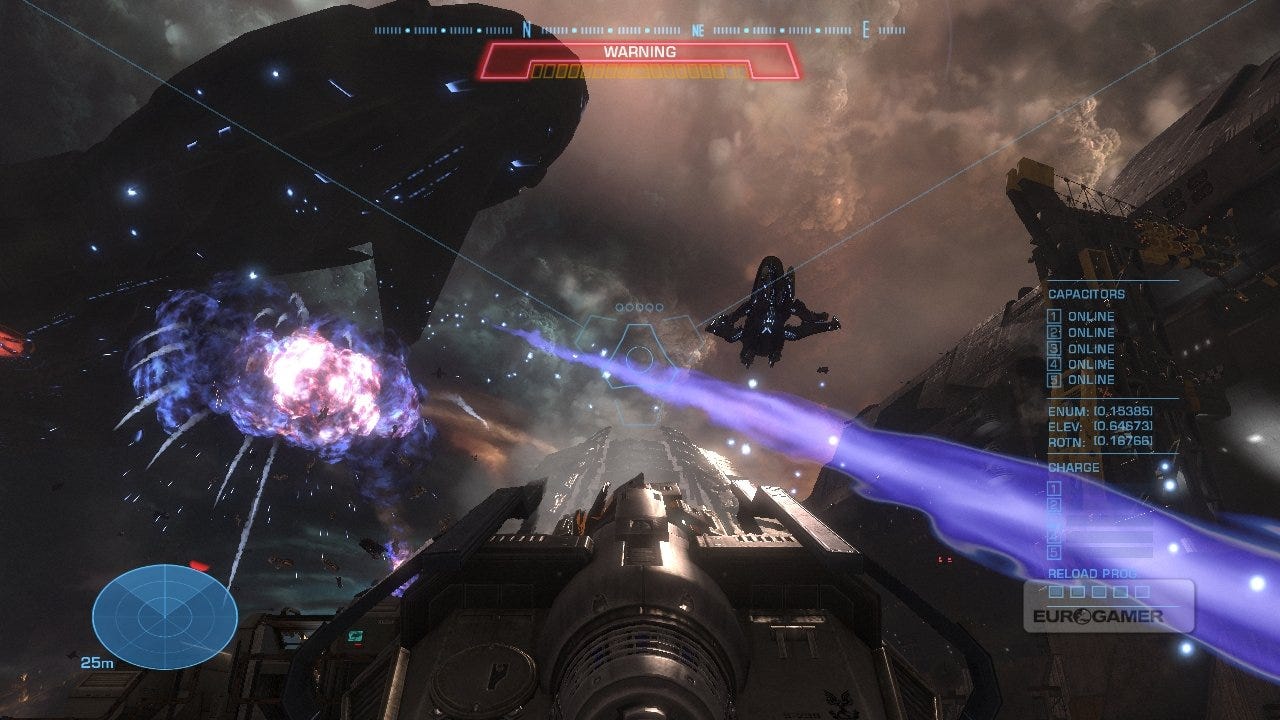
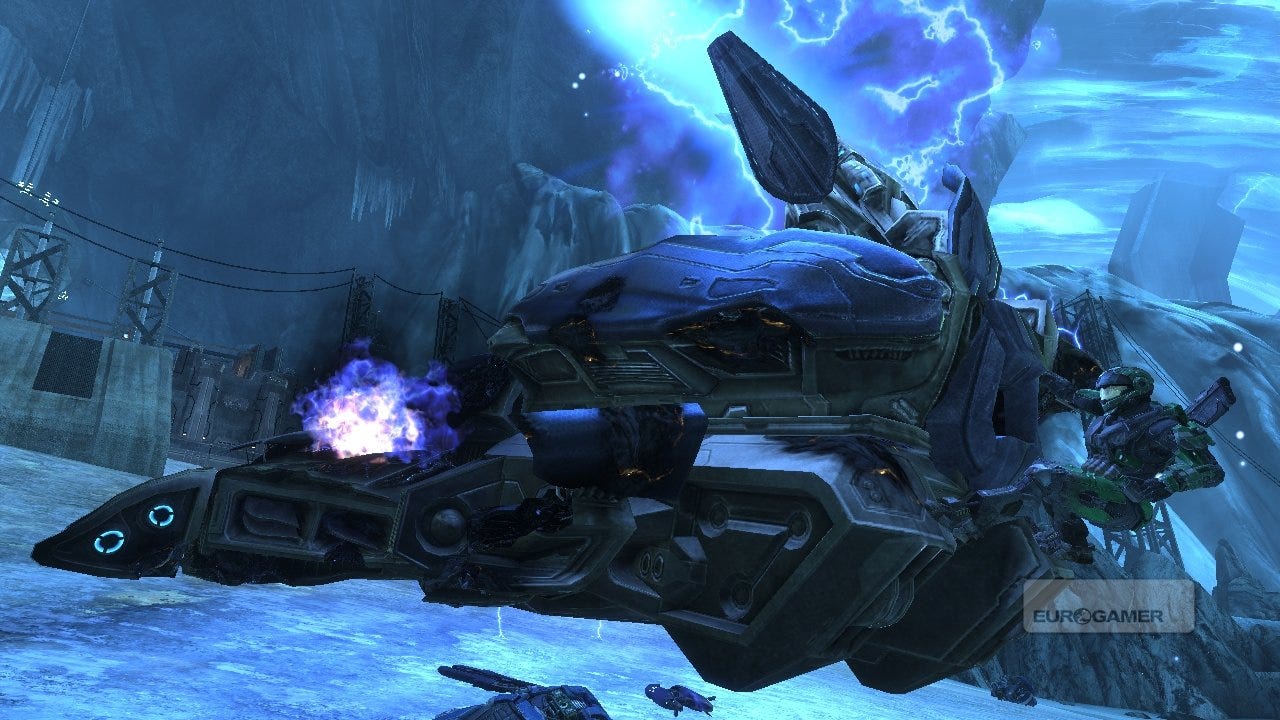
Reach does have some new tricks up its sleeve. Moments where you have to defend a position against enemy waves, Firefight-style, have their own tension but do sap the immense forward momentum that keeps you going when things, inevitably, get brutally tough. The most memorable chapter, Long Night of Solace, launches you into space at the controls of the Sabre orbital attack ship in a remarkably accomplished dogfight sequence, as well as staging an incredible, muffled, low-gravity battle on board an ailing Covenant corvette.
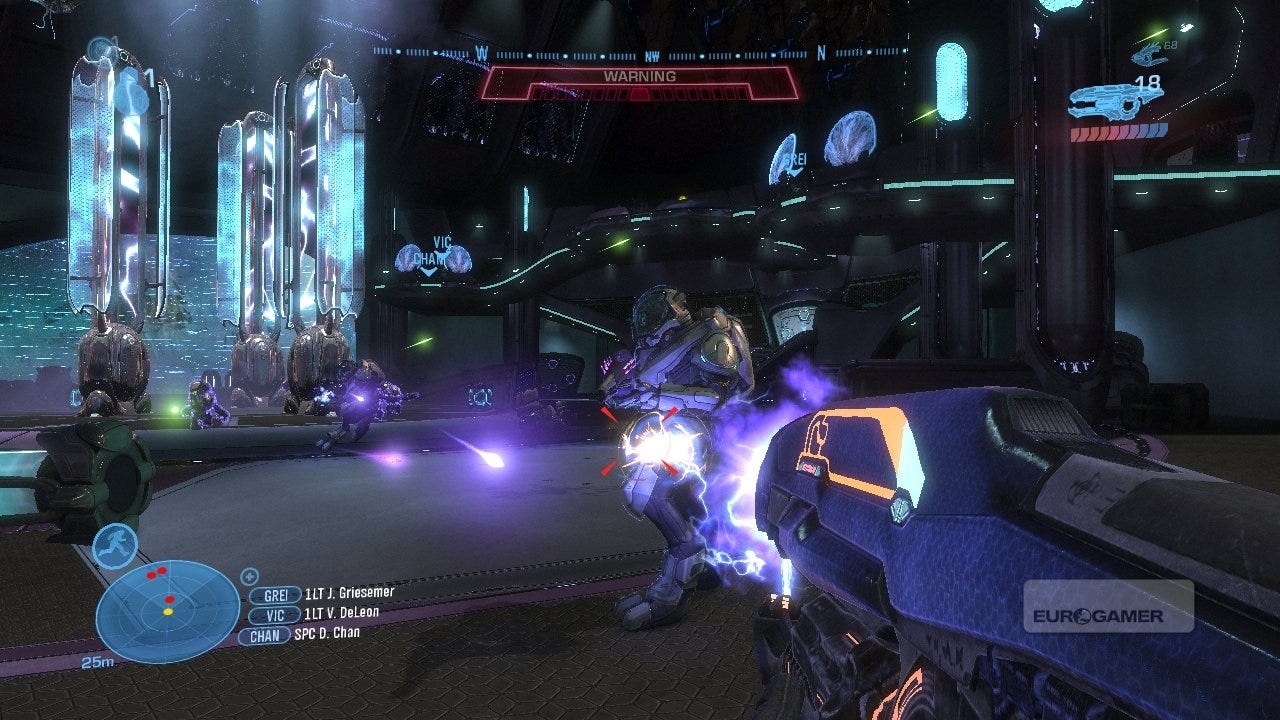
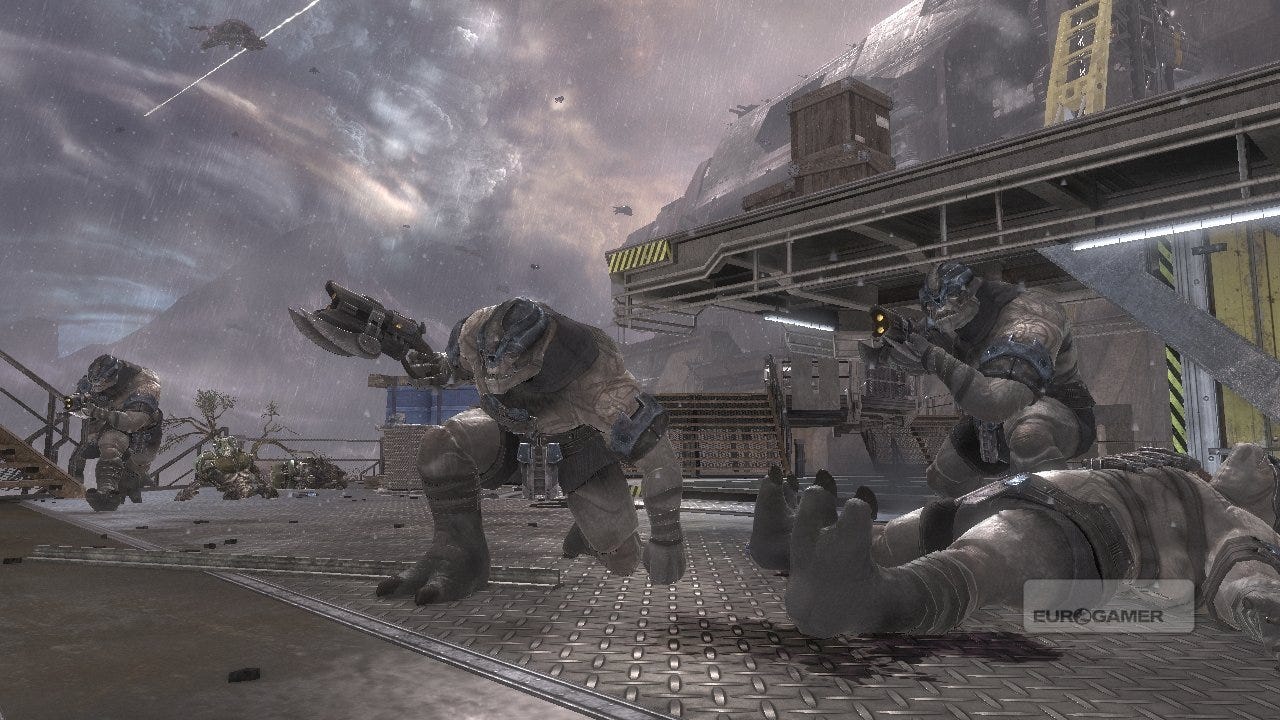
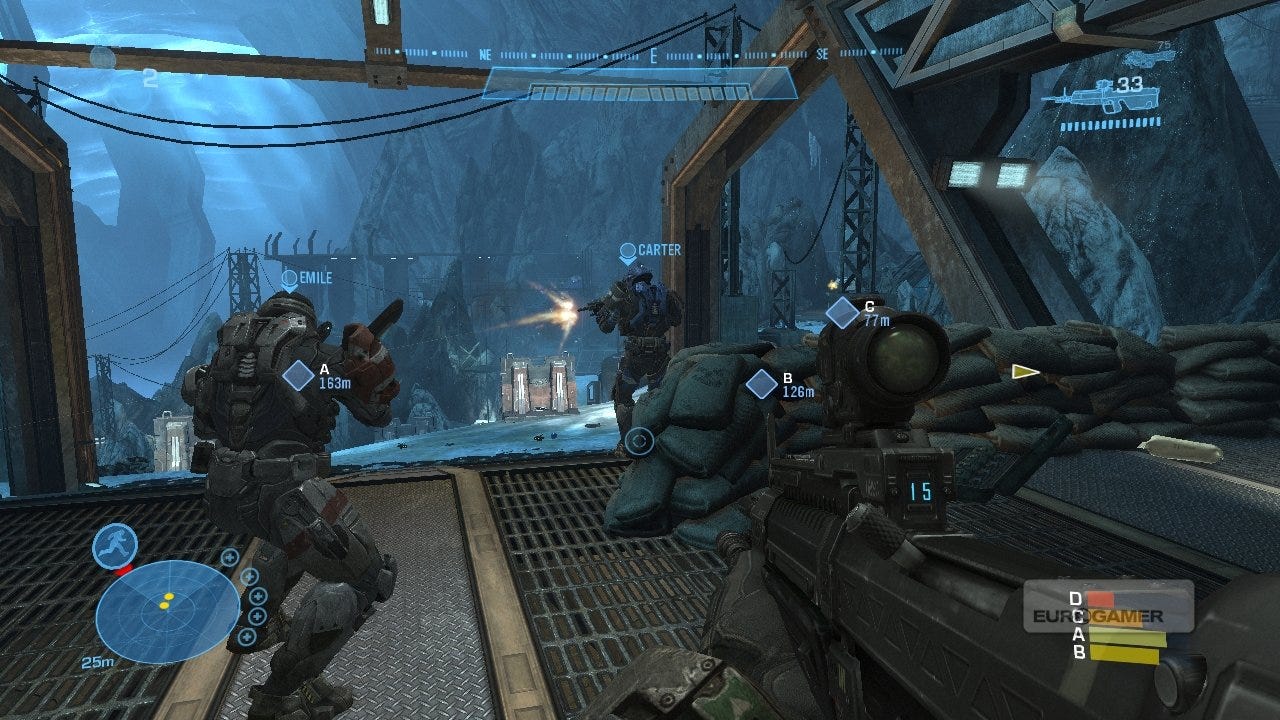
Your Noble companions aren't quite as smart as they should be, but the fact they can't die (unless the story requires it) often provides welcome cover, while a new system of assigning you a named fire team of marines and keeping track of them in the UI encourages you to keep allies alive. Perhaps the biggest change in the campaign is the necessarily complete absence of the glutinous spam horror that is the Flood. Many will welcome that, although I found the reliance on throwing pairs of Hunters at you just as cheap in its way, and I missed the multi-factional battles that have been a Halo trademark since the first game's memorable twist.

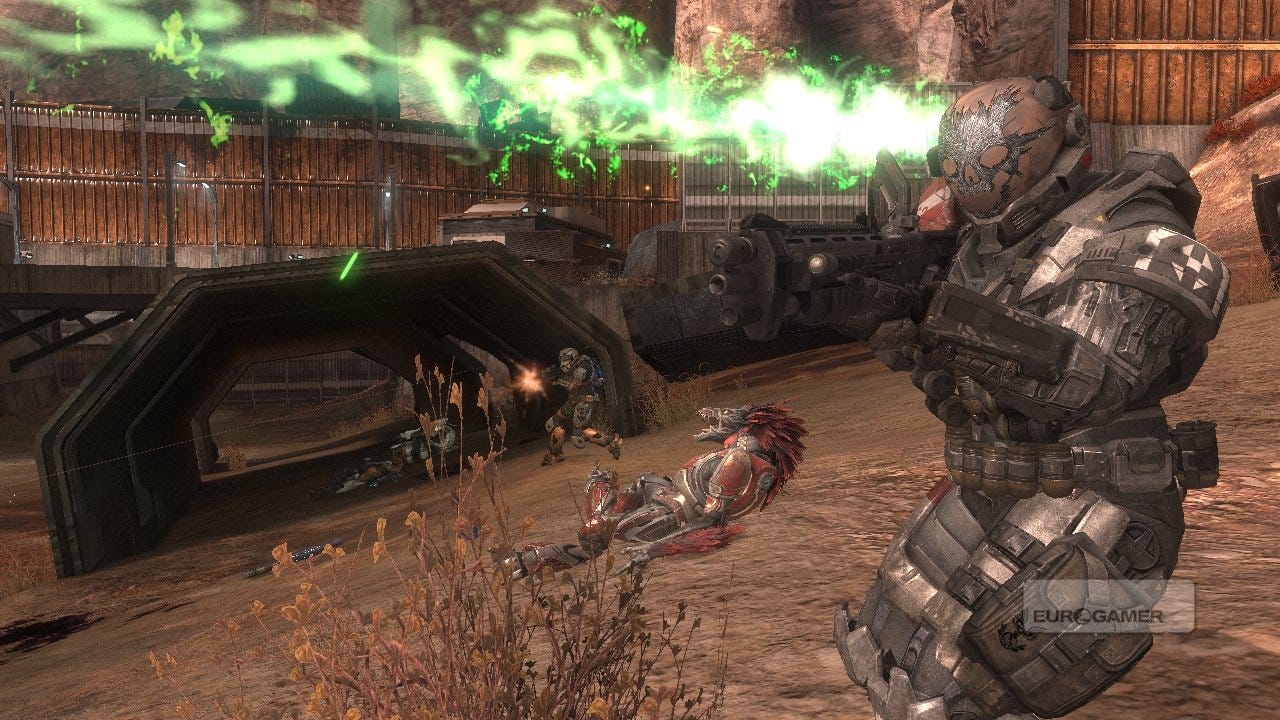
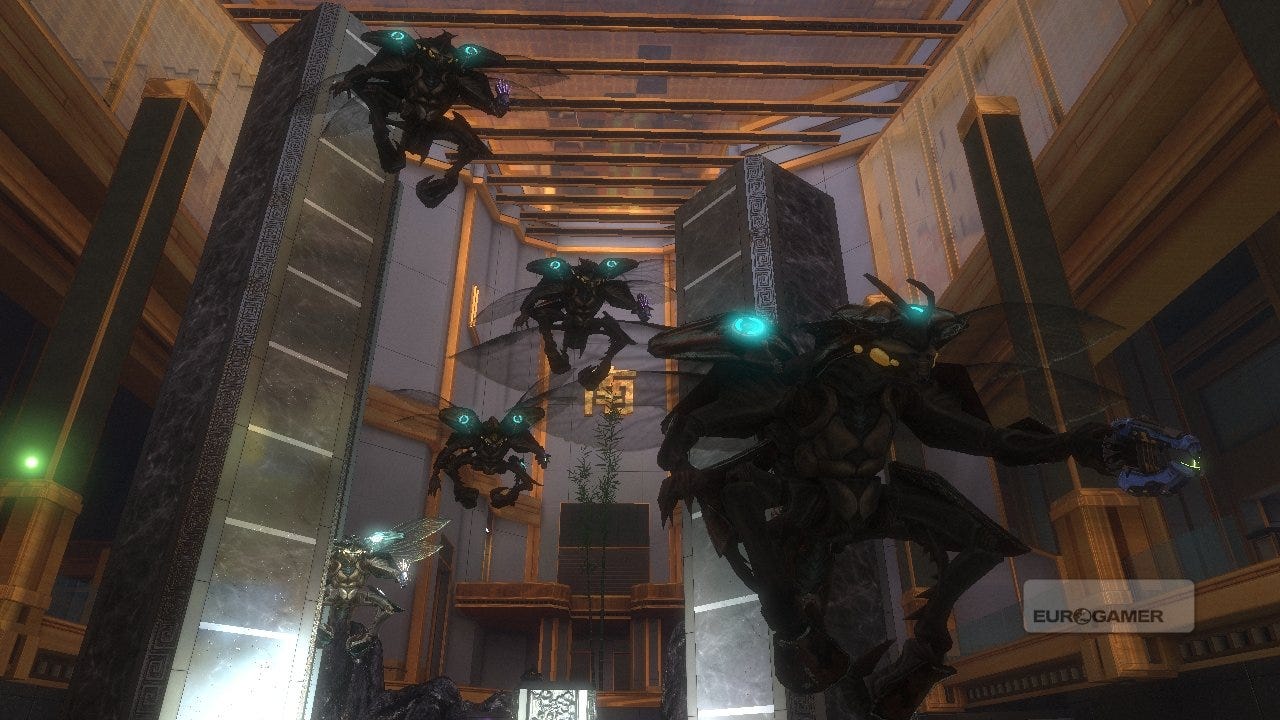
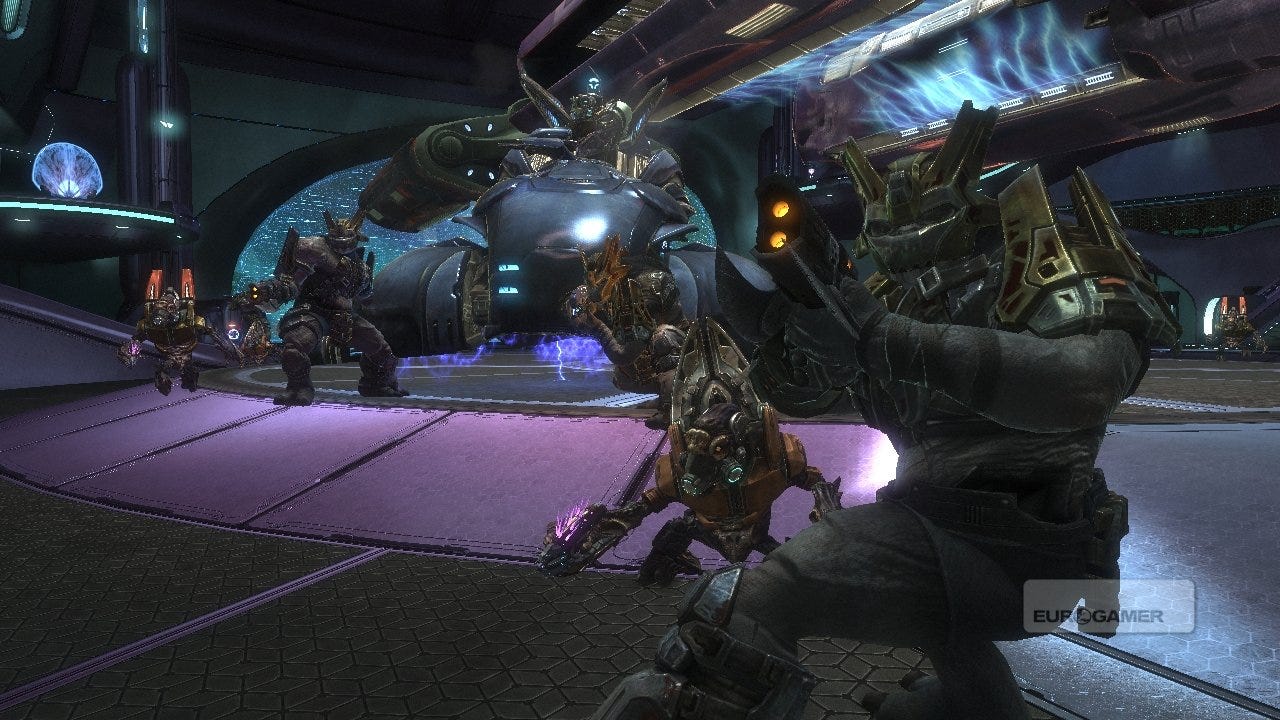
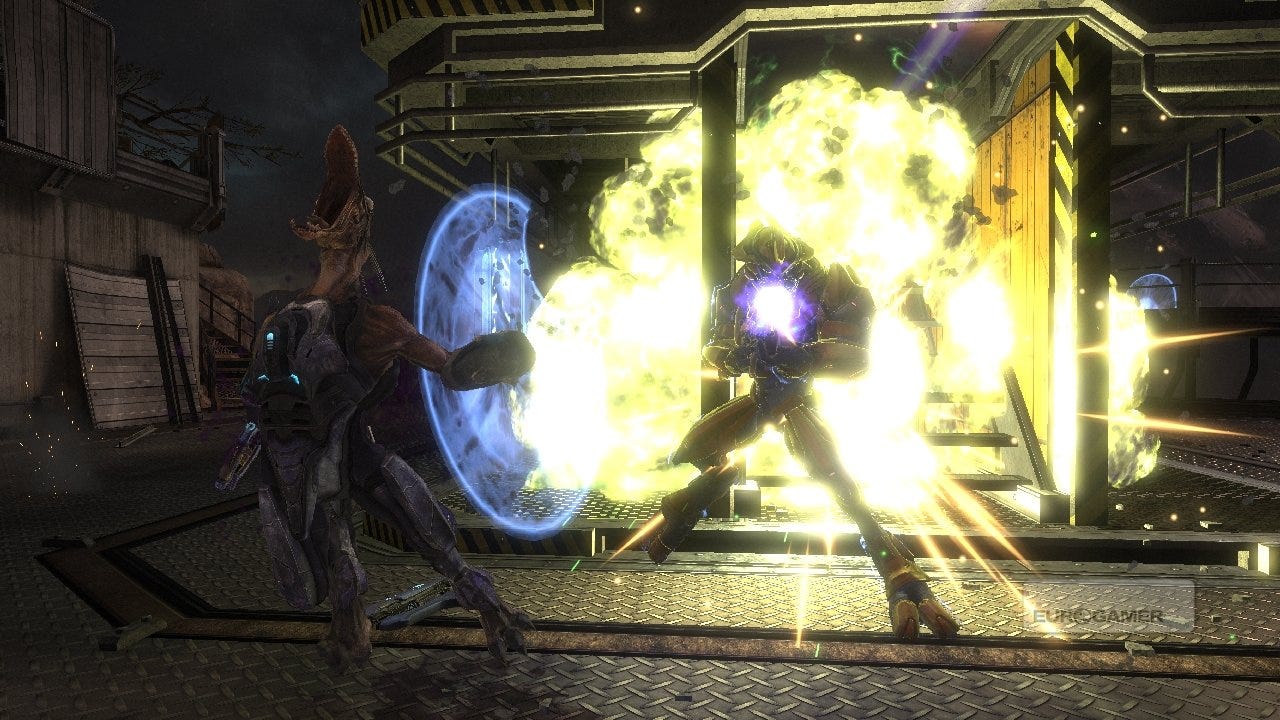
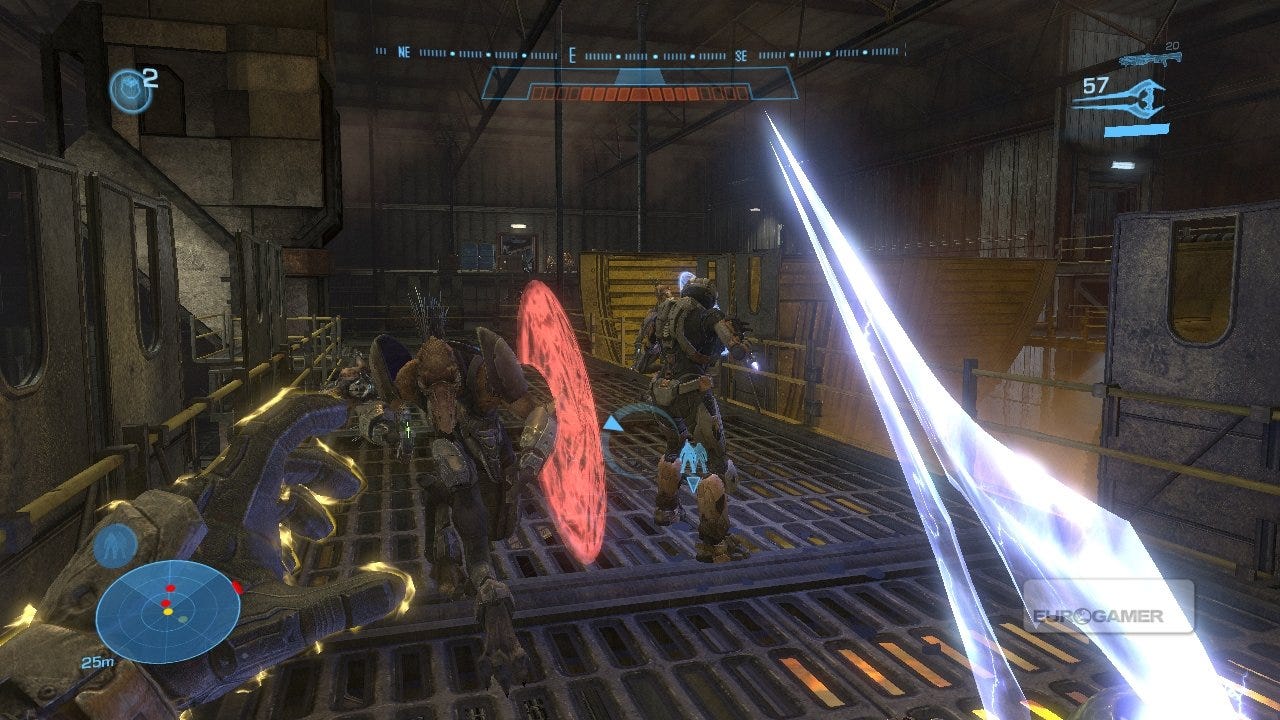
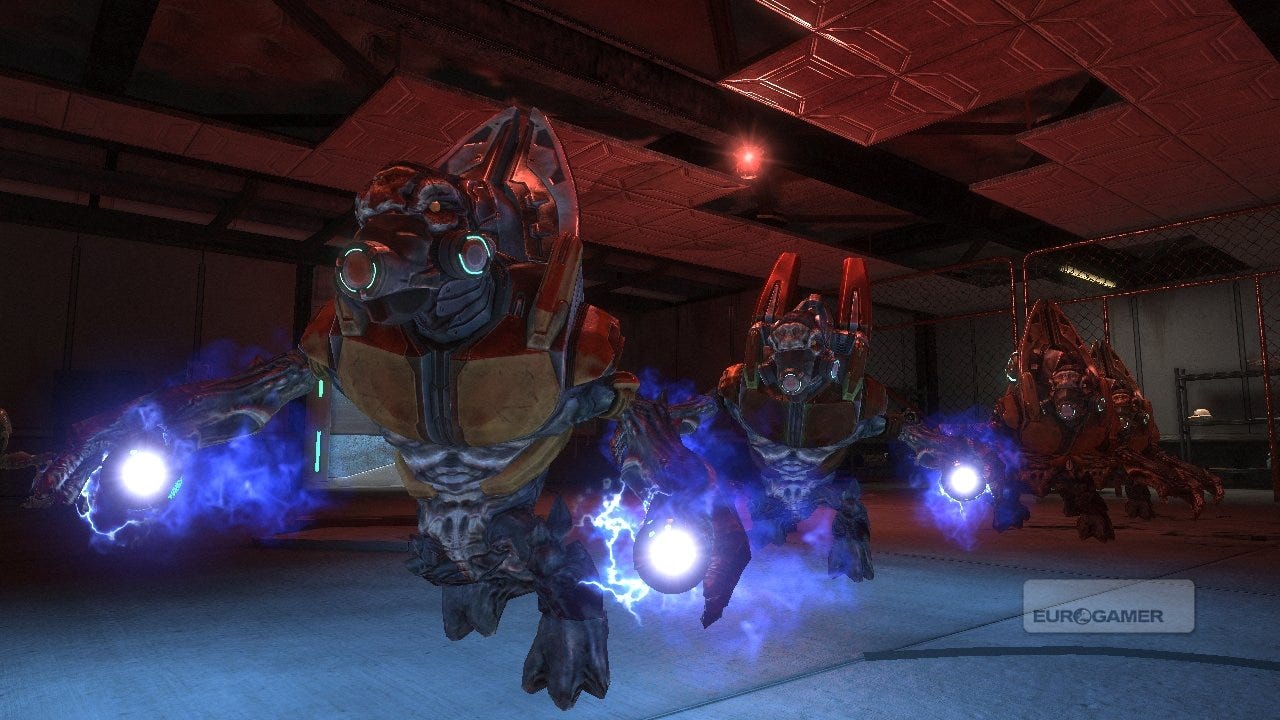
That said, the enemy design is better overall than Halo 3's, with less reliance on Brute force and a more varied range of foes fighting in more complex configurations. Fans will be delighted to learn that the slippery Elites (in a wide range of ranks, some of them now sporting oddly cute space-suits) have never been so formidable. The AI continues to astound; it may not always be believable, but it's never predictable, and it keeps you on your toes more effectively than any script could.

The Covenant's animal intelligence would be nothing, however, if it wasn't for the superlative level design. As architecture, Reach is out-and-out Bungie's best work - and this from a studio which excels at semi-open, semi-linear levels that offer multiple valid tactical options and encourage free-flowing, organic combat. It's majestic stuff, all the more amazing when you consider that some levels have to allow for the vertical dimension opened up by the jet pack armour ability.

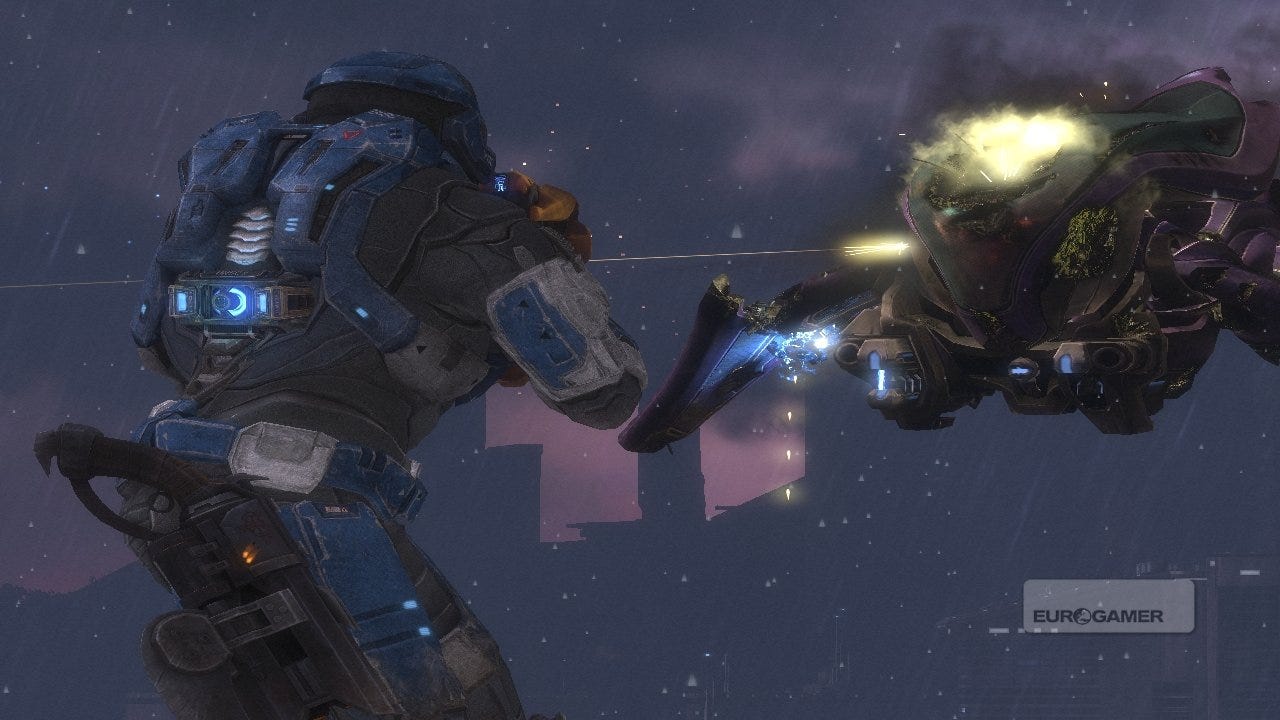
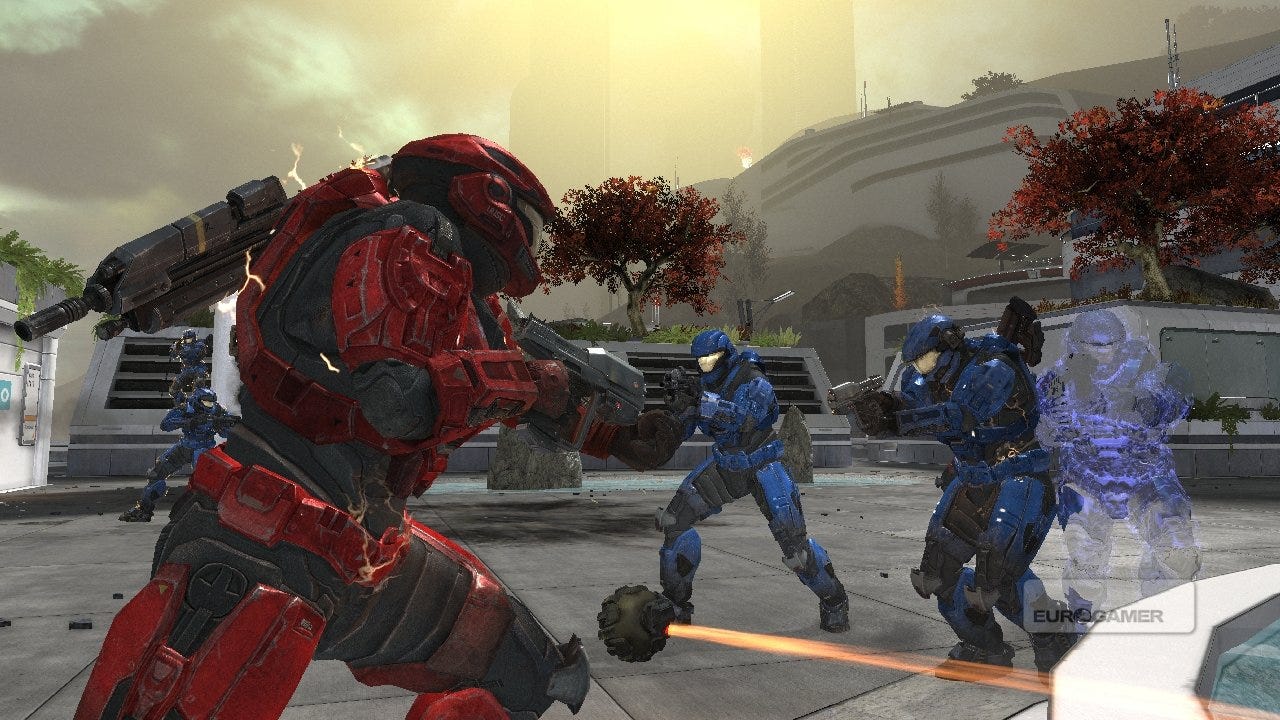
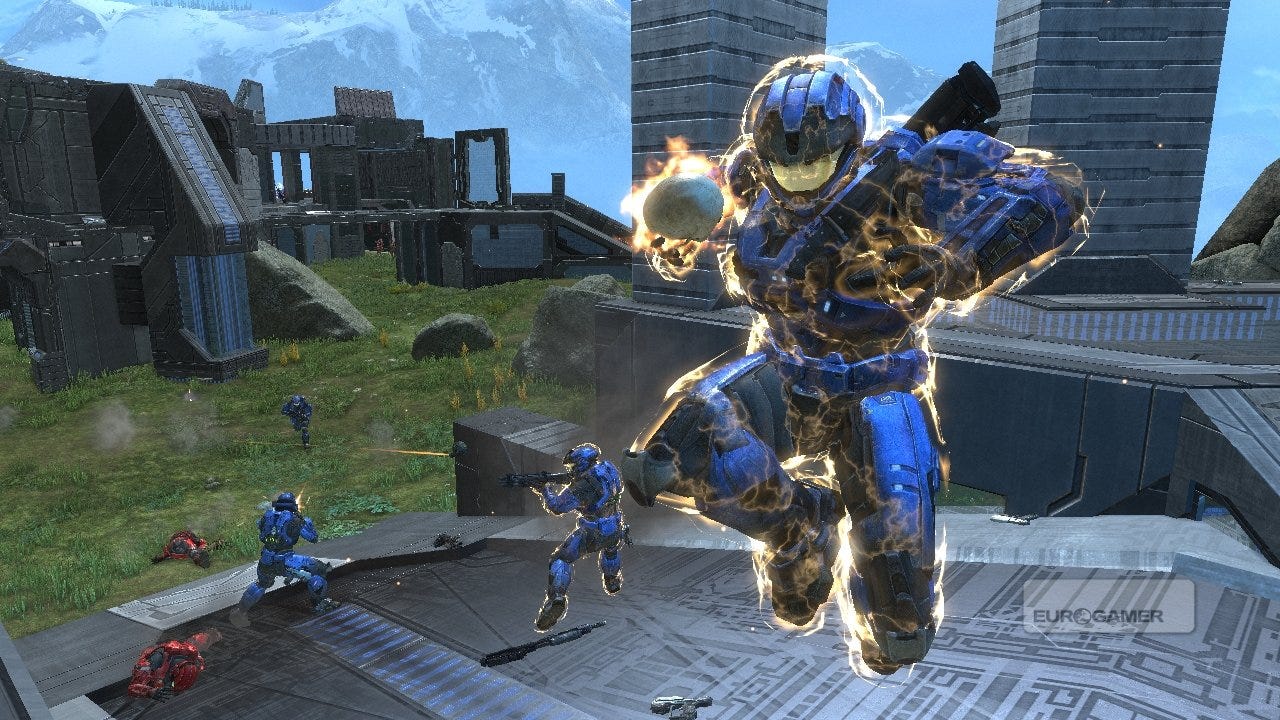
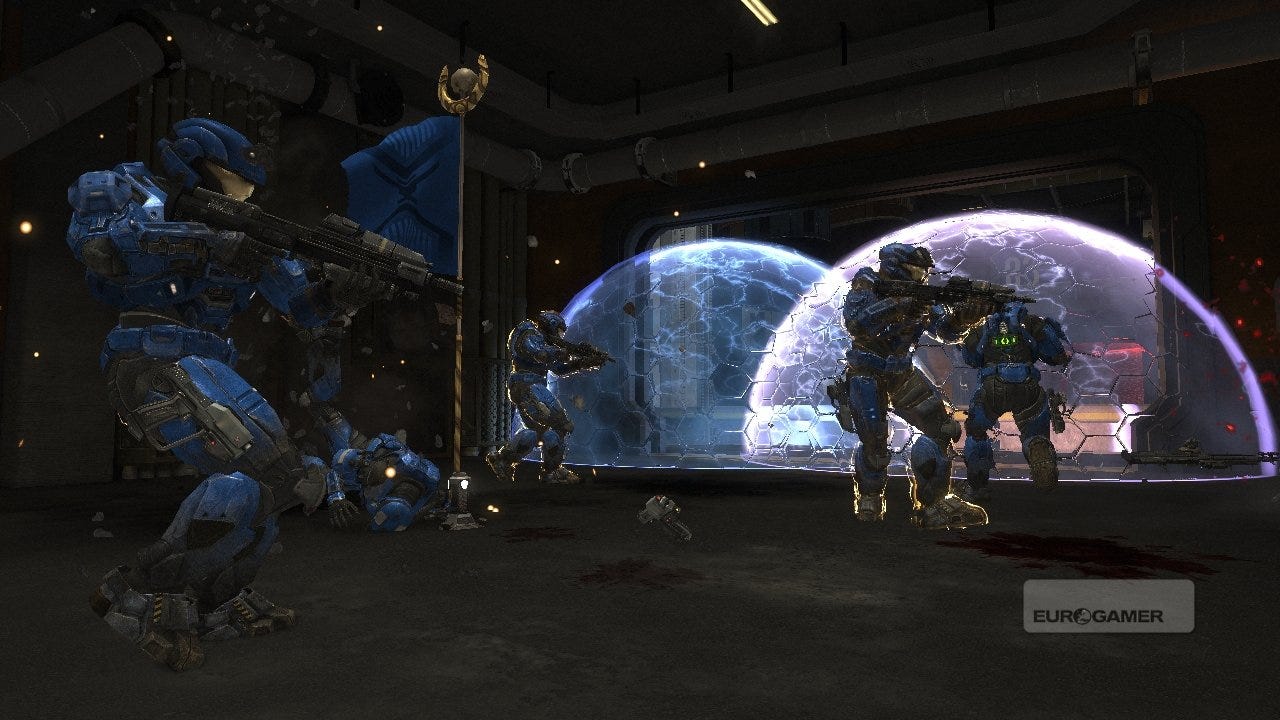
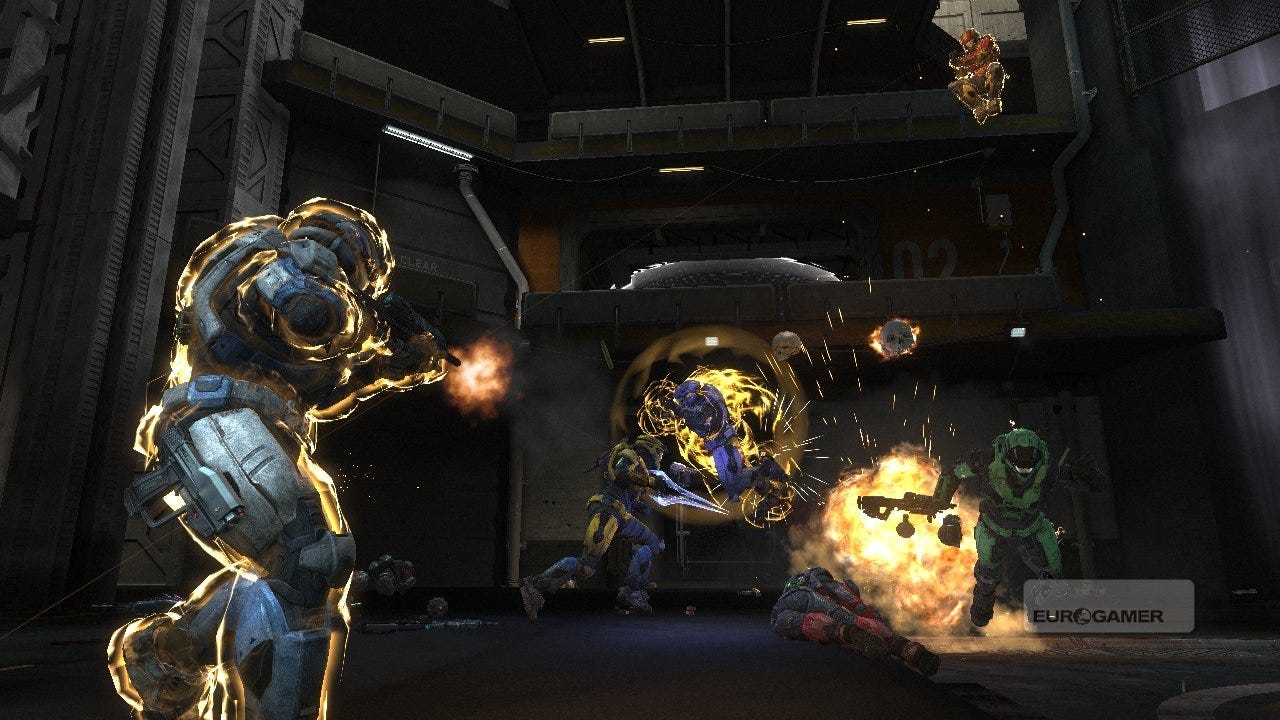
The armour abilities, replacing Halo 3's consumable equipment pick-ups, are permanent abilities on a cooldown than can be equipped one at a time. The jet pack and sprint are joined by a bubble-shield, armour lock (temporary, motionless invulnerability) and holographic decoy. They're pleasingly streamlined and they showcase Bungie's enormous talent for asymmetrical balance, although the inertia-heavy jet pack, with its beautifully tuned controls, grabs all the headlines in the campaign. It's in multiplayer that the armour abilities make a really big splash.

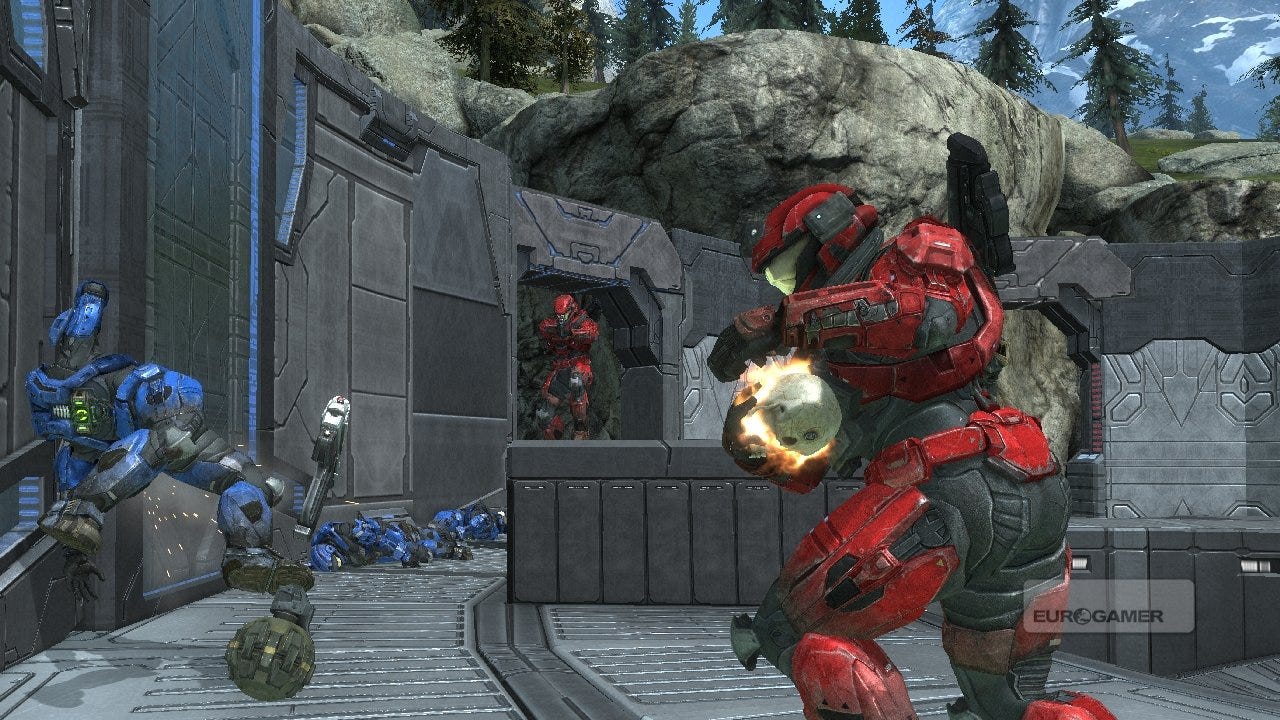
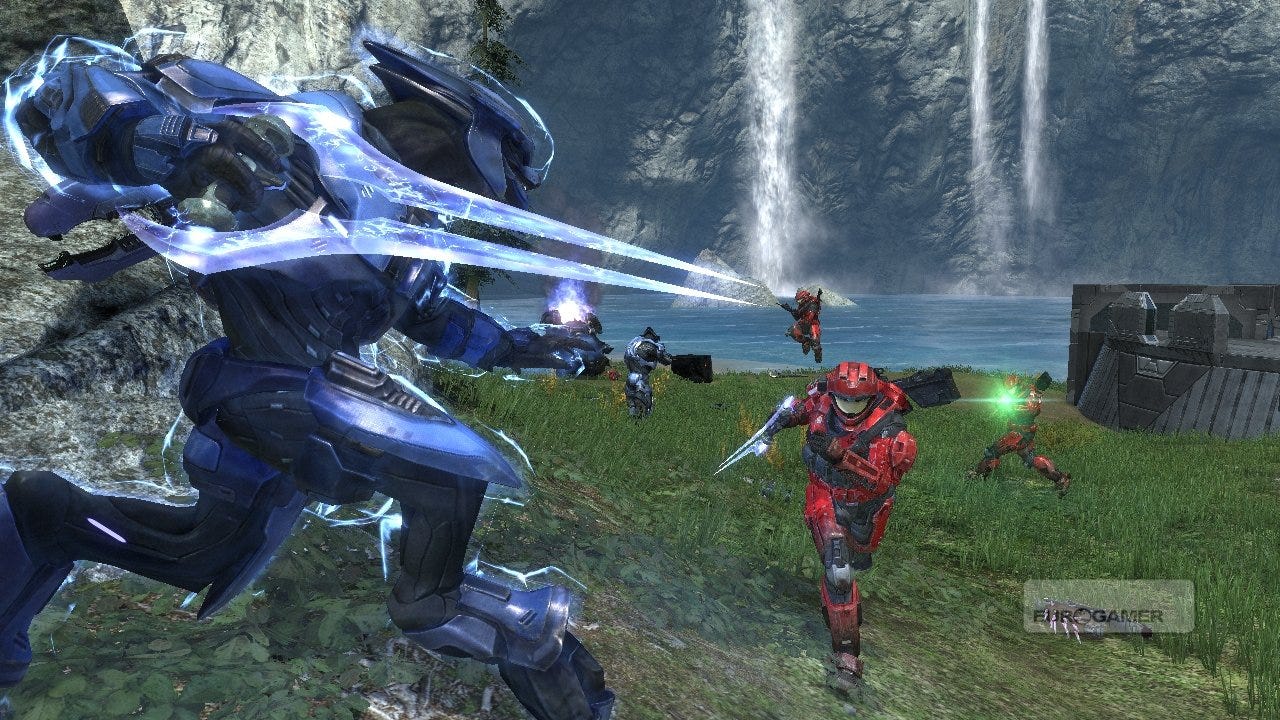
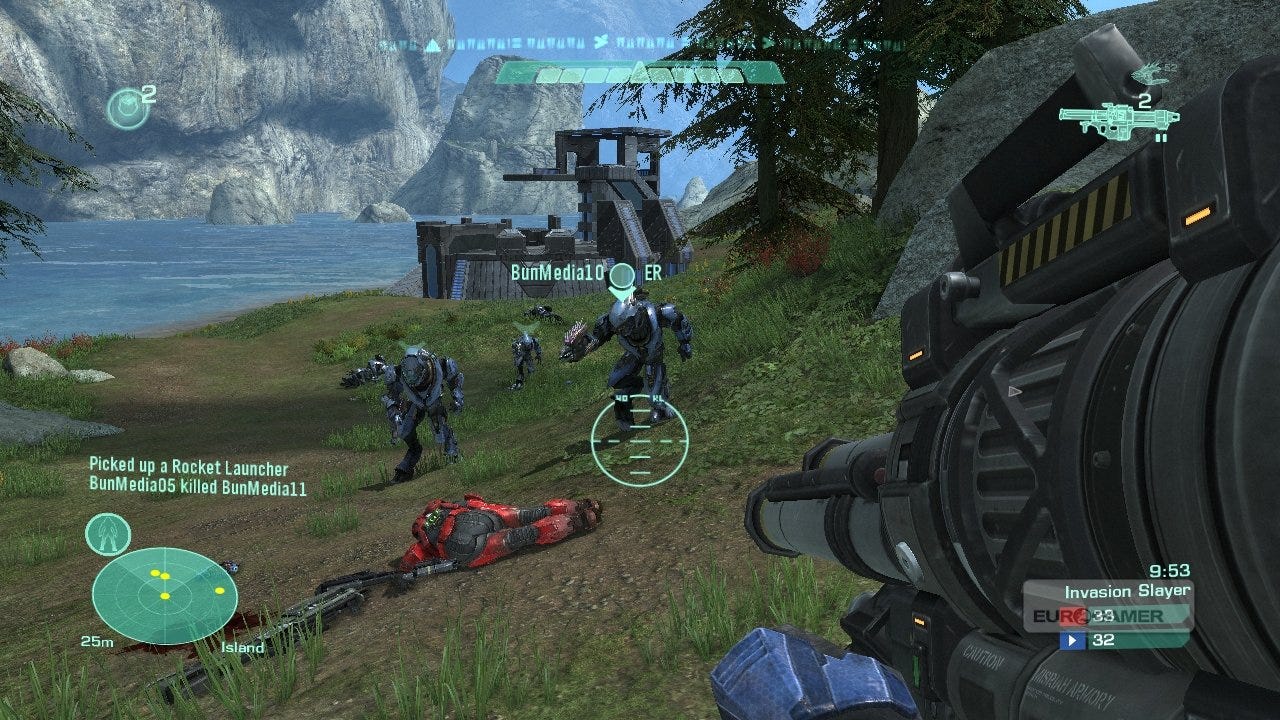
They certainly have a far more drastic effect than the mildly disappointing changes to the weapon designs. Broadly speaking, the human weapons are slightly improved, with punchy back-to-basics interpretations of the classic assault rifle and pistol. But the Covenant armoury has become an unfocused, over-developed mess, ditching Halo 3's wonderful carbine and beam rifle for lesser imitations (the needle rifle and focus rifle respectively) and adding needless trinkets like the plasma repeater and the funny, but useless, knockback effect of the concussion rifle.

Still, you're as likely to have gained a new favourite as lost an old one, balance is undisturbed, and in multiplayer especially the interaction of all these extravagant weapons, vehicles and armour abilities is a wonder to behold. The hologram alone adds a hilarious new dimension to competitive matches.

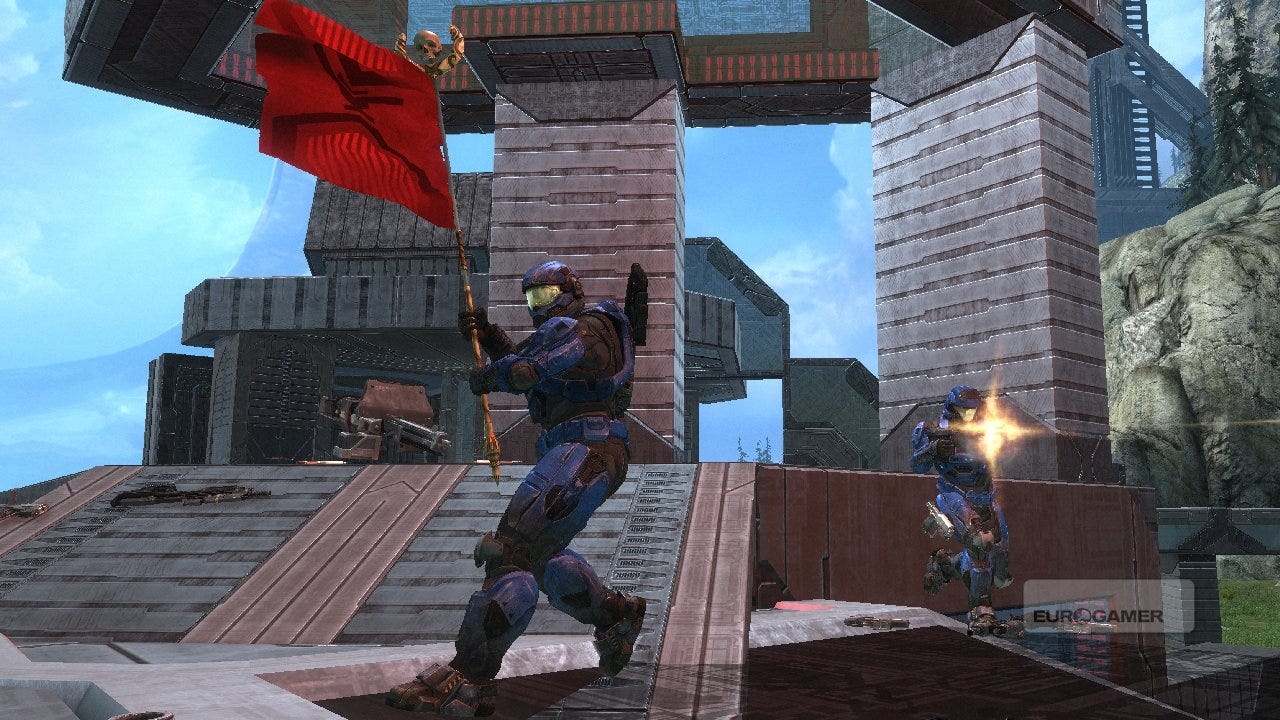
The armour abilities and excellent new maps alone would be enough to make this the best multiplayer Halo yet. In fact, that's exactly what they do, because although though the deep customisation of Firefight and the well-conceived new twists on traditional modes like Headhunter and Stockpile are all welcome, any multiplayer session inevitably devolves into endless rounds of Team Slayer. You know what they say about oldies and goodies.

Bungie demonstrating the co-op campaign.

It's terrific stuff; multiplayer Halo has its own flavour, its slightly deliberate pace offset by the loopy, free-wheeling chaos encouraged by the weapon, vehicle, ability and map design. With the new loadout system and damage changes, that flavour has only been intensified. But things have moved fast in the world of the online console FPS, and what was once the only game in town is starting to seem like an acquired taste next to the crisp, arcade thrills and Pavlovian reward feedback of Call of Duty. Ranking up and earning currency to spend on cosmetic unlocks for your Spartan seem like mere fan service by comparison with Infinity Ward's ruthlessly addictive structure.

Bungie has other means of fostering community loyalty, however, and Reach is lucky enough to inherit Halo 3's online feature set in all its revolutionary integration and breadth, including the campaign co-op, Theater video editor and the Forge map editor, now expanded into the mind-boggling multi-map Forge World playpen. This is still a textbook example of how online games should be done, and even PC giants like Blizzard have taken notice - just look at the design of the new Battle.net. Bungie will no doubt keep its Halo legacy alive by providing peerless web and community support for Reach years into the future.

Reach captures what you love about Halo, refining it on the multiplayer side and preserving the fluid, dynamic, ever-surprising campaign action that makes most rivals look like clumsy shooting galleries. What it doesn't do is redefine single-player like Halo did, multiplayer like Halo 2 did, or the network game like Halo 3 did. To be fair, it doesn't need to; that work is already done. That it can't stir or excite in the same way as those games, try as it might - and boy, does it try - is a bigger and more perpelxing disappointment, but still small beer next to its accomplishments.

I called it a monument at the start, and that's just it. Reach is an encore, a victory lap, a crowd-pleasing last hurrah for a series that most definitely won't end here, but will just as definitely never be the same again. Halo deserves another game this good, and Reach is a deserving tribute.

9 / 10

Halo: Reach is released exclusively for Xbox 360 on 14th September.

Read the Eurogamer.net scoring policy

Comments (287)

Comments for this article are now closed, but please feel free to continue chatting on the forum!

  • Loading...hold tight!